
Private Label OEM Bearings for SKF Oil and Gas Equipment Grade Wholesale
Matching the model number is not interchangeability. True interchangeability lives in the tolerance band, the clearance class, and the traceability behind the steel.
For oil and gas equipment, a private-label OEM bearing that swaps with an SKF part must match not only the outer dimensions but also the internal clearance grade (C3/C4 for high-temperature downhole), the dimensional tolerance band per ISO standards, and the full material heat-number traceability. Skipping any of these turns a "same-model" bearing into a field failure waiting to happen.
I still remember the batch of 22320 spherical roller bearings we shipped to a distributor in Dubai years ago. The model numbers matched the drawing perfectly. What I missed was the clearance — we ran them at standard group instead of C3. Three months into service, the rig reported high-temperature shutdowns. When the bearings came back for teardown, every roller surface showed micro-pitting. The replacement cost on that rig was many times the bearing unit price. That single order rewired how I look at every OEM request: interchangeability is not a dimension check, it is a full-spec verification against the original standard.
Let me walk you through how we verify real interchangeability today, and what documentation a serious OEM factory must hand over before a single unit leaves the warehouse.
Why "Same Model" Doesn’t Mean "Same Performance" in Oil and Gas?
The operating environment decides the spec, not the catalog number. A 22320 sitting in a conveyor pulley in a temperate warehouse and a 22320 spinning inside a mud motor downhole are two completely different animals, even though the drawing says the same thing.
In oil and gas, three variables dominate: sustained high temperature, heavy radial and axial loads, and vibration from drilling or pumping. These conditions demand specific clearance classes — typically C3 or even C4 — to compensate for thermal expansion of the inner ring and shaft. If the clearance is too tight, the bearing seizes once it reaches operating temperature. If it is too loose, the rolling elements skid, generating heat and early fatigue.
A Middle East distributor once sent us a return claim on a batch of 32218 tapered roller bearings used in top-drive assemblies. The bearings had been in service for only a few months. Lab analysis showed the original equipment spec called for C3 clearance, but the OEM supplier had shipped standard clearance units. The thermal growth of the shaft had eaten up the internal play entirely, leading to cage fracture. The rig downtime cost dwarfed the bearing invoice.
This is why, when we receive an OEM order referencing an SKF oil and gas model, the first question is never "what is the size?" It is "what is the operating temperature range, and which clearance class does the application require?" We then cross-check against the SKF interchange table and confirm the clearance group explicitly on the production order. No assumption. No default.
How to Verify the "Real" Interchangeability with SKF Standards?
Dimensional interchange is the floor, not the ceiling. True interchangeability requires matching the tolerance band, the rotating accuracy class, and the internal clearance group simultaneously.
Many buyers assume that if the bore, outer diameter, and width match, the bearing is interchangeable. That assumption is dangerous in precision or high-load applications. The tolerance band — how tightly the actual dimension hugs the nominal value — determines the fit on the shaft and in the housing. A bearing at the loose end of the tolerance band may feel "fine" during bench inspection but generate excessive play or uneven load distribution once mounted.
We use a structured interchange matrix when validating an OEM bearing against an SKF reference. Here is the typical verification flow:
| Verification Item | SKF Reference Spec | OEM Production Spec | Match Status |
|---|---|---|---|
| Bore diameter tolerance | ISO standard P0 class | ISO standard P0 class | Verified |
| OD tolerance | ISO standard P0 class | ISO standard P0 class | Verified |
| Width tolerance | ISO standard P0 class | ISO standard P0 class | Verified |
| Internal clearance group | C3 (per application) | C3 (per application) | Verified |
| Rotating accuracy | Standard grade | Standard grade | Verified |
| Chamfer dimension min | Per SKF drawing | Per SKF drawing | Verified |
A Latin American mining operator once received a batch of 22320 bearings from an unverified supplier. The bore tolerance was off by a noticeable margin — enough to make press-fitting difficult and create micro-movement on the shaft during operation. The entire batch had to be pulled and returned. That kind of dimensional deviation does not show up in a visual inspection; it requires gauge-block measurement or coordinate measuring machine verification at the factory gate.
When we produce a private-label OEM bearing for SKF interchange, every batch goes through a full dimensional audit against the SKF drawing before packaging. The tolerance results are recorded and available in the shipment documentation. This is not optional — it is the baseline for any serious OEM factory.
What Quality Documents Must an OEM Factory Provide?
A bearing without traceable documentation is a liability, not a component. In oil and gas, where a single bearing failure can shut down a rig and cost a mid-six-figure sum in downtime, the paperwork is as important as the product.
The minimum documentation package we provide with every OEM shipment includes:
-
Material certificates with heat number traceability. Every batch of bearing steel is tied to a specific melt heat. The chemical composition — carbon, chromium, manganese, and critical impurity levels — is verified by spectrometer analysis. If a field issue ever arises, we can trace the bearing back to the exact steel batch and production lot.
-
Internal clearance inspection records. For every batch produced to C3 or C4 specification, the actual clearance measurements are recorded per unit or per sample, depending on the order size. These records travel with the shipment.
-
ISO 9001 quality management certificate. This confirms that the factory operates under a certified quality system with documented procedures for incoming material inspection, in-process control, and final audit.
-
Dimensional inspection report. A batch-level report showing the measured values for bore, OD, width, and chamfer against the tolerance band.
A distributor in West Africa once showed us a shipment from another supplier where the material certificate listed a generic steel grade with no heat number. When we asked for the spectrometer report, the supplier could not produce one. That batch was rejected immediately. Without heat-number traceability, there is no way to verify whether the steel meets the required carbon and chromium levels for through-hardened bearing performance.
We run spectrometer verification on every incoming steel lot. If the composition falls outside the specified range, the entire lot is rejected before any forging begins. This is not a marketing claim — it is a documented step in our production workflow, and the records are available to any buyer who asks.
How to Avoid Field Failures Caused by Improper Selection?
Selection is not copying the catalog number. It is recalculating the clearance and load rating against the actual operating conditions.
The most common mistake we see in OEM orders is the assumption that the original equipment clearance class is automatically correct for every installation. It is not. Ambient temperature, shaft material, housing material, and load profile all affect the required internal clearance. A bearing specified for C3 clearance in a standard environment may need C4 in a high-temperature downhole application, or may even require a reduced clearance if the shaft runs cooler than expected.
When a buyer sends us an OEM inquiry, we do not simply mirror the SKF model number onto our production order. We request the application parameters:
- Maximum continuous operating temperature
- Shaft and housing material (for thermal expansion coefficients)
- Load profile (steady, intermittent, or shock)
- Lubrication type and re-lubrication interval
With these inputs, we recalculate the required internal clearance using the thermal expansion compensation method.
A Central Asian gas compression station once ordered a batch of NU205 cylindrical roller bearings as direct replacements for an existing installation. The original bearings had failed repeatedly. After reviewing the operating data, we identified that the ambient temperature in the compressor enclosure was significantly higher than the original design assumption. The standard clearance units were running effectively pre-loaded once hot, leading to premature cage wear. We recommended switching to C3 clearance for this specific installation. The replacement units ran substantially longer without intervention.
This kind of application-based selection is what separates a reliable OEM supplier from a box-mover. The bearing is the same model. The internal spec is adjusted to the reality of the field.
Conclusion
OEM interchangeability in oil and gas is a multi-parameter verification, not a model-number match. Every dimension, every clearance class, every heat number must be checked, recorded, and traceable. The cost of getting it wrong is never the bearing price — it is the rig downtime, the pulled completion, the reputation hit with the end user. A serious private-label OEM factory treats the SKF reference as a full specification to be matched, not a label to be copied.
Products in this article
SKF bearings mentioned above
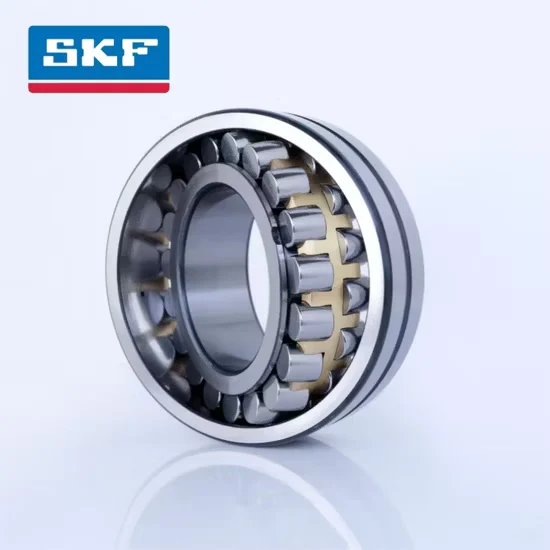 01 Mining and Vibrating Screen Bearings SKF 22320 E-K/C4 Spherical Roller Bearing Genuine Supplier View model details
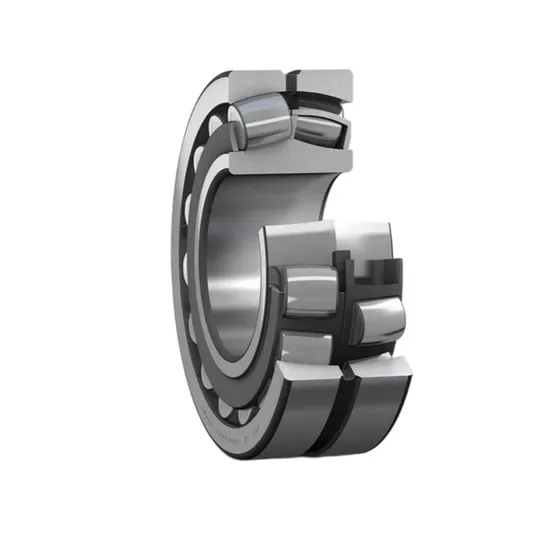 02 Car Bearing 22320E Spherical Roller Bearing Wholesale Supplier View model details
 03 Spherical Roller Bearing 22320EK Spherical Roller Bearing 73mm Width for Heavy-Duty Industrial Applications View model details
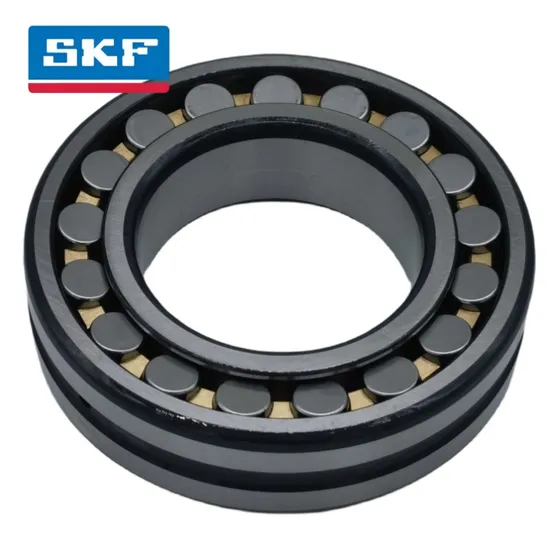 04 Spherical Roller Bearing High Precision SKF Spherical Roller Bearing 22320 E-K/C4 for Conveyor Systems Chrome Steel Gcr15 View model details
Applications
Where these SKF bearings are used
Keep reading
Related SKF bearing selection guides
More practical notes on SKF designations, precision items and project bearing lists from Project Purchasing Company.
 Buying Guide · · 6 min read SKF Ball Bearings Quote: Wholesale Supplier for Bulk & MRO Orders Request a Quote for SKF Ball Bearings that reveals true landed costs beyond unit price. Avoid hidden logistics and customs fees by integrating freight,… Read the guide
 Buying Guide · · 7 min read Spot Fake SKF Ball Bearings: Neutral Buyer Checks & Wholesale Supplier Spotting Fake SKF Ball Bearings requires inspecting physical components, not just packaging. Genuine units feature deep stamped markings and consistent weight, while counterfeits use… Read the guide Buying Guide · · 7 min read SKF Ball Bearing Prices: Wholesale Supplier for Bulk Orders SKF ball bearing prices vary by series and channel, making lowest quotes a risky choice for bulk orders. Genuine units ensure traceability and lower… Read the guide

Request a quote
Send your SKF list. Get one itemized written quote.
Project Purchasing Company supplies SKF ball, roller, precision and housed bearing units to distributors, repair workshops and project buyers worldwide. Standard and precision items are priced line by line, with accessories kept on the same quote.