
Private Label OEM Bearings: SKF-Grade vs NACHI-Grade Wholesale Analysis
Dimensional interchange does not equal functional interchange.
SKF-grade and NACHI-grade bearings differ systematically in internal clearance standards, cage design philosophy, and grease fill protocols — and private label OEM sourcing that treats them as drop-in replacements by size alone will almost certainly trigger early field failures.
I still remember a call from a European buyer who had just taken delivery of a first batch of deep groove ball bearings. His end-user ran high-speed, light-load spindle motors, and the original spec called for an SKF-grade drawing. The buyer sourced a private label OEM bearing that matched every outer dimension — bore, OD, width, chamfer — yet within a few months, the field was reporting abnormal noise across multiple units. When we pulled the returns and cross-referenced the internal clearance callouts, the root cause was staring us back: the European ISO-based clearance group default and the Japanese JIS-based clearance default were pointing in opposite directions for that specific size range. The bearings were dimensionally perfect and functionally wrong. That kind of mismatch is exactly why serious buyers now treat a Private Label OEM Bearings cross-reference as an engineering verification task, not a clerical one.
Let’s walk through what actually separates these two grade systems, where naive cross-referencing breaks down, and how to build a verification chain that protects your private label program from costly field returns.
What Are the Real Differences Between SKF-Grade and NACHI-Grade Bearings?
The gap between SKF-grade and NACHI-grade is not a marketing label — it is a体系-level divergence in how internal clearance, cage geometry, and lubrication are engineered as a system.
When procurement teams compare these two grades, they often start with the dimension sheet and stop there. That is where the first mistake happens. The real differences live inside the bearing, and they are rooted in two distinct engineering traditions.
| Parameter | SKF-Grade Tradition | NACHI-Grade Tradition |
|---|---|---|
| Internal Clearance Default | ISO-based, typically tighter C0 for general industrial | JIS-based, often偏向 C3 for motor applications |
| Cage Design Emphasis | Snap-type or machined brass, optimized for high-speed stability | Pressed steel or engineered polymer, optimized for cost-performance balance |
| Grease Fill Protocol | Lower fill ratio for high-speed, light-load duty | Higher fill ratio for general-purpose, moderate-speed duty |
| Ring Material Purity | Controlled inclusion density, extended fatigue life | Standard clean steel, robust for mainstream industrial use |
| Documentation Chain | Full batch-level material and clearance certificates | Sample-level or lot-level certificates |
A Middle East distributor once placed a private label order where the end-customer specified SKF-style dimensions but required NACHI-grade acceptance criteria. The cage material in the shipment did not match the acceptance document — the customer’s QC team flagged it before the goods even left the warehouse. The lesson was not about quality failure; it was about documentation direction. Without a clear, written cross-reference matrix that maps not just dimensions but also clearance group, cage type, and grease fill, a Private Label OEM Bearings program is essentially gambling with field reliability.
Why Does Direct Cross-Reference Fail in Field Applications?
The single most common reason a dimensionally matched bearing fails early is internal clearance misalignment between the ISO and JIS default systems.
Here is the mechanism. European-origin equipment — especially high-speed spindle motors, precision gearboxes, and light-load conveyors — is typically designed around an SKF-grade clearance assumption. The default C0 or C2 clearance in those applications is intentional: it minimizes shaft deflection and keeps vibration low at elevated RPM. Japanese-origin equipment, by contrast, frequently defaults to C3 clearance even in similar applications, because the JIS tradition assumes slightly higher thermal expansion margins and a broader tolerance for initial looseness.
When a buyer swaps an SKF-grade bearing for a NACHI-grade unit purely by size, the C3 default can introduce measurable radial play that the original design never accounted for. At high speed, that play translates into cage instability, uneven load distribution across the rolling elements, and accelerated grease degradation. The bearing does not fail because it is poorly made — it fails because the system it was dropped into was never designed for that clearance band.
I have seen this pattern repeat across multiple regions. A European pump manufacturer replaced its original SKF-grade deep groove bearings with a private label alternative that matched the drawing perfectly. The first production batch ran fine on the test bench. Six weeks into continuous duty at the end-user’s plant, the bearings started running hot and the grease was breaking down noticeably. The root cause was not the bearing quality — it was the clearance group. The replacement had been sourced to a C3 default, while the OEM design required C0.
The reverse scenario also happens. A mining conveyor operator in Central Asia originally ran NACHI-grade spherical roller bearings that performed well under heavy, slow-speed load. When a maintenance contractor swapped them for an SKF-grade equivalent — assuming the European brand would deliver longer life — the bearings developed raceway spalling within a matter of months. The issue was not brand superiority or inferiority; it was that the SKF-grade grease fill and clearance assumptions were optimized for a different load-speed profile, and the heavy-load, low-speed conveyor duty starved the contact zones of adequate lubrication film.
| Failure Mode | Typical Trigger | Clearance Context |
|---|---|---|
| Abnormal noise at high speed | C3 installed in C0-designed housing | Excessive play |
| Elevated running temperature | Lower fill ratio in continuous-duty motor | Grease starvation |
| Raceway spalling under heavy load | Higher clearance in重载低速 application | Insufficient load zone |
| Cage wear and fracture | Speed-cage mismatch | Dynamic instability |
The takeaway for anyone sourcing Private Label OEM Bearings is straightforward: never approve a cross-reference based on the dimension sheet alone. The clearance group, the cage material, and the grease fill protocol must all be verified against the actual operating conditions of the end application.
How to Verify Private Label OEM Bearings Before Bulk Ordering?
A complete verification document chain is the single most effective safeguard against batch-level rejection and field failure in private label programs.
Verification is not a single checkpoint — it is a layered process that runs from material certification through final functional testing. Buyers who treat it as a formality routinely discover problems only after the goods have shipped, at which point the cost of correction multiplies dramatically.
The verification chain for a Private Label OEM Bearings order should cover four layers:
Layer one: material traceability. The manufacturer must provide a material certificate that identifies the steel grade, the heat treatment batch, and the inclusion control level. This is not a generic "bearing steel" statement — it needs to reference a verifiable heat number and a recognized standard such as ISO 683-17 or equivalent.
Layer two: dimensional compliance. Every critical dimension — bore, OD, width, chamfer, raceway curvature radius — must be inspected against the applicable ISO 492 tolerance class. For private label programs targeting SKF-grade or NACHI-grade replacement, the inspection report must explicitly state the tolerance class (e.g., P0, P6, P5) and confirm conformity.
Layer three: internal clearance verification. This is the layer most often skipped or done inadequately. The measurement must follow ISO 5753 methodology, and the report must state the actual clearance value and the corresponding clearance group (C2, C0, C3, C4). For cross-reference programs, the report must explicitly confirm that the clearance group matches the target brand’s default for that specific size range.
Layer four: system certification. The manufacturer’s quality management system must be certified to ISO 9001 by an accredited body, and the certificate must be current and verifiable. This is the baseline that separates a structured factory operation from a workshop that happens to make bearings.
| Verification Layer | Document Required | Risk if Missing |
|---|---|---|
| Material | Heat-number-linked certificate | Unverifiable steel quality |
| Dimensional | ISO 492 class inspection report | Out-of-tolerance batch |
| Clearance | ISO 5753 measurement report | Clearance group mismatch |
| System | ISO 9001 accredited certificate | No process accountability |
A European industrial buyer once received a full container of private label tapered roller bearings with only a sample-level inspection report and no heat-number-linked material certificates. The buyer’s incoming QC team rejected the entire shipment. The financial exposure was not just the freight — it was the production line downtime that would have followed if defective bearings had reached the end-user. The supplier in that case was not a bad factory; it was a factory that had never been asked to produce a full verification chain for a private label program. The gap was in the buyer’s specification, not just the supplier’s capability.
Which Application Scenarios Match SKF-Grade vs NACHI-Grade?
The right grade is determined by the operating condition, not by brand preference or price perception.
A common misconception in the market is that SKF-grade is inherently more durable than NACHI-grade, or vice versa. Neither is universally true. Each grade system is optimized for a specific cluster of operating conditions, and selecting the wrong one — even if the bearing is perfectly manufactured — will shorten service life.
SKF-grade bearing design traditions tend to excel in applications characterized by:
- High rotational speed with light to moderate radial load
- Tight clearance requirements to minimize shaft deflection
- Precision-oriented duty where vibration and noise must be controlled
- Continuous operation in temperature-stable environments
Typical applications include high-speed electric motors, precision machine tool spindles, light-duty fans, and certain pump configurations.
NACHI-grade bearing design traditions tend to excel in applications characterized by:
- Moderate to low rotational speed with heavy radial and axial load
- Wider clearance tolerance that accommodates thermal expansion
- Robust cage and grease fill designed for contaminated or variable environments
- Intermittent or shock-loaded duty cycles
Typical applications include mining conveyors, heavy-duty gearboxes, agricultural machinery, construction equipment, and certain industrial pump and fan configurations.
| Application Profile | Recommended Grade Basis | Key Design Match |
|---|---|---|
| High-speed, light-load motor | SKF-grade tradition | Tight clearance, high-speed cage |
| Precision spindle | SKF-grade tradition | Low vibration, P5-class tolerance |
| Mining conveyor | NACHI-grade tradition | Wide clearance, heavy-load capacity |
| Agricultural gearbox | NACHI-grade tradition | Contamination tolerance, robust fill |
| Industrial fan (general) | Either, per speed-load point | Match clearance to thermal profile |
A distributor in Latin America once asked me to help resolve a recurring warranty claim on a private label deep groove bearing used in an agricultural gearbox. The bearing was dimensionally correct and passed all incoming inspections. The problem was that the original design had been developed around a NACHI-grade clearance and grease fill assumption, and the private label replacement had been sourced to an SKF-grade default. In the dusty, shock-loaded, moderate-speed environment of the gearbox, the SKF-grade grease fill was insufficient and the tighter clearance generated excessive internal preload under thermal expansion. The bearing was not defective — it was mismatched.
The practical implication for Private Label OEM Bearings sourcing is that the application profile must be documented before the cross-reference is approved. A buyer who can articulate the speed range, the load profile, the ambient temperature, and the contamination level will almost always make a better sourcing decision than a buyer who simply hands over a dimension sheet.
How to Build a Reliable Cross-Reference Matrix for Your Procurement?
A reliable cross-reference matrix is built on operating parameters, not on model number equivalence alone.
Most interchange charts in the market map Brand A model number to Brand B model number based on outer dimensions. That is a necessary starting point, but it is not sufficient for a private label program where field reliability is the measure of success. A proper cross-reference matrix for Private Label OEM Bearings must add at least three more columns to the dimension sheet: clearance group, cage type, and grease fill protocol.
The construction process works in four steps:
Step one: define the target application envelope. Document the maximum and minimum operating speed, the radial and axial load range, the ambient and expected operating temperature, and the contamination exposure level. This envelope determines the required clearance group and cage material.
Step two: map the original brand’s default specification. For the target model number, identify the original manufacturer’s default clearance group, cage type, and grease fill ratio. This information is available in the manufacturer’s published catalog or can be confirmed through technical support.
Step three: identify the private label equivalent and verify parameter alignment. Match the dimension sheet, then verify that the private label bearing’s clearance group, cage material, and grease fill protocol align with the original brand’s default for that application envelope. Any deviation must be explicitly justified by the application conditions.
Step four: document the verification and lock the specification. The final cross-reference matrix must include the dimension match, the clearance group match, the cage type match, the grease fill match, and the supporting verification documents (material certificate, dimensional report, clearance measurement, ISO 9001 certificate). Once approved, this matrix becomes the binding specification for all future orders.
| Cross-Reference Element | Source | Verification Standard |
|---|---|---|
| Outer dimensions | Dimension sheet | ISO 492 tolerance class |
| Clearance group | Original catalog spec | ISO 5753 measurement |
| Cage type | Original catalog spec | Material and design confirmation |
| Grease fill protocol | Original catalog spec | Fill ratio measurement |
| System certification | Supplier audit | ISO 9001 accredited certificate |
A buyer in Southeast Asia adopted this four-step approach for a private label program covering multiple bearing types — deep groove, spherical roller, and tapered roller. The first cycle took longer than a simple dimension-based cross-reference would have, but the buyer eliminated the field-return cycle that had previously consumed a significant portion of the program’s margin. The matrix also became a reusable asset: once built for one supplier, it could be applied to qualify alternative suppliers without starting from scratch.
Conclusion
Dimensional match is the floor, not the ceiling, of a reliable bearing cross-reference. SKF-grade and NACHI-grade systems diverge in clearance defaults, cage design, and lubrication protocols — and private label programs that ignore these differences pay for it in field failures and rejected batches. Build your cross-reference on operating parameters, verify every layer of the document chain, and let the application — not the brand name — drive the selection.
Products in this article
SKF bearings mentioned above
 01 Clutch Release Bearings LM501349/LM501310 501349/10 Double Row Roller Bearing OEM View model details
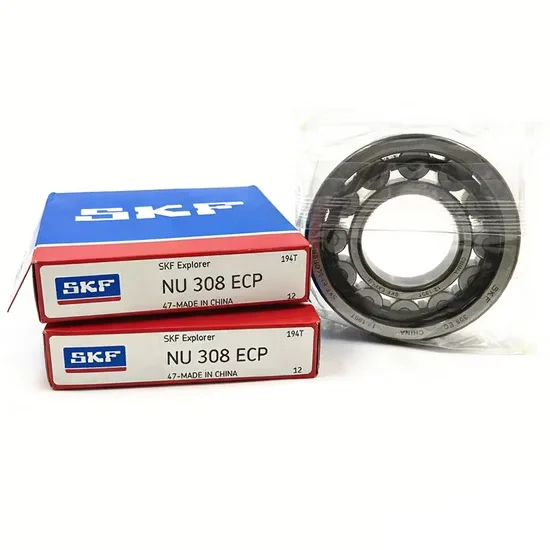 02 Cylindrical Roller Bearings SKF NU308ECP Cylindrical Roller Bearing for Gearbox Reducer OEM View model details
 03 Deep Groove Ball Bearings Genuine SKF Deep Groove Ball Bearings 6201-6206 OEM ODM Supply View model details
 04 Tapered Roller Bearing SKF 32218 Conical Roller Bearing 90x160x42.5mm for Wind Power & Automotive OEM Applications View model details
Applications
Where these SKF bearings are used
Keep reading
Related SKF bearing selection guides
More practical notes on SKF designations, precision items and project bearing lists from Project Purchasing Company.
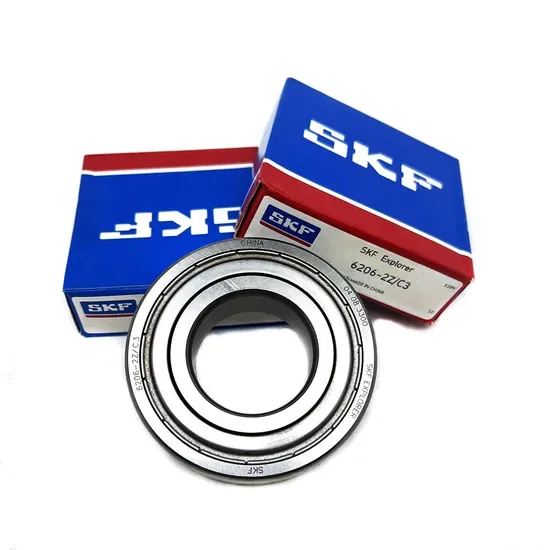 Brands & Alternatives · · 8 min read SKF Ball Bearing Range: Wholesale Supplier for Bulk & MRO Orders Navigate the SKF ball bearing range with precision by mastering series specs, suffix codes, and compliant cross-brand alternatives. Optimize MRO procurement costs while ensuring… Read the guide
 Brands & Alternatives · · 8 min read Ball Bearing Brand Tiers for Motor Repair: Wholesale Supplier Ball Bearing Brand Tiers for motor repair help buyers avoid costly failures from inferior heat treatment and clearance control. Match Tier 1 or 2… Read the guide Brands & Alternatives · · 6 min read Old to New SKF Ball Bearing Designations Cross-Reference Chart for Wholesale Buyers Master the Old to New SKF Ball Bearing Designations Cross-Reference Chart for Wholesale Buyers to avoid catastrophic failures from hidden suffix mismatches. Learn why… Read the guide

Request a quote
Send your SKF list. Get one itemized written quote.
Project Purchasing Company supplies SKF ball, roller, precision and housed bearing units to distributors, repair workshops and project buyers worldwide. Standard and precision items are priced line by line, with accessories kept on the same quote.