
Private Label OEM Spherical Roller Bearings to SKF Standards | Wholesale Supplier
Engraving your logo on a bearing box does not make it an OEM product — it makes it a liability waiting to happen.
Private label OEM spherical roller bearings to SKF standards demand full ISO dimensional compliance, batch-level clearance measurement reports, and steel heat-number traceability — not just a part number copy and a custom carton. Distributors who skip documentation verification face end-user rejection rates that dwarf any unit-price savings.
I still remember the Hannover trade show years ago. A German distributor pulled out an SKF 22320 drawing and asked me to produce a private label run. I shipped the bearings with standard tolerances and simply stamped "C3" on the inspection sheet — no measured clearance range, no heat-number linkage. His quality team rejected the entire shipment. They did not want "close enough." They needed every single bearing’s clearance to fall within the exact micrometer band listed in the ISO 5753 table for the C3 group. That rejection taught me what European buyers actually inspect: not whether you can laser-engrave their logo, but whether your quality documents can survive scrutiny from their most demanding end-users.
Since then, from Chicago to Las Vegas, I have handled private label OEM spherical roller bearings for distributors across multiple regions — and I have seen the same documentation gaps cause the same costly rejections over and over.
Let me walk you through what actually separates a sellable private label program from a batch that ends up in a customs hold or a warehouse return.
What Does "OEM to SKF Standards" Actually Require?
True SKF-standard compliance means meeting ISO dimensional tolerances and clearance groups — not just copying part numbers onto your packaging.
Many first-time buyers assume that matching an SKF part number like 22320 EJA/VA405 is simply a matter of replicating the outer dimensions. In reality, SKF designs are built on ISO 15:1998 boundary dimensions and ISO 492 tolerance classes, and the interchangeability only holds when your manufacturer controls every parameter in those standards — not just a few.
Here is what a proper compliance matrix looks like when you evaluate a potential OEM partner:
| Compliance Parameter | Certified OEM Supplier | Basic Workshop Supplier | Unverified Source |
|---|---|---|---|
| Boundary dimensions per ISO 15 | Fully verified | Partially checked | Not provided |
| Tolerance class (Normal / P6 / P5) | Documented per batch | Sample-level only | Self-reported |
| Radial clearance per ISO 5753 | Full batch measured range | C3/C4 label only | Not provided |
| Material heat-number traceability | Verifiable mill certificates | Generic material statement | None |
| Hardness test (HRC 58-62 range) | Per-batch Rockwell records | Spot check | Not provided |
| SKF / FAG / NSK cross-reference | Documented interchange table | Verbal assurance | None |
A Middle East wholesale buyer once ordered a full container of 22320 C3 spherical roller bearings for mining conveyor applications. The supplier labeled every box "C3" but attached no measured clearance values. When the end-user’s maintenance team opened the packages and measured the first ten units, the clearance spread ranged from C2 to C4 within the same batch. The entire order was returned — and the re-inspection and re-shipping costs exceeded the original purchase price by several multiples.
The lesson is straightforward: your end-users will measure. If your documents cannot predict what their instruments will read, the private label becomes a rejection magnet.
Which Quality Documents Do Distributors Need to Avoid Rejection?
End-users require traceable material certificates, measured clearance data, and dimensional inspection reports — not just generic "C3" labels or unsigned certificates of conformance.
When I supply private label OEM spherical roller bearings to distributors serving industrial and mining sectors, the documentation package I prepare for each batch includes the following elements — and I have found that omitting even one of them triggers questions from procurement teams:
-
Material test certificates with heat numbers: Each batch of bearing rings and rollers must link back to a specific steel heat. The certificate should cover chemical composition and, where required, inclusion ratings. Without this, end-users in regulated industries such as mining, steel, and cement cannot complete their incoming inspection.
-
Measured clearance data per ISO 5753: Not just a "C3" stamp, but the actual measured minimum and maximum radial clearance for the batch, expressed in micrometers, mapped against the ISO 5753 group table. This is the single most rejected document gap I have encountered.
-
Dimensional inspection reports per ISO 492: Bore diameter, outside diameter, width, and chamfer dimensions with actual measured values — not just "within tolerance" statements. European and North American end-users increasingly request these for every shipment.
-
Hardness test records: Through-hardened bearing steel should fall within the HRC 58-62 range. Per-batch Rockwell readings on rings and rollers provide auditable proof.
-
Final inspection summary with batch photo evidence: A consolidated report tying the heat number, clearance data, dimensional results, and hardness values to a specific production batch and packaging run.
A Latin American distributor serving agricultural and conveyor equipment manufacturers learned this the hard way. His OEM supplier provided a one-page "certificate of conformance" with no measured values. The end-user’s quality department rejected the shipment and demanded a full document package before releasing payment. The distributor had to fly in a third-party inspection agency at his own expense — a cost that erased the margin difference between his OEM supplier and a certified alternative.
How to Verify an OEM Supplier’s Capability Before Ordering?
Request sample inspection reports, cross-reference charts, and ISO certification audits before committing to bulk orders — and validate each document against the standard it claims to meet.
Before I place a production order for private label OEM spherical roller bearings on behalf of a distributor partner, I run through a verification sequence that separates capable factories from those that merely claim capability:
Step 1 — Request a pre-production sample with full inspection data. Do not accept a sample bearing without its corresponding dimensional report, clearance measurement, and material certificate. If the supplier cannot produce these for a single sample, they will not produce them for a thousand-unit batch.
Step 2 — Cross-reference the sample against the target brand specification. Using SKF, FAG, and NSK interchange tables, verify that the sample’s boundary dimensions, cage design, and clearance group match the target part number. Our factory provides complete cross-reference support across all major brands, and we include the interchange documentation with every sample submission.
Step 3 — Audit the supplier’s ISO 9001 certification scope. Confirm that the certification covers spherical roller bearing manufacturing specifically — not just "general machinery components." Check the scope description on the certificate carefully.
Step 4 — Evaluate the documentation workflow. Ask the supplier to show you a completed document package from a recent shipment to another distributor. Look for heat-number linkage, measured clearance ranges, and dimensional data — not just pass/fail stamps.
Step 5 — Test the technical support responsiveness. Send a specification question — for example, asking which clearance group suits a high-temperature conveyor application — and measure how quickly and accurately the supplier responds. Technical support quality predicts documentation quality.
A European distributor evaluating a new OEM partner for a mining sector contract asked for sample clearance data on 22320 bearings. The first supplier responded three weeks later with a generic "C3 suitable" statement. Our factory returned measured clearance ranges mapped to the ISO 5753 table within days, along with the full cross-reference chart and material certificates. The distributor signed the contract the same month.
What Are the Common Pitfalls in Private Label Bearing Procurement?
Missing clearance data, incomplete material traceability, and tolerance deviations cause the majority of customs holds, end-user rejections, and field failures in private label programs.
After years of supplying private label OEM spherical roller bearings to distributors worldwide, I have identified the pitfalls that recur most frequently — and they are almost always documentation failures, not manufacturing failures:
Pitfall 1 — Clearance labeling without measured data. Stamping "C3" on a box is not the same as providing measured clearance values. End-users with precision equipment will measure incoming bearings, and if the actual values fall outside the ISO 5753 C3 band, the batch is rejected regardless of what the label says.
Pitfall 2 — Material certificates without heat-number traceability. A generic "bearing steel" certificate does not satisfy end-users in mining, steel, or heavy industry. They need to trace each bearing ring back to a specific steel melt. Without this chain, the bearing cannot be accepted into their maintenance inventory.
Pitfall 3 — Dimensional tolerance assumptions. A supplier may claim "ISO standard tolerances" without providing actual measured values. When the bore diameter drifts toward the upper limit of the tolerance band, interference fits fail during installation — and the end-user blames the distributor’s brand, not the unknown factory behind it.
Pitfall 4 — Cage design mismatches. Spherical roller bearings for vibrating screens and conveyors require specific cage designs — typically machined brass or pressed steel cages rated for high-vibration service. Supplying a standard polyamide cage in a mining application leads to premature cage failure, regardless of how good the rolling elements are.
Pitfall 5 — Packaging that does not protect the product. Private label packaging must do more than carry a logo. It must include proper rust prevention, individual bearing wrapping, and palletization that prevents transport damage. I have seen entire batches corroded before reaching the end-user because the supplier treated packaging as an afterthought.
How to Choose the Right OEM Partner for Spherical Roller Bearings?
Prioritize ISO 9001 certification, complete documentation capability, and technical support depth over the lowest unit price — because documentation failures cost far more than any per-piece savings.
When distributors ask me how to evaluate a private label OEM spherical roller bearings partner, I point them to three non-negotiable criteria:
First — certified quality systems with documented output. ISO 9001 certification is the baseline. But the certification must translate into actual batch-level documentation: material certificates with heat numbers, measured clearance data, dimensional inspection reports, and hardness records. Our factory provides complete ISO 9001 documentation, SKF/FAG/NSK cross-reference support, and measured clearance data for every batch — ensuring your private label bearings pass end-user inspection on first delivery.
Second — full-category capability with cross-brand interchange expertise. A distributor serving multiple industries needs a supplier who can cover deep groove ball bearings, tapered roller bearings, spherical roller bearings, and more — with accurate cross-reference tables that let end-users switch from SKF to your private label without re-engineering their equipment. Our catalog covers all major bearing types including the popular 22320, 22308, 32218, and 30206 models, with complete interchange documentation.
Third — responsive technical support grounded in application knowledge. The right OEM partner should be able to advise on clearance selection for high-temperature applications, cage material choices for vibrating equipment, and sealing options for contaminated environments. This level of support prevents specification errors before they become field failures.
A distributor in Central Asia was sourcing from the lowest-cost supplier available. The unit price was attractive, but every third shipment triggered end-user complaints about clearance inconsistency. After switching to a certified OEM partner with full documentation capability, the complaint rate dropped to near zero — and the distributor’s end-users began requesting his brand by name for replacement orders.
Conclusion
Private label success is built on documentation discipline, not logo placement. Distributors who verify ISO dimensional compliance, demand batch-level clearance data, and insist on heat-number traceability will win end-user trust and eliminate rejection costs. The suppliers who invest in complete quality documentation — not just competitive pricing — are the ones whose private label programs grow into long-term regional brands.
Products in this article
SKF bearings mentioned above
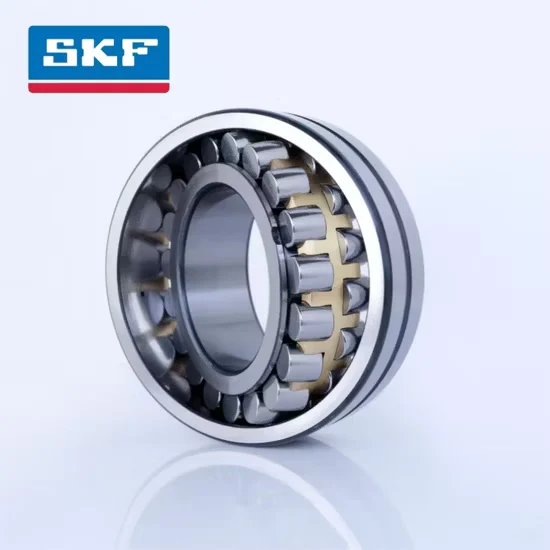 01 Mining and Vibrating Screen Bearings SKF 22320 E-K/C4 Spherical Roller Bearing Genuine Supplier View model details
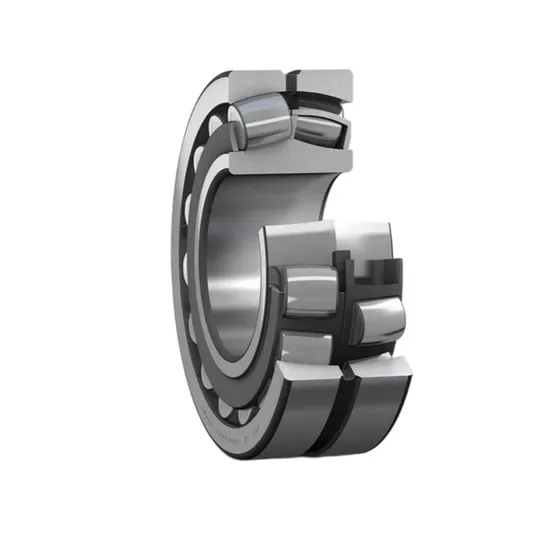 02 Car Bearing 22320E Spherical Roller Bearing Wholesale Supplier View model details
 03 Spherical Roller Bearing 22320EK Spherical Roller Bearing 73mm Width for Heavy-Duty Industrial Applications View model details
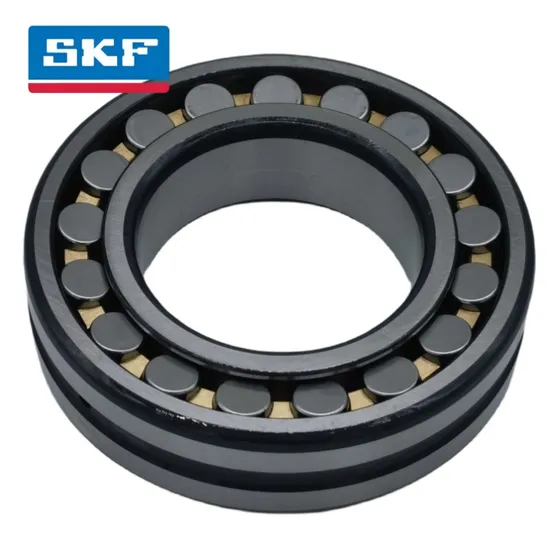 04 Spherical Roller Bearing High Precision SKF Spherical Roller Bearing 22320 E-K/C4 for Conveyor Systems Chrome Steel Gcr15 View model details
Applications
Where these SKF bearings are used
Keep reading
Related SKF bearing selection guides
More practical notes on SKF designations, precision items and project bearing lists from Project Purchasing Company.
 Buying Guide · · 6 min read SKF Ball Bearings Quote: Wholesale Supplier for Bulk & MRO Orders Request a Quote for SKF Ball Bearings that reveals true landed costs beyond unit price. Avoid hidden logistics and customs fees by integrating freight,… Read the guide
 Buying Guide · · 7 min read Spot Fake SKF Ball Bearings: Neutral Buyer Checks & Wholesale Supplier Spotting Fake SKF Ball Bearings requires inspecting physical components, not just packaging. Genuine units feature deep stamped markings and consistent weight, while counterfeits use… Read the guide Buying Guide · · 7 min read SKF Ball Bearing Prices: Wholesale Supplier for Bulk Orders SKF ball bearing prices vary by series and channel, making lowest quotes a risky choice for bulk orders. Genuine units ensure traceability and lower… Read the guide

Request a quote
Send your SKF list. Get one itemized written quote.
Project Purchasing Company supplies SKF ball, roller, precision and housed bearing units to distributors, repair workshops and project buyers worldwide. Standard and precision items are priced line by line, with accessories kept on the same quote.