
Private Label SKF-Style Bearing Supplier | ISO 9001 Factory
Most buyers think private label means swapping the logo and repacking the box. In reality, the difference between a reliable private label program and a costly return nightmare comes down to heat treatment records, material traceability, and cross-reference precision — not the sticker on the seal.
Private label bearing sourcing succeeds when buyers verify ISO documentation traceability, cross-reference accuracy, and production process controls — not just unit price. A legitimate ISO 9001 bearing factory OEM must provide batch-level material certificates, heat treatment logs, and final inspection reports that link every shipment to its production run.
I spent years on the factory floor in the Pearl River Delta before moving into export sales. One afternoon, a distributor from the Middle East sent me a bag of failed 6205 bearings pulled from industrial motors that had been in service for only a few months. The cages were warped, the raceways showed pitting, and the grease had turned dark and gritty. He held up a printed "ISO certificate" from the original supplier — the certificate number did not match any issuer in the accreditation body’s database. That single batch cost him not just the replacement expense but also the trust of his end users across the region.
Cases like that one are far more common than the industry admits. The sections below walk through exactly what documents to demand, how to validate cross-reference claims, which production controls separate serious factories from trading companies, and how to structure a long-term private label partnership that protects your resale market.
What Documents Should a Private Label Bearing Supplier Provide?
An ISO 9001 certificate is the entry ticket, not the finish line. The real baseline for private label bearing sourcing is a complete, batch-linked documentation package that lets you trace every bearing back to its raw material heat number.
When I started reviewing supplier documents for our own private label orders, I built a checklist that has grown over the years. The table below shows what a serious ISO 9001 bearing factory OEM should provide versus what unreliable sources typically offer.
| Document Type | Reliable Factory | Trading Company | No Documentation |
|---|---|---|---|
| ISO 9001 Certificate (verifiable number) | Certified | Self-reported | Not provided |
| Material Mill Certificate (heat number linked) | Full batch-level | Sample-level | None |
| Heat Treatment Furnace Log (time-temperature curve) | Full batch-level | None | None |
| Final Dimensional Inspection Report | Full batch-level | Sample-level | None |
| Internal Clearance Measurement Record | Full batch-level | None | None |
| Noise & Vibration Test Report | Full batch-level | None | None |
| Packing List with Batch Traceability Code | Verifiable | Self-reported | Not provided |
A Middle East MRO distributor I worked with once received a shipment where the supplier’s "material certificate" listed a steel grade but no heat number. When two pallets of 6305 bearings showed abnormal vibration during end-user testing, there was no way to trace the material back to the mill. The entire batch had to be pulled from warehouse shelves — a mid-five-figure loss in logistics and reputation damage combined.
The lesson is straightforward: if a private label bearing supplier cannot produce a material certificate with a heat number that matches the furnace log for the exact batch you ordered, walk away. The cost of a rejected batch at the end user’s site dwarfs any unit-price savings.
How to Verify SKF-Style Cross-Reference Accuracy?
A cross-reference chart printed on a catalog page means nothing unless the factory has physically measured the bearings against the dimensional standards that define each size. Private label bearing sourcing depends on interchange accuracy, not model-name matching.
Distributors across Africa and Latin America frequently ask us whether our bearings can replace specific SKF, NSK, FAG, TIMKEN, NTN, or KOYO part numbers. The answer depends on whether the factory has verified three things: outer diameter tolerance, bore diameter tolerance, and width tolerance — all against ISO 15243 normal class (P0) or tighter.
Here is the verification process we follow for every cross-reference request:
- Pull the original brand’s published dimensional drawing — bore, OD, width, and chamfer dimensions with their tolerance bands.
- Measure a sample from the production batch using calibrated instruments: bore gauge for inner diameter, external micrometer for OD, and gauge blocks for width.
- Compare measured values against the ISO tolerance class — the bearing must fall within the same tolerance band as the original brand’s published specification for that size.
- Check internal radial clearance — for deep groove ball bearings, the C3 or CN clearance must match the application requirement.
- Run a trial fit in the actual housing and shaft if the end user can provide one — this catches any residual mismatch that dimensional data alone might miss.
A distributor in West Africa once ordered a full container of bearings based solely on a supplier’s cross-reference PDF. When the 22320 spherical roller bearings arrived, the outer ring OD was at the upper edge of tolerance — technically within spec on paper, but tight enough to cause interference fit issues in the housings used by local mining operations. The bearings had to be re-machined at the installation site, adding weeks of delay and significant machining cost.
The takeaway for anyone engaged in private label bearing sourcing: never accept a cross-reference chart as the sole proof of interchangeability. Request actual measurement reports for the batch you are buying. If the factory hesitates or says "all our bearings are standard," that is a red flag.
What Quality Controls Differentiate Reliable OEM Factories?
The gap between a factory that produces reliable private label bearings and one that ships scrap is not in the final inspection — it is in the incoming material check and the heat treatment process control. These are the stages where defects are born, and where serious ISO 9001 bearing factory OEM operations invest their quality resources.
Most buyers focus on the finished bearing: Does it spin smoothly? Does the packaging look clean? But by the time a bearing reaches final inspection, the microstructure of the steel has already been determined. If the spheroidized annealing was rushed or the carburizing temperature drifted, no amount of final sorting will catch the problem — it will only show up in the field, months later.
Here is what separates controlled production from uncontrolled:
| Process Stage | Controlled Factory | Uncontrolled Workshop |
|---|---|---|
| Incoming Steel Inspection (chemical composition + inclusion rating) | Standard | Uncontrolled |
| Spheroidized Annealing (furnace atmosphere + cooling rate) | Controlled | Uncontrolled |
| Hard Turning (CNC with in-process gauging) | Standard | Uncontrolled |
| Heat Treatment (quench oil temperature + carbon potential) | Controlled | Uncontrolled |
| Grinding (wheel dressing schedule + size sorting) | Standard | Uncontrolled |
| Final Inspection (100% noise test + sampling dimensional) | Standard | None |
I once visited a small workshop that was producing private label bearings for multiple distributors. They had no incoming material inspection — the steel bars arrived and went straight to the lathe. The heat treatment furnace had no recording pyrometer; the operator judged the quench by the color of the oil smoke. When I asked about their rejection rate, they said they did not track it because "customers do not complain much." That statement alone told me everything.
For buyers doing private label bearing sourcing, the right question to ask a factory is not "Do you have ISO 9001?" but "Can you show me the furnace log for the batch I am ordering?" If they can, you are likely dealing with a serious operation. If they cannot, you are gambling with your end users’ equipment.
How to Structure a Private Label Partnership for Long-Term Resale?
A successful private label bearing sourcing arrangement is built on three pillars: documented traceability, regional market protection, and consistent lead times. Without all three, distributors face the constant risk of parallel imports undercutting their pricing and eroding their brand equity.
Regional distributors in the Middle East, Africa, and Latin America often start with a trial order — a few pallets of high-volume sizes like 6205, 6206, 6305, and 22320. If the quality holds and the documentation is clean, the conversation shifts to larger volumes and brand protection. This is where the partnership structure matters.
The cooperation flow we follow with long-term private label partners typically runs through these stages:
- Sample approval — the buyer receives a sample batch with full documentation, tests it in their market, and confirms the cross-reference accuracy against the brands their customers expect.
- Trial order — a smaller production run with the buyer’s private label packaging, shipped with complete batch documentation.
- Volume production — regular scheduled orders with agreed lead times, priority raw material allocation, and batch-specific quality records archived for each shipment.
- Regional arrangement — for distributors who commit to annual volume targets, market exclusivity discussions ensure that no parallel shipments of the same specification enter their territory through other channels.
A distributor in Latin America came to us after a difficult experience with another factory. That factory had been shipping the same private label bearing line to two competing distributors in the same country — without informing either party. When the second distributor started undercutting prices, the first one lost margin and credibility with their customers overnight.
The fix was not just about finding a new supplier. It was about building a cooperation model where the factory understood that protecting the distributor’s market position was part of the value proposition. Today, that distributor has been with us for multiple years, with a clear regional arrangement and a documentation system that lets them prove quality to their end users on demand.
For anyone evaluating private label bearing sourcing options, the message is clear: price is a factor, but the real cost of a bad partnership is measured in lost customers, not in cents per unit.
Conclusion
Private label bearing sourcing is a documentation game, not a price game. Buyers who verify material traceability, validate cross-reference measurements, and confirm heat treatment controls before placing orders consistently avoid the field failures and return costs that plague those who chase the lowest quote. A genuine ISO 9001 bearing factory OEM will welcome these questions — and will have the records to answer them.
Products in this article
SKF bearings mentioned above
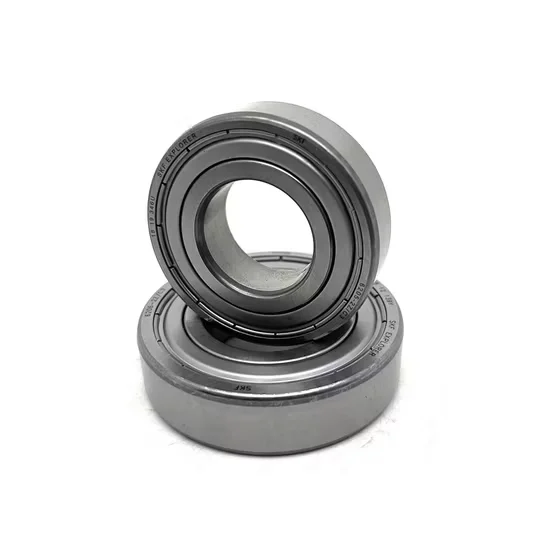 01 Deep Groove Ball Bearings SKF 6204 6205 6206 Deep Groove Ball Bearing Spare Parts View model details
 02 Deep Groove Ball Bearings Original SKF Deep Groove Ball Bearing 6000 6001 6308 6309 6204 6205 6206 for Auto Parts View model details
 03 Agricultural Machinery Bearings X&S 80607kt 6301-2RS 6205-2Z 6206-2Z Deep Groove Ball Bearing View model details
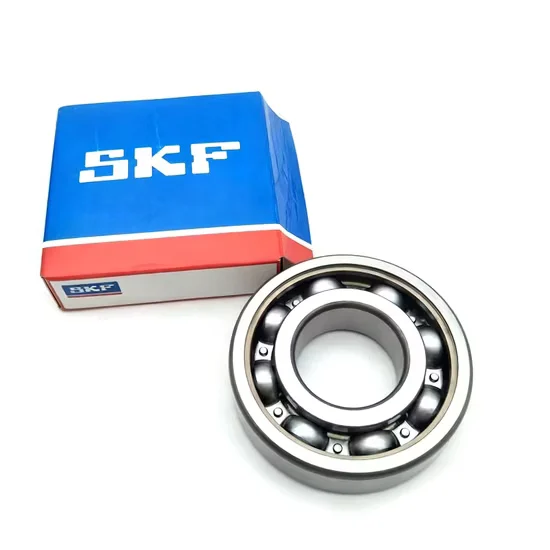 04 Deep Groove Ball Bearings SKF 6205 6206 ZZ C3 Deep Groove Ball Bearing for Automobile Industry View model details
Applications
Where these SKF bearings are used
Keep reading
Related SKF bearing selection guides
More practical notes on SKF designations, precision items and project bearing lists from Project Purchasing Company.
 Buying Guide · · 6 min read SKF Ball Bearings Quote: Wholesale Supplier for Bulk & MRO Orders Request a Quote for SKF Ball Bearings that reveals true landed costs beyond unit price. Avoid hidden logistics and customs fees by integrating freight,… Read the guide Buying Guide · · 7 min read Spot Fake SKF Ball Bearings: Neutral Buyer Checks & Wholesale Supplier Spotting Fake SKF Ball Bearings requires inspecting physical components, not just packaging. Genuine units feature deep stamped markings and consistent weight, while counterfeits use… Read the guide Buying Guide · · 7 min read SKF Ball Bearing Prices: Wholesale Supplier for Bulk Orders SKF ball bearing prices vary by series and channel, making lowest quotes a risky choice for bulk orders. Genuine units ensure traceability and lower… Read the guide

Request a quote
Send your SKF list. Get one itemized written quote.
Project Purchasing Company supplies SKF ball, roller, precision and housed bearing units to distributors, repair workshops and project buyers worldwide. Standard and precision items are priced line by line, with accessories kept on the same quote.