
SKF Aerospace Grade Bearing OEM Factory Direct Supplier
Most buyers assume "Application Grade" is a proprietary SKF technology label. In reality, it simply means the bearing meets a systemic set of metallurgical purity, heat-treatment discipline, and 100% inspection thresholds defined by international aerospace standards.
SKF Aerospace Application Grade bearings represent the benchmark for aviation-level precision and reliability, but industrial procurement demands ISO document verification, application-matched selection, and validated brand interchange to achieve optimal cost-performance.
I still remember a shipment that landed at Jebel Ali a few years back. A mining client in Riyadh had placed an urgent order for self-aligning roller bearings, and the local agent promised SKF stock, ready to ship. When the crates were opened at the warehouse, the packaging stamps looked blurred under the fluorescent lights, and the inner ring engravings varied in depth from one unit to the next. A local technical consultant took one look and called it a high-copy batch. The mine’s conveyor line had already been shut down waiting for installation, and every idle hour was bleeding mid-five-figure losses. That moment drilled one lesson into my skull: authenticity verification is not paperwork—it is the difference between a running plant and a parking lot.
Let me walk you through what actually defines these bearings, how to verify what you are buying, and where cost-effective alternatives fit into a real procurement strategy.
What Defines SKF Aerospace Application Grade Bearings?
The term "Application Grade" is not a single technology—it is a systemic compliance envelope covering material cleanliness, thermal processing, dimensional precision, and full-batch inspection.
Many purchasers treat "aerospace grade" as a marketing adjective. It is not. The differentiation sits in how the steel is melted, how the rings are hardened, and whether every single unit is tested before it leaves the factory floor.
Here is how aerospace-grade specifications stack up against standard industrial-grade offerings across the parameters that matter in real-world operation:
| Parameter | Aerospace Application Grade | Standard Industrial Grade |
|---|---|---|
| Material Purity | Vacuum-degassed, controlled inclusion density | Conventional electric-furnace melting |
| Heat Treatment | Atmosphere-controlled, batch-traceable | Standard carburizing or through-hardening |
| Dimensional Tolerance | Reaches P4/P5 precision class | Typically P0/P6 |
| Inspection Scope | Full batch-level, 100% dimensional and surface | Sample-level抽检 |
| Documentation | Full traceability from melt lot to finished unit | Commercial invoice and basic cert |
| Internal Clearance Control | Tight C2/C3 grouping per application | Standard C3 grouping |
A European aerospace parts distributor I worked with needed angular contact ball bearings for a rotor test rig. They did not just ask for the SKF part number—they demanded the full ISO documentation trail, the heat-treatment batch records, and a brand interchange table showing verified alternatives. The file review alone ran for weeks, followed by months of sample testing on the rig. The point is: aerospace-grade is not about the catalog number. It is about the paper trail that travels with the bearing.
How to Verify Authenticity When Procuring SKF Aerospace Bearings?
Authenticity verification requires a four-layer system: packaging stamp inspection, inner ring engraving check, ISO document audit, and third-party metallurgical testing.
This is where most procurement teams get burned. The bearing looks right. The box says the right brand. But under scrutiny, the cracks show. Let me lay out the verification checklist I use on every high-value order:
Layer One — Packaging Stamp. Genuine SKF Aerospace packaging carries laser-etched batch codes with consistent font depth and spacing. Counterfeit packaging often shows ink-stamped codes that smear under solvent wiping.
Layer Two — Inner Ring Engraving. The part number, origin marking, and production code on the inner ring should be cleanly etched with uniform depth. I have seen counterfeit units where the engraving depth varied visibly within the same ring—a dead giveaway of manual or low-precision marking equipment.
Layer Three — ISO Document Audit. Request the ISO 9001 certificate of the supplying entity and cross-check the certificate number against the issuing body’s public register. Ask for the factory inspection report tied to the specific batch number on your units. If the supplier cannot produce batch-linked documentation, walk away.
Layer Four — Third-Party Metallurgical Testing. For critical applications, send sample units to an independent lab for hardness testing, material composition spectroscopy, and inclusion rating analysis. This step is non-negotiable for aerospace and mining applications where a single failed bearing can trigger cascading equipment damage.
A South American MRO team once received a batch of self-aligning roller bearings for a conveyor system. The model number matched, the price was attractive, and the delivery was fast. Three weeks into operation, two units showed premature spalling. Lab analysis revealed the steel inclusion density was substantially higher than the specification required. The entire batch had to be pulled, the conveyor shut down, and replacement bearings sourced on an emergency timeline. The cost of that failure ran well into the mid-six figures when you factor in lost production, emergency logistics, and equipment inspection.
Which Industrial Applications Require Aerospace Grade Specifications?
Mining conveyors, aviation ground support equipment, high-speed machine tool spindles, and heavy-duty gearboxes operating under extreme contamination or thermal cycling demand aerospace-grade bearing specifications.
The common thread across these applications is unforgiving operating conditions: high radial and axial loads, elevated rotational speeds, thermal fluctuation, and limited access for maintenance. Standard industrial bearings may run for a while in these environments, but their fatigue life drops sharply because the material and processing cannot sustain the stress regime.
Consider a Middle East mining operation running a long-distance overland conveyor. The self-aligning roller bearings on the tail pulley face heavy shock loads from irregular ore feed, fine abrasive dust infiltration, and ambient temperatures that swing dramatically between day and night. Standard-grade bearings in this position showed a pattern of premature inner ring cracking. The root cause was traced to insufficient material cleanliness—the non-metallic inclusions in the steel acted as fatigue initiation sites under the combined stress. Switching to aerospace-grade specification units with controlled inclusion density extended the service intervals substantially and eliminated the unplanned shutdown cycle.
Similarly, in high-speed spindle applications for precision machining, the bearing must maintain P4 or tighter dimensional stability at rotational speeds that generate significant thermal expansion. The cage material, internal clearance grouping, and lubricant specification all need to be matched to the thermal and speed profile of the specific spindle design. Off-the-shelf industrial bearings with standard C3 clearance and stamped steel cages simply cannot hold the required running accuracy.
What Are the Cost-Effective Alternatives to SKF Aerospace Bearings?
ISO 9001-certified manufacturers producing aerospace-grade specification bearings can deliver equivalent performance with full interchange documentation and standard quality verification—at a meaningful cost reduction versus imported brand pricing.
This is the section where I need to be direct. I spent years on the procurement side, negotiating with SKF and FAG agents, watching markups compound through distribution layers. What I learned is that the bearing itself—the steel, the grinding, the heat treatment—is what matters. The brand name on the box is what you pay a premium for.
We operate as a full-category bearing factory integrating R&D, production, and supply, headquartered in China, serving industrial buyers, distributors, and MRO purchasers worldwide. Our catalog covers every major bearing type—deep groove ball bearings, cylindrical roller bearings, self-aligning roller bearings, tapered roller bearings, angular contact ball bearings, thrust bearings—and we focus on the high-demand models that move through industrial supply chains daily. Every bearing we ship carries ISO 9001 certification with complete standard documentation, and we provide full cross-reference interchange support across all mainstream brands including SKF, NSK, FAG, TIMKEN, NTN, and KOYO.
A European distributor came to us needing to replace SKF angular contact ball bearings on a series of aerospace ground support units. They needed three things: verified dimensional interchange, complete ISO documentation for their end customers, and pricing that would let them compete against established local suppliers. We provided the cross-reference mapping, the batch-level inspection reports, and the material traceability documentation. Their sample testing confirmed running accuracy and fatigue life matched the original specification. The partnership moved from sample evaluation to regular bulk orders within a standard procurement cycle.
Here is what the sourcing comparison looks like in practice:
| Factor | Imported Brand SKF Aerospace Application Grade | ISO-Certified Alternative from Integrated Factory |
|---|---|---|
| Dimensional Interchange | OEM reference standard | Full cross-reference verified per ISO standards |
| Material Documentation | Proprietary melt specification | Verifiable spectrometer report per batch |
| Quality Certification | ISO 9001 via global network | ISO 9001 certified with full standard documentation |
| Pricing Structure | Premium brand positioning | Wholesale pricing with bulk-order discount |
| Lead Time | Subject to global allocation | Stock items with same-day dispatch capability |
| Technical Support | Regional application engineering | Application-based selection support per operating condition |
The cost advantage is not about cutting corners on material or process. It is about eliminating the brand premium and the multi-layer distribution markup. The steel meets the same cleanliness standards. The grinding achieves the same precision class. The inspection covers the same parameters. What changes is the price you pay for the name on the box.
How to Select the Right Bearing for Your Specific Application?
Correct bearing selection requires matching the bearing type, precision class, internal clearance, cage material, and sealing configuration to the specific load, speed, temperature, and contamination profile of the application.
This is where I see the most costly mistakes. A buyer sends over a part number—say, a self-aligning roller bearing for a conveyor pulley—and expects a direct drop-in replacement. But the original specification was written for a specific load profile, a specific alignment tolerance, and a specific contamination environment. If your operating conditions have shifted, the original bearing type may no longer be optimal.
Here is the selection framework I apply to every application inquiry:
Step One — Define the Load Profile. Identify the magnitude and direction of radial and axial loads, including any shock load component. Heavy shock loads with moderate misalignment point toward self-aligning roller bearings. Pure axial loads at high speed point toward angular contact ball bearings. Combined loads with high rigidity requirements point toward tapered roller bearings or paired angular contact configurations.
Step Two — Map the Speed and Thermal Regime. High-speed applications require bearings with low friction torque generation, which influences cage material selection and internal geometry. The operating temperature range determines whether standard or high-temperature stabilization heat treatment is required, and affects the lubricant specification.
Step Three — Assess the Contamination Environment. Applications with fine dust, moisture, or chemical exposure need effective sealing solutions. Contact seals provide the highest contamination exclusion but add friction torque. Non-contact seals reduce friction but offer limited protection. For heavily contaminated environments, the sealing solution may be more critical than the bearing type itself.
Step Four — Specify Internal Clearance. Standard C3 clearance works for many general industrial applications. But high-temperature operations with significant shaft-inner ring thermal differential may require C4 clearance to prevent preload buildup during operation. Conversely, precision spindle applications may need C2 or tighter grouping to maintain running accuracy.
Step Five — Confirm Precision Class. General industrial drives and conveyors typically operate well with P0 or P6 class bearings. Machine tool spindles, high-speed motors, and aerospace ground support equipment require P5 or P4 class to maintain the required running accuracy and vibration performance.
A pump manufacturer in Southeast Asia was experiencing repeated bearing failures on their slurry pump line. They were using standard deep groove ball bearings with ZZ shields. After reviewing the operating conditions—fine abrasive particles in the pumped fluid, intermittent dry running during startup, and elevated operating temperatures—we recommended switching to self-aligning roller bearings with enhanced sealing and a modified internal clearance specification. The failure rate dropped sharply, and the maintenance interval extended substantially. The fix was not a more expensive bearing brand. It was a correctly specified bearing for the actual operating environment.
Conclusion
SKF Aerospace Application Grade bearings set the precision and reliability benchmark, but smart procurement is about verified specifications, documented authenticity, and application-matched selection—not brand names alone. ISO-certified manufacturers offering full cross-reference interchange, batch-level quality documentation, and application-based technical support can deliver equivalent performance at a fraction of the imported brand cost. The bearing that keeps your equipment running is the one that is correctly specified, genuinely verified, and properly matched to your operating conditions.
Products in this article
SKF bearings mentioned above
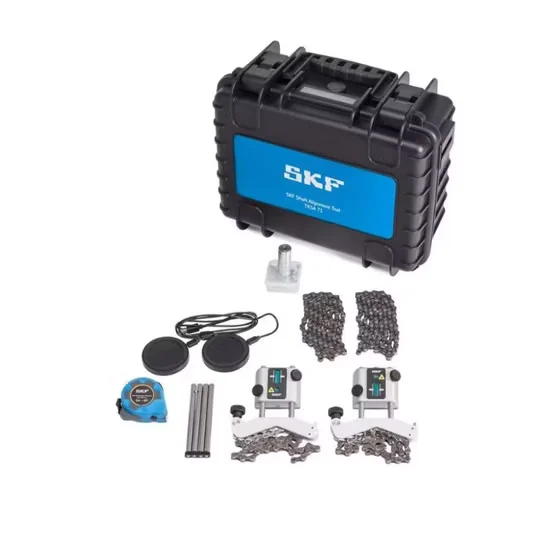 01 Uncategorized SKF TKSA 71 Wireless Laser Shaft Alignment System View model details
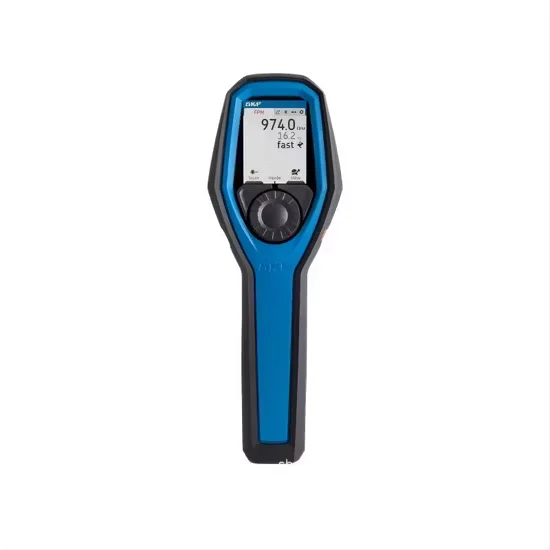 02 Uncategorized SKF TKRS 11 Hand Held Stroboscope for Bearing Inspection View model details
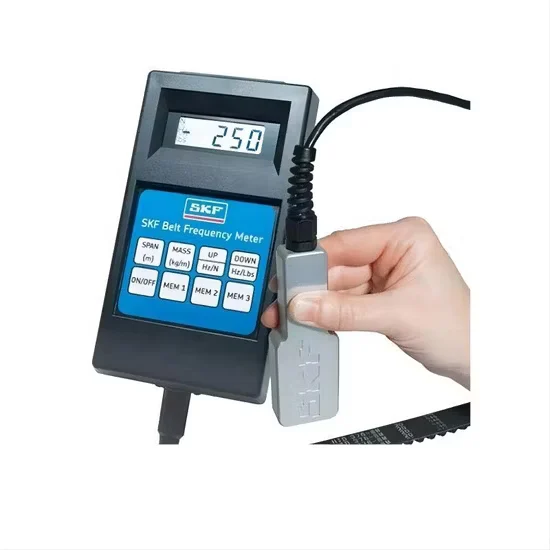 03 Uncategorized SKF PHLFM10 Belt Frequency Meter 10-400Hz Vibration Measurement View model details
 04 Adapter Sleeves Genuine SKF Deep Groove Ball Bearings 6202-6218 for Washing Machine Parts View model details
Applications
Where these SKF bearings are used
Keep reading
Related SKF bearing selection guides
More practical notes on SKF designations, precision items and project bearing lists from Project Purchasing Company.
Buying Guide · · 6 min read SKF Ball Bearings Quote: Wholesale Supplier for Bulk & MRO Orders Request a Quote for SKF Ball Bearings that reveals true landed costs beyond unit price. Avoid hidden logistics and customs fees by integrating freight,… Read the guide  Buying Guide · · 7 min read Spot Fake SKF Ball Bearings: Neutral Buyer Checks & Wholesale Supplier Spotting Fake SKF Ball Bearings requires inspecting physical components, not just packaging. Genuine units feature deep stamped markings and consistent weight, while counterfeits use… Read the guide Buying Guide · · 7 min read SKF Ball Bearing Prices: Wholesale Supplier for Bulk Orders SKF ball bearing prices vary by series and channel, making lowest quotes a risky choice for bulk orders. Genuine units ensure traceability and lower… Read the guide

Request a quote
Send your SKF list. Get one itemized written quote.
Project Purchasing Company supplies SKF ball, roller, precision and housed bearing units to distributors, repair workshops and project buyers worldwide. Standard and precision items are priced line by line, with accessories kept on the same quote.