
SKF Explorer vs Timken Ultra Precision OEM Bearings for Sale
Matching parameters alone does not guarantee a successful brand swap — clearance class, cage material, and suffix codes will silently sabotage installation if ignored.
SKF Explorer and Timken Ultra Precision are not direct plug-and-play substitutes. SKF Explorer emphasizes refined steel cleanliness, multi-lip sealing, and high-speed stability in spherical roller and deep groove ball designs, while Timken Ultra Precision focuses on tapered roller geometry and heavy-shock load tolerance. Correct cross-referencing requires field-by-field verification of bore, OD, width, clearance group, and suffix — plus synchronized updates to customs documentation to avoid port detention.
I still remember a full container of tapered roller bearings stuck at Jeddah port for over a week. The buyer had requested Timken-spec replacements, we quoted against SKF part numbers, and the customs officer flagged the mismatch between the commercial invoice description and the country-of-origin certificate. Demurrage charges nearly swallowed the margin on the entire shipment. Since that day, I never quote a brand interchange without pulling the cross-reference chart, confirming the HS code alignment, and checking the destination port’s documentation rules first. SKF Explorer and Timken Ultra Precision both serve high-precision industrial applications, but their design philosophies, pricing structures, and substitution paperwork are entirely different games.
Let me walk you through what actually matters when you evaluate these two product lines for your next procurement cycle.
What Are the Core Spec Differences Between SKF Explorer and Timken Ultra Precision?
SKF Explorer and Timken Ultra Precision diverge fundamentally in steel metallurgy, sealing architecture, and precision positioning — choosing between them should follow your operating environment, not a parameter spreadsheet.
SKF Explorer series bearings are built around vacuum-degassed, cleanliness-controlled steel with optimized heat treatment profiles. The result is a noticeable extension of fatigue life under contaminated or marginally lubricated conditions. SKF Explorer bearings also feature integrated multi-lip contact seals as standard options, making them particularly strong in environments where dust, moisture, or particulate ingress is a constant threat. Their precision range typically covers P0 through P5, with certain spherical roller and deep groove ball variants reaching P4 under specific configurations.
Timken Ultra Precision bearings, by contrast, are engineered around tapered roller bearing geometry and through-hardened alloy steel designed for heavy radial and axial combined loads. Their strength lies in shock resistance and load-carrying capacity under severe-duty conditions — mining conveyors, steel mill roll necks, heavy truck axles. The Timken Ultra Precision line targets P4 and P2 precision classes for machine tool spindle and high-rigidity applications.
| Dimension | SKF Explorer | Timken Ultra Precision |
|---|---|---|
| Primary Design Focus | Spherical roller, deep groove ball, high-speed stability | Tapered roller, heavy combined loads, shock resistance |
| Steel Treatment | Vacuum-degassed, cleanliness-controlled | Through-hardened alloy, carburized options |
| Sealing Architecture | Multi-lip contact seals, lifetime grease fill options | Open or shielded, field-lubrication typical |
| Standard Precision Range | P0 to P5, select P4 | P4 to P2 for spindle-grade variants |
| Internal Clearance | C3, C4 widely stocked; C2 available on request | Standard, C3, C4; tighter groups on special order |
| Typical Application Profile | Industrial motors, fans, pumps, food processing | Mining, steel mills, heavy transport, machine tool spindles |
A European pulp mill operator once called me asking why their SKF Explorer spherical roller bearings were failing within months on a dryer roll application. After reviewing the installation photos, I found they had substituted Timken tapered rollers in the same housing — the load angle was completely wrong for that geometry, and the cage pocket design could not handle the misalignment. The bearing did not fail from quality; it failed from application mismatch.
The takeaway is simple: do not let a datasheet column heading fool you into thinking two bearings are interchangeable just because they share the same bore and OD. The internal architecture tells a completely different story.
How Do You Cross-Reference SKF Explorer to Timken Ultra Precision Correctly?
A valid cross-reference must match bore diameter, outer diameter, width, internal clearance group, cage type, and suffix codes — skipping any single field risks installation interference or premature field failure.
Here is the step-by-step process I follow for every interchange request that crosses my desk:
-
Confirm basic dimensions first. Bore (d), outer diameter (D), and width (B) must match within ISO tolerance bands. Even a 0.5 mm width difference can cause housing shoulder contact or spacer misalignment.
-
Match internal clearance group. A C3 clearance bearing substituted with a standard (CN) clearance unit from another brand will preload the rolling elements at operating temperature, generating excess heat and early cage fatigue. Always verify the clearance suffix — SKF uses CN/C2/C3/C4/C5, Timken uses similar designations but the exact radial internal play values may differ slightly within the same group label.
-
Check cage material and design. SKF Explorer bearings commonly use pressed steel cages or machined brass cages depending on the series. Timken often specifies polymer cages or bronze-retained designs for their precision line. A cage swap changes the high-speed limit and thermal behavior.
-
Read the suffix codes carefully. Sealing type (2RS, ZZ, open), heat stabilization treatment (S0, S1), special lubricant fill, and modified internal geometry all carry suffix designations that differ between manufacturers. A bearing with matching dimensions but the wrong suffix is not the same bearing.
-
Validate against the manufacturer’s interchange table. Never rely solely on third-party cross-reference tools without confirming against official documentation from both brands.
A mining operation in Central Africa once received a shipment of what they believed were direct Timken equivalents for their conveyor head pulley bearings. The supplier had matched bore and OD but used a standard clearance group instead of the specified C4. Within weeks, bearings were overheating and seizing on the shaft. The root cause was thermal expansion under load — the tighter clearance left no room for the inner ring to expand, creating a locked preload condition. Replacing the full set with correctly specified C4 clearance units resolved the issue, but the downtime cost far exceeded the price difference between the two brands.
When you request a cross-reference from us, we run every interchange through our internal verification system that checks all six fields simultaneously and flags any mismatch before the quote goes out. This is not a service you get from a generic online lookup tool.
What Documentation and Customs Risks Come with Brand Substitution?
Switching bearing brands on a purchase order without updating the commercial invoice, packing list, and certificate of origin will almost certainly trigger customs delays at the destination port.
This is where most procurement teams get caught off guard. The bearing itself might be perfectly correct, but the paperwork tells a different story. Let me explain how this plays out in practice.
When you order Timken-branded bearings and the supplier ships SKF equivalents — even with full technical equivalence — the commercial invoice will typically list the SKF product description and part number. The certificate of origin will show Sweden or China as the manufacturing country, not the United States where Timken’s primary production facilities are located. The HS code might remain the same (8482 for rolling bearings), but the description field on the customs declaration will not match the buyer’s original import permit or letter of credit terms.
I have seen this scenario create problems across multiple regions:
-
Middle East ports: Saudi Arabia and UAE customs authorities routinely verify that the product description on the commercial invoice matches the SASO or ECAS conformity certificates. A brand mismatch means the certificate does not cover the actual goods, and the container sits at the terminal until the exporter provides corrected documents.
-
South American ports: Brazil’s Receita Federal requires the import license (LI) to specify the exact manufacturer and origin. Substituting brands without amending the LI before shipment leads to automatic cargo hold and fine assessment.
-
Southeast Asian ports: Indonesia’s SNI certification and India’s BIS registration are brand-specific. Shipping a different brand than what was declared in the certification application means the goods cannot clear customs until a new certificate is obtained — a process that takes weeks.
| Document | Risk if Brand Changes Without Update |
|---|---|
| Commercial Invoice | Description mismatch triggers customs hold |
| Certificate of Origin | Country of origin no longer matches declared manufacturer |
| Packing List | Part numbers inconsistent with invoice |
| Letter of Credit | Discrepancy in product description leads to bank rejection |
| Conformity Certificate (SASO/BIS/SNI) | Certificate does not cover actual brand shipped |
A buyer in Latin America once received a shipment where the supplier had substituted an SKF Explorer deep groove ball bearing for the specified Timken unit. The bearing was technically superior for the application, but the bill of lading showed the SKF part number while the letter of credit called for Timken. The bank refused payment under the LC, the goods were held at port, and the buyer had to negotiate a direct payment workaround while the supplier scrambled to issue revised documents. The entire episode added weeks of delay and significant administrative cost.
Before we confirm any brand interchange order, our documentation team reviews the destination country’s customs requirements, verifies that the HS code remains valid, and prepares a complete document package that accurately reflects the actual product being shipped. This prevents the cargo from becoming a liability at the port.
Which Application Scenarios Favor SKF Explorer vs Timken Ultra Precision?
Heavy shock and combined-load environments favor Timken’s tapered roller architecture; high-speed precision and contamination-prone settings favor SKF Explorer’s sealed spherical roller and deep groove ball designs.
The right bearing choice is never about which brand is "better" in absolute terms — it is about which design philosophy matches your specific operating conditions. Let me break this down by common industrial scenarios.
Mining and aggregate processing: Conveyor systems, crushers, and vibrating screens generate extreme shock loads and heavy radial-axial combined forces. Timken’s tapered roller bearing geometry is specifically engineered for these conditions, with through-hardened rings and rollers that resist surface fatigue under impact loading. The open or shielded design also allows for regular relubrication in the field, which is critical in dusty environments where grease contamination is inevitable.
Industrial motors and pumps: Electric motors, centrifugal pumps, and fan assemblies operate at sustained high speeds with relatively stable radial loads. SKF Explorer deep groove ball bearings and sealed spherical roller bearings excel here — the multi-lip contact seals prevent moisture and particulate ingress, the optimized internal geometry reduces friction and heat generation, and the cleanliness-controlled steel extends fatigue life under continuous operation. Many motor OEMs specify SKF Explorer as standard because the sealed-for-life design eliminates maintenance intervals.
Food and beverage processing: Hygiene requirements demand bearings that can withstand frequent washdowns without lubricant contamination. SKF Explorer sealed variants with food-grade grease fills and corrosion-resistant options are widely specified in this sector. The sealed architecture prevents external contaminants from entering and internal lubricant from escaping — a dual protection that open-design bearings cannot provide.
Machine tool spindles: High-rigidity, high-precision spindle applications require bearings with minimal runout and tight dimensional consistency. Timken Ultra Precision bearings in P2 and P4 classes are commonly specified for grinding machine spindles and turning centers where thermal stability and rotational accuracy are paramount.
| Application Environment | Recommended Bearing Line | Key Reason |
|---|---|---|
| Mining conveyors, crushers | Timken Ultra Precision (tapered roller) | Shock load tolerance, field relubrication |
| Industrial motors, fans, pumps | SKF Explorer (sealed ball/spherical roller) | High-speed stability, contamination resistance |
| Food processing, washdown | SKF Explorer (sealed, food-grade grease) | Hygiene compliance, sealed-for-life design |
| Machine tool spindles | Timken Ultra Precision (P2/P4 angular contact) | Rotational accuracy, thermal stability |
| Steel mill roll necks | Timken Ultra Precision (carburized tapered) | Heavy combined loads, surface fatigue resistance |
| Paper machine dryers | SKF Explorer (spherical roller, C4 clearance) | Misalignment accommodation, high-temperature operation |
A wind farm operator in Northern Europe once approached us after experiencing repeated gearbox bearing failures. The original specification called for a Timken tapered roller design, but the operating conditions involved variable-speed operation with frequent load reversals and moderate contamination from gear oil degradation. After reviewing the failure analysis, we recommended switching to SKF Explorer spherical roller bearings with C3 clearance and integrated seals. The sealed design prevented contaminant ingress from degraded lubricant, and the spherical roller geometry accommodated the misalignment caused by gearbox housing deflection under variable loads. The replacement bearings ran substantially longer before the next scheduled maintenance interval.
The pattern is clear: match the bearing architecture to the dominant failure mode in your application, not to the brand name on the housing.
How to Verify Authenticity and Quality When Sourcing Replacement Bearings?
Requesting ISO 9001 certification, original mill test reports, and complete cross-reference documentation from your supplier is the minimum threshold to avoid counterfeit or mismatched bearings.
The bearing market is flooded with products that carry famous brand markings but were never manufactured by the original company. Counterfeit bearings do not just underperform — they fail catastrophically and without warning, because the steel quality, heat treatment, and dimensional accuracy are nowhere near original specifications.
Here is what I check before confirming any supply arrangement:
-
ISO 9001 certification from the supplier. This confirms the supplier operates under a documented quality management system with traceability requirements. Ask for the certificate number and verify it against the issuing registrar’s database.
-
Mill test reports or material certificates. Legitimate suppliers can provide documentation showing the steel batch origin, chemical composition, and heat treatment records. If a supplier cannot produce this, walk away.
-
Complete cross-reference documentation. A professional supplier will provide a detailed interchange chart showing the exact field-by-field match between the original part number and the replacement — not just bore and OD, but clearance, cage, seal type, and suffix codes.
-
Physical inspection markers. Genuine bearings from major manufacturers carry specific font styles, stamping depths, and surface finish characteristics that counterfeits consistently fail to replicate. The logo font on a genuine SKF bearing, for example, has specific proportions that are difficult to forge without access to the original tooling.
-
Packaging quality. Original packaging uses specific materials, printing quality, and labeling formats. Counterfeit packaging often shows color shifts, blurred text, or incorrect barcode formats.
A distributor in West Africa once sent us photos of bearings they had purchased from a competing supplier at a price significantly below market rate. The bearings carried a well-known brand logo, but the stamping was shallow and uneven, the cage material was clearly pressed steel instead of the specified brass, and the packaging showed printing errors in the product description. Laboratory testing later confirmed the steel did not meet the specified grade — the carbon content was outside tolerance, and the hardness was substantially below the required range. Those bearings would have failed in service, potentially causing equipment damage and production losses far exceeding the initial purchase price.
When you work with us, every order ships with ISO 9001 documentation, complete material traceability records, and a full cross-reference chart specific to your part numbers. We verify every product against manufacturer specifications before it leaves our facility, and our technical team is available to support installation guidance and application review. This is not just about selling bearings — it is about ensuring that what arrives at your site performs exactly as engineered.
Conclusion
SKF Explorer and Timken Ultra Precision serve different engineering philosophies — successful substitution requires matching internal architecture to application conditions, verifying every cross-reference field, and synchronizing customs documentation to prevent port detention.
Brand interchange is not a parameter-matching exercise; it is a systems-level decision that touches engineering, procurement, logistics, and compliance simultaneously. Get any one of these elements wrong, and the cost of correction far exceeds the price difference between brands.
Products in this article
SKF bearings mentioned above
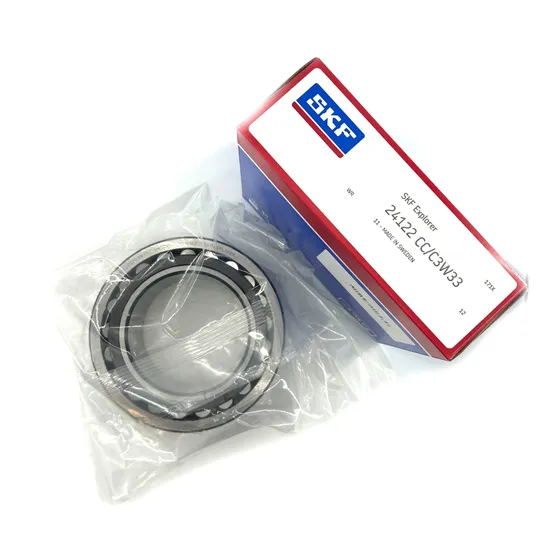 01 Spherical Roller Bearing 24122CC/C3W33 SKF Explorer Spherical Roller Bearing for Gearbox 110x180x69mm View model details
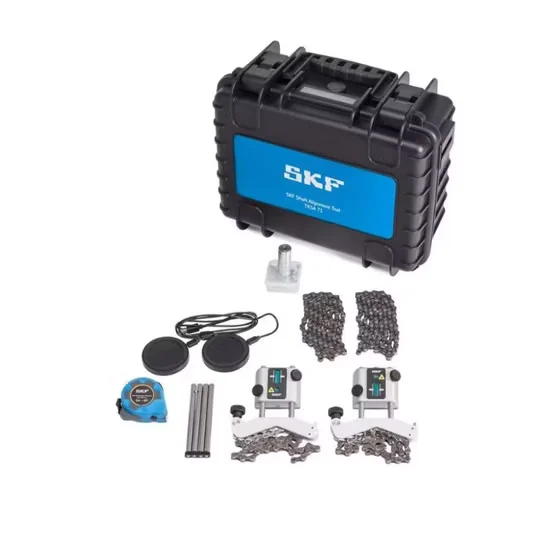 02 Uncategorized SKF TKSA 71 Wireless Laser Shaft Alignment System View model details
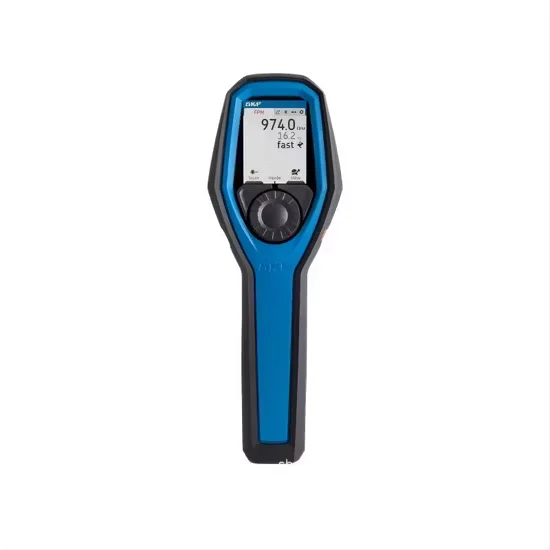 03 Uncategorized SKF TKRS 11 Hand Held Stroboscope for Bearing Inspection View model details
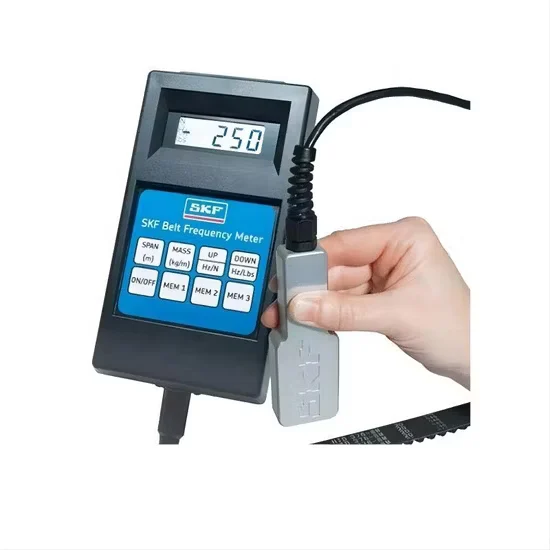 04 Uncategorized SKF PHLFM10 Belt Frequency Meter 10-400Hz Vibration Measurement View model details
Applications
Where these SKF bearings are used
Keep reading
Related SKF bearing selection guides
More practical notes on SKF designations, precision items and project bearing lists from Project Purchasing Company.
 Brands & Alternatives · · 8 min read SKF Ball Bearing Range: Wholesale Supplier for Bulk & MRO Orders Navigate the SKF ball bearing range with precision by mastering series specs, suffix codes, and compliant cross-brand alternatives. Optimize MRO procurement costs while ensuring… Read the guide
 Brands & Alternatives · · 8 min read Ball Bearing Brand Tiers for Motor Repair: Wholesale Supplier Ball Bearing Brand Tiers for motor repair help buyers avoid costly failures from inferior heat treatment and clearance control. Match Tier 1 or 2… Read the guide Brands & Alternatives · · 6 min read Old to New SKF Ball Bearing Designations Cross-Reference Chart for Wholesale Buyers Master the Old to New SKF Ball Bearing Designations Cross-Reference Chart for Wholesale Buyers to avoid catastrophic failures from hidden suffix mismatches. Learn why… Read the guide

Request a quote
Send your SKF list. Get one itemized written quote.
Project Purchasing Company supplies SKF ball, roller, precision and housed bearing units to distributors, repair workshops and project buyers worldwide. Standard and precision items are priced line by line, with accessories kept on the same quote.