
SKF-Grade Bearing Engineering Change Management OEM Supplier
Any unauthorized modification to seal structure, cage material, or internal geometry invalidates the entire OEM specification, regardless of whether the part number remains unchanged.
OEM SKF-grade bearing engineering change management requires a formal Engineering Change Notice (ECN) process for every structural, material, or process deviation. No written customer approval means no production line switch. This is not administrative paperwork—it is the only defensible boundary between a compliant batch and a field failure claim.
I learned this the hard way outside Lagos. A cement mill grinding project we supported received our OEM bearings on site. Within a few months, the client sent photos—seal lips worn through, raceways packed with dust. Investigation revealed the supplier had swapped tooling, quietly changed 2RS rubber seals to ZZ iron shields, and never updated the drawing revision. The shipping manifest still carried the old part number. I spent weeks at Apapa port handling re-shipment clearance, and the SONCAP recertification alone consumed enormous effort. Since then, I treat any deviation—whether a cage material swap from stamped steel to injection-molded nylon or a grease formulation adjustment—as a hard stop until the customer signs off.
That single incident reshaped how I view every purchase order that crosses my desk.
What Triggers an Engineering Change Notice in OEM Bearings?
Any deviation from the approved drawing, material specification, or manufacturing process—no matter how minor it appears to the supplier—must initiate a formal OEM SKF-grade bearing engineering change management protocol.
The trigger threshold is absolute: if the physical bearing differs from the last customer-approved sample in any dimension, material grade, heat treatment cycle, seal configuration, cage design, or grease fill, an ECN is mandatory. This includes changes that suppliers often assume are "internal" or "non-critical," such as switching the cage material from stamped steel to machined polyamide, altering the seal lip geometry, or sourcing rolling elements from a different sub-supplier.
Consider a scenario I encountered with a West African mining conveyor operator. Their supplier replaced the original stamped steel cage with an injection-molded nylon cage without notification. Under high-temperature continuous operation, the nylon cage deformed, causing roller jamming and complete line stoppage. The supplier argued the load capacity was "equivalent." It was not. The cage material directly affects thermal stability, and the operating environment exceeded the nylon transition temperature. The entire batch required replacement, and the downtime cost dwarfed any perceived production savings.
Triggers fall into several categories:
- Structural changes: seal type (contact to non-contact), ring geometry, internal clearance class modification
- Material changes: cage material, rolling element grade, ring steel source, seal compound formulation
- Process changes: heat treatment cycle adjustment, grinding wheel specification change, assembly lubrication method alteration
- Sub-supplier changes: sourcing balls or rollers from a different manufacturer, even if specification appears identical
Each category demands documentation. A Middle East steel mill procurement team once discovered that a bearing supplier had changed the seal rubber compound from NBR to FKM without notification. The FKM seal performed adequately at temperature but lacked the flexibility for the low-temperature startup conditions of their rolling mill. The seal cracked within weeks. The supplier had assumed "better material" required no approval. It did.
How to Classify Bearing Engineering Changes by Criticality?
OEM SKF-grade bearing engineering change management classifies modifications into three tiers based on functional impact, each requiring distinct verification depth and customer confirmation levels.
Not all changes carry equal risk. A systematic classification prevents both over-burdening trivial adjustments and under-controlling critical deviations. The industry-standard three-tier framework operates as follows:
Class A changes affect load capacity, fatigue life, dimensional interchangeability, or operating temperature limits. Examples include ring material grade substitution, internal clearance class modification (from C3 to CN), cage material change affecting thermal performance, or seal structure alteration from contact to non-contact. These require full validation: dimensional inspection reports for multiple samples, material certificates traceable to heat numbers, fatigue life calculation comparison, and customer witness testing or independent laboratory verification. No production shipment occurs until written customer approval is received.
Class B changes affect secondary performance characteristics without altering fundamental interchangeability or load ratings. Examples include grease brand substitution within the same NLGI grade and base oil viscosity, surface finish improvement within tolerance, or packaging material change. These require sample submission with comparison test data, dimensional spot-check reports, and customer acknowledgment—though formal re-approval may not be mandatory if the change falls within the original specification envelope.
Class C changes are cosmetic or administrative: marking method adjustment, packaging box design update, or pallet configuration modification. These require notification and documentation update but typically do not require sample approval before implementation.
The classification must be performed by the supplier’s quality engineering team and verified by the customer’s technical authority. Disputes over classification—where a supplier claims a change is Class C but the customer argues it is Class A—must be resolved through technical data review before any production proceeds.
A European wind farm operator discovered the importance of this classification when their main shaft bearing supplier proposed changing the phosphate coating on the bore surface to an alternative anti-corrosion treatment. The supplier classified it as Class B. The wind farm’s engineering team correctly insisted it was Class A, as the coating thickness affected the interference fit calculation and potential for fretting corrosion under oscillating loads. The subsequent validation revealed the alternative coating required different mounting force parameters. Without this reclassification, field installation would have been compromised.
What Documentation Must Suppliers Provide for Each Change?
A complete OEM SKF-grade bearing engineering change management package must include the change description, before-and-after comparison data, updated drawings with revision control, and a cross-reference table linking old and new part numbers or batch identifiers.
Documentation is the backbone of traceability and the only defensible evidence in warranty disputes or regulatory audits. The minimum ECN package comprises:
Change initiation form: Identifies the trigger, affected part numbers, proposed implementation date, and classification tier. This document must reference the original customer-approved drawing revision and specify exactly what is changing.
Technical comparison report: Side-by-side data showing the original specification versus the proposed change. For dimensional changes, this includes inspection reports from multiple samples. For material changes, this includes mill certificates, chemical composition analysis, and mechanical property test results. For process changes, this includes validation data demonstrating equivalence or improvement.
Updated drawings and specifications: The new drawing revision must be issued with clear change marks (clouds or triangles) indicating exactly what was modified. The revision history block must show the ECN number, effective date, and approval signatures. The old revision must be formally superseded, not merely ignored.
Cross-reference and traceability table: Maps old part numbers, batch numbers, or date codes to the new identifiers. This allows the customer to segregate inventory, identify which units contain the old versus new configuration, and manage the transition without mixing.
Validation test reports: Depending on the change classification, these may include dimensional inspection, material certification, performance testing (friction torque, noise, vibration), or accelerated life testing. For Class A changes, independent laboratory verification is often required.
Implementation timeline: Specifies when the change will take effect in production, how in-process inventory will be handled, and whether a trial batch will be submitted for customer approval before full-scale production.
A North American industrial distributor once received a shipment where the supplier had changed the internal clearance from C3 to CN but issued no ECN. The bearings were dimensionally identical and carried the same part number. The distributor installed them into electric motor applications requiring C3 clearance for thermal expansion compensation. The motors experienced premature failures due to internal preload buildup at operating temperature. The lack of documentation meant the distributor could not identify which batches were affected until after field failures occurred. The recall cost was substantial, and the supplier’s liability was disputed because no ECN had been issued.
How to Verify Supplier Compliance with Change Management Terms?
Verification of OEM SKF-grade bearing engineering change management compliance requires three defensive layers: batch traceability cross-checking, document reconciliation against physical samples, and incoming inspection sampling focused on change-sensitive characteristics.
Trust but verify. Even with a robust ECN system, suppliers occasionally fail to notify, particularly under production pressure or when they perceive a change as "improving" the product. Systematic verification protects the buyer.
Batch traceability cross-check: Every bearing batch should carry a date code, lot number, or serial marking that links to the manufacturer’s production records. When a new batch arrives, request the corresponding ECN status. If the supplier claims "no change," verify this against the drawing revision on file. A mismatch indicates either an undocumented change or a documentation lag—both are red flags.
Document reconciliation: Compare the supplier’s certificate of conformance, material test reports, and dimensional inspection records against the original purchase order specification. Look for subtle discrepancies: a different steel grade designation, a changed heat treatment lot reference, or a revised grease specification. These often signal an undocumented change.
Incoming inspection sampling: Establish an inspection protocol that focuses on characteristics most vulnerable to unauthorized changes. For sealed bearings, verify seal type and material (rubber versus metal shield) through visual inspection and simple mechanical probing. For bearings with specific cage materials, perform a burn test or density check if material substitution is suspected. For bearings requiring specific internal clearance, conduct random sample measurement using feeler gauges or specialized equipment.
Our own facility operates under strict ISO 9001 protocols where every change—regardless of perceived significance—requires documented customer approval before production line implementation. We maintain complete revision-controlled documentation, and our quality team cross-references every shipment batch against the approved ECN file. This discipline emerged directly from the Lagos incident and has since prevented multiple potential field issues.
A South American agricultural equipment manufacturer implemented a verification protocol after experiencing mixed batches from a supplier who had changed cage materials mid-production without notification. They now require suppliers to submit a "no change" declaration with each shipment, backed by financial penalties for undocumented deviations. They also conduct random destructive inspection on sample bearings from each batch to verify cage material and seal configuration. This protocol caught a second undocumented change within the first year, allowing corrective action before field installation.
What Are the Risks of Unauthorized Specification Changes?
Unauthorized deviations in OEM SKF-grade bearing engineering change management create a triple threat: field installation failure, customs clearance obstruction, and warranty claim invalidation.
The consequences extend far beyond the immediate technical failure.
Field installation failure is the most visible risk. As demonstrated in the Lagos cement mill case, an undocumented seal change led to rapid contamination ingress and bearing destruction. The Nigerian case also illustrates a second consequence: customs clearance obstruction. When replacement bearings were shipped, the SONCAP certification had to be re-applied because the technical documentation no longer matched the original approval. This caused multi-week delays at Apapa port, with demurrage charges accumulating daily. The original supplier bore no responsibility for these costs because no ECN had been issued—there was no documented change to trace back to them.
Warranty claim invalidation occurs when the end-user cannot prove the bearing was installed as specified. If the OEM bearing documentation shows no change, but field investigation reveals a different configuration, the bearing manufacturer’s warranty may be voided. The buyer is left holding the loss. A European food processing plant discovered this when their conveyor bearings failed prematurely. Investigation revealed the supplier had changed the grease formulation without notification. The new grease was not rated for the washdown environment. The bearing manufacturer’s warranty was denied because the installed product did not match the approved specification. The supplier’s liability was limited because their purchase order terms excluded consequential damages.
Regulatory and certification non-compliance affects industries with strict documentation requirements: medical devices, aerospace, nuclear, and food processing. An undocumented change may invalidate the buyer’s own regulatory certifications, requiring costly re-validation and audit exposure.
The cumulative risk is not merely technical—it is commercial and legal. Without a formal OEM SKF-grade bearing engineering change management protocol, the buyer has no contractual leverage, no traceability evidence, and no defense against downstream liability.
Conclusion
Engineering change management is not paperwork—it is the structural integrity of your supply chain. Every undocumented bearing modification erodes traceability, exposes you to field failures, and voids your contractual protections. Insist on formal ECN protocols, verify compliance through systematic checks, and treat every deviation as a hard stop until written approval is secured. The cost of discipline is trivial compared to the cost of a single field failure.
Products in this article
SKF bearings mentioned above
 01 Clutch Release Bearings LM501349/LM501310 501349/10 Double Row Roller Bearing OEM View model details
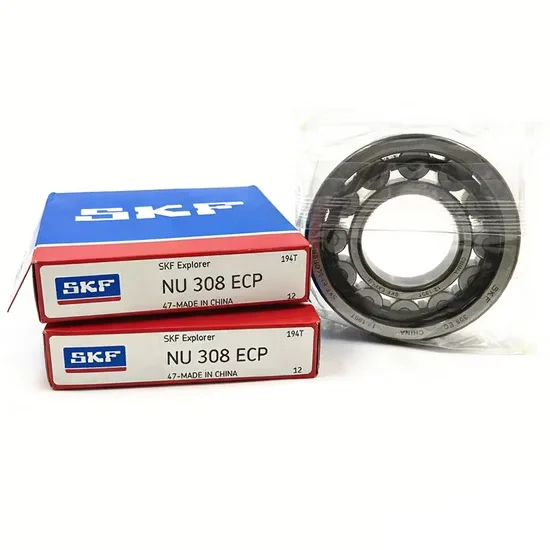 02 Cylindrical Roller Bearings SKF NU308ECP Cylindrical Roller Bearing for Gearbox Reducer OEM View model details
 03 Deep Groove Ball Bearings Genuine SKF Deep Groove Ball Bearings 6201-6206 OEM ODM Supply View model details
 04 Tapered Roller Bearing SKF 32218 Conical Roller Bearing 90x160x42.5mm for Wind Power & Automotive OEM Applications View model details
Applications
Where these SKF bearings are used
Keep reading
Related SKF bearing selection guides
More practical notes on SKF designations, precision items and project bearing lists from Project Purchasing Company.
 Procurement & Trade FAQs · · 8 min read Ball Bearing Supplier to Latin America: Genuine SKF, FAG, NSK Wholesale Sourcing genuine ball bearings for Latin America demands strict customs compliance to avoid costly port delays. Master precise HS codes and Certificates of Origin… Read the guide
 Procurement & Trade FAQs · · 8 min read Genuine Ball Bearing Supply to Southeast Asia Wholesale Master Ball Bearing Supply to Southeast Asia by prioritizing customs compliance and verified authenticity over marginal price differences. Learn how mixed-brand consolidation, accurate HS… Read the guide
 Procurement & Trade FAQs · · 7 min read Genuine Ball Bearings for Africa & Middle East Wholesale Supplier Secure genuine ball bearing supply to Africa and Middle East with strict customs compliance and authentic mixed-brand consolidation. Master SONCAP clearance, optimize container loading,… Read the guide

Request a quote
Send your SKF list. Get one itemized written quote.
Project Purchasing Company supplies SKF ball, roller, precision and housed bearing units to distributors, repair workshops and project buyers worldwide. Standard and precision items are priced line by line, with accessories kept on the same quote.