
SKF-Spec OEM Bearing Load Rating Calculation | Wholesale Supplier
Higher load ratings do not automatically mean longer bearing life—oversizing introduces unnecessary weight, cost, and misalignment risks.
The SKF-spec OEM bearing load rating calculation follows ISO 281 for dynamic loads and ISO 76 for static loads, combining the basic rating formula with application-specific correction factors to match real operating conditions.
I still remember standing on the floor at Hannover Messe, watching a procurement team from a European automotive plant argue with their supplier over a bearing spec sheet. The supplier had quoted a dynamic load rating that looked impressive on paper, but when I ran the numbers using the actual application parameters, the calculated life fell short by a wide margin. The root cause was not the bearing quality—it was the calculation method. That plant had been replacing bearings on their conveyor line every few months, and the downtime cost them far more than the bearings themselves. Once we recalculated using the proper SKF-spec OEM bearing load rating calculation framework, the replacement frequency dropped noticeably.
Getting the SKF-spec OEM bearing load rating calculation right is not about memorizing formulas. It is about understanding which variables actually matter in your specific operating environment and applying the correct correction factors. Let me walk you through the process step by step.
What Exactly Is the SKF-Spec OEM Bearing Load Rating?
The load rating defines the maximum load a bearing can sustain under defined conditions before fatigue or permanent deformation occurs, split into dynamic and static categories.
The basic dynamic load rating, denoted as C, represents the constant radial load (for radial bearings) or axial load (for thrust bearings) that a group of identical bearings can endure for a basic rating life of one million revolutions. This value is published in manufacturer product tables and serves as the starting point for any SKF-spec OEM bearing load rating calculation.
The basic static load rating, denoted as C0, applies when the bearing is stationary, oscillating at very low speeds, or subjected to slow steady loads. It is based on the maximum contact stress at the most heavily loaded rolling element–raceway contact zone.
Here is where most buyers get confused. The published C and C0 values assume ideal laboratory conditions. Real-world operation introduces contamination, lubrication deficiencies, misalignment, and variable loading patterns. The SKF-spec OEM bearing load rating calculation accounts for these through correction factors—specifically the life modification factor aSKF, which incorporates lubrication condition (viscosity ratio) and contamination level.
A Middle East mining operator once received a batch of spherical roller bearings for their primary crusher. The published dynamic load rating was sufficient on paper. But the operating environment involved heavy vibration, marginal lubrication, and fine particulate contamination. Without applying the appropriate contamination factor and viscosity ratio correction, the calculated life was meaningless. After we reran the SKF-spec OEM bearing load rating calculation with site-specific correction factors, the revised life estimate told a very different story—and the bearing specification was upgraded accordingly.
How to Calculate the Basic Dynamic Load Rating Per ISO 281
The basic dynamic load rating calculation uses the standard life equation L10 = (C/P)^p, where p equals 3 for ball bearings and 10/3 for roller bearings.
This is the foundation of any SKF-spec OEM bearing load rating calculation. The equivalent dynamic bearing load P combines the actual radial load Fr and axial load Fa using bearing-specific calculation factors X and Y, which are published in product tables for each bearing series.
Here is the step-by-step process:
-
Determine the actual operating loads. Measure or calculate the radial load Fr and axial load Fa acting on the bearing in your specific application. Include all external forces—belt tension, gear mesh forces, thermal expansion effects, and structural loads.
-
Calculate the equivalent dynamic load P. Use the formula P = X·Fr + Y·Fa, where X and Y are obtained from the bearing manufacturer’s product table based on the Fa/Fr ratio relative to the limiting value e.
-
Apply the basic life equation. Calculate L10 = (C/P)^p. The result gives the basic rating life in millions of revolutions. To convert to operating hours, use L10h = (10^6 / 60n) × L10, where n is the rotational speed in rpm.
-
Apply the life modification factor aSKF. This is where the SKF-spec OEM bearing load rating calculation diverges from a simple textbook exercise. The modified life Lnm = a1 × aSKF × L10 accounts for fatigue load limit Pu, lubrication condition (viscosity ratio κ), and contamination level ηc.
-
Verify against application requirements. Compare the modified rating life Lnm against the required service life for your application. If Lnm falls short, either select a larger bearing or improve operating conditions—better sealing, enhanced lubrication, or reduced contamination ingress.
A Latin American agricultural machinery distributor learned this the hard way. They had been specifying bearings for harvester equipment using only the basic L10 calculation, ignoring the aSKF correction entirely. In dusty field conditions with intermittent lubrication, the actual bearing life was a fraction of the calculated value. Customer complaints mounted. Once we applied the full SKF-spec OEM bearing load rating calculation with proper contamination and lubrication factors, the corrected life estimates matched field experience—and the bearing specifications were adjusted to restore reliability.
How to Calculate the Basic Static Load Rating Per ISO 76
The static load rating calculation ensures the bearing can withstand peak loads without permanent deformation exceeding acceptable limits.
Static load assessment becomes critical when the bearing operates at very low speeds, remains stationary under load for extended periods, or experiences severe shock loads. The SKF-spec OEM bearing load rating calculation for static conditions uses a different framework than dynamic calculations.
The basic static load rating C0 is defined as the static load that corresponds to a calculated contact stress at the center of the most heavily loaded rolling element–raceway contact. The threshold stress values differ by bearing type: 4,600 MPa for self-aligning ball bearings, 4,200 MPa for all other ball bearings, and 4,000 MPa for all roller bearings.
The calculation process follows these steps:
-
Identify the maximum static load. Determine the highest combined radial and axial load the bearing will experience, including startup shock loads, emergency stops, and peak operational forces.
-
Calculate the equivalent static load P0. Use P0 = X0·Fr + Y0·Fa, where X0 and Y0 are static load factors from the product table.
-
Determine the static safety factor s0. Calculate s0 = C0 / P0. The required minimum value depends on the application—typically s0 ≥ 1 for smooth operation with normal requirements, s0 ≥ 1.5 for normal requirements with moderate shock loads, and higher values for heavy shock or critical applications.
-
Verify and adjust. If the calculated safety factor is insufficient, select a bearing with a higher C0 value or reconsider the load conditions.
An automotive assembly plant in Central Europe faced repeated failures in their robotic welding station turntables. The bearings were operating at very slow oscillating speeds with heavy static loads from the welding fixtures. The dynamic load calculation had indicated adequate life, but the static assessment had been skipped entirely. When we performed the SKF-spec OEM bearing load rating calculation for static conditions, the safety factor was well below the minimum threshold. Raceway indentation from static overload was the confirmed failure mode. Upgrading to bearings with adequate static load capacity eliminated the problem.
What Factors Actually Influence Bearing Life Beyond Load Rating?
Load is only one variable—lubrication, contamination, installation quality, and operating temperature collectively determine whether a bearing reaches its calculated life.
The SKF-spec OEM bearing load rating calculation produces a theoretical life estimate. Actual service life depends on how well the operating environment matches the assumptions built into that calculation.
Lubrication condition is arguably the most influential factor after load itself. The viscosity ratio κ—the ratio of actual lubricant film thickness to the theoretical film thickness required for full elastohydrodynamic separation—directly affects the aSKF correction factor. Inadequate lubrication accelerates surface fatigue and wear.
Contamination level determines the ηc factor in the modified life equation. Hard particles entering the lubricant create indentations on raceways that act as stress concentration points, initiating premature fatigue cracks. Sealing effectiveness and filtration quality are therefore integral to the SKF-spec OEM bearing load rating calculation outcome.
Installation quality affects internal clearance, preload, and alignment. Improper mounting—using excessive force, incorrect heating temperatures, or misaligned housings—introduces additional stresses that no calculation can compensate for. A bearing installed with damaged rolling elements or raceways will never achieve its rated life regardless of how accurate the SKF-spec OEM bearing load rating calculation was.
Operating temperature influences material hardness, internal clearance, and lubricant properties. Elevated temperatures reduce lubricant viscosity and can alter bearing internal geometry through thermal expansion.
A wind farm operator in Northern Europe discovered this interplay firsthand. Their gearbox bearings were failing well before the calculated L10 life. Investigation revealed that the lubricant viscosity at operating temperature was lower than assumed, reducing the viscosity ratio κ and consequently the aSKF factor. The SKF-spec OEM bearing load rating calculation had been performed with a viscosity ratio that did not reflect actual hot-running conditions. Correcting the lubricant specification and recalculating with realistic operating temperatures brought the modified life estimate in line with field performance.
How to Select the Right Bearing Based on Load Rating Calculations?
Selection is an iterative process—match the calculated load requirements against bearing catalog data, then validate with application-specific correction factors.
The SKF-spec OEM bearing load rating calculation is not a one-shot exercise. It is an iterative loop between application requirements and bearing selection.
Start by establishing the application parameters: load magnitudes and directions, speed range, required service life, operating temperature range, lubrication method, and contamination exposure. These inputs feed directly into the calculation framework.
Next, identify candidate bearings from the product catalog. Compare the required dynamic load capacity C against published values, and verify the static load capacity C0 against peak loads. At this stage, cross-referencing becomes valuable—if the original specification calls for a particular brand’s bearing, equivalent alternatives from other manufacturers with matching dimensional and load rating specifications can provide procurement flexibility.
Then apply the full SKF-spec OEM bearing load rating calculation with application-specific correction factors. The modified life Lnm must meet or exceed the required service life. If it does not, either select a larger bearing or improve operating conditions.
Finally, verify ancillary requirements: sealing type, cage material, internal clearance class, lubrication compatibility, and mounting dimensions. These details determine whether the bearing will perform as calculated in the real world.
We support this selection process across our full product range—deep groove ball bearings, cylindrical roller bearings, self-aligning roller bearings, tapered roller bearings, angular contact ball bearings, and thrust bearings. Our catalog covers standard series including popular models such as 6205, 6206, 6305, 22320, 32218, 30206, NU205, and 22308. We provide complete cross-reference interchange charts across all major brands, so if your current specification references a particular manufacturer’s part number, we can identify the equivalent alternative in our inventory. Our technical team performs application-based bearing selection using the SKF-spec OEM bearing load rating calculation framework to ensure the recommended bearing matches your actual operating conditions—not just the published catalog rating.
Conclusion
Accurate SKF-spec OEM bearing load rating calculation requires both the standard formulas and honest assessment of real operating conditions. The basic equations from ISO 281 and ISO 76 provide the framework, but the correction factors for lubrication, contamination, and application-specific conditions determine whether the calculated life reflects reality. Skipping these corrections leads to under-specification and premature failure. Oversizing without justification leads to unnecessary cost and weight. The goal is a bearing selection that matches the actual operating environment—validated through calculation, confirmed through experience.
Products in this article
SKF bearings mentioned above
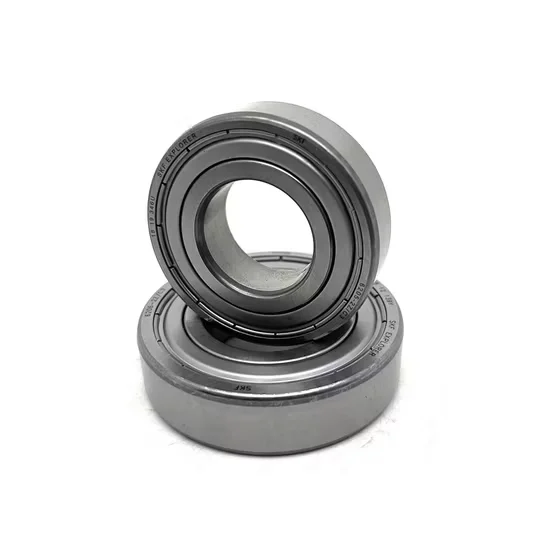 01 Deep Groove Ball Bearings SKF 6204 6205 6206 Deep Groove Ball Bearing Spare Parts View model details
 02 Deep Groove Ball Bearings Original SKF Deep Groove Ball Bearing 6000 6001 6308 6309 6204 6205 6206 for Auto Parts View model details
 03 Agricultural Machinery Bearings X&S 80607kt 6301-2RS 6205-2Z 6206-2Z Deep Groove Ball Bearing View model details
 04 Deep Groove Ball Bearings SKF 6205 6206 ZZ C3 Deep Groove Ball Bearing for Automobile Industry View model details
Applications
Where these SKF bearings are used
Keep reading
Related SKF bearing selection guides
More practical notes on SKF designations, precision items and project bearing lists from Project Purchasing Company.
 Technical Resources · · 6 min read Ball Bearing Weight Table: Wholesale Supplier for Bulk Orders A precise ball bearing weight table is essential for calculating freight costs and avoiding port overweight penalties. Distinguish between net and gross weight to… Read the guide
 Technical Resources · · 7 min read Motor Bearing Lookup by Power | Genuine Wholesale Supplier Stop relying on motor bearing lookup by power alone to avoid premature failures from shock loads and heat. Calculate real dynamic requirements and match… Read the guide Technical Resources · · 7 min read Ball Bearing Load Rating Reference Table: Wholesale Supplier Master the Ball Bearing Load Rating Reference Table to prevent premature failures caused by misinterpreting dynamic and static limits. Learn to calculate equivalent loads… Read the guide

Request a quote
Send your SKF list. Get one itemized written quote.
Project Purchasing Company supplies SKF ball, roller, precision and housed bearing units to distributors, repair workshops and project buyers worldwide. Standard and precision items are priced line by line, with accessories kept on the same quote.