
Small Appliance Bearing Upgrade: Wholesale Supplier for Bulk OEM Orders
Swapping to a cheaper bearing model does not guarantee lower costs.
A successful small appliance bearing upgrade demands rigorous acoustic validation and strict batch consistency checks, not just a simple part number replacement. Ignoring these factors leads to higher warranty claims and brand damage, regardless of the initial unit price savings.
The humid air in Binh Duong always carries the scent of hot plastic and ozone. Standing on the factory floor, watching rows of fan motors spin up for final inspection, the difference between a smooth hum and a harsh grind is immediate. A local OEM recently faced a crisis after switching to a cost-effective alternative for their deep groove ball bearing for fan motor applications. The initial procurement report looked promising, with significant upfront savings. However, within months, the return rate climbed into double digits. Customers complained about noise that developed after just a few weeks of use. The issue was not the bearing design itself, but the lack of OEM bearing noise reduction validation during the prototyping phase. The team had assumed that matching the dimensions was enough. They missed the critical nuance of internal clearance and grease compatibility under sustained high-speed operation. This experience highlights why a small appliance bearing upgrade is a technical challenge, not just a purchasing decision.
Transitioning from manual observations to structured testing reveals the hidden risks in bulk sourcing.
Why Do Simple Bearing Replacements Fail in Small Appliances?
Dimensional compatibility is only the baseline, not the performance guarantee.
Many engineers assume that if a bearing fits the shaft and housing, it will perform adequately. This is a dangerous oversimplification in the context of small appliances. The operational environment of a fan motor or a blender involves high rotational speeds, varying thermal loads, and strict acoustic requirements. A bearing that runs quietly in a low-speed industrial conveyor may generate unacceptable vibration in a household fan. The failure often stems from ignoring the dynamic load rating and the specific grease formulation required for high-RPM applications.
Consider the case of a Southeast Asian manufacturer producing air circulators. They replaced a premium imported bearing with a generic equivalent to cut costs. The new bearing had the same outer diameter, inner diameter, and width. Yet, the noise level increased noticeably after a short running-in period. Investigation revealed that the internal radial clearance was not optimized for the thermal expansion of the plastic housing. As the motor heated up, the clearance tightened, leading to increased friction and heat generation. This cycle accelerated wear and created a distinct whining sound. The cost of handling returns and replacing units far exceeded the initial savings from the cheaper components. This scenario is common when companies treat a small appliance bearing upgrade as a mere commodity swap rather than an engineering revision.
The root cause often lies in the manufacturing tolerances and material quality. Lower-cost alternatives may use steel with higher inclusion levels, which affects fatigue life and smoothness. Without proper heat treatment and precision grinding, the raceways can develop micro-irregularities that amplify vibration. These defects are not visible to the naked eye but are easily detected by sensitive acoustic sensors. Therefore, relying solely on visual inspection or basic dimensional checks is insufficient. A comprehensive approach requires understanding the interplay between mechanical design, material science, and operational conditions.
How to Validate Bearing Upgrades for Fan Motors?
Rigorous acoustic and lifecycle testing is mandatory before mass production.
Validation must go beyond static measurements. Dynamic testing under realistic operating conditions is essential to identify potential issues early. This involves running the motor at various speeds and loads while monitoring vibration and noise levels. Specialized equipment can detect frequencies associated with bearing defects, such as ball pass frequency or cage resonance.
A structured validation process includes several key steps. First, conduct a baseline test with the original bearing to establish reference noise and vibration levels. Next, install the candidate bearing and run the motor through a full duty cycle. Monitor the temperature rise and current consumption, as increases in either can indicate excessive friction. Use acoustic cameras or microphones to map the noise source and ensure it originates from the bearing rather than other components like the fan blades or housing.
| Test Parameter | Baseline (Original) | Candidate (Upgrade) | Acceptance Criteria |
|---|---|---|---|
| Noise Level (dB) | Reference Value | Measured Value | No significant increase |
| Vibration Velocity | Reference Value | Measured Value | Within ISO limits |
| Temperature Rise | Reference Value | Measured Value | Minimal deviation |
| Current Draw | Reference Value | Measured Value | Stable operation |
In one instance, a batch of bearings passed initial static tests but failed during extended lifecycle testing. After several hundred hours of operation, the noise level increased substantially due to grease degradation. The original specification called for a high-temperature synthetic grease, but the alternative used a standard mineral-based lubricant. This mismatch led to premature oxidation and loss of lubricity. Implementing a robust testing protocol would have caught this issue before shipment. For any small appliance bearing upgrade, such diligence prevents costly field failures and protects brand reputation.
Testing also helps verify the consistency of the supply chain. Even if a sample passes, subsequent batches may vary. Regular sampling and testing of incoming goods ensure that the quality remains stable over time. This is particularly important when working with multiple suppliers or when switching sources.
What Role Does Batch Consistency Play in OEM Quality?
Uniform batch quality prevents unexpected noise variations in final products.
Batch consistency is often overlooked until it causes a production crisis. Two bearings with the same part number from different production lots can exhibit distinct acoustic performance. This variation arises from differences in raw material sources, heat treatment processes, and grinding parameters. For an OEM, such inconsistency is unacceptable. It leads to unpredictable product quality and complicates troubleshooting.
A European distributor once reported that a specific bearing model performed well in one quarter but caused noise complaints in the next. Analysis showed that the supplier had changed the steel supplier without notification. The new steel had slightly different hardness and microstructure, affecting the bearing’s damping characteristics. While the dimensions remained within tolerance, the acoustic behavior changed. This incident underscores the need for strict supplier qualification and change management protocols.
When executing a small appliance bearing upgrade, it is crucial to demand full traceability documentation. This includes certificates of material composition, heat treatment records, and dimensional inspection reports. Verifying that each batch meets the same specifications ensures that the final product performs consistently. Without this level of control, manufacturers risk introducing variability that undermines their quality standards.
Moreover, consistent quality reduces the need for extensive incoming inspection. If a supplier has a proven track record of batch consistency, the OEM can rely on their quality assurance processes. This trust allows for smoother production flows and fewer delays. In contrast, inconsistent supplies require rigorous screening of every lot, increasing labor costs and lead times.
How to Source Reliable Bearings for Small Appliances?
Partnering with full-range suppliers ensures genuine quality and technical support.
Finding a reliable partner is as important as selecting the right component. A reputable supplier offers more than just products; they provide technical expertise and supply chain stability. Look for partners who maintain genuine inventory from established global brands. This ensures access to high-quality components with verified performance data.
A professional global full-range bearing supplier can offer flexible solutions tailored to OEM needs. They provide access to a wide variety of brands and types, allowing for optimal selection based on specific application requirements. Whether you need deep groove ball bearings for fan motors or specialized precision bearings for high-speed appliances, a diverse inventory enables quick response to changing demands. Additionally, technical support services help engineers navigate the complexities of bearing selection. Experts can advise on clearance classes, lubrication types, and mounting procedures to optimize performance.
For bulk orders, consolidation services simplify logistics. Instead of managing multiple suppliers, OEMs can source all their bearing needs from a single partner. This reduces administrative burden and improves supply chain visibility. Furthermore, flexible minimum order quantities accommodate both large production runs and smaller trial orders. This flexibility is vital for testing new designs or managing inventory levels efficiently.
When considering a small appliance bearing upgrade, evaluate suppliers based on their ability to provide consistent quality and technical assistance. A partner who understands the nuances of appliance manufacturing can help avoid common pitfalls and ensure long-term success. Their experience with similar applications offers valuable insights that enhance product reliability and customer satisfaction.
Conclusion
Quality consistency outweighs initial price savings in appliance manufacturing.
A successful small appliance bearing upgrade requires a holistic approach that integrates technical validation, batch consistency, and reliable sourcing. Neglecting these elements leads to higher total costs and brand erosion. By prioritizing acoustic performance and partnering with knowledgeable suppliers, OEMs can deliver superior products that meet consumer expectations for quiet and durable operation.
Products in this article
SKF bearings mentioned above
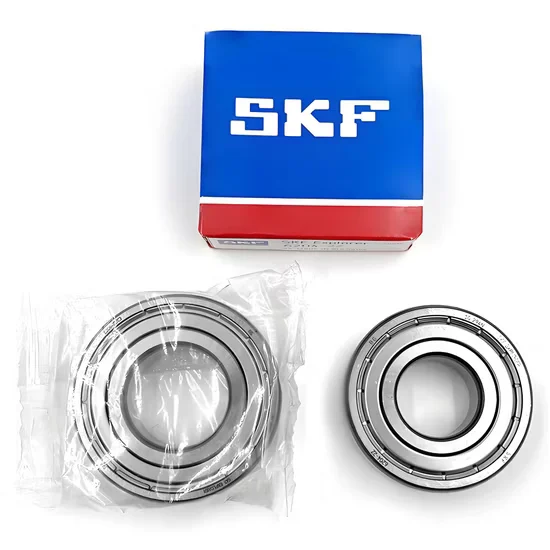 01 Deep Groove Ball Bearings SKF 6200 6300 Deep Groove Ball Bearing Genuine Wholesale Supplier View model details
 02 Deep Groove Ball Bearings SKF 608 Deep Groove Ball Bearing Genuine Stock Wholesale Supplier View model details
 03 Cylindrical Roller Bearings Nu222 Ec J/C3 Single Row Cylindrical Roller Bearing Zhaoyun Wholesale Supplier View model details
 04 Cylindrical Roller Bearings Zhaoyun Nu312 Ec P/C3 Double Row Cylindrical Roller Bearing Wholesale Supplier View model details
Applications
Where these SKF bearings are used
Keep reading
Related SKF bearing selection guides
More practical notes on SKF designations, precision items and project bearing lists from Project Purchasing Company.
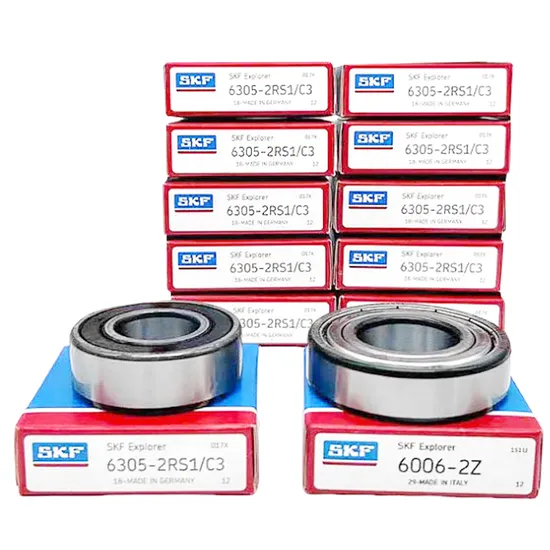 News & Cases · · 7 min read Energy Efficiency Rules 2026 for Motors Bearing Supplier Comply with Energy Efficiency Rules 2026 for Motors by selecting bearings with optimized C3 or C4 clearances to prevent thermal binding. Standard clearance causes… Read the guide
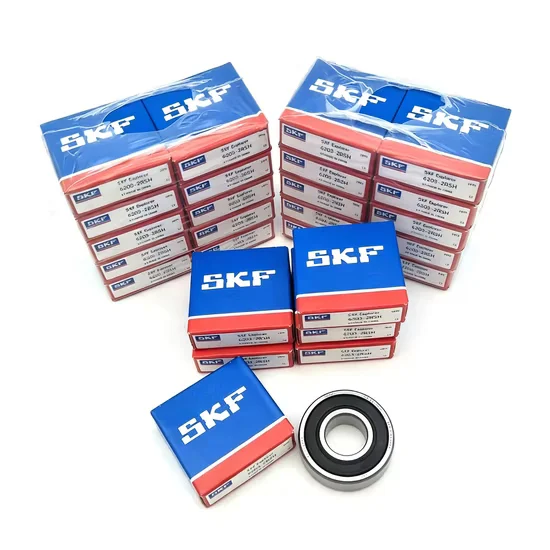 News & Cases · · 8 min read Small Motor Demand 2026: Appliances and Tools Bearings Wholesale Supplier Meeting the small motor demand in 2026 requires matching bearing specifications to actual high-speed and high-temperature operating conditions rather than relying solely on standard… Read the guide
 News & Cases · · 7 min read Electric Motor Repair Bearings: Wholesale Supplier for Bulk MRO & OEM Orders Master the Electric Motor Repair Market 2026 by shifting from reactive part-swapping to predictive maintenance with precise bearing selection. Prevent catastrophic stator damage by… Read the guide

Request a quote
Send your SKF list. Get one itemized written quote.
Project Purchasing Company supplies SKF ball, roller, precision and housed bearing units to distributors, repair workshops and project buyers worldwide. Standard and precision items are priced line by line, with accessories kept on the same quote.