
Custom OEM Bearing BOM Confidentiality Terms – ISO 9001 Factory
A full BOM is not a technical specification—it is a commercial firewall.
For custom OEM bearings, buyers must clearly define which parameters fall under contractual confidentiality protection, which should remain internal to the factory, and ensure procurement requirements are never exploited by third parties. The key lies in layered BOM management: selection parameters (dimensions, load ratings, basic type) can be disclosed openly, while process parameters (material grades, heat treatment specs, internal clearance tolerances, seal designs) must be shielded through embedded confidentiality clauses directly within quotation sheets—not just standalone NDAs.
I still remember a shipment that nearly cost us a long-term partnership. A distributor in Latin America forwarded us a complete BOM for a custom deep groove ball bearing series—material grade, internal clearance class, seal type, cage material, even the specific grease fill quantity. I compiled everything into a single quotation sheet, the way most domestic factories do. Weeks later, that same distributor’s local competitor came back with an identical spec sheet and asked for a price match. Our parameters had become someone else’s free selection manual. That incident reshaped how I approach every custom order today.
The lesson was simple but painful: in international bearing trade, information discipline matters as much as dimensional precision. Let me walk through how to structure this properly.
What Parameters Should Be in a Custom OEM Bearing BOM?
BOM parameters must be分层 managed—selection-critical data stays visible, process-critical data stays protected.
A typical custom OEM bearing BOM contains dozens of data points, but not all carry the same commercial sensitivity. The industry-standard approach separates them into two tiers:
Tier 1: Open Selection Parameters
These are parameters any competent buyer or engineer needs to verify fit, function, and interchangeability:
- Basic bearing type and series designation
- Boundary dimensions (bore, OD, width)
- Basic dynamic and static load ratings
- Limiting speed range
- Application environment indicators (temperature range, contamination level)
These parameters are often dictated by ISO standards or are directly cross-referenceable against mainstream brands such as SKF, NSK, FAG, TIMKEN, NTN, or KOYO. Disclosing them carries minimal IP risk.
Tier 2: Protected Process Parameters
These define how the bearing is actually made and perform:
- Specific steel grade and melting process (e.g., vacuum degassing level)
- Heat treatment cycle parameters (carbon potential, quenching medium, tempering duration)
- Internal clearance tolerance band beyond standard C3/C4 designation
- Seal lip material compound and geometry
- Cage design specifics (rivet pattern, pocket clearance)
- Grease type and fill weight tolerance
This is where manufacturing know-how lives. Reveal these freely, and you hand competitors a recipe.
A practical test I use: if a parameter can be verified by the buyer through incoming inspection or simple measurement, it belongs in Tier 1. If it requires factory-level test equipment or metallurgical analysis to confirm, it belongs in Tier 2 and should only be disclosed under explicit contractual restriction.
Why Full BOM Disclosure Risks Your Competitive Advantage?
A complete BOM handed over without restriction is functionally identical to a free engineering consultation for your competitors.
Consider a scenario that plays out repeatedly in Middle East industrial procurement. A buyer requests a custom tapered roller bearing for a conveyor system and asks the supplier to provide the full material list, clearance specification, and seal configuration. The supplier complies, treating transparency as professionalism. Within months, three competing suppliers in the region are quoting the same specification—sourced from the original BOM that circulated through the buyer’s procurement network. The original supplier’s pricing advantage evaporates, and the buyer now has multiple vendors bidding against each other using the original supplier’s own engineering data.
This is not hypothetical. The mechanism is straightforward:
- Procurement teams often share RFQ packages across multiple vendors for comparison
- BOM details embedded in quotation sheets travel with those packages
- Lower-cost manufacturers reverse-engineer the specification without investing in application engineering
- The original supplier bears the full cost of technical development but receives none of the competitive protection
The irony is that buyers who demand full BOM transparency often complain later about inconsistent quality from cheaper alternatives—because those alternatives lack the process control that made the original specification work.
For distributors operating in competitive regional markets, this dynamic is especially damaging. Your custom bearing specification, once leaked, becomes a commodity document. The differentiation you built through application-specific engineering disappears overnight.
How to Embed Confidentiality Terms in Quotation Sheets?
A standalone NDA is necessary but insufficient—confidentiality clauses must be embedded directly into commercial documents with specific enforcement triggers.
Most factories treat confidentiality as a separate legal exercise: sign an NDA at the beginning of the relationship, then proceed with normal business. The problem is that NDAs are generic. They do not specify which parameters are restricted, what constitutes misuse, or what happens when a buyer forwards your quotation to a competitor for price matching.
Effective confidentiality in OEM bearing transactions requires embedding specific clauses directly into the quotation sheet itself:
Clause 1: Parameter Usage Restriction
State explicitly that the technical parameters provided in the quotation are intended solely for evaluation of the quoting supplier’s capability and pricing. Redistribution to third parties for comparative sourcing is prohibited without written consent.
Clause 2: Reverse Engineering Prohibition
Specify that the buyer shall not use the provided BOM data, material specifications, or process parameters to solicit identical or substantially similar products from other manufacturers.
Clause 3: Validity and Expiry
Confidentiality obligations should survive the quotation validity period. A typical term is multi-year protection even if the order is not placed.
Clause 4: Breach Consequences
Define measurable consequences—such as forfeiture of quoted pricing, exclusion from future tender consideration, or specific penalty structures tied to the commercial value of the protected information.
I have seen quotation sheets where these clauses were printed in small font at the bottom of the technical data page. Buyers signed the quotation, and the clauses became contractually binding. This is far more enforceable than a generic NDA that neither party reads carefully.
For buyers, the benefit is equally clear: when a supplier embeds confidentiality terms in the quotation, it signals that the supplier takes IP protection seriously—and that the buyer’s own application data will be handled with similar discipline.
What Should Buyers Verify Before Signing OEM Agreements?
Buyers must confirm three elements before committing: the scope of confidentiality, the liability structure for breaches, and the permitted usage boundaries for technical data.
As an ISO 9001 certified full-category bearing factory, we have developed a layered BOM management approach that supports distributors with cross-reference selection while protecting both parties’ commercial interests through standardized confidentiality terms. This framework did not emerge from legal templates—it came from years of watching good partnerships deteriorate over preventable information disputes.
When evaluating an OEM bearing supplier, buyers should verify:
Scope Definition
Does the agreement clearly identify which parameters are classified as confidential? A vague statement like "all technical information is confidential" is unenforceable in practice. The agreement should list specific parameter categories—material grades, heat treatment records, internal clearance test data—and define the protection level for each.
Liability Structure
What happens if confidential data is misused? The agreement should specify whether liability falls on the receiving party, whether downstream subcontractors are bound by the same terms, and whether there is a statute of limitations on claims. In cross-border transactions, jurisdiction and dispute resolution mechanisms must be explicitly stated.
Usage Boundaries
Can the buyer use the supplier’s BOM data to qualify an alternative source? Can the supplier use the buyer’s application data to develop competing products for other customers? These boundaries must be negotiated upfront, not after a breach occurs.
A practical approach we follow is to provide a performance equivalence table rather than a full BOM. For example, instead of disclosing a specific steel grade designation, we state that the material meets certain cleanliness and hardness requirements per international standards. This satisfies the buyer’s need for quality assurance without exposing proprietary process choices.
How to Balance Technical Transparency with IP Protection?
Use performance benchmarking instead of full BOM disclosure—this satisfies selection requirements while shielding core manufacturing knowledge.
The tension between transparency and protection is real, but it is not unsolvable. The key is to shift the conversation from "what materials and processes are used" to "what performance outcomes are guaranteed."
For instance, instead of listing a specific grease type and fill quantity, a supplier can state that the bearing achieves a certain operating temperature range and relubrication interval under defined conditions. Instead of disclosing the exact seal lip compound, the supplier can provide salt-spray test endurance data and contamination ingress resistance ratings.
This approach serves multiple purposes:
- It gives buyers the data they need for application validation
- It prevents competitors from replicating the exact manufacturing recipe
- It shifts quality accountability to measurable outcomes rather than input specifications
- It allows the supplier to optimize internal processes without renegotiating the commercial agreement every time a process improvement is made
For MRO buyers and maintenance operations, this is particularly valuable. They need to know that a replacement bearing will perform equivalently in the application—not the exact chemical composition of the cage material. A well-structured performance equivalence statement, backed by test certification, provides confidence without over-disclosure.
In our experience serving distributors across multiple regions, this balanced approach has reduced quotation response time noticeably while eliminating the IP exposure that previously accompanied full BOM sharing. The buyer gets faster sourcing decisions; the supplier retains competitive differentiation.
Conclusion
Custom OEM bearing BOM confidentiality is not about hiding information—it is about controlling which information flows where, under what conditions, and with what consequences for misuse. Layered parameter classification, embedded quotation clauses, and performance-based disclosure together form a practical framework that protects both buyer and supplier interests. In international bearing trade, disciplined information management is as critical as dimensional accuracy.
Products in this article
SKF bearings mentioned above
 01 Thrust Ball Bearing SKF Thrust Ball Bearing 51124 51126 51128 with ISO9001 Certification for Industrial Machinery View model details
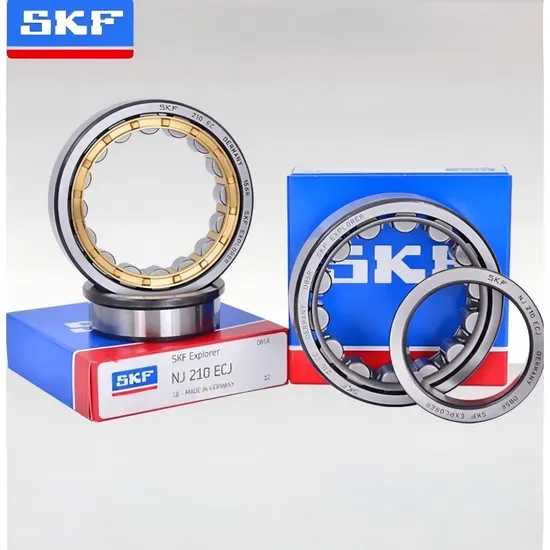 02 Cylindrical Roller Bearing ISO N1014 PHA/SP Cylindrical Roller Bearing, Single Row Open Type for Automotive Applications View model details
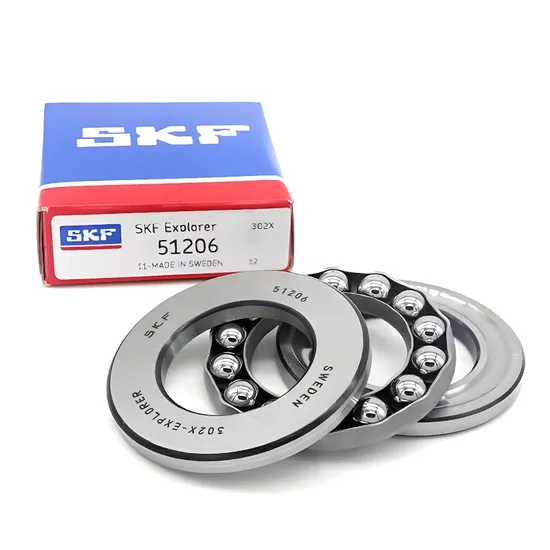 03 Thrust Ball Bearing SKF 51122 Thrust Ball Bearing 110x145x25mm ISO9001 Certified for Industrial Machinery View model details
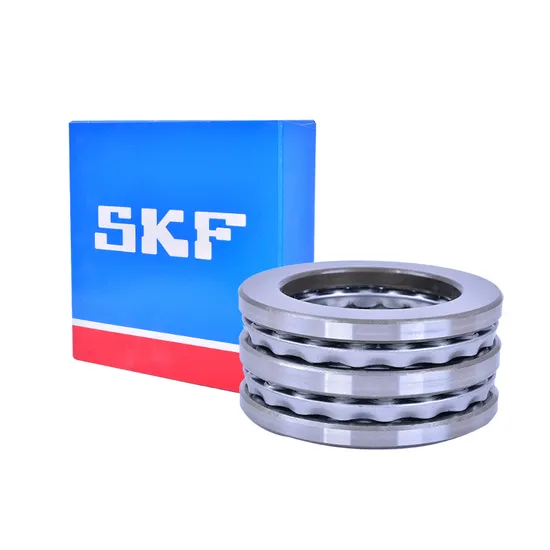 04 Thrust Ball Bearing Thrust Ball Bearing 511/500 P5 Precision for Industrial Machinery with ISO9001 Certification View model details
Applications
Where these SKF bearings are used
Keep reading
Related SKF bearing selection guides
More practical notes on SKF designations, precision items and project bearing lists from Project Purchasing Company.
 Procurement & Trade FAQs · · 7 min read Ball Bearing Supplier to Latin America: Genuine SKF, FAG, NSK Wholesale Sourcing genuine ball bearings for Latin America demands strict customs compliance to avoid costly port delays. Master precise HS codes and Certificates of Origin… Read the guide
 Procurement & Trade FAQs · · 8 min read Genuine Ball Bearing Supply to Southeast Asia Wholesale Master Ball Bearing Supply to Southeast Asia by prioritizing customs compliance and verified authenticity over marginal price differences. Learn how mixed-brand consolidation, accurate HS… Read the guide
 Procurement & Trade FAQs · · 7 min read Genuine Ball Bearings for Africa & Middle East Wholesale Supplier Secure genuine ball bearing supply to Africa and Middle East with strict customs compliance and authentic mixed-brand consolidation. Master SONCAP clearance, optimize container loading,… Read the guide

Request a quote
Send your SKF list. Get one itemized written quote.
Project Purchasing Company supplies SKF ball, roller, precision and housed bearing units to distributors, repair workshops and project buyers worldwide. Standard and precision items are priced line by line, with accessories kept on the same quote.