
6205 6206 6305 22320 32218 30206 NU205 22308 SKF-Grade Private Label Bearings Wholesale Supplier
型号相同不等于轴承相同。
SKF-grade and SNR-manufactured self-aligning roller bearings share the same basic dimensions, but differ fundamentally in cage structure, internal clearance tolerance, and vibration behavior under heavy load. Brand interchange is not a model-number exercise; it requires verification of cage type, clearance class, chamfer design, and the actual load profile at the mounting position.
蒙特雷那个客户到现在还时不时拿这事敲打我。当初他拿SKF的22320来询价,说用在振动筛上,我按型号表直接配了同尺寸的货发过去,结果装上去跑了不到两个月,客户电话就打过来了——振动值飙到原装的三倍,现场工程师指着保持架说材质不对。那批货全退,运费加滞港费够我心疼好几个月。从那以后我就明白,品牌互换不是对着型号表填空,振动筛、破碎机这种重载工况,倒角、游隙、保持架结构差一点就是两回事。现在客户拿SKF、FAG、NSK的号来问,我第一句先问装机位置和载荷类型,答不上来我宁可不接单。
This is why every inquiry I handle as an SKF-Grade Private Label Bearings Wholesale Supplier starts with application context, not part numbers.
What Really Separates SKF-Grade from SNR Manufacturing in Self-Aligning Roller Bearings?
The difference lies in cage design, clearance tolerance band, and raceway curvature — not in the outer dimensions listed on the catalog page.
When a buyer searches for an SKF alternative bearing or compares SKF grade bearing vs SNR manufacturing, the datasheet typically shows identical bore, outside diameter, and width. That is where the similarity ends. Internally, SKF-grade units typically use a centered cage design with guided rollers, while many SNR-manufactured equivalents rely on a non-centered cage arrangement. The cage material itself varies: stamped steel cages, machined brass cages, and polymer cages each respond differently to the冲击 loads and high-frequency vibration typical of vibrating screens and crushers.
| Parameter | SKF-Grade Typical Spec | SNR Manufacturing Typical Spec |
|---|---|---|
| Cage Type | Centered, machined brass or stamped steel | Non-centered, often stamped steel |
| Roller Guidance | Cage-guided, symmetrical | Flange-guided or cage-guided |
| Internal Clearance | Tight tolerance band within C3/C4 | Wider tolerance band within C3/C4 |
| Raceway Curvature | Optimized for misalignment compensation | Standard curvature per ISO 15 |
| Chamfer Design | Controlled fillet radius for stress reduction | Standard fillet per drawing |
| Vibration Performance | Noticeably reduced under heavy impact | Standard under moderate load |
A Middle East steel mill once ordered a batch of 22320 units listed as SKF equivalent. The first set ran for an extended period without issue. The second set, sourced from a different supplier under the same model number, began showing early spalling on the inner ring raceway within months. Root cause analysis pointed to a mismatch in cage material — the replacement used a lighter stamped steel cage where the original specified a machined brass cage, leading to insufficient roller guidance under the mill’s high-impact load profile.
The takeaway: SKF 22320 equivalent is not a single product — it is a family of bearings that may or may not match the original depending on which internal variant the supplier actually produces.
How Do You Correctly Cross-Reference SKF, SNR, FAG, and NSK Self-Aligning Roller Bearings?
Cross-referencing requires matching not just the basic model number but also the suffix codes that define cage type, clearance class, and internal design variant.
The SKF model designation system uses a structured suffix code to specify internal design, cage material, clearance, and precision class. For example, a 22320 E/C3 indicates a specific cage design and C3 clearance, while 22320 EJA/VA405 indicates a variant designed for vibrating screen applications with tighter tolerance and special heat treatment. Simply matching "22320" without reading the suffix is how procurement teams end up with bearings that fit mechanically but fail prematurely.
The cross-reference process I follow for every inquiry works in four steps:
- Confirm the full original part number including all suffixes — not just the basic model. A 22320 E/C3 and a 22320 EJA/VA405 are not interchangeable in vibrating screen service.
- Identify the mounting position and load type — radial-heavy, axial-heavy, or combined; steady or impact-loaded; horizontal or vertical shaft.
- Match the cage material and clearance class to the application — vibrating screens typically require C3 or C4 clearance with machined brass or polymer cages; general industrial use may accept stamped steel with C3.
- Verify the supplier can provide traceable documentation — material certificates, clearance inspection reports, and vibration test data per ISO 15243.
A European aggregates producer once sent me an inquiry for FAG 22320 replacement. They had been through two suppliers already. The first supplier matched the basic number but used a stamped steel cage where the original had a machined brass cage — the replacement lasted a fraction of the expected service life. The second supplier matched the cage type but shipped C2 clearance instead of C3, causing excessive internal preload and overheating at operating temperature. When I received the inquiry, I requested the full original suffix, the shaft arrangement drawing, and the operating temperature range before quoting. The correct match was an SKF-Grade Private Label Bearings Wholesale Supplier equivalent with machined brass cage, C3 clearance, and VA405-level vibration screening treatment.
The lesson is straightforward: SKF alternative bearing selection is an engineering task, not a clerical one.
What Should You Watch for in Vibrating Screen and Crusher Bearing Selection?
Heavy-duty applications demand attention to cage material, clearance class, and vibration rating — standard industrial bearings will fail prematurely in these conditions.
Vibrating screens and jaw crushers impose a unique combination of high radial load, continuous impact, and shaft misalignment on self-aligning roller bearings. The bearing must accommodate not just the static and dynamic loads but also the high-frequency vibration that accelerates fatigue in inadequately designed units.
Three parameters matter most:
Cage material. Stamped steel cages are cost-effective for general industrial use but lack the mass and rigidity to maintain proper roller spacing under continuous impact. Machined brass cages provide superior roller guidance and withstand the shock loads typical of crushers. Polymer cages offer a middle ground with reduced weight and good vibration damping, but their temperature ceiling limits use in high-heat environments.
Clearance class. Standard C2 or CN clearance is insufficient for vibrating screen applications where thermal expansion and shaft deflection create additional internal preload. C3 or C4 clearance is typically required to maintain proper internal geometry at operating temperature.
Vibration rating. Bearings designated for vibrating screen service carry a specific suffix indicating enhanced internal geometry, tighter raceway tolerances, and special heat treatment. Substituting a standard industrial bearing in this role will result in vibration levels that escalate rapidly after installation.
A South American mining operation replaced their primary crusher bearings with standard-spec 22320 units to reduce cost. The original bearings had carried a vibrating-screen-grade suffix. The replacement units ran for a short period before vibration levels rose noticeably and inspection revealed early fatigue spalling on both inner and outer ring raceways. The root cause was a combination of insufficient clearance for the thermal profile and a cage design that could not maintain roller alignment under the crusher’s impact loading pattern.
When I receive an inquiry for 22320, 22308, or any self-aligning roller bearing for vibrating screen or crusher service, I do not quote until I have confirmed the cage type, clearance class, and whether the application requires a vibrating-screen-grade variant. This is not upselling — it is preventing the exact failure cycle that costs far more in downtime than the price difference between bearing grades.
How Do You Verify the Quality of Replacement Bearings Before Accepting Delivery?
ISO documentation, material traceability, and vibration test reports are the minimum verification package — anything less leaves the buyer exposed.
The global bearing market contains a wide range of quality tiers, and model numbers alone cannot distinguish them. Buyers sourcing SKF alternative bearing or SNR bearing replacement need a verification framework that goes beyond visual inspection.
The verification package I provide with every shipment as an SKF-Grade Private Label Bearings Wholesale Supplier includes three core documents:
Material certificate. This confirms the steel grade, heat treatment batch, and inclusion cleanliness level. It traces the raw material back to the melt batch, allowing the buyer to verify that the bearing rings and rollers meet the required carbon content and hardness specifications.
Clearance inspection report. This documents the actual measured internal clearance for the batch, confirming it falls within the specified C3, C4, or other clearance class tolerance band. Without this report, the buyer has no way to confirm that the bearing will perform correctly at operating temperature.
Vibration test report. For applications requiring vibrating-screen-grade or precision-grade bearings, this report documents the vibration level measured per ISO 15243, confirming the bearing meets the specified vibration class.
A Middle East distributor once told me that his previous supplier provided "quality certificates" that turned out to be generic templates with no batch-specific data. When his end users began reporting premature failures, he had no way to trace the problem back to specific production batches. He switched to a supplier that provides full batch-level documentation, and his return rate dropped noticeably. Now he requires the same documentation standard from every supplier in his chain.
The verification standard I apply is simple: if a supplier cannot provide batch-specific material certificates, clearance inspection data, and vibration test reports for precision applications, I do not source from them. This is not about distrust — it is about giving my buyers the documentation they need to satisfy their own end users and regulatory requirements.
Conclusion
Bearing interchange is an engineering decision, not a catalog lookup. SKF-grade and SNR-manufactured self-aligning roller bearings share dimensions but differ in cage structure, clearance tolerance, and vibration performance. Correct cross-referencing requires matching full suffix codes, verifying cage material and clearance class against the actual application, and confirming quality through batch-specific documentation. For heavy-duty applications such as vibrating screens and crushers, skipping these steps guarantees premature failure and far higher total cost than the initial price difference between bearing grades.
Products in this article
SKF bearings mentioned above
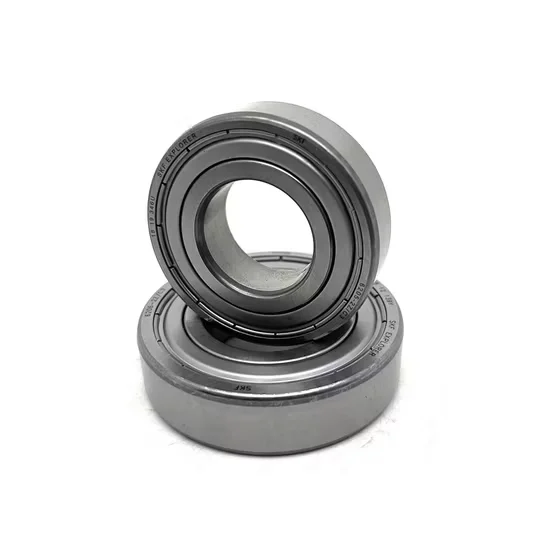 01 Deep Groove Ball Bearings SKF 6204 6205 6206 Deep Groove Ball Bearing Spare Parts View model details
 02 Deep Groove Ball Bearings Original SKF Deep Groove Ball Bearing 6000 6001 6308 6309 6204 6205 6206 for Auto Parts View model details
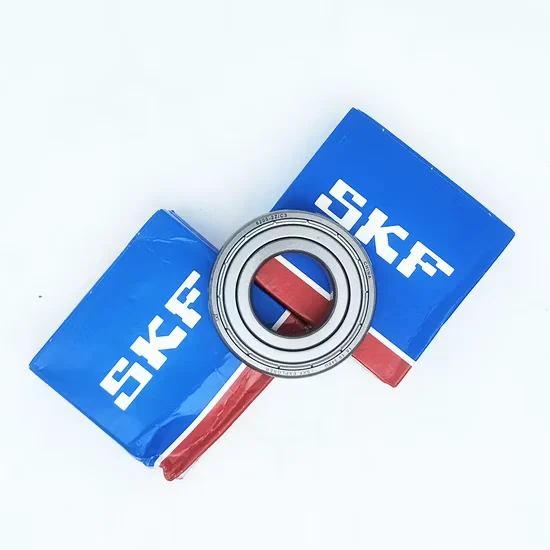 03 Agricultural Machinery Bearings X&S 80607kt 6301-2RS 6205-2Z 6206-2Z Deep Groove Ball Bearing View model details
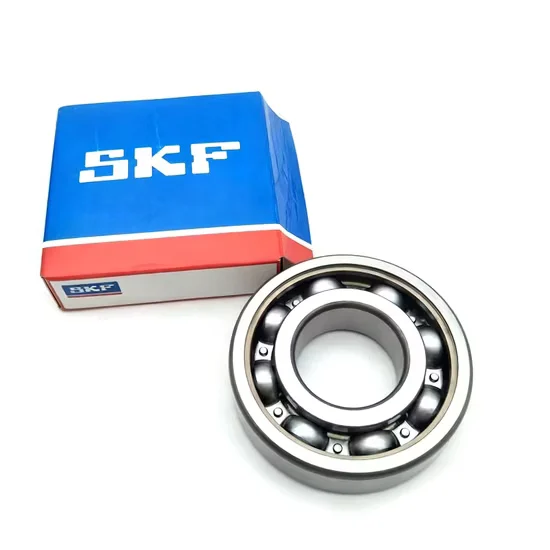 04 Deep Groove Ball Bearings SKF 6205 6206 ZZ C3 Deep Groove Ball Bearing for Automobile Industry View model details
Applications
Where these SKF bearings are used
Keep reading
Related SKF bearing selection guides
More practical notes on SKF designations, precision items and project bearing lists from Project Purchasing Company.
 Brands & Alternatives · · 8 min read SKF Ball Bearing Range: Wholesale Supplier for Bulk & MRO Orders Navigate the SKF ball bearing range with precision by mastering series specs, suffix codes, and compliant cross-brand alternatives. Optimize MRO procurement costs while ensuring… Read the guide
 Brands & Alternatives · · 8 min read Ball Bearing Brand Tiers for Motor Repair: Wholesale Supplier Ball Bearing Brand Tiers for motor repair help buyers avoid costly failures from inferior heat treatment and clearance control. Match Tier 1 or 2… Read the guide Brands & Alternatives · · 6 min read Old to New SKF Ball Bearing Designations Cross-Reference Chart for Wholesale Buyers Master the Old to New SKF Ball Bearing Designations Cross-Reference Chart for Wholesale Buyers to avoid catastrophic failures from hidden suffix mismatches. Learn why… Read the guide

Request a quote
Send your SKF list. Get one itemized written quote.
Project Purchasing Company supplies SKF ball, roller, precision and housed bearing units to distributors, repair workshops and project buyers worldwide. Standard and precision items are priced line by line, with accessories kept on the same quote.