
Contamination Control for Custom OEM Bearings in Assembly Halls | Wholesale Supplier
Most bearing failures traced back to contamination never start inside the bearing — they start on the assembly floor, during the window between unpacking and mounting.
The single most effective contamination control method for custom OEM bearings in assembly halls is a three-layer defense: physical isolation of the mounting zone, strict exposure-time discipline from unsealing to installation, and sealing selection matched to the actual particulate environment — not the catalog default.
I still remember a conveyor line project in Suzhou where a batch of custom bearings started making noise within weeks of installation. When we pulled them apart, the raceways were packed with fine metallic dust mixed with moisture — essentially a grinding paste. The assembly area was open-plan, sitting right next to a grinding station. No curtain, no airflow separation, nothing. We had focused entirely on seal selection at the design stage and never walked the shop floor. The entire batch had to be replaced, and the downtime cost several times the original bearing value. Since then, the first questions I ask any customer raising contamination concerns are always the same: Is your mounting area physically separated from machining zones? How long do bearings sit exposed between unboxing and pressing onto the shaft?
Getting these answers right changes everything downstream. Let me walk through the four control dimensions that actually move the failure rate.
Why Does Contamination Cause Premature Bearing Failure in Assembly Halls?
Particle intrusion is the leading external driver of rolling-contact fatigue, and assembly halls are where the bearing is most defenseless.
A bearing’s internal clearances and surface finishes are engineered at the micron level. Even particles too small to feel between your fingers can create stress concentrations on the raceway, initiating subsurface cracks that propagate under cyclic loading. During normal operation, a well-matched seal keeps most contaminants out. But during assembly — when the bearing is open, handled, and waiting to be fitted — there is zero protection.
In one case involving a European agricultural equipment OEM, we reviewed warranty returns across multiple production seasons. The dominant failure signature was surface-originated spalling on the inner ring raceway, with embedded silicate particles consistent with foundry sand and workshop dust. The assembly hall shared space with casting inspection and shot-blasting prep areas. No one had mapped particle counts in the mounting zone because "the workshop was cleaned every week."
The uncomfortable truth is that sweeping and general housekeeping do not equal contamination control. A clean-looking floor can still carry a particle load far above what a bearing can tolerate during its exposed window. This is why the industry references hydraulic cleanliness standards such as ISO 4406 when discussing bearing-adjacent environments — the logic transfers directly.
What this means in practice: contamination control for custom OEM bearings must begin at the assembly hall layout stage, not at the seal catalog.
How to Establish a Clean Assembly Zone for Bearing Installation?
Physical barriers combined with directional airflow are the foundation — not cleaning frequency.
The approach borrows from simplified cleanroom zoning principles found in ISO 14644, scaled down to practical workshop application. You do not need a certified cleanroom; you need a defined zone where the contamination generation sources cannot reach the bearing during its vulnerable phase.
Here is the step-by-step method we follow when advising customers:
- Map contamination sources. Walk the floor with the customer and mark every process that generates particulate: grinding, cutting, welding, sanding, casting shakeout, even compressed-air blow-off stations. Measure approximate distance to the bearing mounting station.
- Define the clean mounting zone. Enclose the bearing installation area with physical partitions — heavy-duty strip curtains at minimum, rigid panels with sealed joints where budget allows. The zone should cover not just the press station but also the bench where bearings are inspected and pre-greased.
- Control airflow direction. If the hall uses general ventilation, verify that air movement inside the clean zone flows outward toward the partition, not inward from the machining side. A simple smoke test with a handheld tube reveals reverse flow in minutes.
- Establish a material transfer protocol. Bearings arriving from storage should be wiped or blown down outside the clean zone before being brought in. Packaging outer layers — cardboard, stretch wrap — must be removed outside.
- Assign dedicated tools. Pressing sleeves, heating ovens, and induction heaters inside the clean zone should not be shared with other assembly tasks that generate debris.
A Middle East heavy-equipment assembler we worked with implemented partitions and a negative-pressure extraction near the grinding line. Their bearing-related warranty claims dropped noticeably within the first production quarter — not because the bearings changed, but because the environment did.
The key insight for anyone managing contamination control for custom OEM bearings: treat the mounting station like a surgical field, not a workbench.
What Is the Safe Time Window Between Bearing Unpacking and Mounting?
The moment the protective packaging is opened, a countdown starts — and most workshops let it run far too long.
Bearing manufacturers seal their products in wax paper, VCI bags, or sealed boxes specifically to preserve the factory-clean internal condition. Once that seal is broken, the bearing begins accumulating whatever the surrounding air carries. Humidity accelerates the problem by helping particles adhere to greased surfaces.
The operational discipline we recommend:
- Set a maximum exposure time. From the moment the inner packaging is opened to the moment the bearing is fully seated and shielded by the housing or seal, the elapsed time should be measured in minutes, not hours. If the bearing cannot be mounted immediately, it must be re-sealed in clean packaging and returned to a controlled storage area.
- Stage bearings in batch sequence. Pull bearings from storage only for the next assembly batch, not for the entire shift. A rack of pre-staged, unpacked bearings sitting beside the press is an open invitation to contamination.
- Monitor storage environment. The warehouse or staging room where sealed bearings are kept should maintain controlled humidity and low airborne dust. ISO 14644 cleanroom classes are overkill for storage, but a basic dust-controlled, dehumidified room makes a measurable difference.
We once reviewed a failure cluster from a Southeast Asian pump manufacturer. The bearings had been unpacked and laid on an open bench overnight "to warm up to room temperature" before pressing. The bench sat under an overhead crane that ran through a dusty bay. By morning, a visible film of fine particulate had settled on the exposed raceways and the grease lip. The bearings were pressed in, sealed up, and shipped — only to return as warranty failures months later.
For contamination control for custom OEM bearings, the exposure window is the single most overlooked variable. It costs nothing to manage and everything to ignore.
How to Match Bearing Sealing Type with Assembly Environment Contamination Level?
Seal selection must reflect the actual particulate threat the bearing will face in service — not the default configuration on the drawing.
A common misconception is that a bearing’s factory seal will handle any contamination the unit encounters. In reality, seals are rated for specific operating conditions: speed range, temperature, and the type and concentration of contaminants. A seal optimized for low-speed agricultural equipment may perform poorly in a high-speed conveyor running near a cutting line.
The selection logic we apply:
- Classify the operating environment. Is the final equipment running in a relatively clean indoor setting, a moderately dusty workshop, or a heavily contaminated environment such as mining, quarrying, or steel handling? Each tier demands a different seal strategy.
- Identify the dominant contaminant type. Metallic chips, silicate dust, fibrous material, and moisture each interact differently with seal lip geometry and material. A seal that blocks metallic swarf well may allow fine silicate dust to pass if the lip contact pressure is insufficient.
- Evaluate the seal contact type. Non-contact shields (e.g., ZZ/2Z type) offer low friction but limited ingress protection. Contact seals (e.g., RS/2RS type) provide better exclusion but introduce heat at higher speeds. For contamination control for custom OEM bearings in demanding environments, contact seals or labyrinth arrangements are typically necessary.
- Consider supplementary sealing. In severe environments, the bearing’s own seal may need reinforcement with external labyrinth seals, flinger rings, or grease-purging arrangements. This is especially relevant for custom OEM bearings where the housing design can accommodate additional protection.
| Environment Severity | Typical Contaminant | Recommended Seal Approach | Expected Ingress Protection |
|---|---|---|---|
| Light indoor | Ambient dust | Non-contact shield | Basic |
| Moderate workshop | Mixed dust and moisture | Contact rubber seal | Standard |
| Heavy industrial | Metallic chips, silicate, slurry | Contact seal with external flinger | Robust |
| Severe (mining, steel) | Abrasive particulate, high concentration | Double seal or grease purge arrangement | Substantially extended |
A South American mining conveyor operator had been specifying standard contact-sealed bearings for their idler rollers. After repeated premature failures, we reviewed the application and recommended a custom arrangement combining a heavy-duty contact seal with an external labyrinth flinger. The contamination ingress rate dropped substantially, and the service life extended meaningfully — not because the bearing itself changed, but because the sealing system finally matched the environment.
This is where contamination control for custom OEM bearings becomes a design conversation, not a catalog selection. The sealing solution must be engineered around the real contamination profile the bearing will encounter.
Conclusion
Contamination control for custom OEM bearings in assembly halls is won or lost before the bearing ever reaches the shaft. Isolate the mounting zone physically and aerodynamically, enforce strict exposure-time discipline from unsealing to installation, and match the sealing arrangement to the actual contamination severity of the operating environment. These three dimensions, applied systematically, address the root causes behind the majority of contamination-driven premature failures.
Products in this article
SKF bearings mentioned above
 01 Clutch Release Bearings LM501349/LM501310 501349/10 Double Row Roller Bearing OEM View model details
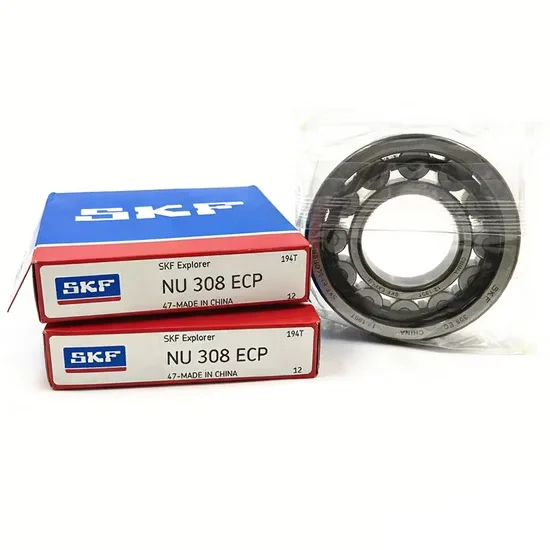 02 Cylindrical Roller Bearings SKF NU308ECP Cylindrical Roller Bearing for Gearbox Reducer OEM View model details
 03 Deep Groove Ball Bearings Genuine SKF Deep Groove Ball Bearings 6201-6206 OEM ODM Supply View model details
 04 Tapered Roller Bearing SKF 32218 Conical Roller Bearing 90x160x42.5mm for Wind Power & Automotive OEM Applications View model details
Applications
Where these SKF bearings are used
Keep reading
Related SKF bearing selection guides
More practical notes on SKF designations, precision items and project bearing lists from Project Purchasing Company.
 Installation & Maintenance · · 6 min read Ball Bearing Maintenance Checklist for Workshops: Genuine SKF/NSK Wholesale Supplier Stop premature failures with our Ball Bearing Maintenance Checklist, addressing contamination and improper installation rather than product quality. Learn essential pre-installation checks, proper mounting… Read the guide
 Installation & Maintenance · · 9 min read Ball Bearing Life in Variable Speed Drives: Wholesale Supplier Standard L10 life calculations fail in variable speed drives due to electrical erosion and thermal degradation. Extend ball bearing life in variable speed drives… Read the guide
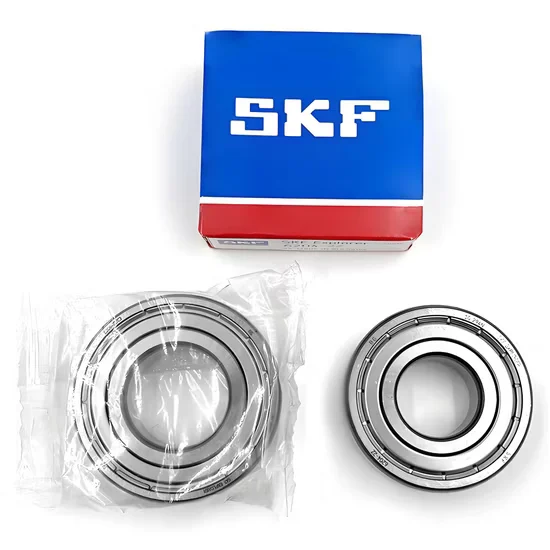 Installation & Maintenance · · 7 min read Corroded Ball Bearings Prevention Wet Sites: Wholesale Supplier Prevent corroded ball bearings in wet sites by prioritizing internal grease fill and contact seal integrity over superficial oiling. Upgrade to double-lip rubber seals,… Read the guide

Request a quote
Send your SKF list. Get one itemized written quote.
Project Purchasing Company supplies SKF ball, roller, precision and housed bearing units to distributors, repair workshops and project buyers worldwide. Standard and precision items are priced line by line, with accessories kept on the same quote.