
Custom OEM Bearing Purchase Contract Templates | Wholesale Supplier
Most buyers assume "manufacturing per drawing" is enough. It is not. Without explicitly referencing ISO inspection standards and defining acceptance criteria, the drawing itself becomes a source of dispute.
A robust Custom OEM Bearing Purchase Contract must explicitly define technical tolerances (referencing ISO 492), inspection protocols (AQL sampling levels), and liability boundaries (distinguishing functional failure from cosmetic defects) to prevent costly post-delivery rejections.
I remember a shipment of non-standard tapered roller bearings destined for the Middle East. The contract simply stated "manufacture per customer drawing." No clearance class, no vibration grade, no inspection method was specified. When the container arrived, the buyer rejected the entire lot, claiming the internal clearance did not match their assembly requirements. The cargo sat at the port for weeks, and the tail payment was never released. That single container became a lesson in how vague contractual language can erase months of production effort. Since then, I have reviewed every OEM contract clause with the same intensity I apply to the production floor—especially for custom orders where ambiguity is the enemy of both sides.
From that point forward, I began treating the contract annex as critically as the engineering drawing itself. Below is a breakdown of the clauses that separate a functional agreement from a liability trap.
Why "Drawings Only" Are Not Enough for OEM Bearing Contracts?
A drawing defines geometry; it does not define "acceptable." Without a referenced inspection standard, the buyer and manufacturer may interpret the same drawing in fundamentally different ways.
In the bearing industry, a drawing might specify an outer diameter of 62 mm with a tolerance of ±0.01 mm. But what about the raceway curvature? What about the surface roughness of the bore? What about the residual magnetism after grinding? These parameters are rarely captured in a customer-supplied drawing, yet they directly affect performance.
A European agricultural machinery manufacturer once ordered a batch of deep groove ball bearings for a harvester gearbox. The drawing called for a standard 6206 footprint. The manufacturer produced the bearings to the dimensional specs on the drawing, but did not control the vibration grade. When the bearings were installed, the gearbox noise level exceeded the OEM’s acoustic specification. The entire batch was returned. The dispute centered on a parameter that was never written into the Custom OEM Bearing Purchase Contract at all.
The solution is not to redraw the part. The solution is to anchor the contract to recognized international standards. ISO 492 defines the tolerance classes (P0, P6, P5, P4, P2) for radial and axial runout, bore diameter, and outside diameter. ISO 15243 provides the framework for classifying bearing damage and failure modes. By referencing these standards in the contract annex, both parties agree on a common language for "acceptable."
| Contract Element | Drawing Only | Drawing + ISO Reference |
|---|---|---|
| Dimensional Tolerance | Specified | Specified + Class (e.g., P6) |
| Internal Clearance | Not defined | Defined (e.g., C3) |
| Vibration Grade | Not defined | Defined (e.g., Z1V1) |
| Surface Roughness | Not defined | Referenced per ISO standard |
| Inspection Method | Not defined | AQL sampling + test procedure |
The takeaway is straightforward: a drawing tells the manufacturer what to make. The contract annex tells both parties how to verify that what was made is acceptable.
What Technical Clauses Must Be Included in the Annex?
The annex is where the commercial risk is either controlled or unleashed. A well-structured technical annex for a Custom OEM Bearing Purchase Contract should cover at least four categories: tolerance class, internal clearance, vibration and noise grade, and material certification requirements.
Tolerance class must be explicitly stated. A P0 (standard) tolerance is acceptable for general-purpose applications, but a P6 or P5 class is often required for precision equipment such as electric motors, machine tool spindles, or high-speed gearboxes. The class determines the permissible deviation in bore diameter, outside diameter, width, and running accuracy.
Internal clearance is equally critical. For instance, a C3 clearance (greater than standard) is typically specified for bearings operating at elevated temperatures or under heavy loads, where thermal expansion of the inner ring must be accommodated. If the contract does not specify the clearance group, the manufacturer may default to CN (standard), which can lead to premature failure in high-temperature environments.
Vibration and noise grade is often overlooked in contracts but is a frequent source of field complaints. Grades such as Z1V1, Z2V2, or Z3V3 define the acceptable vibration amplitude and velocity. For applications like fans, electric motors, or household appliances, a higher Z/V grade is non-negotiable.
Material certification requirements should specify whether the manufacturer must provide a mill test certificate for the bearing steel, a heat treatment report confirming the hardness range (typically HRC 58-62 for through-hardened bearing steel), and a dimensional inspection report for the production batch.
In our own production workflow, every Custom OEM Bearing Purchase Contract we execute includes an annex that locks down these four parameters before the first forging is cut. We provide ISO 9001-certified quality documentation—including material certificates, heat treatment logs, and final inspection reports—as a standard part of the delivery package. This is not an upsell; it is how we prevent the kind of ambiguity that leads to disputes.
How to Set Inspection Nodes to Avoid Post-Delivery Disputes?
The moment the goods leave the factory, the buyer’s leverage drops sharply. Inspection nodes written into the Custom OEM Bearing Purchase Contract are the only mechanism that preserves the buyer’s right to verify quality before the shipment is sealed.
There are two primary inspection points to consider:
Pre-shipment inspection (PSI): This is the most critical node. The contract should specify that a third-party inspection agency (such as SGS, Bureau Veritas, or an equivalent body) or the buyer’s own quality team will conduct a final inspection at the manufacturer’s facility before the goods are packed. The inspection scope should include dimensional verification, visual examination for surface defects, and functional testing (such as rotational torque or vibration measurement) on a statistically defined sample.
Factory acceptance test (FAT): For large or highly customized bearings (such as slewing bearings or specialized tapered roller assemblies), a FAT may be required. This involves running the bearing under simulated load conditions to verify performance before shipment.
A trading company based in Southeast Asia once placed an order for a full container of deep groove ball bearings. The contract did not include a pre-shipment inspection clause. When the goods arrived at the destination port, the buyer discovered that a significant portion of the bearings showed surface rust. The manufacturer argued that the rust had occurred during ocean transit, not during production. Without a pre-shipment inspection report to prove otherwise, the buyer had no basis for a claim. The loss was absorbed entirely by the trading company.
To prevent this, the contract should define:
- The inspection trigger point (e.g., when 80% of the order is packed)
- The sampling standard (e.g., ANSI/ASQ Z1.4 at AQL 1.0 for major defects, AQL 1.5 for minor defects)
- The specific test methods (dimensional, visual, vibration, residual magnetism)
- The consequence of failure (rework at manufacturer’s cost, or rejection of the lot)
How to Define Liability for Latent Defects vs. Shipping Damage?
Not all defects are created equal, and neither are the liability windows. A Custom OEM Bearing Purchase Contract must draw a clear line between defects that originate at the factory (latent defects) and damage that occurs during transit (shipping damage).
Latent defects include material inclusions, improper heat treatment, grinding burns, or assembly errors that are not detectable through visual inspection alone. These defects may only manifest after the bearing has been in service for a period of time. The contract should define a warranty period (typically 12 to 24 months from the date of shipment, or a defined number of operating hours) during which the manufacturer is liable for latent defects.
Shipping damage includes rust caused by inadequate packaging, brinelling from impact during handling, or contamination from moisture ingress. Liability for shipping damage depends on the agreed Incoterms. Under FOB terms, the risk transfers to the buyer once the goods pass the ship’s rail at the port of loading. Under CIF terms, the manufacturer bears the cost of insurance, but the risk still transfers at the same point.
A distributor in Latin America received a shipment of spherical roller bearings that showed severe inner ring cracks upon installation. The manufacturer’s investigation revealed that the cracks were caused by improper forging, a latent defect. Because the contract included a 12-month latent defect warranty, the manufacturer replaced the entire batch at its own cost.
In contrast, a different buyer received a shipment of cylindrical roller bearings that showed outer ring corrosion. The investigation traced the corrosion to condensation inside the container during a prolonged sea voyage. Because the contract was on FOB terms and the packaging met the agreed specification, the loss was covered by the buyer’s marine insurance, not the manufacturer.
The contract should specify:
- The warranty period for latent defects (in months or operating hours)
- The procedure for filing a latent defect claim (including the requirement to return failed samples for analysis)
- The Incoterms and the exact point of risk transfer
- The packaging specification required to prevent shipping damage
Conclusion
A contract is only as strong as its weakest clause. For a Custom OEM Bearing Purchase Contract, the weak points are almost always in the technical annex, the inspection protocol, and the liability definitions. By anchoring the agreement to ISO standards, defining clear inspection nodes, and drawing explicit boundaries between latent defects and shipping damage, both buyer and manufacturer can avoid the disputes that turn profitable orders into costly lessons.
Products in this article
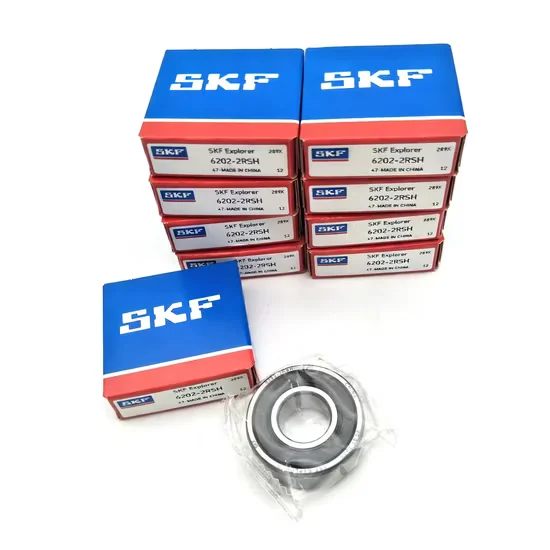
SKF bearings mentioned above
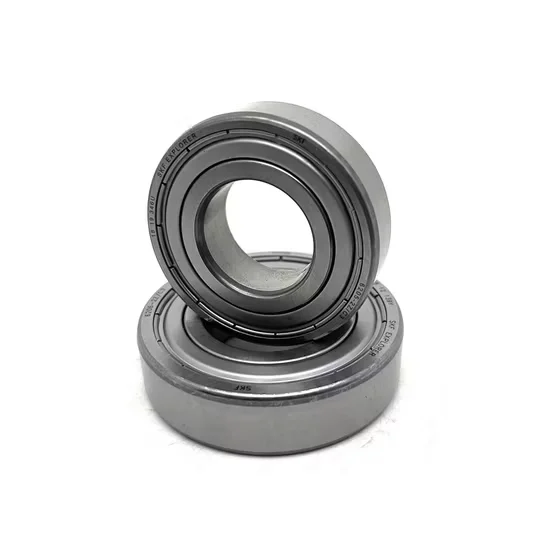 01 Deep Groove Ball Bearings SKF 6204 6205 6206 Deep Groove Ball Bearing Spare Parts View model details
 02 Deep Groove Ball Bearings Original SKF Deep Groove Ball Bearing 6000 6001 6308 6309 6204 6205 6206 for Auto Parts View model details
 03 Agricultural Machinery Bearings X&S 80607kt 6301-2RS 6205-2Z 6206-2Z Deep Groove Ball Bearing View model details
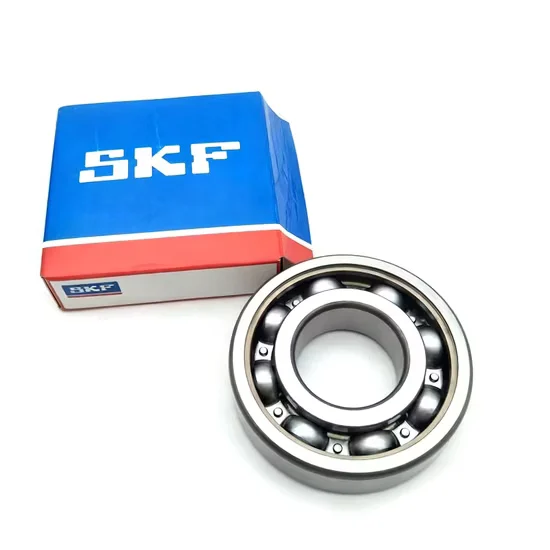 04 Deep Groove Ball Bearings SKF 6205 6206 ZZ C3 Deep Groove Ball Bearing for Automobile Industry View model details
Applications
Where these SKF bearings are used
Keep reading
Related SKF bearing selection guides
More practical notes on SKF designations, precision items and project bearing lists from Project Purchasing Company.
 Procurement & Trade FAQs · · 7 min read Ball Bearing Supplier to Latin America: Genuine SKF, FAG, NSK Wholesale Sourcing genuine ball bearings for Latin America demands strict customs compliance to avoid costly port delays. Master precise HS codes and Certificates of Origin… Read the guide
 Procurement & Trade FAQs · · 8 min read Genuine Ball Bearing Supply to Southeast Asia Wholesale Master Ball Bearing Supply to Southeast Asia by prioritizing customs compliance and verified authenticity over marginal price differences. Learn how mixed-brand consolidation, accurate HS… Read the guide
 Procurement & Trade FAQs · · 7 min read Genuine Ball Bearings for Africa & Middle East Wholesale Supplier Secure genuine ball bearing supply to Africa and Middle East with strict customs compliance and authentic mixed-brand consolidation. Master SONCAP clearance, optimize container loading,… Read the guide

Request a quote
Send your SKF list. Get one itemized written quote.
Project Purchasing Company supplies SKF ball, roller, precision and housed bearing units to distributors, repair workshops and project buyers worldwide. Standard and precision items are priced line by line, with accessories kept on the same quote.