
OE Manufacturer Storage Practices for OEM SKF-Grade Bearings
Condensation, not rain, is the silent killer of factory-fresh bearings in unventilated warehouses.
Proper warehouse storage is the final quality gate for OEM SKF-grade bearings. Even factory-perfect bearings become scrap if humidity control, stacking discipline, or VCI packaging integrity is neglected. The core OE-level parameters are: ambient temperature between 10°C and 25°C, relative humidity below 60%, pallet stacking limited to manufacturer-specified height-to-base ratios, and FIFO rotation within the lubricant shelf life window. VCI packaging must combine heat-sealed polyethylene enclosures with VCI emitters, verified by integrity checks at receipt.
I still remember the morning a Southeast Asian motor OEM opened a full-container shipment only to find yellow rust creeping along the outer rings of 6206 deep groove ball bearings. The grease had already discolored. Two containers bound for a Vietnamese motor plant, and the rust hit right on the production line. Three days of downtime followed. The root cause was not rain or seawater intrusion — it was uncontrolled warehouse dew point inside an unventilated shed where daily temperature swings triggered condensation on cold steel surfaces. That incident reshaped how I think about SKF bearing warehouse storage. A bearing can sail through every bench test at the factory, but park it in a damp shed and it is scrap metal.
Let me walk you through the OE-level storage protocols that separate reliable supply chains from costly field failures.
Why Do Factory-Fresh Bearings Rust in the Warehouse?
Most buyers assume rust comes from rain or direct water exposure. The real culprit is condensation driven by daily temperature swings inside unventilated storage sheds.
When ambient temperature drops at night, the steel mass of bearings cools faster than the surrounding air. If the warehouse lacks climate control, the surface temperature of the bearing drops below the dew point, and moisture condenses directly onto raceways and rolling elements. This happens even in tropical climates where rain never touches the carton. The corrosion pattern is distinctive — localized pitting on outer ring shoulders and cage pockets, not uniform surface rust.
A Latin America MRO buyer experienced this firsthand. VCI wrap on a batch of 6206 and 6305 bearings was torn during transit, and the warehouse lacked dehumidification. Within weeks, the grease showed visible discoloration and the warranty claim ratio spiked. The buyer initially blamed the supplier, but investigation revealed the VCI emitter had escaped into the warehouse atmosphere because the outer polyethylene enclosure was not heat-sealed.
The physics is straightforward. Steel has high thermal mass. In an unventilated shed, daytime heat absorbs into the bearing steel. At night, the air temperature drops rapidly while the steel retains heat briefly, then cools. The moment the steel surface crosses the dew point threshold, condensation begins. Repeat this cycle daily, and you have a corrosion engine running on autopilot.
This is why OE-level SKF bearing warehouse storage protocols mandate continuous dew point monitoring, not just humidity percentage checks. The gap between ambient temperature and dew point must stay above a defined threshold to prevent condensation risk.
What Are the OE-Level Storage Parameters for SKF-Grade Bearings?
The OE-level storage envelope for SKF-grade bearings is narrow: temperature between 10°C and 25°C, relative humidity ceiling at 60%, and strict adherence to pallet stacking height-to-base ratios.
These parameters are not arbitrary. They derive from the lubricant stability curve and the corrosion threshold of bearing steel. Outside this envelope, two failure modes accelerate: grease separation and channeling on the high-temperature end, and condensation-driven corrosion on the low-temperature, high-humidity end.
Sealed bearings face an additional constraint. The maximum storage interval is dictated by the lubricant inside. Lubricant deteriorates over time as a result of ageing, condensation ingress through seal lips, and separation of oil and thickener. Therefore, sealed bearings must follow strict FIFO rotation, and the shelf life window must be tracked from the date of manufacture, not the date of receipt.
For roller bearings, the preservative oil coating provides protection, but only within the specified storage conditions. SKF bearings are coated with high-quality preservative oil during manufacturing, but this coating degrades if temperature and humidity fluctuate beyond limits.
| Parameter | OE-Level Requirement | Risk if Exceeded |
|---|---|---|
| Temperature range | 10°C to 25°C | Grease separation and channeling |
| Relative humidity ceiling | Below 60% | Condensation and raceway corrosion |
| Pallet stacking height | Manufacturer-specified ratio | Micro-brinelling on inner raceways |
| FIFO rotation cycle | Within lubricant shelf life | Lubricant ageing and seal degradation |
| Floor contact | Prohibited, use pallets or racks | Moisture wicking and contamination |
A Middle East distributor learned this the hard way. Stacked pallets exceeding the height limit caused micro-brinelling on inner raceways of a full batch of tapered roller bearings. The rejection rate was substantial, and the distributor had to absorb the loss because the damage was classified as improper storage, not manufacturing defect.
Our ISO 9001-certified factory maintains SKF bearing warehouse storage protocols that enforce these parameters continuously. Dew point monitoring runs around the clock, and pallet stacking height is verified against the bearing type and package dimensions before any shipment leaves the facility. This is why our VCI-wrapped stock of 6205, 6206, 6305, and 22320 bearings maintains integrity through transit and into customer warehouses.
How Should VCI Packaging Be Applied and Inspected?
VCI paper alone does not suffice. Without heat-sealed outer polyethylene, VCI vapor escapes within days, leaving bearings exposed to ambient humidity.
Volatile Corrosion Inhibitor packaging works by releasing protective molecules that form a monolayer on metal surfaces. But this system only functions if the VCI emitter is enclosed in an airtight environment. The standard OE practice is a two-layer system: inner VCI paper or emitter surrounding the bearing, and outer polyethylene bag that is heat-sealed on all seams.
The heat seal is the critical control point. A poorly sealed seam allows VCI vapor to diffuse out and humid air to diffuse in. Within days, the VCI concentration inside the package drops below the protective threshold, and the bearing is effectively unpackaged. This is a failure mode that visual inspection at receipt can catch — if the polyethylene bag feels loose or shows visible gaps at the seal, the VCI system is compromised.
At our factory, every SKF bearing warehouse storage shipment undergoes integrity testing before dispatch. The heat-sealed polyethylene enclosure is checked for seal continuity, and the VCI emitter is verified against the bearing mass and surface area to ensure adequate coverage. This protocol applies to all popular models including 6205, 6206, 6305, and 22320 bearings in our VCI-wrapped stock.
When receiving SKF bearing warehouse storage shipments, buyers should inspect the following at the dock:
- Polyethylene enclosure integrity: no tears, punctures, or unsealed seams
- VCI paper or emitter presence: visible inside the enclosure, not displaced
- Heat seal quality: continuous bead with no gaps or wrinkles
- Package labeling: manufacture date, batch number, and storage instructions legible
- Condensation evidence: no moisture droplets inside the enclosure
A European industrial buyer once rejected a shipment because the VCI wrap showed micro-tears along the fold lines. Investigation traced the damage to improper handling during palletizing at a previous warehouse. The lesson: VCI packaging integrity is a chain, and the weakest link determines whether the bearing arrives ready for installation or headed for the scrap bin.
What Common Warehouse Mistakes Destroy Bearings Before Installation?
Over-stacking, direct floor contact, FIFO neglect, and open-shelf exposure are the four most common warehouse mistakes that destroy SKF-grade bearings before they ever reach the machine.
Each mistake triggers a specific damage mechanism, and all are preventable with disciplined storage protocols.
Over-stacking exceeds the load capacity of the bottom-layer bearings. The inner raceway deforms elastically under excessive static load, creating micro-brinelling that manifests as vibration and noise during operation. This damage is invisible to visual inspection but catastrophic in service. The pallet stacking height-to-base ratio must follow the bearing manufacturer’s specification, and the limit varies by bearing type and package configuration.
Direct floor contact allows moisture to wick upward into the packaging. Concrete floors transmit ground moisture, and even a thin polyethylene layer between pallet and floor is insufficient if the warehouse humidity is uncontrolled. Bearings must be stored on pallets or racks with clearance from the floor, and the storage area must have drainage or vapor barriers if ground moisture is a risk.
FIFO neglect allows bearings to exceed the lubricant shelf life. Sealed bearings are particularly vulnerable. The grease inside ages, the oil and thickener separate, and the lubricant loses its film-forming ability. A bearing stored for years without rotation may feel smooth by hand, but under load, the degraded grease fails to protect the raceway, and premature field failure follows.
Open-shelf exposure removes the VCI protection entirely. Bearings stored on open shelves without packaging are exposed to ambient humidity, dust, and handling contamination. Even if the warehouse climate is controlled, open shelves allow air circulation that accelerates surface oxidation and introduces particulate contamination into the bearing.
A Southeast Asian distributor once stored a batch of 22320 spherical roller bearings on open shelves in a warehouse with intermittent air conditioning. The temperature and humidity cycled daily, and within months, the bearing surfaces showed visible oxidation. The distributor blamed the supplier, but the root cause was open-shelf exposure in an uncontrolled environment.
Our SKF bearing warehouse storage facility eliminates these mistakes by design. Pallet stacking height is enforced by rack configuration, floor contact is prevented by pallet and rack systems, FIFO rotation is tracked by batch date, and all stock remains in VCI-wrapped packaging until dispatch. Same-day dispatch on stock items minimizes the time bearings spend in any warehouse environment, reducing customer storage exposure.
How Can Buyers Verify Supplier Storage Compliance?
Request storage logs, inspect packaging on arrival, and audit warehouse photos. These three verification steps separate compliant SKF bearing warehouse storage suppliers from those who cut corners.
Storage compliance is not a claim — it is a documented practice. A reliable supplier maintains continuous records of warehouse temperature, humidity, and dew point. These logs should be available for review upon request, covering the period from bearing receipt to shipment. If a supplier cannot produce storage logs, the bearings may have been exposed to uncontrolled conditions that compromise lubricant integrity and corrosion protection.
Packaging inspection at receipt is the buyer’s last line of defense. The VCI enclosure must be intact, the heat seal must be continuous, and the VCI emitter must be present and undamaged. Any deviation from these criteria is grounds for rejection or further investigation. The buyer should document the condition of packaging with photographs at the dock, creating a timestamped record that supports warranty claims if field failures occur.
Warehouse photo audits provide additional assurance. A compliant SKF bearing warehouse storage facility will have palletized storage with floor clearance, rack systems that enforce stacking limits, and climate control equipment visible in the background. If the supplier provides warehouse photos, the buyer can verify that the storage environment matches OE-level parameters.
Our factory provides complete standard documentation with every shipment, including storage condition records and packaging integrity verification. This transparency is part of our ISO 9001-certified quality system, and it gives buyers confidence that the SKF bearing warehouse storage protocols have been followed from manufacturing through dispatch.
For global industrial buyers, distributors, and MRO purchasers, verification is not optional — it is essential. The cost of a single batch failure far exceeds the effort of requesting storage logs and inspecting packaging. A Middle East steel mill once accepted a shipment without dock inspection, only to discover micro-brinelling damage during installation. The supplier denied the claim because the buyer could not prove the damage occurred in transit versus warehouse storage. Documentation protects both parties.
Conclusion
Factory-perfect bearings become scrap if warehouse storage neglects dew point control, stacking discipline, or VCI packaging integrity. OE-level SKF bearing warehouse storage requires temperature between 10°C and 25°C, humidity below 60%, strict FIFO rotation, and heat-sealed VCI enclosures verified at receipt. Buyers who request storage logs, inspect packaging on arrival, and audit warehouse photos protect their investment from condensation, micro-brinelling, and lubricant degradation. Proper storage is not an afterthought — it is the final quality gate between the factory and the machine.
Products in this article
SKF bearings mentioned above
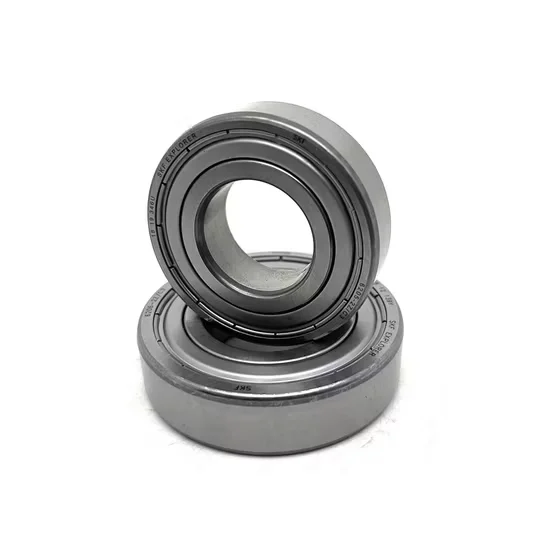 01 Deep Groove Ball Bearings SKF 6204 6205 6206 Deep Groove Ball Bearing Spare Parts View model details
 02 Deep Groove Ball Bearings Original SKF Deep Groove Ball Bearing 6000 6001 6308 6309 6204 6205 6206 for Auto Parts View model details
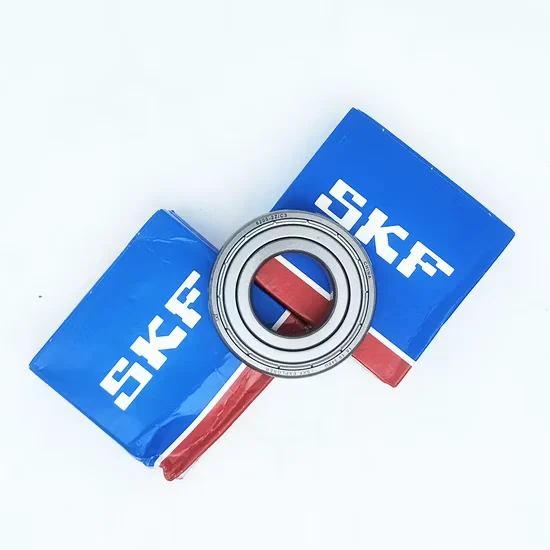 03 Agricultural Machinery Bearings X&S 80607kt 6301-2RS 6205-2Z 6206-2Z Deep Groove Ball Bearing View model details
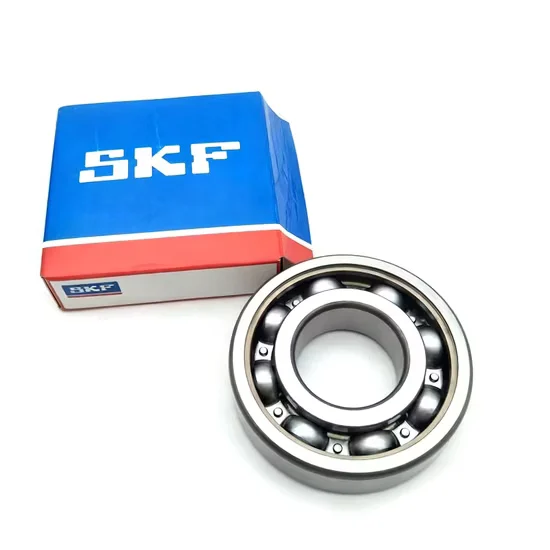 04 Deep Groove Ball Bearings SKF 6205 6206 ZZ C3 Deep Groove Ball Bearing for Automobile Industry View model details
Applications
Where these SKF bearings are used
Keep reading
Related SKF bearing selection guides
More practical notes on SKF designations, precision items and project bearing lists from Project Purchasing Company.
 Installation & Maintenance · · 6 min read Ball Bearing Maintenance Checklist for Workshops: Genuine SKF/NSK Wholesale Supplier Stop premature failures with our Ball Bearing Maintenance Checklist, addressing contamination and improper installation rather than product quality. Learn essential pre-installation checks, proper mounting… Read the guide
 Installation & Maintenance · · 9 min read Ball Bearing Life in Variable Speed Drives: Wholesale Supplier Standard L10 life calculations fail in variable speed drives due to electrical erosion and thermal degradation. Extend ball bearing life in variable speed drives… Read the guide
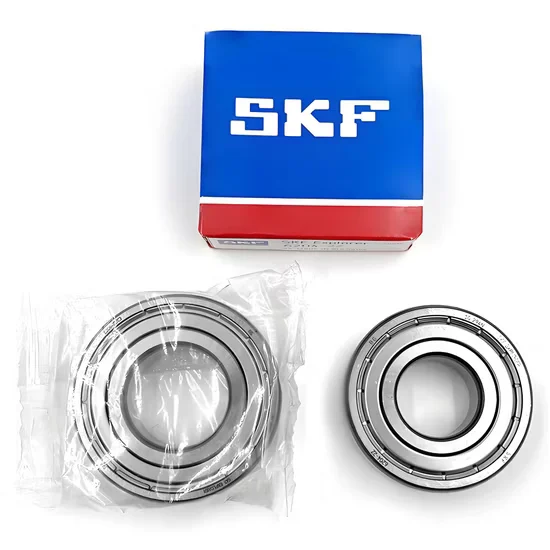 Installation & Maintenance · · 7 min read Corroded Ball Bearings Prevention Wet Sites: Wholesale Supplier Prevent corroded ball bearings in wet sites by prioritizing internal grease fill and contact seal integrity over superficial oiling. Upgrade to double-lip rubber seals,… Read the guide

Request a quote
Send your SKF list. Get one itemized written quote.
Project Purchasing Company supplies SKF ball, roller, precision and housed bearing units to distributors, repair workshops and project buyers worldwide. Standard and precision items are priced line by line, with accessories kept on the same quote.