
OEM Custom SKF-Grade Radial Clearance Codes Bearings Wholesale Supplier
Most buyers treat radial clearance codes as random letters stamped on a box. In reality, choosing the wrong code can destroy a premium bearing in weeks.
Radial clearance codes (C2, C3, C4, C5) are calculated values tied to operating temperature, shaft fit, and load conditions—not arbitrary safety margins. Selecting the wrong code causes premature failure even in high-grade bearings, while the right code extends service life meaningfully.
I still remember a shipment of spherical roller bearings sent to a copper mine in northern Chile. The buyer had specified C3 clearance based on the catalog recommendation. Within a short period, the inner rings expanded under sustained high-temperature operation, the clearance vanished entirely, and the bearings seized. The mine manager sent back the damaged pieces with a simple question: why did this happen? That moment forced me to stop treating clearance as a catalog checkbox and start treating it as a calculated variable tied to thermal dynamics, interference fits, and real-world load profiles.
Understanding how these codes interact with your actual operating environment is what separates a reliable OEM supply chain from one that constantly replaces failed units.
What Are Radial Clearance Codes and Why Do They Matter?
Radial clearance codes define the internal play between rolling elements and raceways before installation, and they directly determine whether a bearing survives its intended service life or fails prematurely.
The ISO 5753 standard provides the measurement methodology for radial internal clearance, and SKF-grade bearing manufacturers follow this framework to classify bearings into clearance groups. These groups—C2 (tighter than standard), CN (standard/normal), C3 (larger than standard), C4 (larger than C3), and C5 (larger than C4)—are not marketing labels. They represent specific micrometer ranges that change how the bearing behaves under thermal and mechanical stress.
When a buyer orders radial clearance codes bearings without understanding what each code actually controls, the consequences appear in predictable patterns:
- Excessive vibration in low-temperature, light-load applications where C3 was chosen unnecessarily.
- Inner ring expansion and seizure in high-temperature environments where CN was specified.
- Rolling element skidding and cage wear when clearance is too large for the rotational speed.
A distributor in the Middle East once returned a full order of deep groove ball bearings because they "felt loose" during hand rotation. The issue was not a quality defect—it was that the buyer had ordered C4 clearance for a standard electric motor application that required CN or C3. The internal play was simply larger than what the application needed, and the buyer mistook normal C4 behavior for a defect.
The core principle is straightforward: radial clearance is not a static value. It changes during operation due to thermal expansion of the inner ring, inner ring, and outer ring, plus the elastic deformation caused by load. The initial clearance code you select must account for these changes, not ignore them.
How Does Temperature Affect Radial Clearance?
High-temperature operations require larger initial radial clearance to compensate for thermal expansion of the inner ring and rolling elements—ignoring this relationship is the single most common cause of field seizure in premium bearings.
When a bearing operates at elevated temperatures, the inner ring typically runs hotter than the outer ring because it is directly coupled to the rotating shaft, which transmits heat from the process. The inner ring expands radially inward, reducing the internal clearance. If the initial clearance is too tight, the bearing effectively preloads itself, generating additional friction, more heat, and a runaway cycle that ends in seizure.
The calculation follows a predictable physical relationship: the inner ring expansion is determined by the shaft diameter, the temperature differential between the inner ring and the outer ring, and the linear expansion coefficient of bearing steel.
Consider a conveyor system in a sintering plant where the shaft surface temperature regularly exceeds a significant threshold above ambient. A standard CN clearance bearing installed in this environment will lose most of its internal play within minutes of reaching steady-state temperature. The result is metal-to-metal contact between rolling elements and raceways, rapid lubricant breakdown, and catastrophic failure.
I have seen this pattern repeat across multiple mining and mineral processing sites in Latin America. The conveyor head pulley bearings on one iron ore line failed repeatedly with CN clearance. After switching to C4 clearance bearings—calculated to retain sufficient residual play at peak operating temperature—the same bearing positions ran substantially longer without intervention. The bearing specification did not change in any other way. Only the clearance code changed.
Conversely, specifying C4 or C5 clearance for a low-temperature application introduces its own problems. Excessive internal play allows rolling elements to skid rather than roll cleanly, particularly during startup or under light load. This skidding generates localized wear on the raceway and cage pockets, leading to premature noise complaints and cage failures.
The practical rule is: match the clearance code to the expected steady-state temperature differential between inner and outer rings, not to the ambient temperature or the catalog recommendation alone.
How to Match Clearance with Shaft and Housing Fits?
Interference fits between the inner ring and shaft reduce radial clearance—the amount of reduction depends on the interference volume, and failing to calculate this loss leads to unexpected preload and early failure.
When a bearing inner ring is pressed onto a shaft with an interference fit, the inner ring expands elastically to accommodate the shaft oversize. This expansion reduces the internal radial clearance. The general engineering rule is that the clearance reduction is approximately a defined proportion of the effective interference amount, though the exact value depends on the shaft geometry, hollow or solid, and the ring cross-section.
For a typical solid shaft with a standard j5 or k5 tolerance, the clearance loss can be significant enough to convert a C3 bearing into an effective CN or even C2 condition after mounting. If the application also involves elevated temperature, the combined effect of interference fit reduction and thermal expansion can eliminate clearance entirely.
This is where many field failures originate—not from the bearing quality, but from the mismatch between the specified clearance code and the actual mounting conditions.
A European steel mill operator specified C3 clearance bearings for a continuous caster roll with a heavy interference fit on a large-diameter shaft. After mounting, the effective clearance dropped to near zero. During operation, the bearings ran hot, the grease carbonized, and the rolls had to be replaced on an accelerated schedule. The root cause was not the bearing—it was the failure to account for clearance loss during fit calculation.
The correct approach involves a sequential calculation:
- Determine the required residual operating clearance based on temperature, speed, and load conditions.
- Calculate the clearance reduction from the interference fit using the shaft and housing tolerance values.
- Add the fit-induced clearance loss to the required residual clearance to determine the minimum initial clearance code needed.
- Select the nearest standard clearance code (C2, CN, C3, C4, or C5) that meets or exceeds this calculated value.
| Fit Condition | Typical Clearance Reduction | Recommended Initial Code for High-Temp Application |
|---|---|---|
| Light transition fit (h5/g5) | Noticeably reduced | C3 |
| Standard interference (j5/k5) | Substantially reduced | C3 or C4 |
| Heavy interference (m5/n5) | Significantly reduced | C4 or C5 |
This table provides directional guidance only. The actual values must be calculated for each specific bearing size, shaft diameter, and tolerance combination.
When ordering radial clearance codes bearings for interference fit applications, always provide the shaft and housing tolerance specifications to the supplier so that the initial clearance can be verified against the calculated operating condition.
Which Clearance Code Fits Your Application?
Different industrial applications demand different clearance codes—mining and conveyor systems typically require C4, standard electric motors and fans use C3, and precision machine tool spindles need C2 or CN.
The clearance code selection is not a matter of preference. It is a function of the operating environment, and each code maps to a distinct set of conditions:
-
C2 (Tighter than standard): Used in precision applications where minimal internal play is required to maintain positional accuracy. Typical applications include machine tool spindles, instrumentation, and low-vibration electric motors. The trade-off is reduced tolerance for thermal expansion and interference fit effects.
-
CN (Standard/Normal): The default clearance for general-purpose bearings. Suitable for applications with moderate temperatures, light to moderate interference fits, and standard load conditions. Many catalog listings assume CN unless otherwise specified.
-
C3 (Larger than standard): The most commonly specified clearance code beyond CN. Used in electric motors, fans, pumps, and gearboxes where moderate temperature rise and standard interference fits are expected. C3 provides enough residual clearance to accommodate typical thermal expansion without introducing excessive play.
-
C4 (Larger than C3): Required for high-temperature applications such as conveyor pulleys in mining and mineral processing, kiln support rollers, and vibrating screens. C4 compensates for both significant thermal expansion and heavy interference fits on large shafts.
-
C5 (Larger than C4): Reserved for extreme conditions—very high temperatures, very heavy interference fits, or applications where the combined thermal and fit-induced clearance loss is substantial. C5 is less common but critical in specific heavy industrial segments.
A vibration screen at a copper concentrator in Peru originally operated with C3 clearance bearings. The screen ran hot, the bearings degraded quickly, and maintenance intervals were unacceptably short. After switching to C4 clearance bearings—selected based on the calculated temperature differential and shaft fit—the service life extended substantially, and the maintenance interval aligned with the plant’s planned shutdown schedule.
The selection process must always start from the application conditions, not from catalog defaults. When in doubt, provide the operating temperature range, shaft and housing fits, speed, and load profile to your bearing supplier for a clearance recommendation based on calculation rather than assumption.
How to Verify Clearance on OEM Custom Orders?
Requesting inspection certificates and conducting pre-installation measurement are essential steps to confirm that radial clearance codes bearings meet the specified requirements before they enter service.
Even with correct specification, the delivered product must be verified. Manufacturing variation, measurement uncertainty, and handling damage can all affect the actual clearance of a received bearing. Relying solely on the marking on the box is insufficient for critical applications.
The verification process should include:
-
Inspection certificate review: Request a certificate that documents the measured radial internal clearance for the specific batch or lot. The certificate should reference the ISO 5753 measurement method and state the measured values against the specified clearance group limits.
-
Pre-installation measurement: For critical positions, measure the radial clearance of a sample from each batch before mounting. This confirms that the bearing has not been damaged during shipping or storage and that the clearance falls within the specified group.
-
Storage condition verification: Bearings stored in uncontrolled environments can experience corrosion or lubricant degradation that affects clearance and performance. Verify that storage conditions meet the manufacturer’s recommendations.
-
Mounting procedure compliance: Improper mounting—such as hammering the bearing directly or applying force through the rolling elements—can damage the raceways and alter the clearance. Ensure that mounting tools and procedures follow established standards.
A mining operator in Africa received a shipment of spherical roller bearings marked C4. Without conducting pre-installation measurement, the maintenance team installed the bearings on a crusher application. Within a short period, multiple positions showed abnormal temperature rise. Investigation revealed that the actual clearance of several bearings fell outside the C4 range—some were effectively CN. The supplier had not provided batch-level inspection certificates, and the lack of pre-installation verification meant the non-conforming bearings entered service undetected.
When sourcing radial clearance codes bearings from an OEM supplier, always make inspection certificate provision and pre-installation measurement a contractual requirement. This is not a sign of distrust—it is a standard quality assurance practice that protects both the buyer and the supplier from field failures caused by undetected specification deviations.
Conclusion
Radial clearance codes are calculated values, not arbitrary labels, and selecting the correct code requires understanding temperature, fit, and load conditions. Matching the clearance to the application environment prevents premature failure, while ignoring these factors leads to costly field replacements regardless of bearing quality. Always calculate, verify, and document the clearance specification before installation.
Products in this article
SKF bearings mentioned above
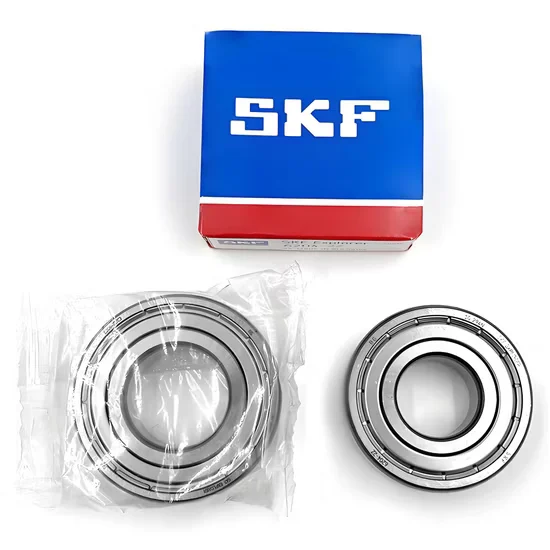 01 Deep Groove Ball Bearings SKF 6200 6300 Deep Groove Ball Bearing Genuine Wholesale Supplier View model details
 02 Deep Groove Ball Bearings SKF 608 Deep Groove Ball Bearing Genuine Stock Wholesale Supplier View model details
 03 Cylindrical Roller Bearings Nu222 Ec J/C3 Single Row Cylindrical Roller Bearing Zhaoyun Wholesale Supplier View model details
 04 Cylindrical Roller Bearings Zhaoyun Nu312 Ec P/C3 Double Row Cylindrical Roller Bearing Wholesale Supplier View model details
Applications
Where these SKF bearings are used
Keep reading
Related SKF bearing selection guides
More practical notes on SKF designations, precision items and project bearing lists from Project Purchasing Company.
 Technical Resources · · 6 min read Ball Bearing Weight Table: Wholesale Supplier for Bulk Orders A precise ball bearing weight table is essential for calculating freight costs and avoiding port overweight penalties. Distinguish between net and gross weight to… Read the guide
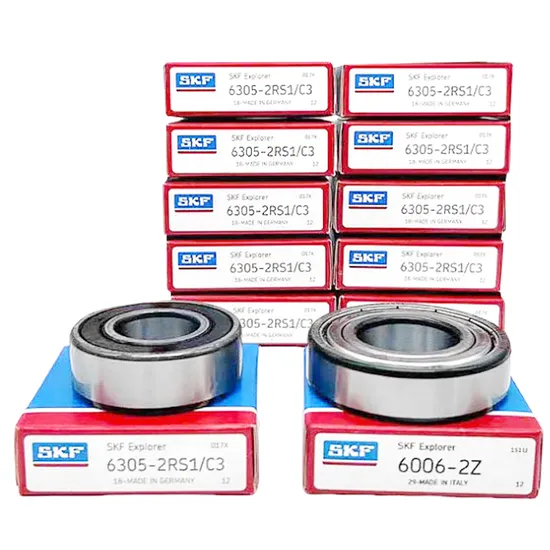 Technical Resources · · 7 min read Motor Bearing Lookup by Power | Genuine Wholesale Supplier Stop relying on motor bearing lookup by power alone to avoid premature failures from shock loads and heat. Calculate real dynamic requirements and match… Read the guide Technical Resources · · 7 min read Ball Bearing Load Rating Reference Table: Wholesale Supplier Master the Ball Bearing Load Rating Reference Table to prevent premature failures caused by misinterpreting dynamic and static limits. Learn to calculate equivalent loads… Read the guide

Request a quote
Send your SKF list. Get one itemized written quote.
Project Purchasing Company supplies SKF ball, roller, precision and housed bearing units to distributors, repair workshops and project buyers worldwide. Standard and precision items are priced line by line, with accessories kept on the same quote.