
OEM SKF-Grade Bearing Program Handover Documentation Standards for Wholesale Suppliers
Handover documentation is not an attachment—it is the product itself. For OEM SKF-grade bearing orders, the mandatory handover package must include model verification, heat number traceability certificates, material test reports, dimension inspection reports with measured clearance values, and a valid ISO 9001 certificate—missing any single item can trigger QA rejection at destination port.
I spent three days squatting in a corrugated-iron warehouse at Apapa Port in Lagos, waiting for a QA inspector to clear a shipment of 22320 spherical roller bearings. The buyer had placed the order to an SKF-equivalent OEM standard, but the handover documentation package was missing the material traceability sheet and the dimension inspection report. The inspector refused to sign the release form. The entire container sat in that warehouse for weeks, racking up storage fees that ate into the margin on the whole order. That single missing folder of paper turned a routine delivery into a financial lesson nobody wanted.
Since then, every OEM SKF-grade bearing order I handle starts with the documentation checklist—before the first bearing is even pulled from stock. The documents travel with the goods, not after them.
Let me walk you through exactly what goes into that package, why each piece matters, and how to make sure your supplier delivers it right the first time.
What Documents Are Required for OEM SKF-Grade Bearing Handover?
A compliant OEM SKF-grade bearing handover package contains six core documents: commercial invoice with full model breakdown, heat number traceability certificate, material test report, dimension inspection report with measured internal clearance, ISO 9001 quality management certificate, and certificate of origin. These are not optional extras. They form the verification chain that connects every physical bearing in the box back to its raw material batch and production record.
The heat number traceability certificate is the backbone of the entire package. It links each bearing—or each batch of bearings sharing the same production lot—to the specific steel heat from which the rings and rolling elements were forged. Without this link, the buyer has no way to confirm that the material meets the grade specification required by the OEM standard.
The material test report provides the chemical composition and mechanical properties of the steel used—carbon content, chromium levels, hardness values after heat treatment. For OEM SKF-grade bearing programs, the material must conform to recognized bearing steel standards, and the report must show actual test values, not just "conforms to spec" statements.
The dimension inspection report is where many shipments fail. It must include measured values for bore diameter, outside diameter, width, and—critically—the actual measured internal clearance of each inspected unit, not just a statement that clearance "falls within range." OEM end-users in mining, conveyor, and crusher applications often require clearance values recorded to the micrometer level because their equipment operating parameters depend on precise preload and fit conditions.
The ISO 9001 certificate validates that the manufacturer operates under a certified quality management system. But here is the catch that catches many buyers off guard: the certificate must be current, issued by an accredited body, and must cover the specific product scope that includes the bearing types being shipped.
| Document | Content Scope | Traceability Level | Verification Standard |
|---|---|---|---|
| Heat Number Certificate | Steel heat-to-bearing batch link | Full batch-level | Verifiable against mill records |
| Material Test Report | Chemical composition, hardness | Full batch-level | Verifiable against ISO 683-17 |
| Dimension Inspection Report | Bore, OD, width, measured clearance | Sample-level per lot | Verifiable against ISO tolerances |
| ISO 9001 Certificate | QMS scope and validity | Manufacturer-level | Accredited body registration |
| Certificate of Origin | Country of manufacture | Shipment-level | Chamber of Commerce issuance |
| Commercial Invoice | Model, quantity, batch mapping | Full shipment | Must match packing list |
A distributor in the Middle East once received a full order of OEM SKF-grade bearings where the dimension inspection report listed only nominal values—no actual measured clearance data. The end-user’s QA team rejected the entire lot because their maintenance protocol required documented measured clearance for every bearing going into critical crusher applications. The re-inspection and re-documentation cycle added weeks of delay and cost several times what the original inspection would have cost.
Why Do Missing Handover Documents Cause Delivery Rejection?
Missing handover documents cause delivery rejection because QA protocols at destination treat undocumented goods as unverifiable—and unverifiable goods cannot be released into service. This is not a bureaucratic preference. It is a liability control measure. When a bearing fails in a mining conveyor or a steel mill roll table, the first question is always: can you trace this bearing back to its material source? If the answer is no, the entire maintenance and procurement chain is exposed.
I have seen this pattern repeat across multiple regions. In an African mining operation, a shipment of spherical roller bearings arrived at a port facility without heat number traceability documentation. The mine’s QA policy required full material traceability for every rotating component going onto their conveyor systems. Without the heat number linking the bearings to certified steel, the QA manager had no choice but to hold the shipment. The bearings sat in a temporary storage facility near the port for an extended period. The demurrage and storage costs mounted daily, and the conveyor maintenance schedule slipped, forcing the operation to run existing equipment beyond its planned service interval.
In another case, a South American buyer purchasing OEM SKF-grade bearings for a crusher application received the shipment with documentation formatted to a non-standard template. The end-user’s engineering team required the inspection reports to follow a specific ISO-aligned format that included standardized field headers, measurement units, and traceability references. The supplier’s documents, while technically containing the right data, were organized in a proprietary layout that did not map to the buyer’s document control system. The shipment was held pending document reformatting—a process that required back-and-forth communication between the supplier’s quality department and the buyer’s engineering team, adding substantial delay to a project that was already on a tight commissioning timeline.
The common thread in these cases is not that the bearings were defective. In every instance, the physical products were fully compliant. The rejection was purely documentation-driven. And in each case, the cost of the delay—storage, demurrage, rescheduling, re-inspection—far exceeded the cost of producing the correct documents at the time of manufacture.
This is why I treat the handover documentation package as a production deliverable, not an afterthought. The documents must be generated, verified, and packed alongside the goods—not prepared later when someone remembers to ask for them.
How to Verify Handover Documents Match Physical Products?
Verifying that handover documents match physical products requires a three-point cross-check: model number alignment, heat number traceability chain validation, and measured clearance comparison against the bearing’s application standard. This verification must happen before the goods leave the supplier’s facility—ideally during the pre-shipment inspection—and again upon arrival at destination before the goods are released to the end-user.
Start with the model number. The model designation on every bearing’s marking must match the model listed on the commercial invoice, the packing list, and the dimension inspection report. For OEM SKF-grade bearing orders, this includes verifying any suffix codes that indicate internal design variations, cage materials, or clearance classes. A mismatch at this level is the simplest error to catch and the most costly to miss—shipping the wrong clearance class to a high-temperature application can lead to premature field failure.
Next, validate the heat number traceability chain. Each heat number on the material test report must correspond to a specific batch of bearings. Physically check the bearing packaging—inner boxes, outer cartons—for heat number markings or batch codes that link back to the certificate. If the supplier uses laser-etched batch codes on the bearing outer rings, verify those against the documentation as well. The chain must be unbroken: heat number on certificate matches batch code on packaging matches any marking on the bearing itself.
The third check is the measured clearance comparison. Take the dimension inspection report and locate the measured internal clearance values. Compare these values against the standard clearance range for the bearing’s designated clearance class—whether that is C2, CN, C3, C4, or another grade per ISO 5753. If the report shows values outside the declared class range, the documentation is either incorrect or the bearings were misclassified during inspection. Either way, the shipment should not ship until the discrepancy is resolved.
In my experience, the most effective way to run this verification is to create a simple cross-reference matrix before shipment:
- List every bearing model and quantity in the order
- For each model, record the heat number from the traceability certificate
- For each heat number, record the measured clearance values from the inspection report
- Confirm that each measured value falls within the declared clearance class range
- Verify that the model designation on the physical packaging matches all documentation entries
This matrix takes minimal time to prepare but catches the vast majority of documentation-to-product mismatches before they become field problems.
What Are the Common Documentation Mistakes Buyers Should Avoid?
The most common documentation mistakes in OEM SKF-grade bearing orders are: accepting dimension reports without actual measured clearance data, relying on a generic ISO certificate without verifying product scope coverage, and allowing document formats that do not align with the end-user’s QA template requirements. Each of these errors looks minor on paper but triggers major delays when the shipment reaches destination.
The missing measured clearance data problem is the most frequent. Many suppliers provide dimension inspection reports that list only the nominal clearance class—stating, for example, that the bearings are "C3 clearance" without recording what the actual measured values are. For general distribution sales, this may be acceptable. But for OEM SKF-grade bearing programs serving mining, crusher, conveyor, or heavy industrial applications, the end-user needs to know the specific measured clearance of each bearing or batch to calculate fit conditions, thermal expansion allowances, and preload settings. A report that says "within C3 range" without providing the actual numbers is functionally useless for engineering validation.
The second mistake is treating the ISO 9001 certificate as a blanket approval. An ISO certificate is only valid if its scope explicitly covers the bearing types being shipped. I have seen cases where a supplier’s ISO certificate covered "mechanical components" or "metal parts" broadly, but did not specifically include rolling bearings in the certified product scope. A strict QA auditor will reject this. The certificate must clearly state that the quality management system applies to the design, manufacture, and inspection of rolling bearings.
The third mistake is format non-compliance. Some end-users—particularly in mining, steel, and energy sectors—require documentation in a specific standardized format. The supplier may provide all the right data, but if it is organized in a proprietary template rather than the buyer’s required format, the QA team will flag it as non-conforming. This is especially common when the end-user operates under an asset management system that requires all incoming inspection data to be uploaded into a specific digital platform with defined field structures.
To avoid these mistakes, buyers should request a documentation sample from the supplier before placing the order—ideally from a previous OEM SKF-grade bearing shipment—and run it past the end-user’s QA team for pre-approval. This single step eliminates the majority of documentation-related rejections.
How to Ensure Your Supplier Provides Complete Handover Documentation?
Ensuring complete handover documentation starts with making the documentation requirements a contractual deliverable—not a post-order request—and verifying compliance through pre-shipment document review before the goods are released. The documentation package must be specified in the purchase order with the same level of detail as the product specifications themselves.
When placing an OEM SKF-grade bearing order, the purchase order should explicitly list every required document: heat number traceability certificate, material test report, dimension inspection report with measured clearance values, ISO 9001 certificate with product scope, certificate of origin, and commercial invoice with batch-level model breakdown. The PO should also specify the format requirements—whether the end-user requires a specific template, digital file format, or language for the documentation.
Before shipment, request a complete documentation package for review. Do not accept a promise that "documents will follow the goods." I have seen too many shipments where the goods arrived and the documents were still being prepared—sometimes days, sometimes weeks later. During that gap, the goods sit at the port or in a bonded warehouse, accumulating charges and delaying the project.
Ask the supplier specific verification questions:
- Can you provide a sample heat number traceability certificate from a recent production batch?
- Does your dimension inspection report include actual measured clearance values, or only nominal class declarations?
- Is your ISO 9001 certificate scope specific to rolling bearing manufacture?
- Can you map each heat number to specific bearing models and quantities in my order?
- Will the complete documentation package be packed inside the shipping container or sent separately?
These questions separate suppliers who treat documentation as a core production output from those who treat it as an administrative afterthought. In our own operations, we generate the full handover documentation package—including heat number traceability, material reports, and measured clearance data—alongside the production process, so that when the bearings are packed and ready, the documents are already verified and waiting. Every heat number is traced, every measured value is recorded, and every document is cross-checked against the physical goods before the container is sealed.
Conclusion
OEM SKF-grade bearing handover documentation is a production deliverable equal in importance to the physical product—missing heat traceability, measured clearance data, or proper ISO scope coverage will trigger QA rejection and generate costs that dwarf the price of preparing the documents correctly. Treat the document checklist as a contractual requirement, verify it before shipment, and never let the goods leave the facility until the paperwork is complete and cross-checked against every bearing in the order.
Products in this article
SKF bearings mentioned above
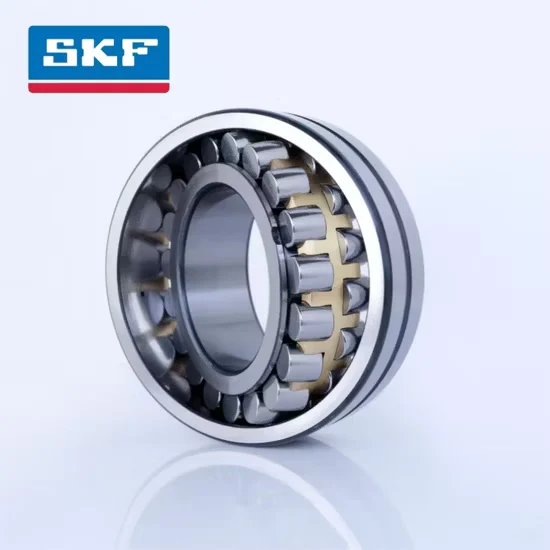 01 Mining and Vibrating Screen Bearings SKF 22320 E-K/C4 Spherical Roller Bearing Genuine Supplier View model details
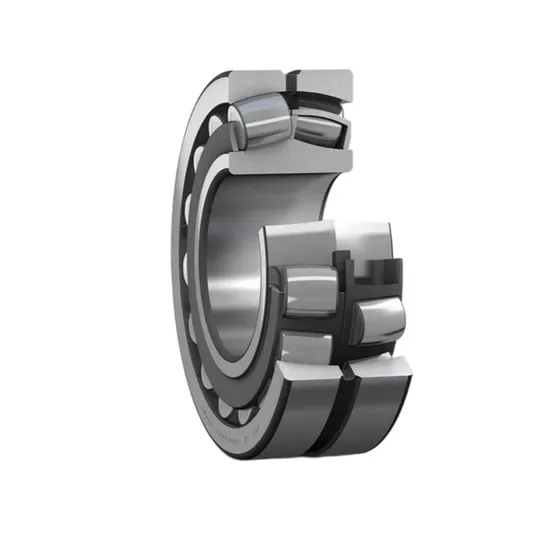 02 Car Bearing 22320E Spherical Roller Bearing Wholesale Supplier View model details
 03 Spherical Roller Bearing 22320EK Spherical Roller Bearing 73mm Width for Heavy-Duty Industrial Applications View model details
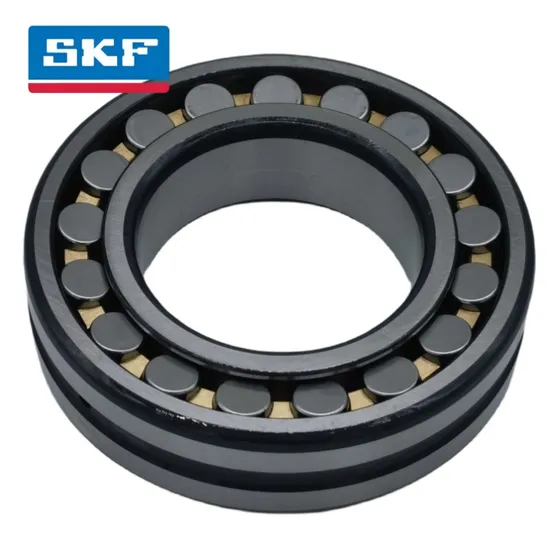 04 Spherical Roller Bearing High Precision SKF Spherical Roller Bearing 22320 E-K/C4 for Conveyor Systems Chrome Steel Gcr15 View model details
Applications
Where these SKF bearings are used
Keep reading
Related SKF bearing selection guides
More practical notes on SKF designations, precision items and project bearing lists from Project Purchasing Company.
 Procurement & Trade FAQs · · 8 min read Ball Bearing Supplier to Latin America: Genuine SKF, FAG, NSK Wholesale Sourcing genuine ball bearings for Latin America demands strict customs compliance to avoid costly port delays. Master precise HS codes and Certificates of Origin… Read the guide
 Procurement & Trade FAQs · · 8 min read Genuine Ball Bearing Supply to Southeast Asia Wholesale Master Ball Bearing Supply to Southeast Asia by prioritizing customs compliance and verified authenticity over marginal price differences. Learn how mixed-brand consolidation, accurate HS… Read the guide
 Procurement & Trade FAQs · · 7 min read Genuine Ball Bearings for Africa & Middle East Wholesale Supplier Secure genuine ball bearing supply to Africa and Middle East with strict customs compliance and authentic mixed-brand consolidation. Master SONCAP clearance, optimize container loading,… Read the guide

Request a quote
Send your SKF list. Get one itemized written quote.
Project Purchasing Company supplies SKF ball, roller, precision and housed bearing units to distributors, repair workshops and project buyers worldwide. Standard and precision items are priced line by line, with accessories kept on the same quote.