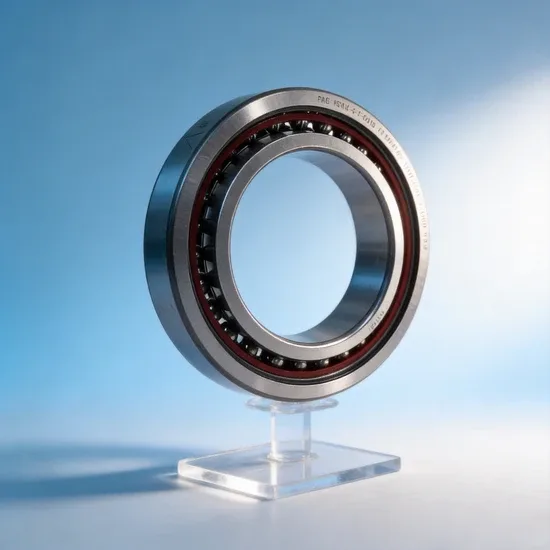
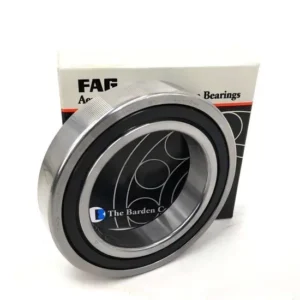
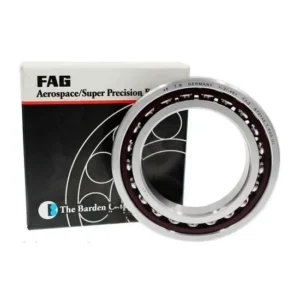
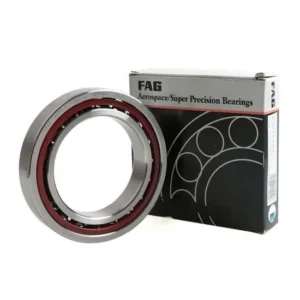
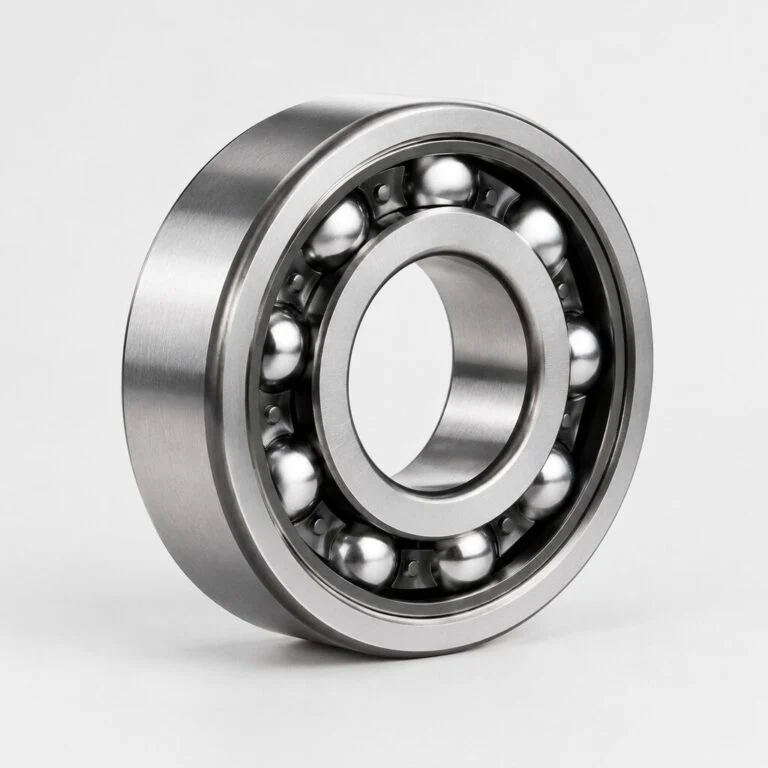
Listed data for this SKF designation; confirm the execution and dimensions against your drawing or application before ordering.
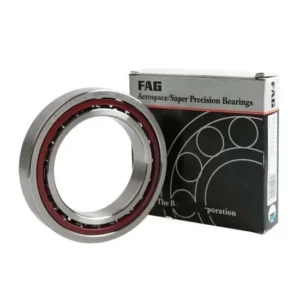
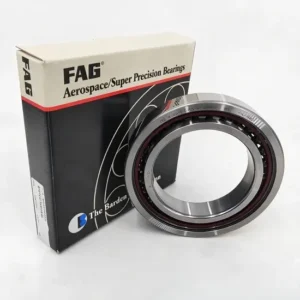
Authorized Channel Sourcing — Every FAG HCB71904-E-T-P4S we ship is backed by traceable procurement documentation linking the batch directly to certified distribution networks.
Technical Specifications
| Parameter | Value |
| Designation | FAG HCB71904-E-T-P4S |
| Bearing Type | Angular Contact Ball Bearing |
| Bore Diameter (d) | 20 mm |
| Outside Diameter (D) | 37 mm |
| Width (B) | 9 mm |
| Dynamic Load Rating (C) | 7350 N |
| Static Load Rating (C₀) | 4550 N |
| Limiting Speed (Grease) | 38000 rpm |
| Limiting Speed (Oil) | 56000 rpm |
| Weight | 0.030 kg |
| Cage Material | Phenolic resin outer-ring guided (T) |
| Seal or Shield Type | Open |
| Clearance Class | Standard spindle preload pairing |
| Precision Class | P4S (ISO Class 4 with enhanced running accuracy) |
| Contact Angle | 25° (E suffix) |
| Bore Type | Cylindrical |
| Arrangement | Single Row |
| Number of Rows | Single Row |
| Ball Material | Silicon nitride ceramic (HCB hybrid) |
| Origin | China |
Note: Suffixes HCB, E, and T are confirmed against FAG spindle bearing catalog conventions for hybrid ceramic angular contact designs; P4S indicates ISO tolerance class 4 with supplementary running accuracy control.
Application Suitability
| Industry | Typical Applications |
| Machine tool manufacturing | High-frequency grinding spindle front bearing, CNC lathe live tooling spindle |
| Robotics | High-speed harmonic drive joint actuator bearing, precision rotary table |
| Precision equipment | Optical inspection rotary stage, semiconductor wafer positioning spindle |
| Electric motor repair | High-speed test rig spindle, dynamometer shaft support |
What Happens When a Spindle Bearing Fails at 24,000 RPM
Precision loss at high speed is never gradual — it is sudden, expensive, and almost always traceable to a specification mismatch.
I once spent three days rebuilding a CNC grinding spindle in Lagos that seized after barely a week of operation. The shop had replaced its original P4 hybrid ceramic angular contacts with standard steel-ball look-alikes from an unverified source. The cage shredded under thermal expansion, scoring the shaft beyond repair. The FAG HCB71904-E-T-P4S exists for exactly this reason: when spindle speeds push past conventional limits, ceramic rolling elements and verified contact angles are not optional upgrades — they are baseline requirements.

Matching Bearing Dynamics to Spindle Load Profiles
The FAG HCB71904-E-T-P4S is dimensioned for compact spindles where combined axial and radial loads coexist at extreme rotational speeds. The 25° contact angle delivers higher axial rigidity than a 15° alternative, which matters when grinding wheels or milling cutters impose thrust loads during engagement. We typically cross-check this designation against equipment OEM drawings to confirm whether the original specification called for hybrid ceramic or full-steel construction — swapping between the two without adjusting preload can shift the thermal equilibrium point of the entire spindle stack.
Thermal Behavior Under Sustained High-Speed Operation
At speeds approaching the grease-lubricated limit, friction heat at the ball-raceway contact becomes the dominant failure driver. Ceramic balls carry roughly 60% the density of bearing steel, which reduces centrifugal loading on the outer raceway and cuts frictional heat generation noticeably. The phenolic resin cage (T suffix) is lightweight and outer-ring guided, designed to maintain stability where metallic cages would introduce additional vibration harmonics. Temperature management through proper preload selection and lubrication interval remains the responsibility of the spindle designer — but starting with the correct bearing specification eliminates the largest variable.
Why P4S Tolerances Matter Beyond the Catalog Number
The P4S designation signals compliance with ISO 492 Class 4 dimensional tolerances, plus supplementary running accuracy controls that go beyond standard P4. For a 20 mm bore spindle bearing, this governs inner ring runout, outer ring thickness variation, and lateral runout — parameters that directly influence surface finish on ground or milled workpieces. The HCB hybrid construction further tightens the operational envelope: ceramic balls exhibit lower thermal expansion than steel, so the bearing's internal geometry stays closer to its design preload across the operating temperature range.
The Hidden Expense of Unverified Precision Bearings
A counterfeit or mis-specified spindle bearing rarely announces itself at installation. It runs, it holds tolerance for a period, then degrades — often taking the spindle shaft, housing, and adjacent bearings with it. ISO 281 life calculations assume correct material, geometry, and lubrication; introduce soft inner rings from unauthorized sources and those calculations become meaningless. Premature cage failure on a grinding spindle typically means unplanned downtime measured in days, not hours, plus the cost of shaft regrinding or replacement.
How We Verify Before We Ship
Every HCB71904-E-T-P4S leaving our inventory passes through a documentation chain that starts at authorized distributor invoicing and ends with batch-level traceability on your receiving dock. We cross-reference the requested suffix combination against the OEM equipment number you provide — checking contact angle, cage type, and precision class simultaneously, not just the base designation. When a buyer needs origin documentation for customs clearance in markets with strict import controls, we supply country-of-origin certification alongside the standard certificate of conformity. This is how we prevent the kind of field failure I witnessed in Addis, where a batch of mislabeled angular contacts took down three spindles in a single week.
Documentation & Authenticity
- Supplier Certificate of Conformity tied to the specific batch and lot number of your FAG HCB71904-E-T-P4S shipment
- Material certification confirming silicon nitride ceramic ball grade and bearing steel ring composition
- Dimensional inspection report verifying P4S running accuracy — bore runout, outer ring thickness variation, and lateral runout measured before dispatch
- Country-of-origin documentation formatted for import customs compliance in destination markets
- Batch and lot traceability linking your received bearings back through the authorized distribution chain
Storage, Handling & Mounting
- Keep the HCB71904-E-T-P4S sealed in its original packaging until the moment of mounting — phenolic cages absorb moisture if exposed to humid workshop air for extended periods
- Handle hybrid ceramic bearings with clean lint-free gloves; ceramic ball surfaces are more susceptible to visible marking from skin oils than steel, which can complicate inspection
- Mount using controlled induction heating of the inner ring only — outer ring heating risks uneven thermal expansion across the ceramic-steel interface
- Verify shaft and housing tolerances against P4S fit recommendations before pressing; interference fit that is too tight will consume internal clearance and generate excess preload heat at speed
- Apply the specified high-speed spindle grease in the correct fill volume — overfilling an open bearing at 38,000 rpm causes churning losses and rapid temperature rise
Request a Technical Quotation
Share your spindle speed, load profile, and OEM equipment number so we can verify the FAG HCB71904-E-T-P4S is the correct match for your application. We will confirm batch availability, lead time, and provide the full documentation package with your quotation.
Frequently Asked Questions
Q: How can I verify the authenticity of a high-precision hybrid ceramic spindle bearing?
A: Request batch-level traceability documentation that links back to an authorized distributor invoice. Genuine FAG spindle bearings carry markings that can be cross-checked through brand verification channels. We supply QR verification pathways and traceability paperwork with every shipment.
Q: What does the 25° contact angle (E suffix) mean for my spindle compared to a 15° design?
A: The 25° angle provides higher axial stiffness, which is critical when cutting tools or grinding wheels generate thrust loads. A 15° bearing offers lower friction and slightly higher speed capability but sacrifices axial rigidity. The correct choice depends on your spindle's load spectrum.
Q: Can I substitute a standard steel-ball bearing for this HCB hybrid ceramic version?
A: The substitution changes the thermal behavior, speed capability, and preload requirements of the spindle. We recommend against swapping between hybrid and full-steel constructions without a full engineering review of the spindle stack, including thermal growth compensation and lubrication intervals.
Q: How do ISO P4 and P4S precision classes differ for spindle applications?
A: P4S meets all ISO 492 Class 4 dimensional tolerances and adds supplementary running accuracy controls — typically tighter inner ring runout and lateral runout specifications. For high-speed grinding spindles where surface finish depends on rotational accuracy, P4S is often the minimum acceptable grade.
Q: What cross-reference considerations apply when replacing this bearing with another brand?
A: A valid cross-reference must match not only the base dimensions but also the contact angle, cage material, ball material (ceramic vs steel), and precision suffix. We provide complete cross-brand interchange comparisons covering SKF, NSK, FAG, and NTN with all suffix parameters aligned.
Confirm Your Spindle Bearing Specification
Send us your OEM equipment number or spindle application parameters, and we will return a verified cross-reference with full documentation within one business day.