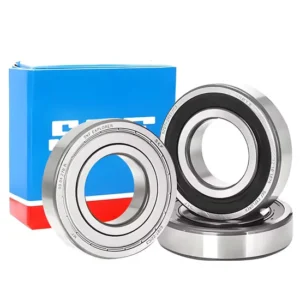
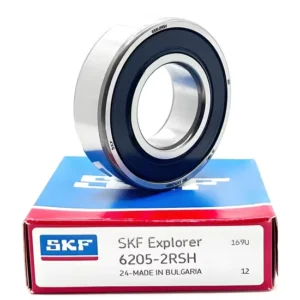
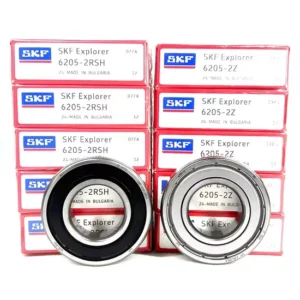
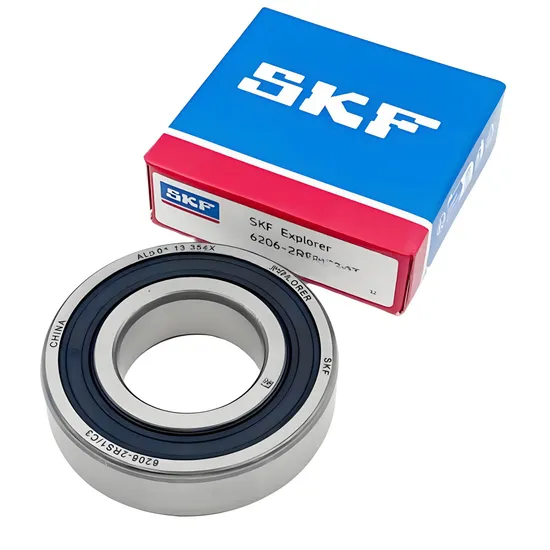
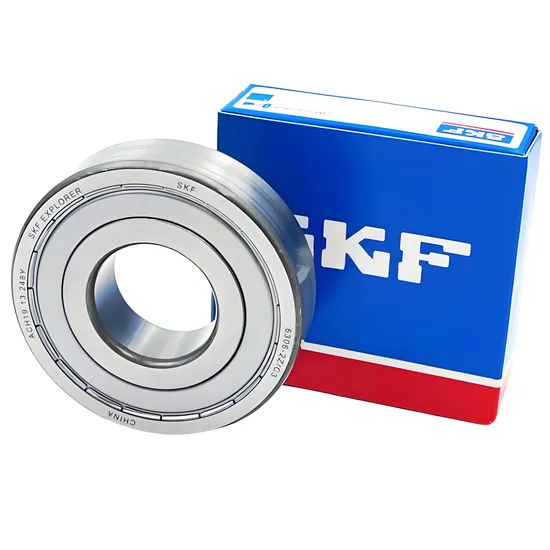
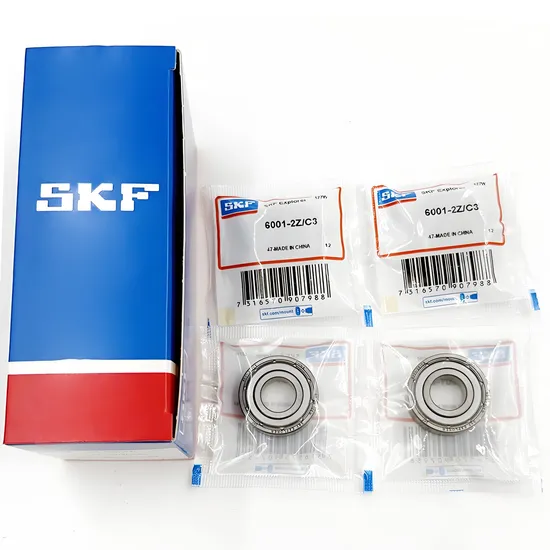
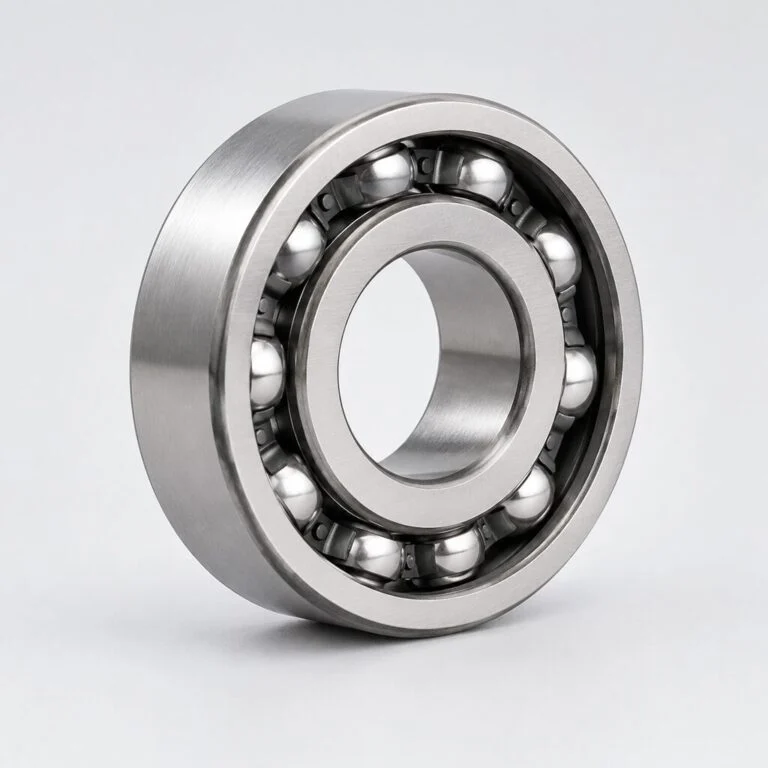
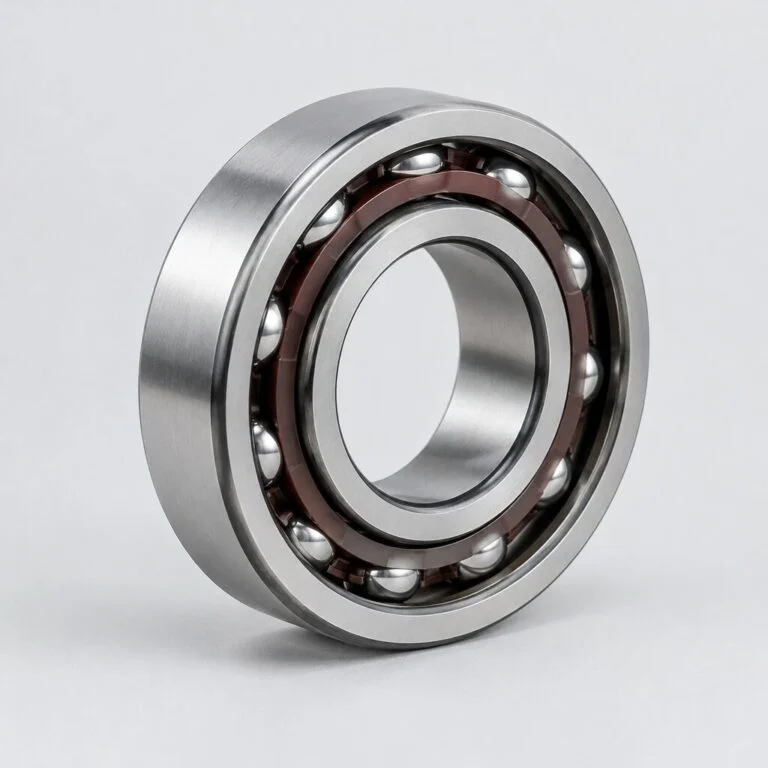
Listed data for this SKF designation; confirm the execution and dimensions against your drawing or application before ordering.
Full Brand Sourcing Coverage — Consolidate mixed-brand industrial packages into single shipments without juggling multiple regional distributors.
Technical Specifications
| Parameter | Value |
| Designation | SKF 6009-2RS1/C3 |
| Bearing Type | Deep Groove Ball Bearing |
| Bore Diameter (d) | 45 mm |
| Outside Diameter (D) | 75 mm |
| Width (B) | 16 mm |
| Cage Material | Sheet Metal |
| Seal or Shield Type | Sealed with contact seals on both sides (2RS1) |
| Clearance Class | Greater than Normal (C3) |
| Material | Bearing Steel |
Application Suitability
| Industry | Typical Applications |
| Electric Motors | Rotor shaft support in high-temperature winding environments |
| Industrial Pumps | Impeller shaft sealing against moisture and slurry ingress |
| Gearboxes | Secondary shaft support requiring maintenance-free lubrication |
Why the SKF 6009-2RS1/C3 deep groove ball bearing Prevents Thermal Seizure in Motors
Thermal expansion demands extra internal clearance to prevent rolling element jamming under continuous operational heat.
I used to troubleshoot industrial water pump motors on-site where standard clearance bearings seized after just a few months of high-temperature operation. The internal gaps simply vanished as the steel expanded, turning the bearing into a solid block of friction and completely halting the production line. Upgrading the entire fleet to a C3 clearance design completely eliminated these catastrophic lockups, proving that understanding thermal dynamics is just as critical as calculating basic radial loads.

Matching Dual Seals to Wet and Dusty Pump Environments
When sourcing replacement parts for agricultural irrigation systems or municipal water pumps, keeping abrasive contaminants out is just as critical as keeping the internal grease intact. The SKF 6009-2RS1/C3 deep groove ball bearing utilizes dual nitrile rubber contact seals to block slurry, moisture, and fine sand from reaching the precision raceways. Our procurement team ensures these sealed units arrive with factory-intact lubrication, ready for immediate installation in harsh field conditions without requiring any additional maintenance preparation. This level of contamination protection drastically reduces the frequency of unexpected impeller shaft failures during peak pumping seasons.
Navigating Radial Loads and Thermal Shifts in Industrial Gearboxes
Gearbox secondary shafts primarily endure steady radial loads, but they also generate significant internal heat during continuous power transmission cycles. This thermal buildup thins standard greases and expands the inner ring, which can crush the rolling elements if the initial internal clearance is too tight for the application. Contact seals retain the specialized high-temperature grease while preventing external gearbox oil or metallic wear debris from contaminating the bearing interior. Proper clearance selection directly dictates whether the component survives the first year of operation or requires a premature teardown. Furthermore, the sheet metal cage provides reliable structural support for the rolling elements, ensuring stable operation even when the gearbox experiences moderate vibrational shocks during startup and shutdown sequences.
Decoding the 2RS1 and C3 Suffixes for Operational Longevity
The C3 suffix indicates an internal radial clearance larger than the standard normal group, specifically engineered to accommodate the thermal expansion of the shaft and housing during high-speed or high-heat operation. Without this extra gap, the rolling elements would experience excessive preload, leading to rapid fatigue and eventual raceway spalling. Meanwhile, the 2RS1 designation confirms the presence of two nitrile rubber contact seals that physically touch the inner ring shoulders. This contact creates a tight barrier against dust and water splash, though it introduces slightly more frictional heat compared to non-contact metal shields. Choosing between sealed and shielded variants depends entirely on the contamination level and thermal profile of your specific machinery. The sheet metal cage material further complements this setup by offering excellent durability and heat dissipation properties, making it highly suitable for the standard speed ranges typically found in electric motors and industrial pumps.
The Financial Drain of Premature Seizures and Unplanned Downtime
Installing a standard clearance bearing in a high-heat application inevitably leads to smearing and severe raceway spalling as the components bind together under thermal stress. These failures rarely happen during scheduled maintenance windows, forcing emergency production halts and expensive expedited shipping for replacement parts. According to failure mode classifications outlined in ISO 15243, thermal overload and inadequate internal clearance account for a substantial portion of premature bearing rejections in heavy machinery. The true cost lies in the lost production hours and the collateral damage to adjacent shaft components, not just the price of the scrapped bearing itself. Ignoring the specific suffix requirements often results in repeated failures that drain maintenance budgets far beyond the initial procurement savings.
Securing Traceable Inventory for Critical Motor Rebuilds
Counterfeit bearings often fail to meet the precise C3 clearance tolerances required for thermal compensation, leading to immediate field failures once the motor reaches operating temperature. We source every unit through authorized channels, providing complete batch traceability documentation that proves the metallurgical origin and quality control history of your specific lot. Our massive spot inventory covers thousands of standard part numbers, allowing us to consolidate mixed-brand emergency orders into a single global shipment without delaying your rebuild schedule. Furthermore, our technical team provides cross-brand equivalent model consultation if you need to match legacy equipment specifications without waiting for extended lead times. This comprehensive approach ensures that the exact sealing and clearance configuration you require is always available when your production line goes down.
Documentation & Authenticity
- Original factory batch traceability confirming the exact production date of your C3 clearance lot.
- Official manufacturer app QR authentication verifying the 2RS1 seal specification before installation.
- Material inspection reports validating the bearing steel composition for high-temperature motor applications.
- Dimensional verification documents ensuring the 45 mm bore and 75 mm outside diameter meet strict tolerances.
Storage, Handling & Mounting
- Keep the 2RS1 sealed units in original packaging until mounting to prevent moisture from degrading the factory grease.
- Avoid using sharp metal tools to pry open the packaging, which could accidentally score the nitrile rubber contact seals.
- Store the C3 clearance bearings in a climate-controlled environment to prevent condensation from compromising the internal raceways.
- Use induction heaters for inner ring expansion during mounting, avoiding open flames that could melt the dual rubber seals.
Preparing Your Technical Parameters for Selection Review
To ensure this specific designation matches your machinery, please share your exact radial and axial load profiles alongside continuous operating temperatures and environmental contamination levels. Providing the original equipment manufacturer part numbers allows our engineering team to perform precise cross-reference verifications and confirm dimensional interchangeability. We will then review your installation space constraints to confirm whether the 16 mm width and dual seal configuration align perfectly with your existing housing design. Supplying these operational details enables us to validate the L10 life calculations and guarantee that the selected clearance class will perform reliably under your specific thermal conditions.
Frequently Asked Questions
Q: How can I verify the authenticity of the C3 clearance designation using official tools?
A: You can authenticate the bearing by scanning the QR code printed on the original packaging using the manufacturer's official mobile application. This digital verification confirms the exact production batch, the C3 internal clearance specification, and the authorized distribution channel. It effectively eliminates the risk of installing counterfeit parts that lack proper thermal expansion tolerances in high-heat motor applications.
Q: What exactly does the C3 suffix mean for deep groove ball bearings in electric motors?
A: The C3 suffix designates an internal radial clearance that is intentionally larger than the standard normal group. In electric motors, the shaft and inner ring expand significantly due to operational heat. This extra clearance compensates for that thermal expansion, preventing the rolling elements from binding and seizing under high-temperature continuous duty cycles.
Q: When should I choose 2RS1 contact seals over 2Z metal shields for pump applications?
A: You should select 2RS1 contact seals when the pump operates in wet, muddy, or highly dusty environments where liquid splash and fine particulate ingress are major concerns. The rubber lips physically touch the inner ring, creating a superior barrier against contaminants compared to the non-contact gaps of 2Z metal shields, albeit with slightly higher frictional heat generation.
Q: What are the recommended relubrication intervals for bearings with dual contact seals?
A: Bearings equipped with 2RS1 dual contact seals are pre-lubricated at the factory and designed to be maintenance-free for their entire operational lifespan. The rubber seals permanently retain the initial grease fill while blocking external contamination. Attempting to relubricate them is generally not recommended, as forcing new grease through the seals can damage the sealing lips and compromise their protective barrier.