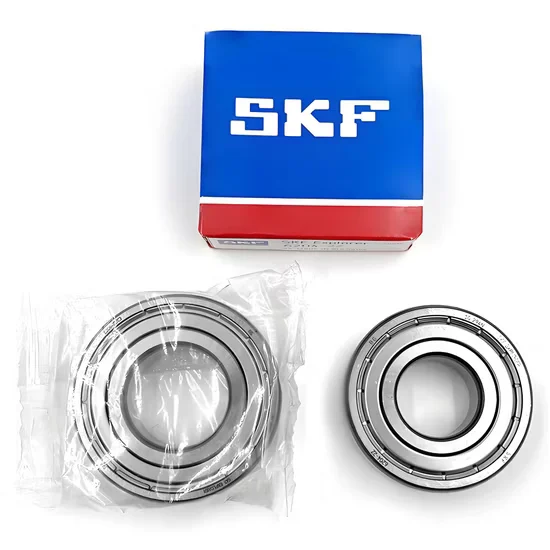
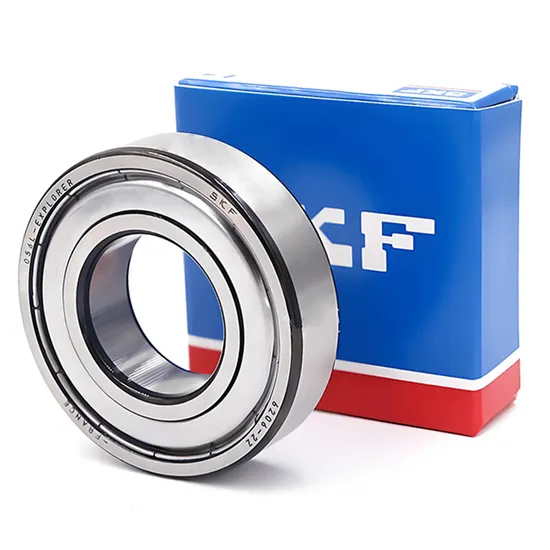
Listed data for this SKF designation; confirm the execution and dimensions against your drawing or application before ordering.
Traceable Batch Sourcing — Every Natebon 3rd generation wheel hub bearing unit ships with production lot records and Certificate of Conformity tied to the specific batch, supporting full import documentation and field traceability for NEV fleet operators.
Technical Specifications
| Parameter | Value |
| Designation | Natebon Auto Bearing (3rd Gen Hub Unit) |
| Bearing Type | Wheel Hub Bearing Unit (3rd Generation) |
| Precision Class | P0 |
| Wheel Hub System | 3rd Gen Hub Unit |
| Steering System | EPS Bearings |
| Features | Safe, Long Lifespan, Lightweight, Eco-Friendly |
| Origin | China |
| Suitable for Car Brands | Volkswagen, WuLing, Benz, BMW, Hyundai, Honda, Toyota, Jeep, Nissan, Ford, Buick, Chery, Chevrolet, Cadillac, Geely, Roewe, Audi, Peugeot, Lexus, Volvo, Mazda, Kia |
| Application | Passenger Vehicles, Commercial Vehicles, Powertrain System, New Energy Vehicles, EPS Steering System |
This is a proprietary hub unit product line; no standard bearing suffix designations apply. Specific dimensional data and load ratings vary by vehicle platform and should be confirmed against the application catalog.
Application Suitability
| Industry | Typical Applications |
| Automotive & Heavy Vehicle Repair | Wheel end hub assembly replacement for EV delivery vans and passenger sedans |
| Electric Motors | EPS electric power steering column bearing modules |
| Material Handling | Drive axle hub units on electric warehouse forklifts and AGVs |
| General MRO | Fleet maintenance wheel hub swap-out for hybrid and battery-electric commercial vehicles |
Why Dust Penetration Kills Wheel Bearings Long Before Fatigue Does
The seal is the first line of defense, and most field failures start where the seal fails.
When I sat with a fleet maintenance manager in Riyadh, half his electric delivery vans were back in the shop within three months. The hub bearings had non-contact metal shields — technically correct on paper, but desert fines had migrated past the shield gap, contaminated the factory grease, and turned the rolling surfaces into a grinding paste.. In new energy vehicle platforms, unscheduled hub replacement is not just a parts cost; it pulls a revenue-earning vehicle off route and cascades through delivery schedules. Counterfeit or poorly sourced Natebon 3rd generation wheel hub bearing unit assemblies often ship with seals that look right in the box but lack the lip contact pressure needed to actually keep road debris out under sustained operation.

Matching the Hub Unit to NEV Wheel End Duty
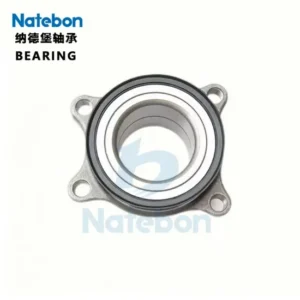
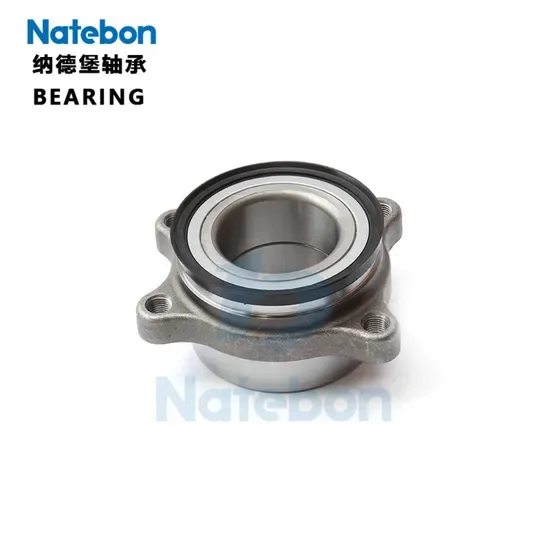
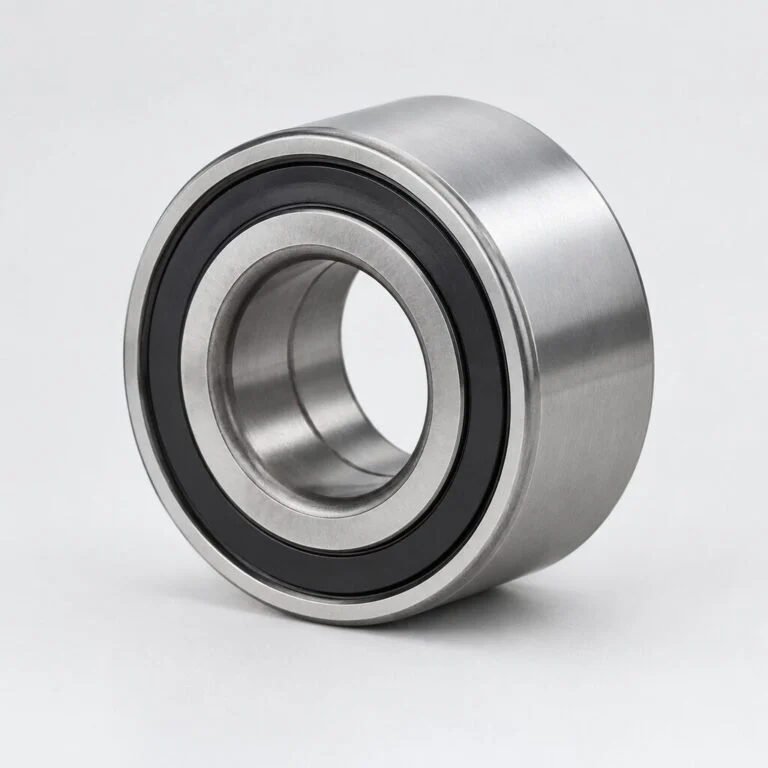
The Natebon 3rd generation wheel hub bearing unit for new energy vehicles integrates inner ring, outer ring, rolling elements, and sensor ring into a single pre-assembled module. This integration matters because NEV wheel ends carry additional mass from regenerative braking components and see torque reversal patterns that differ from conventional drivetrains. When a workshop pulls a worn hub and presses in a replacement that lacks the correct ABS sensor ring spacing, the traction control system throws faults that sideline the vehicle even though the bearing itself is mechanically sound. We have seen procurement teams match the outer diameter and bolt pattern but overlook the sensor ring specification — a mismatch that only surfaces after the van is back on the road. Our cross-reference checks flag these platform-specific details before the purchase order is placed.
Load Spectrum and Sealing Demands at the Wheel End
Wheel hub units in passenger and commercial EVs endure combined radial and axial loading that shifts with every corner, curb strike, and braking event. The bearing runs at speeds proportional to road velocity while managing splash water, brake dust, and in arid regions, fine silica sand that migrates along the axle spindle. Temperature cycling from brake heat on long descents then expands internal clearances and thins the grease film at precisely the moment the seal lip needs to stay seated.. Contact seals with proper lip preload hold this line; non-contact shields pass the catalog spec but leave a gap that contaminants exploit over thousands of kilometers. Installation practice matters equally — pressing the hub unit in skewed or without a controlled interference fit can distort the outer ring and shift the seal geometry before the vehicle even leaves the bay.
What the Third-Generation Design Actually Changes
The 3rd generation hub unit merges the bearing races and the wheel flange into one machined assembly, eliminating the press-fit interfaces that earlier generations relied on. This means the rolling contact geometry and the seal seat concentricity are set at the factory and cannot be disturbed by field installation force. The P0 precision class meets the dimensional and running accuracy requirements for general passenger and commercial vehicle wheel hub duty, keeping noise and vibration within acceptable thresholds for cabin comfort. Lightweight construction reduces unsprung mass at each wheel corner, which matters for NEV range targets where every kilogram of rotating and reciprocating mass draws from the battery. The pre-greased, sealed-for-life design removes the re-lubrication variable that often introduces contamination during maintenance.
The Hidden Cost of Sourcing the Wrong Hub Assembly
A hub unit that fits the bolt pattern but carries the wrong internal clearance or sensor ring offset does not fail gracefully — it generates ABS fault codes, accelerates tire wear on one side, or produces a low-frequency hum that customers attribute to the drivetrain.. When the root cause is traced back, the vehicle has already accumulated mileage on a compromised assembly, and the fleet operator faces not just the replacement part cost but the labor for a second teardown, the alignment correction, and the customer confidence hit. Genuine Natebon 3rd generation wheel hub bearing unit assemblies sourced with batch documentation avoid this cascade because the dimensional inspection and seal integrity checks happen before the carton leaves the warehouse.
How We Verify What You Receive
Traceability starts with a Certificate of Conformity tied to the specific production lot, so the hub units you install can be linked back to their manufacturing batch. We source through verifiable channels and cross-reference each inquiry against the vehicle platform specification — checking not only the outer dimensions but the sensor ring type, the seal configuration, and the flange bolt pattern. Origin documentation is prepared alongside the shipment so your import clearance proceeds without hold-ups. Our team reviews application parameters with you before quotation, catching mismatches in platform generation or steering system compatibility that catalog lookups alone would miss.
Documentation & Authenticity
- Supplier Certificate of Conformity listing the production lot number for each carton of hub units shipped
- Material certificates confirming bearing steel grade used in the inner and outer rings
- Third-party dimensional inspection reports covering flange runout and bore tolerance for the specific batch
- Country-of-origin documentation formatted for customs clearance in destination markets
- Batch and lot traceability linking each hub unit to its production date and factory line
Storage, Handling & Mounting
- Store each Natebon 3rd gen hub unit in its sealed factory packaging until the moment of installation; premature opening exposes the pre-packed grease to workshop airborne particulates
- Keep cartons horizontal on shelving in a dry environment — the integrated sensor ring on this 3rd generation unit can be damaged by impact if heavy items are stacked on top
- Mount using a hydraulic press with a flat, parallel adapter plate that contacts the outer ring flange only; driving force through the inner ring can brinell the raceway and create vibration signatures that mimic imbalance
- Verify the ABS sensor ring alignment with the vehicle knuckle sensor pocket before final torque on the hub bolts — a clocking error here causes traction control faults that are costly to diagnose in the field
- Do not apply additional grease to this sealed-for-life unit; the factory fill volume and grease type are calibrated for the service interval
Request a Technical Review Before You Commit
Share your vehicle platform code, annual volume requirement, and destination port so we can confirm the correct Natebon 3rd generation wheel hub bearing unit variant, validate the sensor ring and seal specification against your application, and prepare the documentation package for your import process. We can also provide a sample batch for your workshop to trial-fit before you commit to production quantities.
Frequently Asked Questions
Q: What is the difference between 1st, 2nd, and 3rd generation wheel hub bearing units?
A: First-generation units are simple bearing cartridges pressed into a separate hub. Second-generation units add an integrated flange on one ring, typically the outer ring. Third-generation units merge both the inner and outer rings with the wheel flange and sensor ring into a single pre-assembled module, eliminating installation interfaces that can introduce misalignment or preload errors in the field.
Q: How can I verify the origin and batch of hub units received from a non-branded supplier?
A: Request a Certificate of Conformity that references the production lot number, along with country-of-origin documentation. Cross-check the lot number with the supplier before shipment and verify that the dimensional inspection report covers the specific batch you are receiving, not a generic template.
Q: What should I inspect when receiving a shipment of 3rd gen hub units?
A: Check seal lip integrity for any nicks or deformation from transit. Confirm the ABS sensor ring is present and undamaged. Verify flange bolt hole count and pitch circle diameter match your vehicle platform. Measure flange face runout with a dial indicator to confirm it is within the P0 tolerance band specified for the Natebon 3rd generation wheel hub bearing unit.
Q: How do I cross-reference a hub unit by OEM equipment number?
A: Provide the OEM part number along with the vehicle make, model year, and platform code. The cross-reference must verify not only the outer dimensions and bolt pattern but also the sensor ring type, seal configuration, and whether the unit is designed for driven or non-driven axle positions, as these differ even within the same vehicle platform.
Q: What are common failure modes of wheel hub units in new energy vehicles?
A: The higher unsprung mass from battery placement and regenerative braking torque reversals can accelerate fatigue spalling on raceways. Seal failure from road contamination is the more frequent issue, as brake dust from heavier vehicles is more abrasive. Ensuring the correct seal type and verifying grease integrity on receipt address the majority of early-life failures..
Secure Your Hub Unit Supply with Verified Traceability
Send us your vehicle platform list and destination port so we can prepare a matched quotation with full batch documentation for your next procurement cycle.