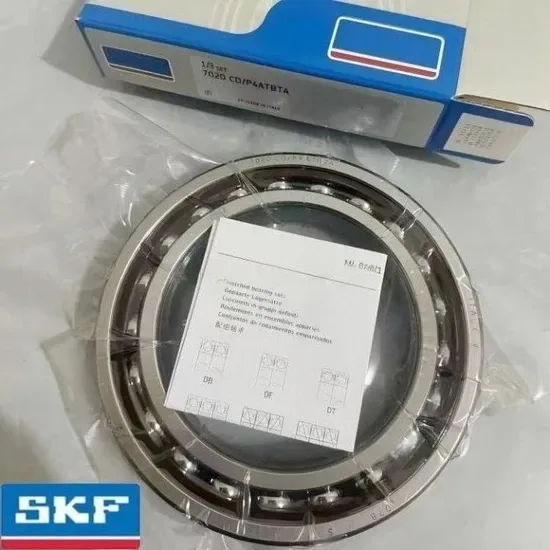
Listed data for this SKF designation; confirm the execution and dimensions against your drawing or application before ordering.
Sourcing Through Authorized Channels — Every Natebon Precision Wheel Bearing 3rd Gen Hub Unit ships with batch-level traceability and verifiable origin documentation, eliminating blind spots that counterfeit supply chains exploit.
Technical Specifications
| Parameter | Value |
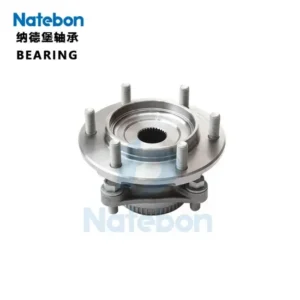
| Designation | Natebon Precision Wheel Bearing 3rd Gen Hub Unit |
| Bearing Type | Wheel Hub Unit (3rd Generation) |
| Material | Chrome Steel |
| Precision Class | P0 |
| Wheel Hub System | 3rd Gen Hub Unit |
| Steering System | EPS Bearings |
| Origin | China |
Note: Specific dimensional data (bore, OD, width, load ratings, limiting speed, weight) and suffix details for this exact hub unit variant remain unverified against the manufacturer catalog; confirm full designation with your application requirements before ordering.
Application Suitability
| Industry | Typical Applications |
| Automotive Repair & MRO | Passenger vehicle wheel hub assemblies, front and rear axle replacements |
| Commercial Vehicle Maintenance | Light and medium-duty truck hub units subject to higher load cycles |
| Electric Power Steering Systems | EPS column and rack-mounted bearing positions in modern steering columns |
| Powertrain Service | Driveline-adjacent hub positions where integrated sensor encoders are required |
What Happens When a Hub Bearing Fails Prematurely on the Highway
A clearance or precision mismatch in a wheel hub unit does not announce itself until the damage is already done.
Pull a seized hub assembly off a vehicle that just covered twenty thousand kilometers, and you will often find the QR code on the box scans perfectly. The packaging looks right. The outer dimensions measure within tolerance. Yet the inner ring shows spalling patterns that indicate it was never rated for the thermal expansion that highway sustained-speed driving demands. This is the exact scenario where a Natebon Precision Wheel Bearing 3rd Gen Hub Unit sourced through a verified channel makes the difference — not because the base number matches, but because the full specification including material grade, precision class, and sensor encoder integration has been confirmed against the application before it ever leaves the warehouse.

How the 3rd Gen Design Fits Modern Wheel-End Architectures
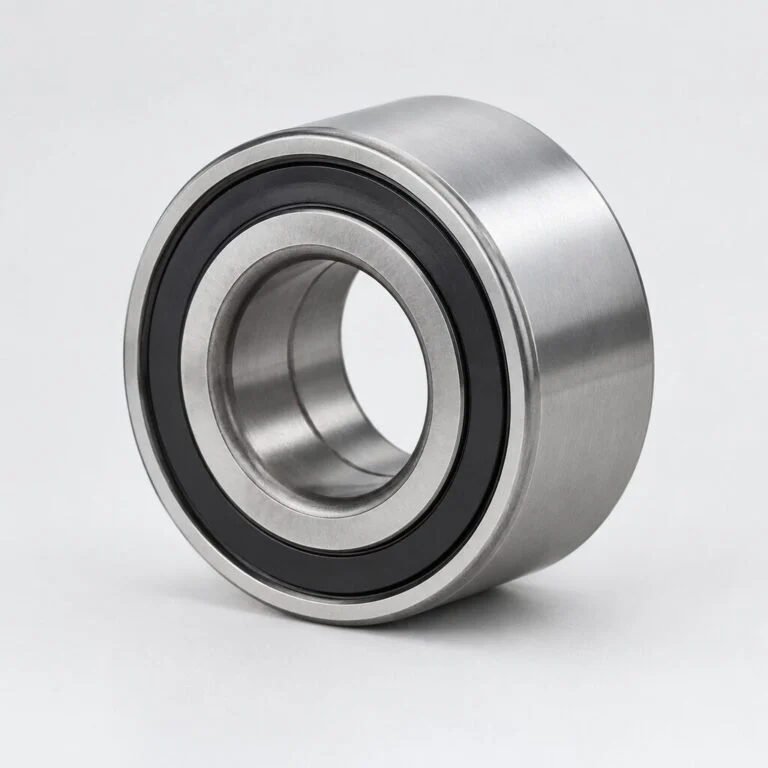
The third-generation hub unit integrates the inner ring, outer ring, and ABS sensor encoder into a single pre-assembled cartridge, which removes two variables that plague older generation hub replacements: field adjustment of preload and contamination ingress during separate component installation. When a workshop installs a Natebon Precision Wheel Bearing 3rd Gen Hub Unit, the chrome steel construction and P0 precision class provide the dimensional consistency that modern ABS and traction control systems depend on for accurate wheel speed signal generation. In one distributor account we supported, switching from an unverified hub source to a documented supply chain resolved a recurring ABS fault code that had been misdiagnosed three times — the earlier units had encoder ring runout outside the sensor's tolerance window.
Loads, Speeds, and Thermal Reality at the Wheel End
A wheel hub bearing lives in a hostile combination of radial load from vehicle weight, axial load from cornering, and shock loading from road irregularities — all while cycling through ambient temperature swings and brake-generated heat. Chrome steel provides the hardness and fatigue resistance needed for these conditions, but only when the material batch and heat treatment are consistent across production lots. Sealed third-generation units are factory-lubricated and not designed for re-greasing in the field, which means the initial lubricant fill and seal integrity determine the entire service life. P0 precision class meets ISO normal tolerance requirements, which is appropriate for standard passenger and commercial vehicle hub positions where the tolerance stack-up with the knuckle and axle flange is designed around this grade.
Decoding the Specification: Why Material and Precision Matter Together
Chrome steel, typically equivalent to SAE 52100 or 100Cr6, achieves surface hardness in the HRC 58-62 range after through-hardening, giving the raceways the contact fatigue resistance that wheel hub applications demand over tens of thousands of kilometers. The P0 precision class — sometimes referenced as ABEC 1 in the North American system — defines the allowable deviations in bore diameter, outside diameter, and width, along with running accuracy limits for inner and outer ring runout. For a third-generation hub unit, this precision grade aligns with the design intent of most OEM wheel-end systems, where the suspension geometry and ABS sensor gap are engineered around normal-class tolerances. The integrated sensor encoder in a 3rd Gen hub unit adds another dimension: its magnetic pole pitch and runout must stay within tight limits to produce a clean square-wave signal to the ABS module, and this is where inconsistent manufacturing quality in unverified units typically causes field failures.
The Downtime Equation Nobody Puts on the Purchase Order
A single warranty return on a hub bearing involves more than the cost of the part: there is the labor to remove and reinstall, the diagnostic time to rule out ABS sensor or wiring faults, the customer confidence loss, and — for fleet operators — the vehicle off-road time. When the root cause traces back to an underspecified or counterfeit hub unit, the purchasing decision that saved a small margin upfront has cost multiples in downstream liability. Correct selection means confirming that the Natebon Precision Wheel Bearing 3rd Gen Hub Unit matches not just the vehicle platform's base part number, but also the OEM's precision, material, and encoder specifications. Failure classification per ISO 15243 provides the framework to distinguish between failures caused by manufacturing defects, contamination, incorrect mounting, and specification mismatch — and that distinction determines whether a warranty claim is valid or whether the problem will simply repeat on the next replacement.
How Verification Actually Works in Our Supply Chain
Every Natebon Precision Wheel Bearing 3rd Gen Hub Unit we supply is sourced through channels that provide batch-level documentation, not just a box with a logo. Our cross-reference process goes beyond matching the base vehicle application number: we verify that the precision class, material specification, and sensor encoder type align with what the OEM designed for that specific axle position. When a buyer sends us an OEM equipment number or VIN-derived application code, we return a cross-reference that includes the full suffix breakdown and interchange equivalents where applicable. Country-of-origin documentation accompanies each shipment so that import clearance and buyer-side quality audits have the paperwork they need. This is not about having the largest warehouse — it is about every unit that leaves our dock being traceable back to a confirmed production batch.
Documentation & Authenticity
- Supplier Certificate of Conformity (COC) referencing the specific batch and production lot for each Natebon Precision Wheel Bearing 3rd Gen Hub Unit shipment, enabling downstream traceability audits.
- Chrome steel material certificate confirming chemical composition and heat treatment compliance for the bearing steel used in the hub rings and rolling elements.
- Third-party dimensional inspection report verifying P0-class bore, OD, width tolerances, and encoder ring runout before dispatch.
- Country-of-origin documentation package prepared for import clearance, including HS code classification support for wheel hub bearing assemblies.
- QR code verification pathway guidance via brand official apps where applicable, so receiving inspectors can authenticate packaging and product markings on arrival.
Storage, Handling & Mounting
- Retain the original sealed packaging until the moment of installation; premature exposure to workshop humidity risks corrosion on the chrome steel raceways of this sealed 3rd Gen hub unit.
- Store hub units horizontally on a flat shelf — vertical stacking of boxed units can transfer point loads through the packaging and cause brinelling marks on the raceways before the bearing ever reaches the vehicle.
- Use clean gloves when handling the hub flange and encoder surface; fingerprint residue on the magnetic encoder ring can interfere with ABS sensor signal quality.
- During press-in installation, apply force only to the outer ring flange — never press through the inner ring or sensor encoder, as this transfers the full mounting load through the rolling elements and causes immediate raceway damage.
- Confirm the knuckle bore and axle flange dimensions are within OEM tolerance before installation; an out-of-round knuckle bore will distort the outer ring of this P0-precision hub unit and accelerate wear.
- Torque the axle nut to the vehicle manufacturer's specification using a calibrated wrench — under-torque allows hub play that destroys the bearing within thousands of kilometers, while over-torque eliminates the designed internal clearance.
Ready to Confirm Fitment for Your Application
Share the OEM hub assembly number, vehicle platform, or VIN-derived application code so we can return a verified cross-reference with full specification alignment. If you need batch documentation or country-of-origin paperwork for import planning, specify that in your initial inquiry and we will include it with the quotation. Lead time and available quantities depend on the specific hub unit variant, so early confirmation ensures your maintenance schedule stays on track.
Frequently Asked Questions
Q: How can I verify the authenticity and origin of a Natebon Precision Wheel Bearing 3rd Gen Hub Unit upon delivery?
A: Each shipment includes a Supplier Certificate of Conformity tied to the production batch, along with country-of-origin documentation. Where brand official app QR verification is supported, we provide the verification pathway so your receiving team can scan and confirm packaging authenticity on arrival. Material certificates and third-party dimensional reports are available as part of the documentation package.
Q: What cross-reference checks should I perform beyond matching the base part number?
A: A reliable cross-reference must align three elements: the vehicle platform fitment, the precision class (P0 in this case), and the sensor encoder type and signal format. Matching only the base number while overlooking these parameters is a frequent cause of ABS fault codes and premature hub failure in the field. We return a complete interchange comparison addressing all three dimensions.
Q: Is P0 precision sufficient for automotive wheel hub applications, or should I look for P6 or higher?
A: P0 precision (ISO normal class) is the standard specification for the vast majority of passenger and commercial vehicle wheel hub positions. Higher precision classes such as P6 or P5 are typically specified for machine tool spindles or high-speed electric motor applications where running accuracy directly affects process quality. Upgrading to a higher class in a wheel hub application adds cost without measurable benefit unless the OEM specifically calls for it.
Q: Can a sealed 3rd generation hub unit be re-lubricated in the field?
A: No. Third-generation hub units are factory-sealed and pre-lubricated for their full service life. Attempting to introduce grease through the seal will compromise seal integrity and introduce contamination. If a hub unit shows signs of lubrication failure (noise, play, ABS faults), the correct action is complete unit replacement.
Q: What is the typical process for placing a bulk order as a distributor or fleet MRO buyer?
A: The process starts with application confirmation — share the vehicle platforms or OEM part numbers you need covered, and we return verified cross-references with documentation details. After quotation and lead time confirmation, we support sample or trial batches for new applications before moving to volume orders, each accompanied by pre-shipment inspection and the full documentation package.
Confirm Your Hub Bearing Requirement — Get a Verified Cross-Reference and Documentation Package
Send us the OEM equipment number, vehicle application details, or specific hub unit designation, and we will return a complete specification match with pricing, lead time, and available documentation for your review.