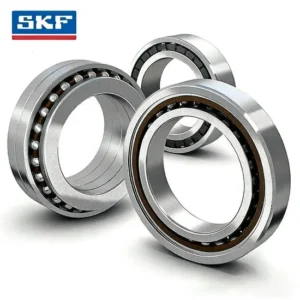
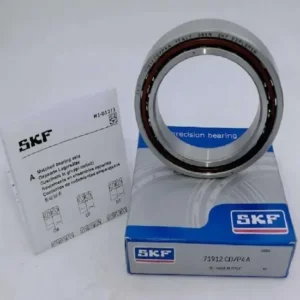
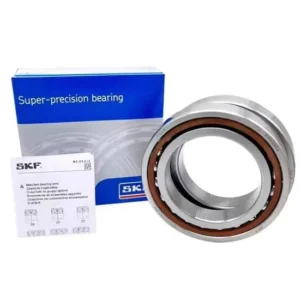
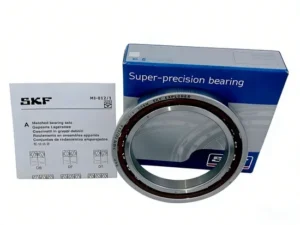
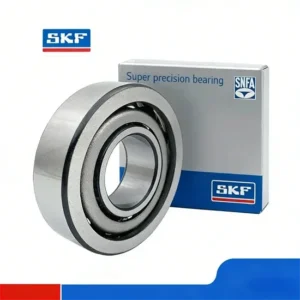
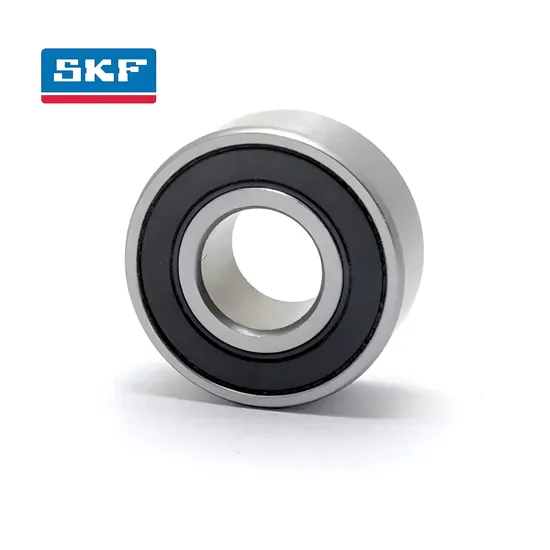
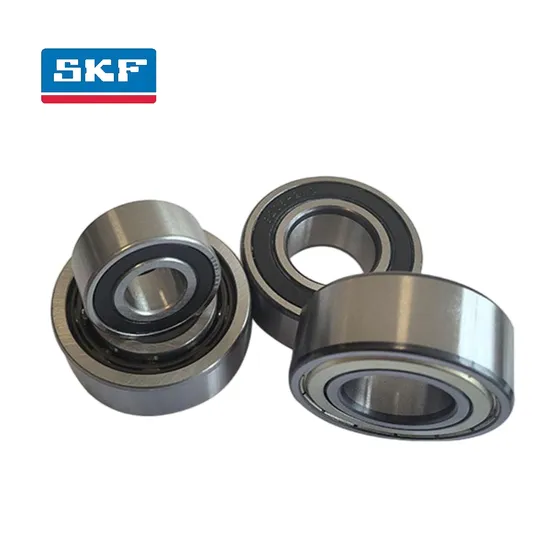
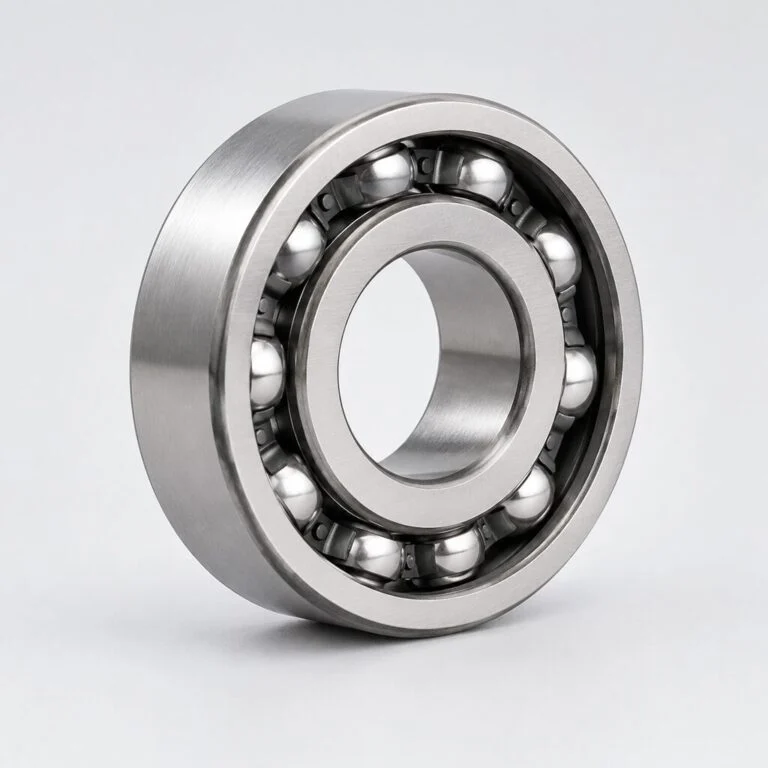
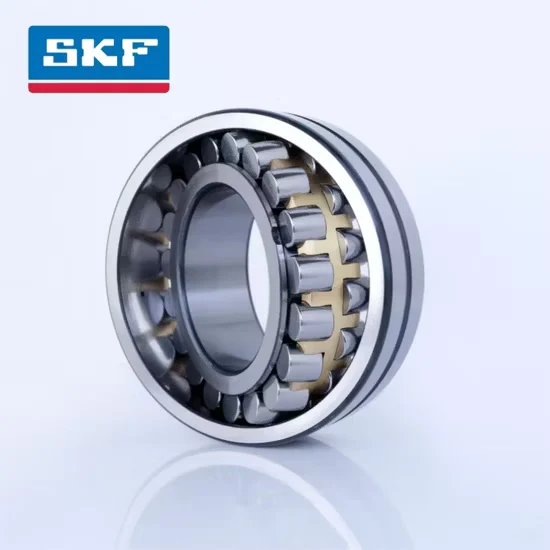
Listed data for this SKF designation; confirm the execution and dimensions against your drawing or application before ordering.
Authorized Sourcing Channels — Every SKF HCB7005-C-P4S unit we ship traces back through verified distributor networks with full batch documentation preserved from origin to delivery.
Technical Specifications
| Parameter | Value |
| Designation | SKF HCB7005-C-P4S |
| Bearing Type | Angular Contact Ball Bearing |
| Bore Diameter (d) | 55 mm |
| Precision Class | P4 (ISO 492) |
| Contact Angle | 15° (suffix C) |
| Number of Rows | Single Row |
| Arrangement | Single |
| Weight | 0.100 kg |
| Origin | China |
| Bore Type | Cylindrical |
| Customization | Available |
Note: The suffixes HCB and S appear in this designation but remain unverified against the manufacturer's published catalog; their exact meaning should be confirmed before finalizing application-critical orders.
Application Suitability
| Industry | Typical Applications |
| Industrial Machinery | CNC milling spindle nose bearing |
| Precision Equipment | Optical grinding head support |
| Robotics | High-speed joint actuator shaft |
| Electric Motors | High-frequency motor spindle end |
What Happens When Suffix Blindness Wrecks a Spindle
Buying an SKF HCB7005-C-P4S angular contact ball bearing by base number alone is a gamble most maintenance engineers don't realize they're taking. The suffix string carries the entire engineering intent.
I've seen procurement teams match the "7005" and "P4" while ignoring the C contact angle designation entirely — then wonder why thermal expansion at sustained high RPM causes axial preload loss and eventual raceway spalling. In one case, a furniture CNC shop substituted a P0-grade 15° bearing where P4 precision was required. The spindle ran fine at low speed but developed chatter marks on workpiece surfaces within the first production shift. The cost wasn't just the bearing — it was scrapped production batches and a two-day unplanned shutdown.

Matching Precision to Spindle Demands
Machine tool spindles running above typical industrial motor speeds demand bearings that hold dimensional stability under thermal load. The SKF HCB7005-C-P4S angular contact ball bearing reaches P4 tolerance class, meaning its bore, outside diameter, and running accuracy meet tighter ISO 492 limits than standard P5 alternatives. When a grinding head operates at the upper boundary of grease lubrication intervals, even minor inner ring runout compounds into visible workpiece finish defects. We cross-check incoming spindle specifications against our interchange database — not just matching base numbers but verifying that contact angle, cage type, and precision class all align before proposing an alternative brand.
Thermal Growth and the 15° Contact Angle Trade-off
The C suffix specifies a 15° contact angle, which directly shapes how this bearing behaves under load. A 15° angle generates lower friction heat than 25° or 40° variants, making it suitable where radial loads dominate and spindle speeds push toward the lubrication limit. However, axial stiffness drops proportionally. In a CNC router spindle experiencing intermittent axial cutting forces, this trade-off must be evaluated against the duty cycle. Temperature rise inside the housing reduces effective internal clearance, and if the original design called for C specifically, substituting a higher angle bearing without adjusting preload introduces binding risk. Lubrication selection — oil-air versus grease-packed — further shifts the thermal equilibrium point.
Decoding What the Suffix String Actually Controls
The P4 precision class means this bearing meets ISO tolerance class 4 requirements for dimensional and running accuracy, tighter than the common P5 grade used in general industrial motors. For a 55 mm bore spindle bearing, this translates to controlled inner ring runout and bore variation that keep the rotating assembly centered at high speed. The single-row angular contact architecture supports combined radial and axial loads in one direction, which is why spindle designs typically mount these in paired arrangements — the mating bearing's orientation and preload class must match. The C contact angle at 15° keeps friction low under predominantly radial cutting forces but requires the designer to confirm that axial stiffness is adequate for the specific tool holder and cutting regime. Cage material, seal configuration, and pairing arrangement are all encoded in suffixes that sit outside this particular designation string.
The Invoice Price Is the Smallest Number on the Failure Report
Correct bearing selection backed by traceable sourcing protects against failure modes that dwarf the procurement cost. A mismatched precision class installed in a high-speed spindle may pass initial run-in testing but develops progressive geometric error as raceway wear accelerates under runout stress. Counterfeit bearings with cloned markings and soft inner rings produce surface spalling that contaminates the entire lubrication system. When a seized spindle forces a complete teardown, the replacement bearing cost becomes a rounding error against lost production hours, scrapped workpieces, and emergency freight charges. ISO 281 establishes the life calculation framework, but that framework assumes correct selection — a variable that no fatigue model compensates for.
How We Keep Sourcing Honest
Every SKF HCB7005-C-P4S we supply enters our inventory through authorized distributor channels with chain-of-custody documentation. We pull batch traceability records at the point of receipt, not after the fact. Our cross-reference database covers SKF, NSK, FAG, TIMKEN, NTN, and KOYO interchange data — but we flag clearance, cage, and precision mismatches before quoting alternatives, because a base-number match with the wrong suffix causes field failures. For buyers importing into regions with strict origin documentation requirements, we prepare country-of-origin certificates and HS code paperwork with each shipment. When an application pushes into unusual speed or load territory, our engineering team reviews the selection against the operating parameters you provide rather than simply shipping what was asked for.
Documentation & Authenticity
- Supplier Certificate of Conformity with batch number linking this SKF HCB7005-C-P4S to its production lot
- Material certificate confirming bearing steel composition and heat treatment condition
- Dimensional inspection report verifying P4-class bore and outside diameter tolerances before dispatch
- QR code scan pathway through SKF's official verification application for on-site authenticity checks
- Country-of-origin documentation formatted for customs clearance in the destination market
- HS code and import classification support included with commercial invoice
Storage, Handling & Mounting
- Retain the factory-sealed packaging on this 0.100 kg bearing until the moment of installation to prevent moisture ingress that could compromise P4 running accuracy
- Store flat in a temperature-stable environment away from direct sunlight, as thermal cycling of thin-section angular contact bearings can cause condensation inside unsealed packaging
- Use lint-free gloves when handling the bore and outside diameter surfaces; fingerprint residue on P4-precision raceways accelerates corrosion pitting under high-speed operation
- Confirm spindle housing and shaft fit tolerances match the 55 mm bore specification before pressing; interference fits that exceed the design envelope collapse internal clearance in single-row angular contact bearings
- If this bearing mounts as part of a paired arrangement, verify the V-marks and pairing orientation before separating components from their matched set packaging
Ready to Verify the Fit?
Share your spindle speed, load profile, and operating temperature so we can confirm whether this 15° contact angle and P4 class selection matches your application. Provide the OEM equipment number for a full cross-reference check including suffix alignment. Request the documentation package and origin confirmation for your import compliance team. Confirm batch availability and projected dispatch timing against your maintenance window.
Frequently Asked Questions
Q: What do the C and P4 suffixes mean in this bearing designation?
A: The C suffix indicates a 15° contact angle, which balances lower friction heat generation with moderate axial stiffness — suitable where radial loads dominate. P4 denotes ISO tolerance class 4, providing tighter dimensional and running accuracy than P5 or P0 grades for precision spindle applications.
Q: How does ISO P4 precision compare to ABEC 7?
A: ISO P4 and ABEC 7 occupy roughly equivalent positions in their respective tolerance frameworks, but they are not identical standards. Certain applications requiring enhanced running accuracy — such as high-frequency grinding spindles — may specify P4A, which tightens specific running accuracy parameters beyond standard P4 limits.
Q: What cross-reference checks are needed beyond matching the base number?
A: Contact angle, cage material and design, precision class, and clearance must all align between the original and substitute bearing. A 7005 base designation with P4 precision but a different contact angle or cage type can produce thermal binding or premature cage failure under the same operating conditions.
Q: How can I verify that the bearing I receive is genuine SKF?
A: Each genuine bearing carries a unique QR code scannable through SKF's official mobile application, linking to production batch data. We also supply chain-of-custody documentation from authorized distributor channels. Counterfeit bearings increasingly clone QR codes, so verification should include both the digital scan and physical inspection of packaging quality, marking consistency, and accompanying certificates.
Q: Are the HCB and S suffixes standard SKF designations?
A: These suffixes appear on the designation string but are not found in the current publicly available SKF catalog for this bearing family. We recommend confirming their specific meaning — whether they denote special cage materials, preload classes, or manufacturing variants — directly against the manufacturer's technical documentation before placing application-critical orders.
Verify Your Spindle Bearing Selection Today
Send us your application parameters or OEM part number for a complete technical review and documentation package. Our engineering team responds with cross-reference analysis, origin confirmation, and lead time within one business day.