
SKF-Grade vs ZKL Custom OEM Bearings Wholesale Supplier | Bulk Pricing
"SKF-grade" is not a technical standard — it is a marketing shorthand that means nothing on a purchase order unless you specify the exact tolerance grade, vibration class, material certification, and clearance group behind it.
When buyers search for Custom OEM Bearings SKF vs ZKL, what they actually need is a side-by-side parameter comparison that tells them which tier fits their application — not a brand loyalty debate. The short answer: SKF-tier bearings reach P5/P4 precision with Z2/Z3 vibration classes as standard offering, while ZKL-tier bearings typically deliver P0/P6 precision with Z1/Z2 vibration classes at a noticeably lower unit cost. For high-speed motors and precision spindles, go SKF-tier; for conveyors, agricultural machinery, and general industrial gearboxes, ZKL-tier is the rational choice. The mistake I see most often is buyers ordering "SKF-equivalent" without writing any of these parameters into the contract — and then blaming the supplier when the bearings fail prematurely.
I learned this the hard way. A South American distributor once ordered a full container of 6205 deep groove ball bearings under his own private label, destined for local electric motor assemblers. He told us "SKF-grade quality" was essential. We shipped standard P0 tolerance, Z1 vibration class — perfectly acceptable for general industrial use. Three months later, the motors were failing in the field: excessive noise, premature bearing wear, warranty claims piling up. His complaint? "You said SKF-grade, but these are nothing like SKF." The reality was that motor applications at those speeds required at least P6 tolerance and Z2 vibration class — parameters he never specified. The bearings we produced were exactly what his purchase order described. The gap was between what he said and what he wrote.
That single dispute reshaped how I handle every inquiry for Custom OEM Bearings SKF vs ZKL — and it should reshape how you write your next purchase order.
What Does "SKF-Grade" Actually Mean on a Bearing Purchase Order?
It means nothing verifiable unless you translate it into ISO-standard parameters. "SKF-grade" is a phrase buyers use when they want high precision and low vibration — but it carries no contractual weight. No international standard defines "SKF-grade." No inspection lab tests for it. When a buyer writes "SKF-grade" on an RFQ, the supplier is left to guess which specific parameters the buyer actually needs.
The SKF brand itself produces bearings across multiple precision tiers — from standard P0 industrial grades up to P4 and P2 for machine tool spindles and aerospace applications. Their Explorer-class spherical roller bearings, for instance, feature optimized internal geometry that extends fatigue life well beyond basic ISO rating calculations. But when a buyer in Lagos or São Paulo asks for "SKF-grade" from a Chinese OEM supplier, they usually mean P6 tolerance, Z2 vibration, and GCr15 carbon chromium steel — not the full Explorer specification.
Here is what "SKF-grade" typically translates to in actual procurement language:
| Parameter | What "SKF-Grade" Usually Implies | What ZKL-Tier Typically Delivers |
|---|---|---|
| Tolerance Grade | P6 or P5 per ISO 492 | P0 or P6 per ISO 492 |
| Vibration Class | Z2 or Z3 per ISO 15242 | Z1 or Z2 per ISO 15242 |
| Material | Vacuum-degassed GCr15 | Standard GCr15 |
| Clearance | C3 or per application spec | C0 (standard) unless specified |
| Documentation | Full batch-level material certs | Sample-level or self-reported |
| Surface Finish | Noticeably superior raceway finish | Standard raceway finish |
This is not about one being "better" than the other in absolute terms. It is about matching the specification to the application. A mining conveyor running at low speed under heavy radial load does not need P5 precision — it needs load capacity and robust sealing. Paying for SKF-tier precision in that application is burning money.
The takeaway: never write "SKF-grade" on a purchase order. Write the actual ISO class. If you are not sure which class you need, that is a selection problem — and we will get to that.
Custom OEM Bearings SKF vs ZKL: A Specification Comparison Matrix
The real difference between SKF-tier and ZKL-tier custom OEM bearings lies in four measurable dimensions — tolerance, vibration, material certification depth, and documentation rigor — not in vague brand prestige.
When I sit down with a buyer to compare Custom OEM Bearings SKF vs ZKL, I pull up the same framework every time. Let me walk you through it using four of the most commonly ordered models in our catalog: 6205, 6206, 6305, and 22320.
| Model | Parameter | SKF-Tier | ZKL-Tier |
|---|---|---|---|
| 6205 | Tolerance | P5 | P0 |
| 6205 | Vibration | Z3 | Z1 |
| 6205 | Material Cert | Full batch-level, verifiable | Sample-level, self-reported |
| 6206 | Tolerance | P6 | P0 |
| 6206 | Vibration | Z2 | Z1 |
| 6305 | Tolerance | P6 | P6 |
| 6305 | Vibration | Z2 | Z1 |
| 6305 | Clearance | C3 standard | C0 unless specified |
| 22320 | Tolerance | P5 | P0 |
| 22320 | Vibration | Z2 | Z1 |
| 22320 | Cage | Machined brass, controlled | Stamped steel, standard |
| 22320 | Documentation | Full batch-level, verifiable | Sample-level, self-reported |
Notice that the ZKL-tier column is not "bad" — it is simply a different cost-performance point. For a general-purpose industrial fan running at moderate speed, a 6305 at P6/Z1 will perform adequately and cost noticeably less than the SKF-tier equivalent. The question is always: what happens if the bearing underperforms?
A Middle East distributor once asked us to produce a private-label batch of 22320 spherical roller bearings for a mining conveyor application. The conveyor ran at low speed, carried heavy loads, and operated in a dusty environment. The distributor initially wanted SKF-tier pricing and quality. After we walked through the application parameters together, he realized that P0 tolerance and Z1 vibration were entirely sufficient — the critical factors were load rating, seal effectiveness, and grease retention, not precision. Switching to ZKL-tier saved him a substantial amount per unit across a full order, with zero impact on field performance.
The pattern I see across hundreds of inquiries: buyers who specify correctly save money. Buyers who specify "SKF-grade" and hope for the best either overpay or underreceive.
How to Verify Quality Claims When Ordering Custom OEM Bearings
Do not accept "we match SKF quality" as a quality statement — demand the documentation that proves it.
This is where the Custom OEM Bearings SKF vs ZKL conversation shifts from specifications to verification. Any supplier can claim to produce SKF-tier bearings. The question is whether they can prove it with traceable, auditable documentation.
Here is the documentation package I recommend every buyer request before placing a bulk order:
- Material test report — confirming steel grade (GCr15 per GB/T 18254 or equivalent), carbon content range, chromium content range, and inclusion cleanliness level.
- Dimensional inspection report — covering bore diameter, outside diameter, width, and chamfer dimensions against ISO 492 tolerance bands for the claimed precision class.
- Vibration test data — measured per ISO 15242, showing acceleration or velocity values mapped to the claimed Z-class.
- Hardness test report — confirming raceway and rolling element hardness within the standard HRC 58-62 range for through-hardened bearing steel.
- ISO 9001 certificate — verifying the manufacturer operates a certified quality management system, with the certificate currently valid and issued by an accredited body.
- Clearance measurement data — confirming the actual radial internal clearance falls within the claimed group per ISO 5753.
A Latin America trading company once faced a customs clearance delay because their bearing shipment lacked proper material certification documentation. The importing country required verifiable steel grade certificates for industrial components. The supplier they originally worked with could only provide a self-declared statement — not a lab-tested report. The shipment sat at port for weeks, incurring storage fees and demurrage costs that far exceeded the price difference between a proper supplier and a cheap one. When they switched to a manufacturer who provided full batch-level documentation as standard practice, the problem disappeared entirely.
The lesson: documentation is not paperwork overhead. It is your insurance policy against quality disputes, customs delays, and field failures. If a supplier cannot provide these documents for Custom OEM Bearings SKF vs ZKL orders, walk away.
Which Tier Fits Your Application: A Selection Guide
The right bearing tier is determined by your application’s speed, load, precision, and environment — not by the brand name on the box.
After years of sorting through Custom OEM Bearings SKF vs ZKL inquiries, I have noticed that application mismatches fall into two categories: over-specifying (wasting budget) and under-specifying (causing failures). Here is how to avoid both.
High-speed electric motors and fans require tight tolerance and low vibration. At elevated RPM, even minor geometric deviations in the raceway translate into measurable vibration and audible noise. These applications need at least P6 tolerance and Z2 vibration class — SKF-tier territory. A P0 bearing in a high-speed motor will generate excessive noise and may fail well before its calculated L10 life.
Mining conveyors and heavy-duty industrial gearboxes operate at low to moderate speed under high radial and axial loads. Precision matters far less than load capacity, seal integrity, and lubrication retention. ZKL-tier at P0/Z1 is entirely appropriate here. The cost savings are substantial across a fleet-wide order.
Agricultural machinery faces a different challenge: contamination. Dust, crop residue, and moisture are the primary enemies. Seal design and grease selection matter more than precision grade. ZKL-tier with robust contact seals and appropriate grease fill will outperform an SKF-tier bearing with standard seals in the same environment.
Automotive wheel hubs and transmission systems demand high precision and extended fatigue life. These are safety-critical applications where bearing failure means vehicle breakdown or worse. SKF-tier or equivalent precision is non-negotiable.
Pump and compressor applications vary widely. Clean-water pumps at moderate speed can use ZKL-tier. High-speed process pumps handling corrosive fluids need SKF-tier precision and potentially specialized materials.
The common thread: match the specification to the failure mode you are trying to prevent. If your bearing fails from vibration-induced noise, you under-specified precision. If it fails from contamination ingress, you under-specified sealing. If it fails from fatigue spalling under heavy load, you under-specified load rating. The tier should follow the failure analysis — not the other way around.
How to Order Custom OEM Bearings with Full Specification Clarity
Write every parameter into the purchase order — tolerance grade, vibration class, clearance group, material standard, cage type, and documentation requirements — before you send the PO.
This is the final piece of the Custom OEM Bearings SKF vs ZKL puzzle. You now understand the parameter differences. You know how to verify claims. You know which tier fits your application. The last step is translating all of this into a purchase order that leaves no room for ambiguity.
Here is the specification checklist I recommend for every custom OEM bearing order:
- Bearing type and model — e.g., deep groove ball bearing 6205-2RS
- Tolerance grade — P0, P6, P5, P4, or P2 per ISO 492
- Vibration class — Z1, Z2, Z3, or Z4 per ISO 15242
- Radial internal clearance — C2, C0, C3, C4, or C5 per ISO 5753
- Material standard — GCr15 per GB/T 18254, or equivalent specification
- Cage type and material — stamped steel, machined brass, polyamide, or other
- Seal or shield type — open, 2Z (metal shields), 2RS (contact seals)
- Lubrication — grease type and fill percentage, or oil lubrication specification
- Documentation required — material cert, dimensional report, vibration data, hardness report, ISO 9001 certificate
- Packaging and marking — individual box, bulk pack, private label, or neutral packaging
- Inspection and acceptance criteria — AQL sampling level, acceptable defect limits
A European industrial buyer once received a batch of 6305 bearings that were technically within P0 tolerance — but the clearance was C0 instead of the C3 he needed for his high-temperature oven application. The bearings seized within weeks because thermal expansion eliminated the already-tight internal clearance. His purchase order said "6305-2RS" and nothing else. No clearance specification. No temperature context. The supplier delivered exactly what was ordered — and it was wrong for the application.
The fix is simple: specify everything. If you need C3 clearance for a high-temperature application, write "C3" on the PO. If you need P6 tolerance and Z2 vibration for a motor application, write both. A reputable supplier — whether producing SKF-tier or ZKL-tier — will confirm every parameter before production begins and provide documentation proving compliance after production ends.
Conclusion
"SKF-grade" is a conversation starter, not a specification — the real procurement decision happens at the parameter level. Whether you are sourcing Custom OEM Bearings SKF vs ZKL for motors, conveyors, pumps, or agricultural equipment, the outcome depends on three things: specifying the correct ISO tolerance, vibration, and clearance class for your application; verifying those specifications with traceable documentation; and writing every parameter into the purchase order before production starts. Get those three right, and the brand name on the box becomes irrelevant.
Products in this article
SKF bearings mentioned above
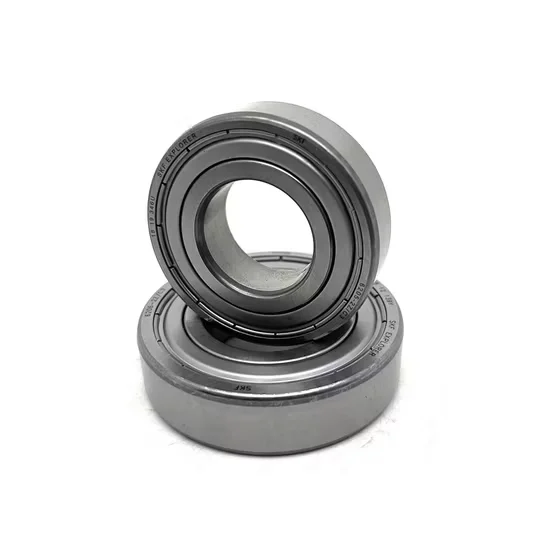 01 Deep Groove Ball Bearings SKF 6204 6205 6206 Deep Groove Ball Bearing Spare Parts View model details
 02 Deep Groove Ball Bearings Original SKF Deep Groove Ball Bearing 6000 6001 6308 6309 6204 6205 6206 for Auto Parts View model details
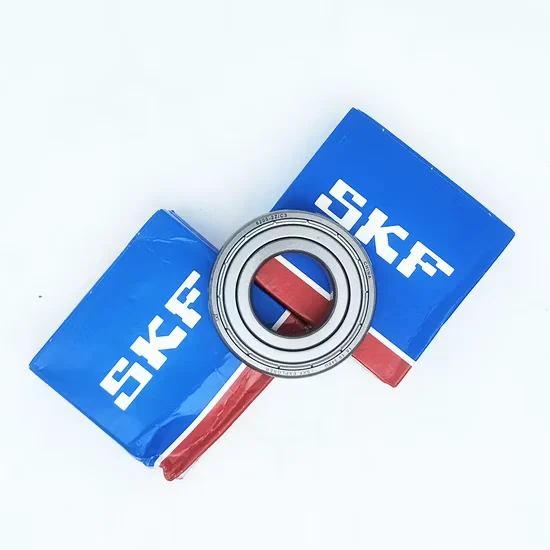 03 Agricultural Machinery Bearings X&S 80607kt 6301-2RS 6205-2Z 6206-2Z Deep Groove Ball Bearing View model details
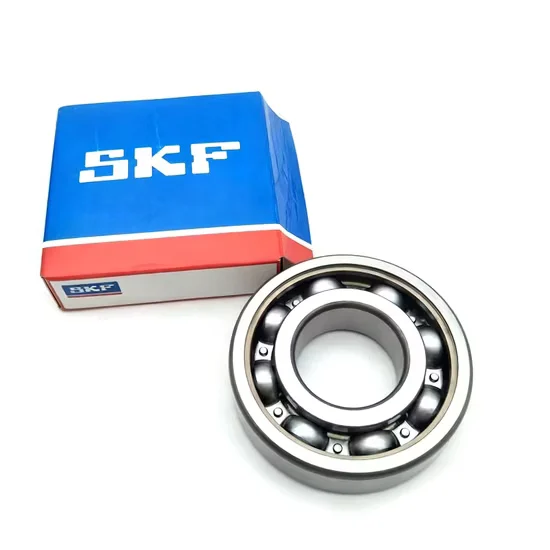 04 Deep Groove Ball Bearings SKF 6205 6206 ZZ C3 Deep Groove Ball Bearing for Automobile Industry View model details
Applications
Where these SKF bearings are used
Keep reading
Related SKF bearing selection guides
More practical notes on SKF designations, precision items and project bearing lists from Project Purchasing Company.
 Brands & Alternatives · · 8 min read SKF Ball Bearing Range: Wholesale Supplier for Bulk & MRO Orders Navigate the SKF ball bearing range with precision by mastering series specs, suffix codes, and compliant cross-brand alternatives. Optimize MRO procurement costs while ensuring… Read the guide
 Brands & Alternatives · · 8 min read Ball Bearing Brand Tiers for Motor Repair: Wholesale Supplier Ball Bearing Brand Tiers for motor repair help buyers avoid costly failures from inferior heat treatment and clearance control. Match Tier 1 or 2… Read the guide Brands & Alternatives · · 6 min read Old to New SKF Ball Bearing Designations Cross-Reference Chart for Wholesale Buyers Master the Old to New SKF Ball Bearing Designations Cross-Reference Chart for Wholesale Buyers to avoid catastrophic failures from hidden suffix mismatches. Learn why… Read the guide

Request a quote
Send your SKF list. Get one itemized written quote.
Project Purchasing Company supplies SKF ball, roller, precision and housed bearing units to distributors, repair workshops and project buyers worldwide. Standard and precision items are priced line by line, with accessories kept on the same quote.