
SKF vs Chinese OEM Bearing Manufacturer: Precision Cross-Reference Wholesale
Dimensional equivalence does not guarantee functional interchange. When replacing SKF bearings with Chinese OEM alternatives, the critical differences lie not in outer/inner diameters or width, but in internal clearance group matching, cage material compatibility, and grease formulation alignment. A proper SKF bearing cross-reference requires verifying clearance class (C2/C3/C4/C5), cage type (steel/brass/polyamide), and lubricant compatibility — not merely copying part numbers from a dimension chart. Getting these three parameters right is what separates a successful substitution that cuts procurement costs significantly from a field failure that shuts down a production line.
I spent time grinding bearing rings in a Dongguan workshop before joining field installation crews. On one job at a nickel mine in Southeast Asia, the maintenance team had sourced what they believed were direct SKF equivalents for conveyor idler rollers. The 6206 replacements measured within acceptable dimensional tolerance, yet within a few months the polyamide cages fractured under thermal cycling, halting the entire conveyor system for days. The failure was not caused by wrong bore or OD — it was caused by a C3 clearance being substituted where C4 was required for that operating temperature range, combined with a cage material that could not withstand the ambient heat. That single incident reshaped how I approach every SKF bearing cross-reference request from global buyers.
The lesson from that mine site is simple: buyers searching for SKF bearing cross-reference solutions must look beyond the basic dimension table. Let me walk through the actual technical parameters that determine whether a Chinese OEM bearing can truly replace an SKF unit in your application.
What Really Separates SKF from Chinese OEM Bearings in Cross-Reference Applications?
The material metallurgy, heat treatment consistency, and batch-to-batch dimensional control define the real performance gap — not the nominal dimensions printed on the outer ring.
Both SKF and qualified Chinese OEM manufacturers produce bearings to ISO 492 dimensional standards. When you pull a caliper on a P0-grade 6205 from either source, the bore, OD, and width will fall within the same tolerance band. The divergence appears in three hidden dimensions:
| Parameter | SKF Standard Practice | Chinese OEM (ISO 9001 Certified) | Unverified Low-Grade Supplier |
|---|---|---|---|
| Internal Clearance Consistency | Controlled per ISO 5753, full batch documentation | Verifiable per batch, ISO 5753 compliant | Self-reported, sample-level only |
| Cage Material Traceability | Full material certification per batch | Standard material certification available | Not provided |
| Heat Treatment Uniformity | Controlled atmosphere, documented hardness range | Standard controlled process, hardness within HRC 58-62 | Uncontrolled, variable results |
| Surface Finish (Raceway) | Micron-level precision, documented Ra values | Standard precision, meets ISO requirements | Noticeably reduced surface quality |
| Grease Fill Compatibility | Formulation matched to application class | Compatible with standard greases, application-verified | Generic fill, no application matching |
A European MRO buyer once contacted me after replacing a batch of SKF 22320 spherical roller bearings in a cement kiln fan with unverified Chinese equivalents. The dimensions matched perfectly. The bearings failed within weeks due to excessive internal clearance causing misalignment under thermal expansion. The original SKF units specified C4 clearance for high-temperature operation; the replacement supplier had shipped standard CN clearance without flagging the difference. The cost of that single downtime event dwarfed any procurement savings.
When you request an SKF bearing cross-reference from a Chinese OEM manufacturer, the supplier must provide clearance group documentation matching your original specification. If they cannot produce batch-level clearance test reports, walk away.
What Are the Most Common Mistakes During SKF Bearing Cross-Reference Substitution?
Dimensional matching is only the first step — clearance group mismatch, cage material incompatibility, and grease formulation conflict account for the majority of premature field failures in cross-reference applications.
I have reviewed hundreds of failed substitution cases across mining, pumping, and industrial motor applications. The pattern is consistent: buyers focus entirely on the basic dimension table and ignore three critical internal parameters.
Mistake One: Ignoring Internal Clearance Group
SKF designates clearance groups as C2 (tight), CN (standard), C3, C4, and C5 (loose). When operating temperature rises, the inner ring expands more than the outer ring, reducing internal clearance. If you substitute a CN clearance bearing where C3 or C4 is specified, the bearing will preload itself during operation, generating excessive heat and failing prematurely. Conversely, using C5 where CN is specified causes excessive vibration and noise.
A Middle East water pumping station replaced SKF deep groove ball bearings with Chinese OEM equivalents. The dimensions were correct, but the original specification called for C3 clearance due to the hot ambient environment. The replacement bearings were shipped with CN clearance. Within weeks, operators reported abnormal temperature rise and increased vibration. The fix was straightforward: resupply with correct C3 clearance units, and the problem disappeared.
Mistake Two: Overlooking Cage Material
SKF offers multiple cage designs for the same bearing number: stamped steel, machined brass, and polyamide (PA66 or glass-fiber reinforced). Each serves different operating conditions. Polyamide cages are lightweight and run cooler but cannot withstand temperatures above 120°C continuously. Brass cages handle higher temperatures and heavier loads but cost more. Steel cages are the economy option for standard applications.
A Latin American distributor requested SKF bearing cross-reference for a mining conveyor application. The original SKF specification called for brass cage 22308 bearings due to high ambient temperature and shock loading. The replacement supplier quoted the same bearing number with standard polyamide cages — a fraction of the cost. The cages melted within months under continuous thermal stress. The correct cross-reference must specify cage material explicitly.
Mistake Three: Grease Compatibility
Different bearing manufacturers use different base grease formulations. If you relube a Chinese OEM bearing with a grease incompatible with the original fill, the grease can separate, thicken, or lose lubricity. This is particularly critical in sealed bearing applications where regreasing is not possible.
| Failure Mode | Root Cause | Prevention |
|---|---|---|
| Premature cage fracture | Cage material mismatch for temperature/load | Verify cage suffix in cross-reference |
| Overheating and seizure | Clearance group too tight for operating temperature | Match C2/C3/C4/C5 specification exactly |
| Grease degradation and leakage | Incompatible lubricant formulation | Confirm grease type or request ungreased supply |
| Vibration and noise | Excessive clearance or poor surface finish | Require batch-level vibration test data |
How Do You Verify a Chinese OEM Bearing Can Replace SKF in Your Application?
Demand ISO 9001 certification, batch-level inspection reports, clearance group verification, and conduct a trial installation before committing to full-volume procurement.
The SKF bearing cross-reference process must follow a structured verification protocol. I have seen buyers receive counterfeit inspection certificates, so the verification must be multi-layered.
Step One: Confirm ISO 9001 Certification and Audit Scope
Request the supplier’s ISO 9001 certificate and verify it covers bearing manufacturing (not just trading). The certificate should be issued by an accredited body and remain valid.
Step Two: Request Batch-Level Inspection Reports
For every SKF bearing cross-reference order, require the supplier to provide inspection reports covering:
- Dimensional accuracy (bore, OD, width, chamfer)
- Internal clearance measurement (actual values, not just pass/fail)
- Vibration level (Z1V1, Z2V2, Z3V3 per ISO 15243 or equivalent)
- Hardness test results (within HRC 58-62 range for bearing steel)
- Surface roughness documentation
A US industrial buyer once received a shipment of SKF-equivalent 6305 bearings with inspection certificates. Random sampling revealed that the clearance values on the certificates did not match the actual bearings — the certificates were generic templates, not batch-specific data. The supplier was replaced with one providing genuine batch-level documentation.
Step Three: Verify Clearance Group Matching
If your original SKF bearing specifies C3 clearance, the Chinese OEM replacement must ship with C3 clearance — verified by actual measurement, not just marked on the box. Request photos or video of the clearance measurement process for critical applications.
Step Four: Conduct Trial Installation
Before placing a full-volume order, procure a small trial batch (a few dozen units) and install them in your application. Monitor temperature, vibration, and noise levels over an initial run period. Compare performance data against your baseline with original SKF units.
Step Five: Lock Quality Terms in Purchase Agreement
For ongoing SKF bearing cross-reference procurement, include contractual clauses specifying:
- Acceptable quality level (AQL) for dimensional and clearance inspection
- Right to reject batches failing to match specification
- Replacement or refund terms for field failures traced to manufacturing defects
- Documentation requirements for each shipment
How Do You Balance Cost and Quality in Bulk SKF Bearing Cross-Reference Procurement?
Wholesale pricing from Chinese OEM manufacturers offers substantial cost advantages, but quality protection mechanisms must be contractually locked before placing bulk orders.
Global buyers sourcing SKF bearing cross-reference alternatives typically face a procurement dilemma: original SKF bearings carry premium pricing that strains maintenance budgets, while unverified cheap alternatives risk catastrophic field failures. The solution lies in structured wholesale procurement with verified Chinese OEM manufacturers.
The Wholesale Pricing Advantage
A qualified Chinese OEM bearing factory operating under ISO 9001 certification can offer SKF bearing cross-reference products at wholesale pricing significantly below original brand levels — typically reducing procurement costs substantially while maintaining performance equivalence for standard industrial applications. This is achieved through lower labor costs, streamlined production processes, and direct factory-to-buyer supply chains without intermediary markups.
Quality Protection Mechanisms
When procuring SKF bearing cross-reference bearings in bulk, implement the following protections:
-
Pre-shipment inspection: Engage a third-party inspection service (SGS, Bureau Veritas, or equivalent) to verify dimensional accuracy, clearance, and vibration levels before shipment.
-
Sample approval before mass production: For new suppliers, require pre-production samples matching your exact SKF bearing cross-reference specification. Approve samples before authorizing mass production.
-
Batch traceability: Each shipment must include batch numbers traceable to production records, material certificates, and inspection reports.
-
Private-label packaging with quality marking: Many Chinese OEM manufacturers offer private-label packaging services. Ensure your brand name and quality specifications are printed on packaging, creating accountability for the supplier.
-
Warranty and replacement terms: Negotiate clear warranty terms covering manufacturing defects. A reputable supplier will stand behind their products and replace defective units without dispute.
A distributor in Central Asia procured SKF bearing cross-reference equivalents for agricultural machinery applications. By working directly with an ISO 9001 certified factory, they secured wholesale pricing with private-label packaging, batch-level quality documentation, and a replacement guarantee for any field failures traced to manufacturing defects. The result: competitive pricing for their regional customers, reliable product quality, and zero disputes over warranty claims over multiple procurement cycles.
Avoiding the Low-Price Trap
The cheapest SKF bearing cross-reference quote is rarely the best value. If a supplier’s price is dramatically below market, investigate why. Possible red flags:
- No ISO 9001 certification or expired certification
- Refusal to provide batch-level inspection reports
- Generic clearance (CN) shipped regardless of your specification
- No private-label or documentation customization capability
- Unwillingness to accept third-party pre-shipment inspection
The true cost of bearing failure includes not just the replacement bearing, but downtime, labor, secondary damage to adjacent components, and reputational loss with your customers. A slightly higher unit price from a verified supplier delivers far better total cost of ownership.
Conclusion
Successful SKF bearing cross-reference substitution depends on matching internal clearance, cage material, and grease compatibility — not just copying dimensions from a part number chart. Chinese OEM manufacturers with ISO 9001 certification can deliver performance-equivalent bearings at wholesale pricing, provided buyers implement structured verification protocols including batch-level inspection reports, trial installations, and contractual quality protections. The procurement savings are substantial, but only when quality mechanisms prevent the far greater cost of field failure.
Products in this article
SKF bearings mentioned above
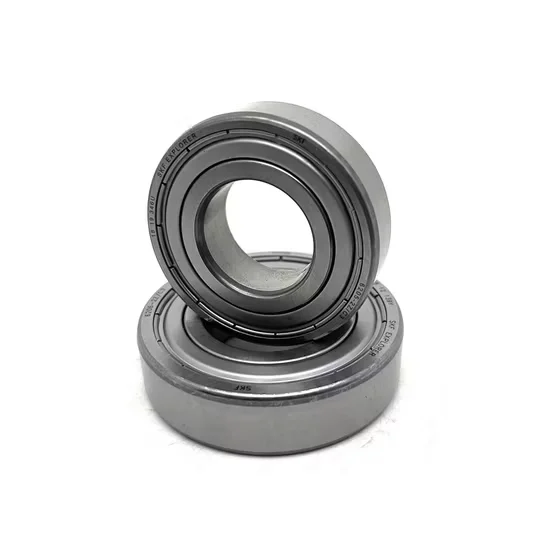 01 Deep Groove Ball Bearings SKF 6204 6205 6206 Deep Groove Ball Bearing Spare Parts View model details
 02 Deep Groove Ball Bearings Original SKF Deep Groove Ball Bearing 6000 6001 6308 6309 6204 6205 6206 for Auto Parts View model details
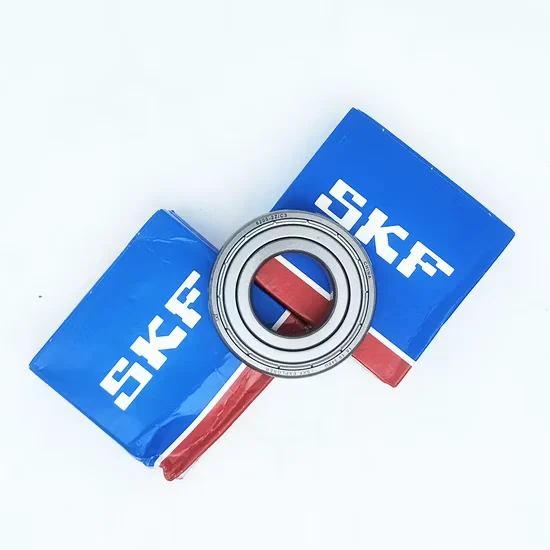 03 Agricultural Machinery Bearings X&S 80607kt 6301-2RS 6205-2Z 6206-2Z Deep Groove Ball Bearing View model details
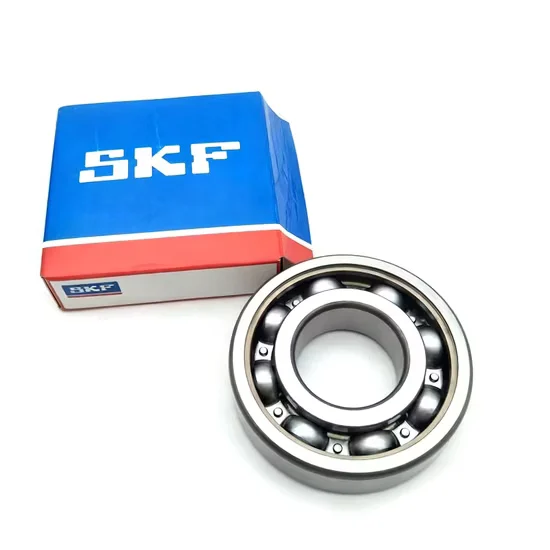 04 Deep Groove Ball Bearings SKF 6205 6206 ZZ C3 Deep Groove Ball Bearing for Automobile Industry View model details
Applications
Where these SKF bearings are used
Keep reading
Related SKF bearing selection guides
More practical notes on SKF designations, precision items and project bearing lists from Project Purchasing Company.
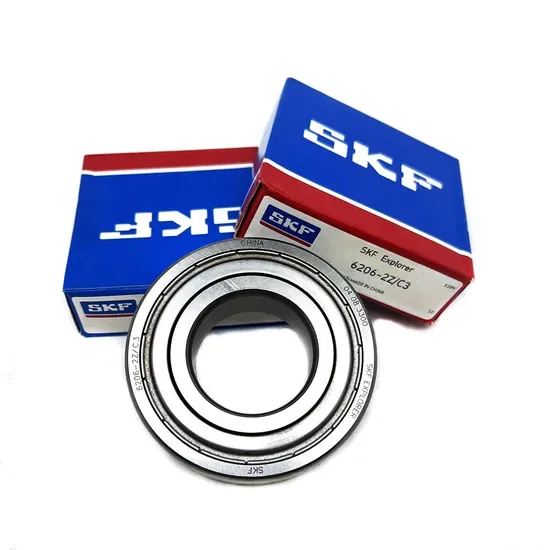 Brands & Alternatives · · 8 min read SKF Ball Bearing Range: Wholesale Supplier for Bulk & MRO Orders Navigate the SKF ball bearing range with precision by mastering series specs, suffix codes, and compliant cross-brand alternatives. Optimize MRO procurement costs while ensuring… Read the guide
 Brands & Alternatives · · 8 min read Ball Bearing Brand Tiers for Motor Repair: Wholesale Supplier Ball Bearing Brand Tiers for motor repair help buyers avoid costly failures from inferior heat treatment and clearance control. Match Tier 1 or 2… Read the guide Brands & Alternatives · · 6 min read Old to New SKF Ball Bearing Designations Cross-Reference Chart for Wholesale Buyers Master the Old to New SKF Ball Bearing Designations Cross-Reference Chart for Wholesale Buyers to avoid catastrophic failures from hidden suffix mismatches. Learn why… Read the guide

Request a quote
Send your SKF list. Get one itemized written quote.
Project Purchasing Company supplies SKF ball, roller, precision and housed bearing units to distributors, repair workshops and project buyers worldwide. Standard and precision items are priced line by line, with accessories kept on the same quote.