
Corroded Ball Bearings Prevention Wet Sites: Wholesale Supplier
Surface oil is not enough to stop rust in high-salinity environments.
Preventing corroded ball bearings in wet sites requires a systemic approach focused on internal grease fill volume, contact seal lip integrity, and humidity-controlled installation protocols rather than superficial coating. Standard open or lightly shielded bearings will fail rapidly when exposed to salt fog and washdown cycles if the internal lubrication barrier is compromised during mounting or if the seal geometry cannot withstand hydrostatic pressure from water ingress.
I still remember the stifling heat inside the pump room of a desalination plant in Jebel Ali. The air tasted of salt, and the humidity clung to every surface. A client was furious because their deep groove ball bearings were seizing within months, despite using what they considered premium brands. I pulled a failed unit from a vertical pump. The outer race looked fine, but once I wiped away the grime, the raceway was pitted with red rust. It was not a manufacturing defect. The bearing had been installed days earlier during a maintenance window, left exposed to the humid air while waiting for alignment checks, and packed with generic lithium grease that offered zero water resistance. The seals were non-contact shields, designed for dust, not water. The salt mist had penetrated the tiny gap, mixed with the grease, and turned into an abrasive corrosive paste. That failure was not about the steel quality; it was about ignoring the environment.
Understanding why standard practices fail in these conditions is the first step toward reliable operation. For distributors and MRO operators managing inventory for marine, mining, or food processing sectors, knowing how to specify the right components for corroded ball bearings prevention wet sites is critical to reducing unplanned downtime.
Why Do Ball Bearings Corrode So Fast in Wet Sites?
High salinity and moisture bypass inadequate seals, destroying the raceway from the inside out.
Corrosion in bearings is rarely uniform. It starts at microscopic points where the protective oil film is broken. In wet sites, especially those with salt spray or chemical washdowns, the water acts as an electrolyte. When it penetrates the bearing cavity, it reacts with the steel surfaces. If the grease is not specifically formulated to repel water, it emulsifies, losing its viscosity and protective capability. This leads to fretting corrosion and pitting, which creates stress concentrators that accelerate fatigue failure.
The speed of this degradation depends on the environment’s aggressiveness. A freshwater washdown area is challenging, but a marine deck exposed to salt spray is catastrophic for standard components. Salt crystals are hygroscopic; they attract and hold moisture against the metal surface, ensuring that even when the visible water evaporates, a corrosive film remains.
In one case involving a European wind farm operator, bearings in the pitch control systems suffered from condensation due to temperature fluctuations. The original specification used standard rubber seals. Over time, the rubber hardened and lost elasticity, creating micro-gaps. Moisture entered, condensed on the cooler inner ring, and caused standstill corrosion. The failure was not due to load but to environmental exposure during idle periods. This highlights that corroded ball bearings prevention wet sites must account for both operational and static conditions.
How to Select the Right Seals for High-Humidity Environments?
Upgrade to contact seals with proper lip design to block water ingress effectively.
Seals are the primary defense line. Many maintenance teams default to ZZ shields (metal non-contact) because they have lower friction and higher speed limits. However, in wet environments, these shields offer almost no protection against liquid water. They can deflect large particles, but capillary action draws water past the gap.
For high-humidity and washdown applications, contact seals made from nitrile rubber (NBR) or fluorocarbon (FKM) are essential. FKM offers better resistance to high temperatures and aggressive chemicals, making it suitable for food processing or chemical plants. The key is the lip geometry. A double-lip seal provides two barriers: the primary lip keeps contaminants out, and the secondary lip retains grease. Some advanced designs include a garter spring to maintain constant contact pressure even as the rubber ages.
| Seal Type | Contact Status | Water Resistance | Friction Level | Best Application |
|---|---|---|---|---|
| Metal Shield (ZZ) | Non-contact | Poor | Low | Clean, dry, high-speed |
| Single Lip Rubber (RS) | Contact | Moderate | Medium | General industrial, light splash |
| Double Lip Rubber (2RS) | Contact | Good | Medium-High | Washdown, high humidity |
| FKM Viton Seal | Contact | Excellent | High | Chemical exposure, high temp |
Selecting the wrong seal is a common error. A client in Southeast Asia operating a palm oil mill switched to double-lip seals but experienced overheating. The issue was not the seal itself but the lack of adjustment in grease type. The higher friction generated more heat, and the grease they used could not handle the thermal load. This shows that seal selection for corroded ball bearings prevention wet sites must be balanced with lubrication strategy.
What is the Correct Grease Filling Protocol for Wet Conditions?
Ensure adequate internal grease volume and use water-resistant lubricant properties.
Grease does more than lubricate; it acts as a physical barrier against contaminants. In wet environments, the grease must have high water resistance, meaning it does not wash out easily and does not emulsify. Lithium complex greases with additives like calcium sulfonate offer superior water spray-off resistance compared to standard lithium soaps.
The filling volume is critical. For standard applications, 30% to 50% of the free space is typical. However, in wet or corrosive environments, increasing the fill to 60% or more can help create a tighter seal against ingress. The excess grease pushes out any water that might attempt to enter and maintains a positive pressure barrier. But overfilling causes churning and overheating, so balance is key.
During a retrofit project for a mining conveyor in Australia, we recommended switching to a calcium sulfonate complex grease and increasing the fill volume. The previous grease had washed out during high-pressure cleaning cycles, leaving the bearings dry. After the change, the maintenance interval extended significantly. The grease stayed in place, and the seals remained lubricated, preventing hardening and cracking.
It is also vital to ensure compatibility between the grease and the seal material. Some synthetic greases can cause certain rubber compounds to swell or shrink, compromising the seal lip. Always verify compatibility charts before mixing. For those sourcing components, understanding these requirements helps in specifying the right pre-lubricated options or planning regreasing schedules for corroded ball bearings prevention wet sites.
Which Installation Mistakes Accelerate Corrosion?
Avoid exposing bare bearings to humid air during mounting and use proper tools.
The most vulnerable moment for a bearing is during installation. If a bearing is removed from its packaging in a humid environment and left on a workbench for hours, condensation forms on the cold steel surface. This initial rust layer becomes a nucleation point for further corrosion once the bearing is in service.
Proper installation protocol dictates that bearings should remain in their vapor-corrosion inhibitor (VCI) packaging until the last possible moment. The mounting area should be clean and, if possible, climate-controlled. If working outdoors or in a wet site, use temporary protective covers or apply a thin layer of compatible anti-corrosion oil immediately after unpacking, removing it only before final assembly if required by the lubrication plan.
Using the correct tools is also part of corrosion prevention. Hammering a bearing onto a shaft damages the raceways and can distort the seals, creating gaps for water entry. Induction heaters or hydraulic presses ensure uniform expansion and seating without mechanical shock. Damaged seals are invisible to the naked eye but fatal in wet conditions.
A distributor in Latin America reported a batch of returns from a sugar mill. The bearings were rusted internally despite being new. Investigation revealed that the installation team was unpacking bearings days in advance and storing them in an unconditioned warehouse. The humidity penetrated the packaging, and the VCI paper was insufficient for the prolonged exposure. Implementing a "just-in-time" unpacking rule solved the issue. This underscores that technical support for installation practices is as valuable as the product itself when addressing corroded ball bearings prevention wet sites.
Conclusion
Corrosion prevention is a system, not a single product choice.
Stopping rust in wet and saline environments demands a holistic view of seal geometry, grease chemistry, and handling protocols. Relying on surface treatments or standard components invites premature failure. By upgrading to contact seals, selecting water-resistant lubricants, and controlling the installation environment, operators can significantly extend bearing life. For global buyers and MRO specialists, integrating these technical specifics into procurement standards ensures that every bearing delivered is ready for the harsh realities of wet site operations.
Products in this article
SKF bearings mentioned above
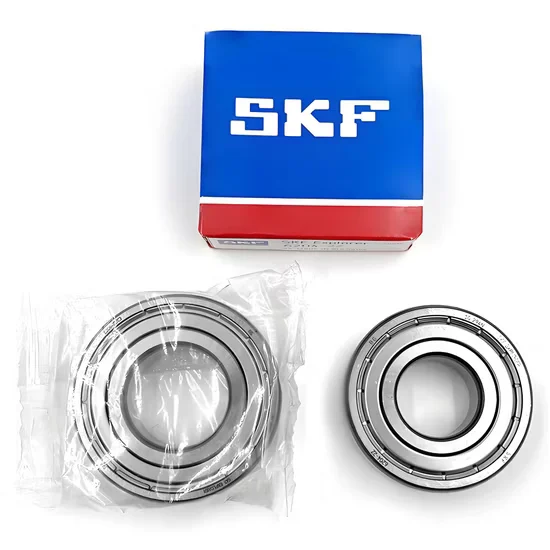 01 Deep Groove Ball Bearings SKF 6200 6300 Deep Groove Ball Bearing Genuine Wholesale Supplier View model details
 02 Deep Groove Ball Bearings SKF 608 Deep Groove Ball Bearing Genuine Stock Wholesale Supplier View model details
 03 Cylindrical Roller Bearings Nu222 Ec J/C3 Single Row Cylindrical Roller Bearing Zhaoyun Wholesale Supplier View model details
 04 Cylindrical Roller Bearings Zhaoyun Nu312 Ec P/C3 Double Row Cylindrical Roller Bearing Wholesale Supplier View model details
Applications
Where these SKF bearings are used
Keep reading
Related SKF bearing selection guides
More practical notes on SKF designations, precision items and project bearing lists from Project Purchasing Company.
 Installation & Maintenance · · 6 min read Ball Bearing Maintenance Checklist for Workshops: Genuine SKF/NSK Wholesale Supplier Stop premature failures with our Ball Bearing Maintenance Checklist, addressing contamination and improper installation rather than product quality. Learn essential pre-installation checks, proper mounting… Read the guide
 Installation & Maintenance · · 9 min read Ball Bearing Life in Variable Speed Drives: Wholesale Supplier Standard L10 life calculations fail in variable speed drives due to electrical erosion and thermal degradation. Extend ball bearing life in variable speed drives… Read the guide
 Installation & Maintenance · · 6 min read Fan Ball Bearing Vibration Signs: Genuine SKF/NSK Wholesale Supplier Identify ball bearing vibration signs in fans through systematic analysis to prevent catastrophic failures caused by counterfeit inventory. Learn step-by-step envelope diagnosis techniques and… Read the guide

Request a quote
Send your SKF list. Get one itemized written quote.
Project Purchasing Company supplies SKF ball, roller, precision and housed bearing units to distributors, repair workshops and project buyers worldwide. Standard and precision items are priced line by line, with accessories kept on the same quote.