
Custom OEM Bearing Engineering Change Cost Absorption Terms – Wholesale Supplier
Most buyers think an engineering change is just "revising a drawing." In reality, once molds are cut and materials are machined, a mid-production spec change means an entire batch of semi-finished goods becomes scrap.
In custom bearing OEM contracts, engineering change cost absorption terms must explicitly define who pays for mold modifications, semi-finished inventory write-offs, and re-sampling fees—before production begins. Without written clauses, buyers face open-ended financial exposure, and suppliers absorb unilateral risk that erodes margins.
Early in my career, I was sourcing deep groove ball bearings and non-standard flange housings for an agricultural machinery plant in Jakarta. The molds were already completed, tooling trials passed, and material cutting was underway. Then their engineer sent a revised drawing: load conditions had shifted, bore tolerances tightened, and the entire specification changed. Over a mid-six-figure amount in cut material became scrap overnight. When I pulled up the contract to negotiate cost sharing, their manager pointed out the obvious gap—there was no engineering change clause at all. I ate that loss myself. Since then, whether working with buyers in Ho Chi Minh City or Surabaya, I have seen the same pattern repeat: disputes over custom bearing OEM engineering changes almost never stem from product quality failures. They stem from missing contractual frameworks.
Let me walk through how to structure these terms properly.
What Costs Are Triggered by Engineering Changes in Custom Bearing OEM?
Engineering changes after tooling completion trigger three distinct cost categories: mold modification fees, semi-finished goods write-offs, and re-sampling charges—each requiring separate contractual allocation.
When a buyer requests a specification change mid-production, the financial impact is rarely limited to a single line item. The reality is layered. First, existing molds may need re-machining or complete replacement. Second, any material already cut, turned, or ground to the original specification becomes unusable. Third, the revised design requires new samples, new dimensional inspections, and often new material certifications before full production can resume.
Consider a typical scenario: an agricultural equipment buyer orders a batch of custom flange housings with specific bore dimensions. The supplier completes the mold, begins turning operations, and produces several hundred semi-finished units. Then the buyer’s engineering team determines that the load capacity requirement has increased, necessitating a larger cross-section and revised internal geometry. The mold must be re-cut. Every semi-finished housing already in the production queue is scrapped. And new samples must be produced, measured, and approved before the order can proceed.
The critical mistake buyers make is assuming these costs fall naturally into a single bucket. They do not. Mold modification is a fixed tooling expense. Semi-finished scrap is a variable production loss tied to completion stage. Re-sampling involves both laboratory costs and lead time extensions. Each category demands its own absorption rule.
A distributor in the Middle East once ordered private-label tapered roller bearings with a specific cage design. Midway through production, they requested a change to the roller complement count. The mold was unaffected, but every cage already stamped was scrapped, and new sampling was required. Because their contract had no segmented cost breakdown, the dispute over who absorbed the cage scrap versus the sampling fee lasted months.
How Should Tooling and Mold Modification Costs Be Allocated?
Buyers bear full responsibility for mold modification costs when engineering changes occur after tooling approval; suppliers absorb only design-phase revisions made before mold fabrication begins.
This principle sounds straightforward, yet contracts routinely leave it ambiguous. The trigger point matters enormously. If a buyer requests a dimensional change after the mold has been fabricated and the first-article inspection passed, the modification cost is entirely attributable to the buyer’s late specification shift. The supplier had no design error. The tooling was built to the approved drawing.
However, if the change occurs during the design review phase—before any metal has been cut for the mold—the supplier should absorb the revision cost as part of normal engineering iteration. This distinction must be written into the contract with clear milestone definitions: design freeze, mold fabrication start, first-article approval, and mass production launch.
In practice, I structure this by defining change order trigger points explicitly. Any modification request received after mold fabrication commencement triggers a separate tooling change order with itemized costs. The buyer receives a detailed breakdown: hours of re-machining, electrode consumption for EDM work, and any additional heat treatment cycles required. Transparency here prevents the perception of arbitrary charges.
A European industrial motor OEM once revised shaft diameter specifications during the pilot run phase of a custom cylindrical roller bearing order. The mold for the outer ring had already been completed. The modification required re-cutting the raceway groove profile. Because the contract specified that post-mold-completion changes trigger buyer-funded tooling modifications, the cost allocation was uncontested. What could have become a prolonged negotiation was resolved in days.
The key is defining "tooling approval" precisely. Does it mean the supplier’s internal sign-off? The buyer’s written confirmation of the first-article sample? Or the formal PPAP submission? Ambiguity in this definition is where disputes breed.
What Happens to Semi-Finished Goods When Specifications Change?
Semi-finished inventory write-off costs should be shared proportionally based on the production completion percentage at the time the engineering change is issued.
This is where most contracts fail entirely. Buyers assume suppliers should absorb all scrap because "they started production too early." Suppliers assume buyers should pay for everything because "they changed the spec." Neither position is reasonable. The fair approach is proportional allocation tied to how far production had progressed when the change order was received.
If a change is issued after raw material has been cut but before any machining, the material cost is the primary loss. If the change arrives after turning operations are complete but before grinding, the scrap value includes both material and partial labor. If grinding is finished but heat treatment has not begun, the accumulated cost is substantially higher. Each stage represents a different level of value addition, and the absorption ratio should reflect this.
I recommend structuring this as a staged cost table in the contract annex. Define production milestones: material procurement, rough turning, finish turning, grinding, heat treatment, assembly, and final inspection. Assign a cumulative cost percentage to each stage. When a change order is issued, identify the furthest stage reached for affected semi-finished goods, and apply the corresponding percentage to calculate the write-off amount.
An agricultural machinery buyer in Southeast Asia once requested a load capacity upgrade after mold completion. A significant portion of raw material had already been cut into blanks. Under a properly structured proportional clause, the buyer absorbed the full material cost for blanks already cut, while the supplier absorbed the cost of raw material still in standard stock that could be redirected to other orders. The semi-finished blanks that had undergone partial machining were split based on the cumulative cost at that stage. Both parties accepted the outcome because the formula was pre-agreed.
Without this proportional framework, every change order becomes a negotiation battlefield. Suppliers inflate scrap claims. Buyers dispute every line item. And the relationship deteriorates.
How to Structure Re-Sampling and Re-Approval Fees in Contracts?
Contracts must cap sampling costs and define clear re-approval timelines to prevent open-ended financial exposure for both buyers and suppliers.
Re-sampling is often the most underestimated cost in engineering changes. Buyers focus on mold modifications and material scrap, then receive an invoice for dimensional inspections, metallurgical testing, material certification renewals, and functional validation runs—and the total sampling cost exceeds expectations.
The solution is twofold: establish a cost cap for sampling activities related to engineering changes, and define the re-approval cycle timeline so that lead time impacts are contractually bounded.
In the contract annex, specify the maximum number of sampling iterations included in the base engineering change fee. If the first sample fails and a second iteration is required, define whether the additional cost is absorbed by the supplier (if the failure stems from their process) or charged to the buyer (if the failure stems from the revised specification itself). This distinction is critical.
Additionally, define the re-approval timeline. How many days does the buyer have to inspect and approve the revised sample? What happens if approval is delayed? If the buyer takes weeks to respond, the supplier’s production schedule is disrupted, and work-in-progress inventory accumulates. A contractual response window—say, a defined number of business days—protects both parties.
A distributor ordering private-label flange housings once changed bore tolerance after production had started. The re-sampling cycle required new grinding trials, updated inspection reports, and revised material certificates. Because the contract included a sampling cost cap and a defined approval timeline, the financial exposure was contained. The buyer knew the maximum sampling charge upfront. The supplier knew the approval deadline and could plan production accordingly.
Without these caps and timelines, re-sampling costs spiral. Buyers face uncapped invoices. Suppliers face indefinite production holds.
Why Must Engineering Change Terms Be Written Before Production Starts?
Verbal agreements on engineering change costs lead to disputes; written clauses signed before production commencement protect both buyers and suppliers from unilateral risk transfer.
This principle is foundational, yet I continue to see buyers and suppliers rely on handshake agreements or email confirmations for change order terms. The problem is not trust. The problem is memory. When a dispute arises months later, both parties recall the conversation differently. The buyer remembers the supplier saying they would "handle it." The supplier remembers the buyer agreeing to "cover any extra costs." Neither position is documented.
Written clauses eliminate this ambiguity. The contract should include a dedicated engineering change annex that defines: trigger points for cost allocation, mold modification responsibility rules, semi-finished scrap proportional formulas, sampling cost caps, re-approval timelines, and dispute resolution procedures for change-related disagreements.
Both parties sign this annex before the first production order is released. When a change occurs, the contract provides the answer. No negotiation is needed. No relationship strain occurs. The formula is applied, the invoice is issued, and production resumes.
I have seen suppliers absorb substantial losses because they trusted verbal assurances from buyers who later faced internal budget constraints and could not honor their word. I have seen buyers face unexpected charges because they assumed suppliers would "be reasonable" about change costs. Reasonableness is not a contractual mechanism. Written terms are.
An industrial equipment buyer in Latin America once faced a significant specification change mid-production. Because their contract included comprehensive engineering change terms, the cost allocation was executed smoothly. The buyer paid the mold modification fee, the proportional semi-finished scrap cost, and the capped sampling charge. The supplier resumed production without delay. Both parties continued their relationship without friction.
Contrast this with a similar situation where no written terms existed. The change order triggered a three-month dispute. Production was halted. Delivery deadlines were missed. The buyer sourced from an alternative supplier at a premium. The original supplier wrote off the work-in-progress inventory. Both parties lost far more than the original change cost would have been.
Conclusion
Custom bearing OEM engineering change cost absorption terms are not optional contractual details—they are essential risk management frameworks. Mold modifications, semi-finished scrap, and re-sampling fees must be allocated through written clauses signed before production begins. Proportional cost sharing based on production stage, defined trigger points, sampling cost caps, and re-approval timelines protect both buyers and suppliers from disputes. When these terms are absent, every engineering change becomes a financial confrontation. When they are present, changes are managed as routine contractual events.
Products in this article
SKF bearings mentioned above
 01 Clutch Release Bearings LM501349/LM501310 501349/10 Double Row Roller Bearing OEM View model details
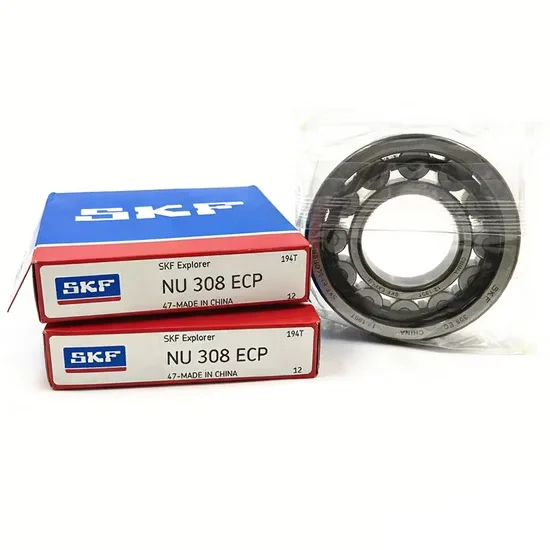 02 Cylindrical Roller Bearings SKF NU308ECP Cylindrical Roller Bearing for Gearbox Reducer OEM View model details
 03 Deep Groove Ball Bearings Genuine SKF Deep Groove Ball Bearings 6201-6206 OEM ODM Supply View model details
 04 Tapered Roller Bearing <p> 32218 Rodamiento de rodillos cónicos 90x160x42.5mm para aplicaciones OEM de energía eólica y automotriz View model details
Applications
Where these SKF bearings are used
Keep reading
Related SKF bearing selection guides
More practical notes on SKF designations, precision items and project bearing lists from Project Purchasing Company.
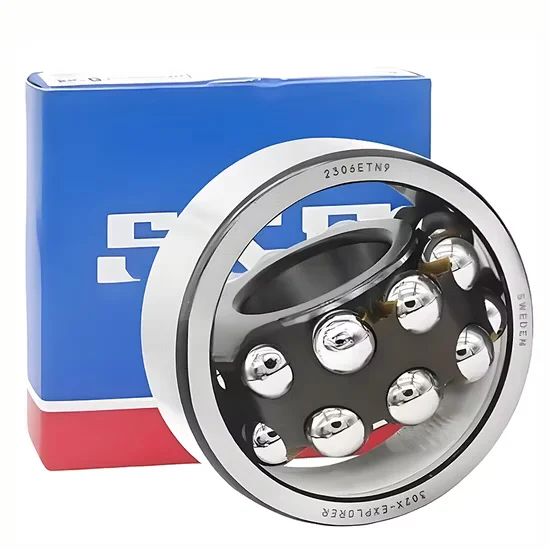 Procurement & Trade FAQs · · 8 min read Ball Bearing Supplier to Latin America: Genuine SKF, FAG, NSK Wholesale Sourcing genuine ball bearings for Latin America demands strict customs compliance to avoid costly port delays. Master precise HS codes and Certificates of Origin… Read the guide
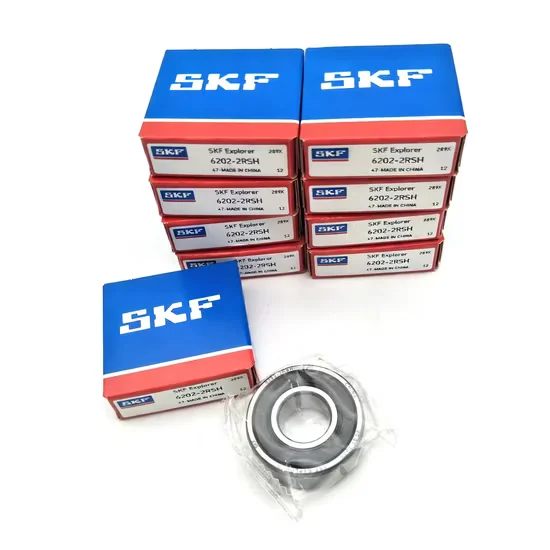 Procurement & Trade FAQs · · 8 min read Genuine Ball Bearing Supply to Southeast Asia Wholesale Master Ball Bearing Supply to Southeast Asia by prioritizing customs compliance and verified authenticity over marginal price differences. Learn how mixed-brand consolidation, accurate HS… Read the guide
 Procurement & Trade FAQs · · 7 min read Genuine Ball Bearings for Africa & Middle East Wholesale Supplier Secure genuine ball bearing supply to Africa and Middle East with strict customs compliance and authentic mixed-brand consolidation. Master SONCAP clearance, optimize container loading,… Read the guide

Request a quote
Send your SKF list. Get one itemized written quote.
Project Purchasing Company supplies SKF ball, roller, precision and housed bearing units to distributors, repair workshops and project buyers worldwide. Standard and precision items are priced line by line, with accessories kept on the same quote.