
Custom OEM Bearing Multi-Year Supply Agreement Terms for Sale
Locking a fixed price in a long-term contract is the fastest way to kill your supply chain when raw steel surges.
A robust Custom OEM Bearing Multi-Year Supply Agreement Terms framework must explicitly define payment milestones, raw material or exchange rate adjustment triggers, and quality dispute response timelines clause by clause, so neither profit leakage nor supplier friction catches you off guard.
I still remember the first multi-year deal I handled for a distributor based in Dubai. The contract said T/T thirty percent advance and the balance against the copy of the bill of lading. What it did not say was anything about exchange rate fluctuation tolerance, and the quality complaint response window was left blank. Half a year later, the dollar dipped, the buyer insisted on honoring the original unit price, and quality complaint emails piled up faster than our production line could re-inspect each batch. By the time the contract expired, the margin was gone and we had eaten the return freight on top. That single order taught me one thing: vague clauses cost more than any legal fee you try to save.
From that point on, every agreement I review starts with the same three anchors: when money moves, when price moves, and when quality objections must be answered. Below is how those anchors translate into enforceable contract language for bearing procurement.
What Are the Critical Payment Terms in a Long-Term Bearing Supply Agreement?
Payment terms in a Custom OEM Bearing Multi-Year Supply Agreement Terms document must tie each cash flow milestone to a verifiable shipment or inspection event, never to a calendar date alone.
In practice, the structure that survives both supplier and buyer audits looks like this: a deposit paid after contract signing, a progress payment triggered by completion of a defined production batch, and a final balance released against shipping documents or a third-party inspection certificate.
A Middle East industrial distributor once signed a rolling two-year framework with a regional OEM motor builder. The contract specified a deposit percentage, a mid-production payment upon completion of the inner and outer ring grinding stage, and the balance payable against the bill of lading copy. When the buyer later tried to delay the final payment by claiming "warehouse congestion," the supplier pointed to the document clause and released the next batch only after the previous balance cleared. The rhythm stayed clean for the entire contract life.
The risk list you should walk through before signing includes:
- Currency fluctuation exposure over the contract life
- Late payment interest rate and grace period definition
- Document presentation window for letter of credit scenarios
- Ownership transfer point aligned with the chosen Incoterms rule
- Bank charge allocation for cross-border transfers
How Should Price Adjustment Clauses Be Structured to Mitigate Risks?
A Custom OEM Bearing Multi-Year Supply Agreement Terms contract without a dynamic price adjustment clause is a bet that steel and exchange rates will stay flat for years, and that bet almost always loses.
Most buyers assume a locked price is the safest option. The reality is the opposite: when bearing steel prices spike, a supplier trapped in a fixed-price multi-year deal will either cut corners on heat treatment or simply stop shipping.
The mechanism that works in the field ties the unit price to a published raw material index or a defined exchange rate band. For example, the contract states that if the reference bearing steel index moves beyond a pre-agreed tolerance band compared to the baseline month, either party may trigger a price revision using a transparent formula. The same logic applies to currency: if the settlement currency appreciates or depreciates beyond a set percentage against the factory’s cost currency, a surcharge or discount kicks in automatically.
A European wind farm operator renegotiated its three-year bearing framework after the first year using exactly this structure. When bearing grade steel prices jumped, the adjustment formula activated, the supplier kept shipping on schedule, and the buyer avoided the far larger cost of turbine downtime caused by delayed replacement bearings.
Key elements to lock into the clause:
- Reference index source and baseline month
- Tolerance band percentage that triggers revision
- Formula weights for material, labor, and energy components
- Notice period and evidence submission requirement
- Frequency cap on how often adjustments can be invoked
What Quality Warranty and Response Protocols Must Be Included?
Writing "products shall conform to ISO standards" in a Custom OEM Bearing Multi-Year Supply Agreement Terms is not a quality clause; it is a wish. The real clause must define response hours, re-inspection ratios, and who pays for return freight.
A quality warranty section that only cites a general standard leaves every dispute open to interpretation. What matters on the shop floor is the timeline: how many hours the supplier has to acknowledge a complaint email, how many days to provide a preliminary root cause analysis, and how many weeks to complete replacement delivery.
Our own factory operates under an ISO 9001 certified quality system, and every shipment leaves with a full set of standard quality documentation, including material certificates, dimensional inspection reports, and hardness test records. When a quality objection arrives, the protocol is straightforward: written acknowledgment within one working day, preliminary analysis within a few working days, and a complete corrective action report with replacement dispatch within the agreed window. For a distributor managing hundreds of end users across multiple countries, this kind of predictable rhythm is worth more than a slightly lower unit price.
An industrial motor manufacturer in South America once raised a batch-level vibration complaint. The contract’s quality clause required the supplier to acknowledge within one working day, send a preliminary report within a few working days, and arrange replacement bearings by express courier at the supplier’s cost if the defect was confirmed. The entire loop closed well before the motor assembly line had to stop.
The protocol checklist should cover:
- Written acknowledgment time limit
- Preliminary root cause analysis deadline
- On-site inspection trigger conditions
- Replacement or rework delivery window
- Return freight and customs cost allocation
- Batch re-inspection sampling ratio
How to Define Liability and Dispute Resolution in Case of Breach?
A Custom OEM Bearing Multi-Year Supply Agreement Terms without a clear breach liability and dispute resolution clause is a contract that only works when nothing goes wrong.
Long-term supply relationships will face disruptions: raw material shortages, port congestion, force majeure events, or simply a buyer delaying payment. The contract must state what happens in each scenario, not leave it to a judge to decide years later.
A typical structure defines liquidated damages for late delivery or late payment, caps total liability at a percentage of the affected batch value, and excludes indirect or consequential loss such as downstream production stoppage. For dispute resolution, the clause names a neutral arbitration institution, the seat of arbitration, the language of proceedings, and the governing law. This removes the temptation for either side to forum-shop when a disagreement arises.
A cross-border trading company once faced a situation where a shipment was held at a transit port due to documentation mismatch. The contract’s force majeure and dispute resolution clauses clearly separated supplier-responsibility delays from buyer-responsibility delays, and the arbitration seat was pre-agreed in a neutral jurisdiction. Both sides knew the rules before the problem happened, and the issue was resolved through document correction rather than legal action.
Essential items for this section:
- Liquidated damages rate for late delivery and late payment
- Liability cap and exclusion of consequential loss
- Force majeure definition and notice obligation
- Governing law of the contract
- Arbitration institution, seat, and language
- Survival clause for confidentiality and warranty obligations
Conclusion
A Custom OEM Bearing Multi-Year Supply Agreement Terms document is only as strong as its weakest clause. Payment milestones tied to verifiable events, dynamic price adjustment formulas linked to published indexes, and quality response protocols with defined timelines and cost allocation are the three pillars that keep a long-term bearing supply relationship stable. Lock those three anchors in writing, and both buyer and supplier can focus on moving product instead of arguing over paper.
Products in this article
SKF bearings mentioned above
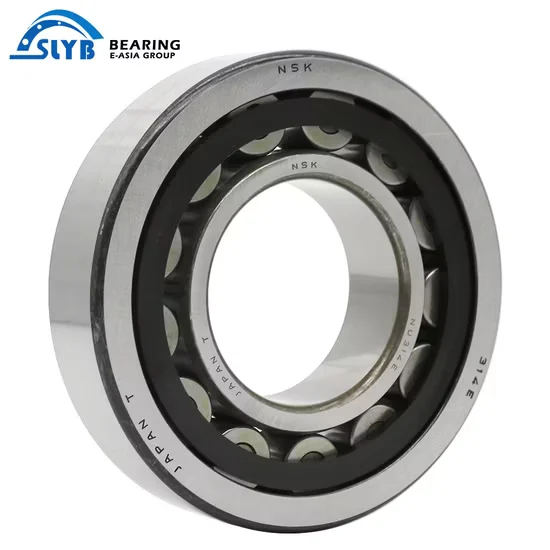 01 Clutch Release Bearings LM501349/LM501310 501349/10 Double Row Roller Bearing OEM View model details
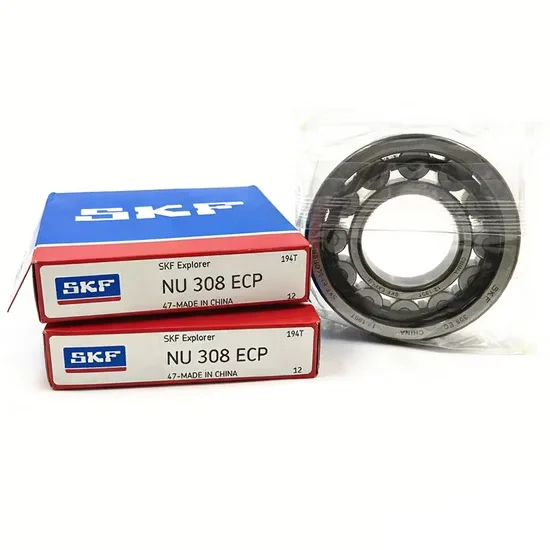 02 Cylindrical Roller Bearings SKF NU308ECP Cylindrical Roller Bearing for Gearbox Reducer OEM View model details
 03 Deep Groove Ball Bearings Genuine SKF Deep Groove Ball Bearings 6201-6206 OEM ODM Supply View model details
 04 Tapered Roller Bearing <p> 32218 Rodamiento de rodillos cónicos 90x160x42.5mm para aplicaciones OEM de energía eólica y automotriz View model details
Applications
Where these SKF bearings are used
Keep reading
Related SKF bearing selection guides
More practical notes on SKF designations, precision items and project bearing lists from Project Purchasing Company.
 Procurement & Trade FAQs · · 7 min read Ball Bearing Supplier to Latin America: Genuine SKF, FAG, NSK Wholesale Sourcing genuine ball bearings for Latin America demands strict customs compliance to avoid costly port delays. Master precise HS codes and Certificates of Origin… Read the guide
 Procurement & Trade FAQs · · 8 min read Genuine Ball Bearing Supply to Southeast Asia Wholesale Master Ball Bearing Supply to Southeast Asia by prioritizing customs compliance and verified authenticity over marginal price differences. Learn how mixed-brand consolidation, accurate HS… Read the guide
 Procurement & Trade FAQs · · 7 min read Genuine Ball Bearings for Africa & Middle East Wholesale Supplier Secure genuine ball bearing supply to Africa and Middle East with strict customs compliance and authentic mixed-brand consolidation. Master SONCAP clearance, optimize container loading,… Read the guide

Request a quote
Send your SKF list. Get one itemized written quote.
Project Purchasing Company supplies SKF ball, roller, precision and housed bearing units to distributors, repair workshops and project buyers worldwide. Standard and precision items are priced line by line, with accessories kept on the same quote.