
Custom OEM SKF-Spec Bearings for OE Automotive Programs
Dimensional interchange is not performance interchange. Sourcing custom OEM SKF-spec bearings for OE automotive programs requires full parameter alignment across clearance, seal design, and grease formulation—not just matching outer diameter and bore size.
The answer to passing OE validation is reverse-engineering every bearing parameter from the actual application conditions, then documenting the full chain from工况倒推 to PPAP submission.
I still remember a batch of tapered roller bearings we shipped to a truck modification plant near Monterrey. The customer inspected clearance per the SKF drawing, but our production floor ran to the national standard. The cages disintegrated before the trucks hit twenty thousand kilometers. That mid-six-figure loss didn’t just hurt the balance sheet—it burned months of trust. What I learned on that售后 trip, crawling under rigs in the Sonoran heat, is that OE customers do not buy "close enough." They buy parameter-by-parameter traceability.
Moving from the assembly line to procurement conversations with Tier 1 buyers, I now start every custom OEM SKF-spec bearing inquiry by asking about the failure mode they are trying to eliminate—not by handing over a catalog.
Why "Cross-Reference" Fails in OE Automotive Programs?
A cross-reference chart matches geometry; it does not match physics. Most buyers assume that if a bearing shares the same bore, OD, and width as the OE original, it will perform identically. In reality, OE validation tests evaluate internal clearance under thermal expansion, seal lip pressure against contamination ingress, and grease rheology across the full temperature envelope.
Consider a European passenger car suspension program where a Tier 1 supplier substituted a bearing based purely on dimensional interchange. The seal material was incompatible with the grease base oil. Within the first warranty period, noise complaints spiked and the OEM traced the root cause to lubricant leakage past the seal lip. The recall cost multiplied the original bearing price many times over.
| Parameter | Dimensional Cross-Reference Only | Full OE Spec Alignment |
|---|---|---|
| Bore / OD / Width | Matched | Matched |
| Radial Internal Clearance | Standard group assumed | Application-derived C0/Cn |
| Seal Material & Lip Design | Generic rubber | Contamination-level matched |
| Grease Base Oil & Thickener | Off-the-shelf | Temperature & life validated |
| Documentation | Datasheet only | PPAP + material cert + test report |
The gap between the two columns is where warranty claims are born.
How to Reverse-Engineer Bearing Specs from Application Conditions?
Start with the failure mode, not the catalog number. When I walk a Tier 1 procurement engineer through a custom OEM SKF-spec bearing specification, I ask three questions first: What killed the last bearing? What is the contamination environment? What is the thermal cycle?
The process follows a structured reverse-engineering logic:
- Map the operating envelope. Record shaft speed range, load direction (radial, axial, combined), and peak operating temperature.
- Derive clearance from thermal growth. If the inner ring runs hotter than the outer ring due to heat path asymmetry, the effective internal clearance shrinks. Select the starting cold clearance group—C2, CN, C3, or C4—so that operating clearance stays within the target band.
- Match seal to contamination class. For high-dust environments like off-highway equipment, a contact seal with a reinforced outer lip and grease-filled labyrinth is non-negotiable. For clean, high-speed applications, a low-friction non-contact seal preserves torque efficiency.
- Select grease by temperature and life. The base oil viscosity must maintain an adequate lubricant film at peak temperature, while the thickener type determines bleed characteristics over the target service interval.
A North American heavy-truck hub unit program illustrates the stakes. The Tier 1 buyer specified a taper roller bearing with a tight clearance tolerance band. During assembly, the interference fit between the bearing cup and the housing pushed the actual clearance below the minimum threshold, causing preload and early spalling. The fix was not a different bearing type—it was widening the tolerance band on the cup OD by a few microns and reclassifying the clearance group. That single adjustment eliminated the assembly scrap line.
What Documentation Do Tier 1 Buyers Require for Custom OEM Bearings?
OE procurement lives and dies by paperwork. A bearing can be manufactured to perfect specifications, but without the documentation chain, it will not pass the supplier audit. Tier 1 buyers in the automotive sector typically require a complete PPAP package, which includes the dimensional report, material certificates, process flow diagram, control plan, and initial sample inspection report.
Beyond PPAP, OE customers increasingly ask for application-specific validation evidence:
- Clearance verification report showing measurement methodology, sample size, and statistical capability indices.
- Seal durability test data demonstrating lip wear and leakage resistance under simulated contamination exposure.
- Grease compatibility and life test results confirming that the lubricant does not degrade the seal elastomer and maintains rheological stability across the temperature range.
Our factory holds ISO 9001 certification and maintains a full documentation infrastructure to support these requirements. When a European OE program requested custom clearance bearings for a Tier 1 suspension project, we provided not only the standard material certificates but also a工况-specific validation report correlating the bearing internal geometry to the customer’s thermal simulation data. That documentation package shortened the PPAP approval cycle substantially.
How to Validate Custom Bearings Before Mass Production?
Never skip the trial fit. Even with perfect documentation, the only way to confirm that a custom OEM SKF-spec bearing will survive in the field is to validate it under real or simulated conditions before committing to a production run.
The validation sequence typically includes:
- Dimensional and clearance audit on the first production sample to confirm conformance to the OE drawing.
- Bench rig testing under accelerated load and speed conditions to verify fatigue life and thermal behavior.
- Vehicle-level trial installation on a small fleet to capture real-world vibration, noise, and temperature data over an extended mileage interval.
A Latin American mining equipment OEM once received a batch of spherical roller bearings that passed all bench tests but failed in the field within a few thousand operating hours. The root cause was not the bearing itself—it was the relubrication interval specified by the maintenance team, which was far shorter than the grease bleed rate could support. The validation gap was not in manufacturing; it was in the absence of a field trial that would have exposed the maintenance-lubrication mismatch.
For custom OEM SKF-spec bearings destined for OE automotive programs, we recommend a minimum of two validation gates: a bench rig cycle that replicates the most severe load case, followed by a controlled field trial on a representative sample of vehicles. Only after both gates close should the production order be released.
Conclusion
OE automotive programs reward parameter discipline, not dimensional shortcuts. Custom OEM SKF-spec bearings must be reverse-engineered from the application failure mode, validated through bench and field trials, and supported by a complete PPAP documentation chain. The difference between a bearing that passes OE qualification and one that triggers a warranty recall is not the steel—it is the rigor of the specification process.
Products in this article
SKF bearings mentioned above
 01 Clutch Release Bearings LM501349/LM501310 501349/10 Double Row Roller Bearing OEM View model details
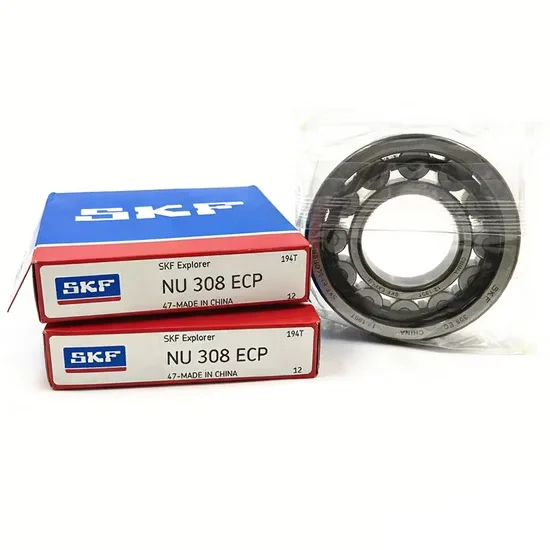 02 Cylindrical Roller Bearings SKF NU308ECP Cylindrical Roller Bearing for Gearbox Reducer OEM View model details
 03 Deep Groove Ball Bearings Genuine SKF Deep Groove Ball Bearings 6201-6206 OEM ODM Supply View model details
 04 Tapered Roller Bearing <p> 32218 Rodamiento de rodillos cónicos 90x160x42.5mm para aplicaciones OEM de energía eólica y automotriz View model details
Applications
Where these SKF bearings are used
Keep reading
Related SKF bearing selection guides
More practical notes on SKF designations, precision items and project bearing lists from Project Purchasing Company.
 Applications & Industries · · 7 min read Ball Bearings for Model Engines: Wholesale Supplier & Bulk Orders Standard industrial bearings fail in model engines due to incorrect clearances and cage materials. Ball Bearings in Model Engines require specific tight tolerances, machined… Read the guide Applications & Industries · · 7 min read Ball Bearings for Garden Tillers: Genuine Wholesale Supplier Genuine Ball Bearings in Garden Tillers prevent costly field failures caused by mud ingress and shock loads. Discover critical selection criteria for sealing and… Read the guide Applications & Industries · · 7 min read Ball Bearings for Pressure Washers Wholesale Supplier Stop premature pump failures by prioritizing seal integrity over basic dimensions for Ball Bearings in Pressure Washers. Learn why high-temperature contact seals and synthetic… Read the guide

Request a quote
Send your SKF list. Get one itemized written quote.
Project Purchasing Company supplies SKF ball, roller, precision and housed bearing units to distributors, repair workshops and project buyers worldwide. Standard and precision items are priced line by line, with accessories kept on the same quote.