
Custom OEM SKF-Spec Bearings for OE Motorcycle Assembly | Wholesale Supplier
Matching a bearing part number is not the same as matching its operating behavior.
To source Custom OEM SKF-Spec Bearings that survive real-world motorcycle assembly and road use, buyers must verify vibration grade, internal clearance, and seal type against actual working conditions—not just cross-reference tables. A correct part number with the wrong vibration class or clearance will still fail early, and the hidden cost of field returns dwarfs any unit-price savings.
I still remember a conversation at a Hannover trade show a few years ago. An Italian motorcycle OEM buyer was furious. His previous supplier had shipped deep groove ball bearings labeled as SKF-spec 6205 cross-reference parts. On the dyno test bench, vibration levels spiked well beyond acceptable limits. The entire batch had to be pulled off the line, disassembled, and reworked. The rework labor alone wiped out any margin the buyer thought he had saved by switching suppliers. That single episode reshaped how I approach every OEM bearing inquiry: before we even talk price, we pull out the vibration grade, clearance group, and seal configuration, and match them to the specific engine or wheel hub application.
This is where most sourcing mistakes begin, and this is where Custom OEM SKF-Spec Bearings must be evaluated differently from generic aftermarket replacements.
Why Cross-Reference Alone Isn’t Enough for Motorcycle OEM Bearings?
A cross-reference table tells you the external dimensions match; it tells you nothing about how the bearing will behave under load, heat, and speed.
In motorcycle OEM assembly, the 6205 and 6305 series are among the most frequently specified sizes for engine countershafts, gearboxes, and wheel hubs. Buyers often receive a supplier’s cross-reference chart showing a perfect dimensional match to SKF, NSK, or FAG originals. What the chart rarely shows is whether the vibration grade, internal clearance, and seal type are truly equivalent.
Consider a real scenario from a European motorcycle plant. The engineering team specified a 6205 bearing at vibration grade P6, clearance C3, for a mid-displacement engine application. The supplier delivered a dimensionally identical part but at standard vibration grade and C0 clearance. On the assembly line, everything looked fine. Once the engines were run on the test bench at operating temperature and rated RPM, vibration readings exceeded the acceptable threshold across nearly the entire batch. The root cause was not the bearing size—it was the mismatch in vibration class and clearance behavior under thermal expansion.
Here is how the key specification layers typically break down when buyers compare a genuine SKF-spec requirement against a loosely matched alternative:
| Specification Layer | SKF-Spec Requirement | Loosely Matched Alternative | Verification Depth |
|---|---|---|---|
| Dimensional Accuracy | P5 / P6 class | Standard P0 class | Full batch-level |
| Vibration Grade | Z2V2 or Z3V3 | Z1V1 or ungraded | Sample-level |
| Internal Clearance | C3 for high-temp shaft | C0 standard | Verifiable |
| Seal Type | 2RS rubber seal for contaminated zones | ZZ metal shield only | Full batch-level |
| Quality Documentation | ISO 9001 + inspection report | Self-reported only | Not provided |
The pattern is consistent: the dimensional shell is correct, but the internal performance characteristics are not.
For buyers sourcing Custom OEM SKF-Spec Bearings, the takeaway is clear. A cross-reference table is a starting point, not a finish line. Without verifying vibration grade, clearance, and seal type, you are essentially gambling on assembly line performance.
How to Verify SKF-Spec Bearings Meet Your Assembly Requirements?
Work backward from the application conditions, not forward from the catalog number.
The correct selection sequence for motorcycle OEM bearings begins with the operating environment. Engine countershaft bearings run at elevated temperatures and require C3 clearance to compensate for thermal shaft expansion. Wheel hub bearings in dusty or wet conditions need 2RS rubber seals rather than ZZ metal shields, because rubber seals retain grease and block contaminants far more effectively.
A Southeast Asian motorcycle assembly plant learned this the hard way. They specified 6305 bearings with 2RS seals for a scooter wheel hub application. The supplier substituted ZZ-shielded bearings, arguing they were "equivalent." Within a few months of field use, the metal shields allowed dust and moisture ingress, the grease degraded, and the bearings began failing at an alarming rate. The plant had to issue a service bulletin and replace thousands of units under warranty. The lesson was expensive but definitive: seal type is not a cosmetic choice; it is a functional requirement.
When I work with OEM buyers on Custom OEM SKF-Spec Bearings, I walk them through a verification checklist:
- Confirm the exact vibration grade required for the application, referencing ISO 15243 classifications such as Z2V2 or Z3V3.
- Match the internal clearance group to the expected operating temperature range and shaft speed.
- Specify the seal type explicitly: 2RS for contaminated environments, ZZ for clean, high-speed applications.
- Require the supplier to provide batch-level inspection reports, not just a generic certificate.
- Cross-check the supplier’s documentation against ISO 492 tolerance standards.
At our facility, we maintain a complete cross-reference interchange chart covering SKF, NSK, FAG, TIMKEN, NTN, and KOYO. Every Custom OEM SKF-Spec Bearings order is produced under ISO 9001 certification, and we support vibration grade and clearance customization with verifiable batch documentation. Buyers do not have to guess whether the bearing matches their assembly requirement—we provide the data to prove it.
What Are the Hidden Costs of Choosing the Wrong Bearing Supplier?
The unit price on the invoice is the smallest part of the total cost of a bad bearing decision.
Most buyers focus on the purchase price per piece. What they rarely calculate is the total cost of ownership when a bearing fails to meet OEM specifications. The hidden costs stack up quickly: assembly line stoppages, rework labor, warranty replacements, freight for returned goods, and—perhaps most damaging—loss of confidence from the OEM customer.
A South American motorcycle distributor once requested a full cross-reference table covering SKF, NSK, and FAG part numbers for a range of engine and chassis bearings. One of the shortlisted suppliers provided only the model numbers without any supporting verification documents. The distributor’s engineering team could not validate the vibration grade or clearance, so they delayed the order by weeks while they searched for an alternative source. That documentation gap translated directly into delayed market launch and lost revenue.
The cost structure of a wrong bearing choice typically looks like this:
| Cost Category | Impact Level | Visibility at Purchase |
|---|---|---|
| Unit purchase price | Noticeably low | Highly visible |
| Assembly line rework labor | Substantially extended | Hidden until failure |
| Warranty and field replacement | Substantially extended | Hidden until failure |
| Freight and logistics for returns | Noticeably reduced | Hidden until failure |
| OEM customer confidence loss | Substantially extended | Hidden until failure |
The pattern is always the same: the apparent savings on the invoice are multiplied many times over by the downstream costs of failure. For buyers evaluating Custom OEM SKF-Spec Bearings, the rational approach is to treat the supplier’s quality documentation and technical verification capability as part of the price, not as an optional extra.
How to Build a Reliable OEM Bearing Supply Chain?
Reliability is built on certification, verification, and technical dialogue—not on price alone.
A sustainable OEM bearing supply chain rests on three pillars. First, the supplier must hold ISO 9001 certification and be willing to provide batch-level inspection documentation on request. Second, the supplier must support full cross-reference interchange across all major brands, so that buyers are not locked into a single source. Third, the supplier must offer application-based technical selection, not just catalog quoting.
From my experience working with OEM buyers across multiple regions, the suppliers who last are the ones who treat the initial inquiry as a technical consultation. They ask about the application environment, the expected load and speed, the temperature range, and the contamination level. They then recommend the appropriate vibration grade, clearance group, and seal type, and back it up with documentation.
When sourcing Custom OEM SKF-Spec Bearings, buyers should look for a partner who can provide a complete cross-reference chart, ISO-standard quality verification, and application-based selection support. The supplier should be willing to customize vibration grade and clearance to match the specific assembly requirement, and should dispatch stock items quickly to minimize production downtime.
Conclusion
Cross-referencing a bearing number is only the first step; verifying vibration grade, clearance, and seal type against real application conditions is what separates a reliable OEM supply from a costly field failure.
Custom OEM SKF-Spec Bearings demand a selection process rooted in application parameters, backed by ISO-certified documentation, and supported by a supplier who treats technical verification as a core service. The hidden costs of getting it wrong—rework, warranty claims, and lost customer trust—always outweigh the apparent savings of a cheaper, under-documented alternative.
Products in this article
SKF bearings mentioned above
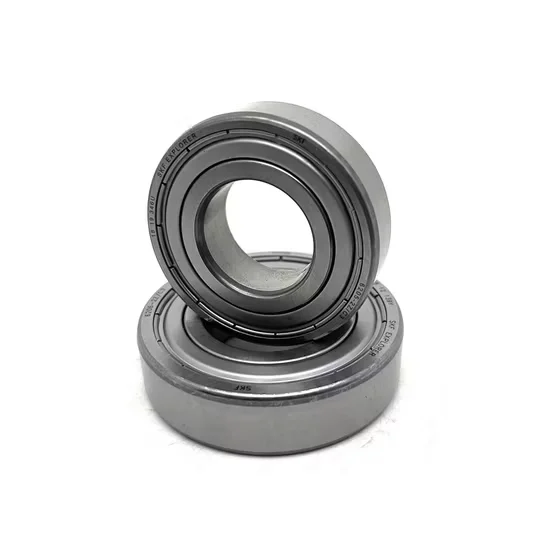 01 Deep Groove Ball Bearings SKF 6204 6205 6206 Deep Groove Ball Bearing Spare Parts View model details
 02 Deep Groove Ball Bearings Original SKF Deep Groove Ball Bearing 6000 6001 6308 6309 6204 6205 6206 for Auto Parts View model details
 03 Agricultural Machinery Bearings X&S 80607kt 6301-2RS 6205-2Z 6206-2Z Deep Groove Ball Bearing View model details
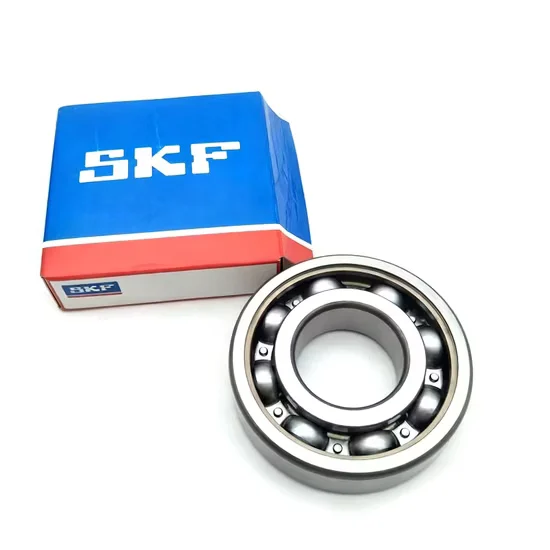 04 Deep Groove Ball Bearings SKF 6205 6206 ZZ C3 Deep Groove Ball Bearing for Automobile Industry View model details
Applications
Where these SKF bearings are used
Keep reading
Related SKF bearing selection guides
More practical notes on SKF designations, precision items and project bearing lists from Project Purchasing Company.
 Applications & Industries · · 7 min read Ball Bearings for Model Engines: Wholesale Supplier & Bulk Orders Standard industrial bearings fail in model engines due to incorrect clearances and cage materials. Ball Bearings in Model Engines require specific tight tolerances, machined… Read the guide Applications & Industries · · 7 min read Ball Bearings for Garden Tillers: Genuine Wholesale Supplier Genuine Ball Bearings in Garden Tillers prevent costly field failures caused by mud ingress and shock loads. Discover critical selection criteria for sealing and… Read the guide Applications & Industries · · 7 min read Ball Bearings for Pressure Washers Wholesale Supplier Stop premature pump failures by prioritizing seal integrity over basic dimensions for Ball Bearings in Pressure Washers. Learn why high-temperature contact seals and synthetic… Read the guide

Request a quote
Send your SKF list. Get one itemized written quote.
Project Purchasing Company supplies SKF ball, roller, precision and housed bearing units to distributors, repair workshops and project buyers worldwide. Standard and precision items are priced line by line, with accessories kept on the same quote.