
FOB OEM Bearings Built to SKF Specifications | Wholesale Supplier
Most buyers assume price gaps between OEM bearings and SKF originals come down to brand premiums. In reality, the difference lives in cage material, clearance class, and seal configuration — details that silently reshape FOB pricing and field performance.
FOB pricing for OEM bearings built to SKF specifications depends on specification verification completeness, quality documentation rigor, and order volume structure — not merely on matching a model number.
I spent years on the inspection floor before moving to the trade side. Calipers and spectrometers were more familiar to me than business cards. The shift to sales revealed something the catalog never shows: a single cage material suffix on a spec sheet translates into a completely different bearing at the installation site. A conveyor operator in Vietnam once sent me a drawing for an SKF 22320 equivalent, asking for an OEM cross-reference. I quoted FOB based on the basic dimensions. When the shipment arrived, the clearance was CN instead of C3. Under high-temperature operation, the bearing seized. The entire line went down for two days.. Since that incident, I made a personal rule: any order claiming "built to SKF specs" must have clearance, seal type, lubrication, and cage material confirmed item by item — written into the proforma invoice without a single letter left ambiguous.
That lesson shaped how I approach every FOB quote today. Let me walk you through what actually drives pricing, what specifications matter most, and how to verify compliance before the goods leave the port.
What Determines FOB Prices for SKF-Spec OEM Bearings?
The completeness of specification verification directly determines both pricing accuracy and delivery reliability.
When a buyer requests FOB pricing for OEM bearings built to SKF specifications, the first instinct is to send a model number and expect a quote. But a model number alone tells you almost nothing about the internal configuration that drives cost.. The suffix letters after the basic number encode cage type, seal arrangement, clearance class, and lubrication fill — each of which changes material cost, machining time, and inspection requirements.
Consider a real scenario. A distributor in the Middle East requested FOB pricing for a self-aligning roller bearing equivalent to a widely used mining conveyor model. The initial inquiry listed only the basic number. When we asked for the full suffix, it turned out the application required a brass cage, C4 clearance, and a high-temperature grease fill. The cage material alone shifted the unit cost noticeably compared to a standard pressed-steel cage variant. The C4 clearance required additional sorting and measurement during final inspection. The specialized grease added another procurement layer. None of this was visible in the basic model number.
The FOB price structure for OEM bearings built to SKF specifications typically breaks down into several cost layers:
- Raw material and cage configuration: Brass cages cost substantially more than pressed steel or polyamide variants. Machined brass cages add further machining cost..
- Clearance class sorting: Standard CN clearance bearings come off the production line in bulk. Non-standard clearances like C3, C4, or C5 require additional measurement, sorting, and documentation — all adding cost.
- Seal and shield type: Open bearings are the baseline. Adding contact seals (2RS) or shields (2Z) introduces additional components and assembly steps.
- Lubrication specification: Standard lithium-based grease is common. High-temperature, food-grade, or synthetic lubricants require separate filling processes and compatibility verification.
- Documentation and certification: ISO 9001 compliance, material certificates, and dimensional inspection reports add administrative and testing cost but are non-negotiable for industrial procurement.
A common misconception is that FOB price equals total cost. In reality, a specification error discovered after installation — like the Vietnam conveyor case — generates downtime losses that dwarf any per-unit savings..
Which SKF Specifications Most Affect OEM Bearing Pricing?
Clearance class, cage material, seal type, and lubrication specification are the four critical parameters beyond basic dimensions that reshape both pricing and performance.
Basic dimensions — bore, outside diameter, and width — define the bearing envelope. But the operating environment determines everything inside that envelope. Here is where OEM bearings built to SKF specifications must be scrutinized parameter by parameter.
Clearance class is perhaps the most misunderstood parameter. Internal clearance defines the internal play between rolling elements and raceways.. A bearing specified with CN clearance but installed in a high-temperature application will experience thermal expansion that eliminates internal play, leading to preload, overheating, and premature failure. Conversely, excessive clearance in a low-temperature or high-precision application causes vibration and reduced accuracy. The clearance class directly affects sorting time and inspection cost during production.
Cage material determines how the bearing handles speed, load, and temperature. Pressed steel cages are economical and suitable for general-purpose applications. Machined brass cages handle higher speeds and temperatures, common in industrial gearboxes and heavy-duty conveyors. Polyamide cages offer weight reduction and good performance at moderate speeds but have strict temperature ceilings.. Switching from pressed steel to machined brass can shift unit cost noticeably, and this difference is invisible unless the cage suffix is explicitly confirmed.
Seal type affects contamination resistance and friction. Open bearings suit applications where external lubrication is continuous. Shields (2Z) provide basic dust protection with low friction. Contact seals (2RS) offer superior contamination exclusion but introduce slight friction and speed limitations. The seal specification changes the bill of materials and assembly process.
Lubrication fill is the final critical parameter. Standard grease fills suit most general applications. But mining, steel, food processing, and marine environments often demand specialized lubricants — high-temperature, water-resistant, food-grade, or low-noise formulations. Each lubricant type requires separate filling equipment, compatibility checks, and sometimes shelf-life documentation.
Here is a qualitative comparison showing how these parameters shift across application requirements:
| Parameter | General Industrial | High-Temperature Conveyor | Mining & Heavy Load |
|---|---|---|---|
| Clearance Class | CN (Standard) | C3 or C4 (Elevated) | C3 (Thermal compensation) |
| Cage Material | Pressed Steel | Machined Brass | Machined Brass or Pressed Steel |
| Seal Type | Open or 2Z | Open (external lube) | 2RS (contamination exclusion) |
| Lubrication | Standard lithium grease | High-temperature synthetic | EP grease with solid additives |
| Documentation Level | Basic dimensional report | Full material certificate | Full batch traceability |
.
A European MRO buyer once replaced a batch of standard-clearance bearings in a high-temperature fan application. Within weeks, bearings were failing at an accelerated rate. The root cause was not bearing quality — it was clearance mismatch. The original specification called for C3, but the replacement batch was supplied with CN. The thermal expansion eliminated internal play, causing skidding and raceway damage..
How to Verify OEM Bearings Meet SKF Specifications?
Require complete quality documentation including material certificates, dimensional inspection reports, and clearance verification records — and cross-check every suffix parameter against the original specification.
Verification is where many procurement processes break down. A buyer receives a quote for OEM bearings built to SKF specifications, the price looks competitive, and the model number matches. But without systematic verification, there is no way to confirm that the internal configuration actually matches the application requirement.
The verification process should follow a structured approach:
Step 1: Suffix-by-suffix cross-reference. Take the original SKF part number and decode every suffix letter. Confirm that the OEM manufacturer’s designation maps identically to each parameter — cage, seal, clearance, lubrication.. Do not assume that matching the basic number is sufficient.
Step 2: Request dimensional inspection reports. Reputable OEM manufacturers provide batch-level dimensional reports covering bore diameter, outside diameter, width, and raceway geometry. These reports should reference measurable tolerances aligned with ISO 492 normal class or higher precision classes as specified..
Step 3: Confirm clearance measurement records. For non-standard clearance classes (C3, C4, C5), the manufacturer should provide actual measurement data from the production batch, not just a statement of compliance. This is particularly critical for applications with thermal cycling or heavy loads.
Step 4: Verify material certificates. Steel composition and heat treatment records should be available upon request.. This confirms that the bearing rings and rolling elements meet the specified steel grade and hardness requirements.
Step 5: Inspect marking and packaging. Genuine-spec OEM bearings should carry proper type identification, batch codes, and manufacturer markings. Packaging should include part number, quantity, and traceability information..
A distributor in Southeast Asia once received a cross-reference order for a tapered roller bearing equivalent. The basic dimensions matched, but the cage was polyamide instead of the specified machined brass. The application involved a gearbox operating at elevated temperatures. The polyamide cage would have degraded under those conditions. The discrepancy was caught during incoming inspection only because the buyer had explicitly specified the cage suffix in the purchase order..
This case illustrates a broader principle: verification is not optional. It is the only safeguard against specification drift — whether caused by miscommunication, substitution, or misunderstanding of suffix codes.
What Quality Documentation Should FOB Quotes Include?
ISO 9001 certification, material test reports, dimensional inspection records, and specification compliance certificates are mandatory for any serious industrial procurement — and should be explicitly listed in the FOB quotation package.
When evaluating FOB pricing for OEM bearings built to SKF specifications, the documentation package is not an afterthought. It is part of the deliverable. A quotation that lists only unit price, quantity, and delivery time — without referencing supporting documentation — leaves critical compliance questions unanswered.
A complete documentation package should include:
- ISO 9001 certification: Confirms that the manufacturer operates under a recognized quality management system. This is the baseline expectation for any industrial bearing supplier serving international markets..
- Material test reports: Provide evidence that the steel used for rings and rolling elements meets specified composition and hardness standards. These reports should be traceable to the production batch.
- Dimensional inspection reports: Confirm that finished bearings meet the specified tolerance class. Batch-level reports are preferable to generic type-approval certificates.
- Clearance verification records: Particularly important for C3, C4, and C5 clearance classes. Actual measurement data from the production batch provides confidence that the specified clearance was achieved.
- Specification compliance statement: A formal declaration that the supplied bearings match the requested SKF specification suffix-by-suffix, including cage material, seal type, and lubrication.
Our factory maintains ISO 9001 certification and provides standard quality documentation with every shipment. We also offer complete cross-reference support across all major bearing brands, ensuring that OEM equivalents are matched parameter by parameter — not just by basic dimensions. When a buyer sends us a specification, we return a quotation that explicitly confirms every suffix parameter, supported by the documentation package outlined above.
A procurement manager at a Latin American mining operation once shared that their previous supplier provided bearings at attractive FOB prices but could not produce material certificates or clearance records when requested. After switching to a supplier with transparent documentation practices, they eliminated an entire category of incoming inspection disputes and reduced field failures noticeably..
The lesson is straightforward: documentation is not paperwork. It is evidence of process control. And in the context of FOB pricing for OEM bearings built to SKF specifications, it is the difference between a bearing that performs and a bearing that merely looks correct on paper.
Conclusion
FOB pricing for OEM bearings built to SKF specifications is shaped by specification completeness, not just model numbers. Clearance class, cage material, seal type, and lubrication — confirmed suffix by suffix — determine both cost and field reliability. Quality documentation including ISO 9001 certification, material certificates, and dimensional reports is not optional; it is the verifiable foundation of every industrial bearing procurement decision.
Products in this article
SKF bearings mentioned above
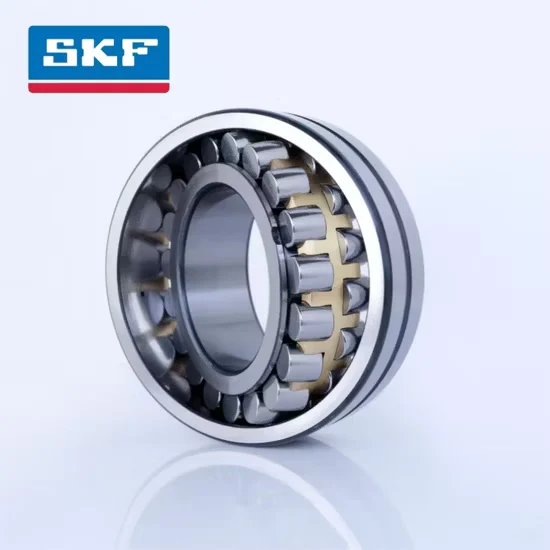 01 Mining and Vibrating Screen Bearings SKF 22320 E-K/C4 Spherical Roller Bearing Genuine Supplier View model details
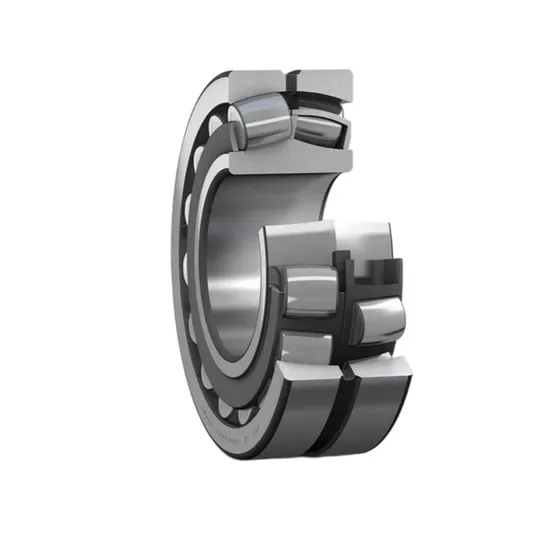 02 Car Bearing 22320E Spherical Roller Bearing Wholesale Supplier View model details
 03 Spherical Roller Bearing 22320EK Spherical Roller Bearing 73mm Width for Heavy-Duty Industrial Applications View model details
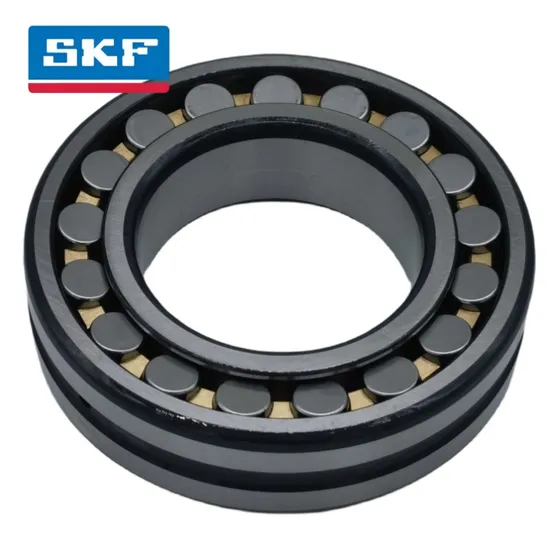 04 Spherical Roller Bearing High Precision SKF Spherical Roller Bearing 22320 E-K/C4 for Conveyor Systems Chrome Steel Gcr15 View model details
Applications
Where these SKF bearings are used
Keep reading
Related SKF bearing selection guides
More practical notes on SKF designations, precision items and project bearing lists from Project Purchasing Company.
 Procurement & Trade FAQs · · 7 min read Ball Bearing Supplier to Latin America: Genuine SKF, FAG, NSK Wholesale Sourcing genuine ball bearings for Latin America demands strict customs compliance to avoid costly port delays. Master precise HS codes and Certificates of Origin… Read the guide
 Procurement & Trade FAQs · · 8 min read Genuine Ball Bearing Supply to Southeast Asia Wholesale Master Ball Bearing Supply to Southeast Asia by prioritizing customs compliance and verified authenticity over marginal price differences. Learn how mixed-brand consolidation, accurate HS… Read the guide
 Procurement & Trade FAQs · · 7 min read Genuine Ball Bearings for Africa & Middle East Wholesale Supplier Secure genuine ball bearing supply to Africa and Middle East with strict customs compliance and authentic mixed-brand consolidation. Master SONCAP clearance, optimize container loading,… Read the guide

Request a quote
Send your SKF list. Get one itemized written quote.
Project Purchasing Company supplies SKF ball, roller, precision and housed bearing units to distributors, repair workshops and project buyers worldwide. Standard and precision items are priced line by line, with accessories kept on the same quote.