
OEM Bearing Design Optimization for SKF Cross Dimensions Wholesale Supplier
Matching outer dimensions is not engineering; it is geometry. True OEM bearing design optimization requires aligning internal clearance, grease fill, and cage geometry with the actual speed, load, and thermal profile of the application.
Cross-referencing external dimensions is only the entry point. The real engineering behind OEM bearing design optimization lives inside the bearing—where internal clearance classes, groove curvature, and lubricant volume determine whether a unit runs for years or fails within months. I learned this the hard way on the assembly floor in Dongguan, watching operators press cages into deep groove ball bearings day after day. When a European distributor later returned a full order of dimension-matched units for overheating and early spalling, the teardown revealed the truth: standard clearance was wrong for their continuous high-speed duty. That failure reshaped how every OEM request is handled today—starting with application parameters, not just a drawing.
Let us walk through the structured method that turns a simple dimension match into a reliable, application-optimized specification.
Why Dimension Matching Fails in OEM Applications?
External dimensions are the front door; internal design determines lifespan under real operating conditions.
A drawing tells you bore, outside diameter, and width. It does not tell you what happens inside when the inner ring expands faster than the outer ring at elevated temperature, or when centrifugal force pushes balls against the outer raceway at high RPM. Many OEM buyers assume that if a bearing physically fits, it will perform identically to the original. This is one of the most persistent myths in industrial procurement.
Consider a European distributor who ordered a batch cross-referenced to a well-known deep groove ball bearing for a high-speed fan motor application. Every external measurement was matched to the micron. Three months into continuous duty, complaints arrived: overheating, noise, and fatigue spalling on the raceways. The distributor suspected counterfeit product. After teardown analysis, the root cause was clear—standard internal clearance was insufficient for the operating speed and temperature combination. The balls were running with near-zero clearance under thermal expansion, creating artificial preload, excessive friction, and rapid lubricant breakdown.
This is not an isolated case. Across multiple regions, OEM engineers and maintenance teams encounter the same pattern: dimension-matched bearings fail prematurely because the internal design was never matched to the application. OEM bearing design optimization demands looking beyond the drawing.
Step 1: Define Application Parameters Before Cross-Referencing
Speed, load type, and temperature must drive clearance and grease selection—not just the dimensional drawing.
Before any cross-reference lookup, three application parameters must be documented:
- Operating speed range (RPM): Continuous duty speed, peak speed, and start-stop frequency determine the speed factor, which directly influences clearance class and grease selection.
- Load profile (magnitude, direction, shock vs. steady): Radial load, axial load, and shock loading intensity dictate internal geometry requirements, contact angle, and cage material selection.
- Thermal environment (ambient temperature, heat generation, cooling conditions): High ambient temperature or poor heat dissipation changes the thermal expansion differential between inner and outer rings, requiring clearance compensation.
A mining conveyor operator once replaced tapered roller bearings based solely on bore and outside diameter. The dimension match was perfect. Under shock loading from heavy ore impact, the standard cage fractured within weeks. The application required a reinforced cage design and modified internal geometry—parameters invisible on a dimensional drawing. OEM bearing design optimization begins with capturing these three parameters before any product selection.
Step 2: Optimize Internal Clearance for Your Operating Condition
Standard clearance is not universal; high-speed or high-temperature applications often require larger clearance classes to prevent thermal locking.
Internal clearance classes—C2, C0 (standard), C3, C4, C5—define the radial play inside a bearing before mounting and operation. During operation, the inner ring typically runs hotter than the outer ring due to proximity to the heat source and friction. This thermal gradient causes the inner ring to expand more, reducing internal clearance. If the initial clearance is too small, the bearing can reach zero or negative clearance under operating conditions—creating preload, overheating, and rapid failure.
For high-speed applications such as electric motors and fans running continuously at elevated RPM, C3 clearance is frequently the minimum requirement. In extreme thermal environments, C4 may be necessary. Conversely, for precision machine tool spindles where rigidity is paramount and thermal growth is controlled, C2 or standard clearance may be appropriate.
| Operating Condition | Typical Clearance Class | Rationale |
|---|---|---|
| Low speed, controlled temperature | C2 or Standard | Minimal thermal expansion; rigidity priority |
| General industrial duty | Standard | Balanced clearance for moderate conditions |
| High speed, continuous motor duty | C3 | Compensates for inner ring thermal growth |
| High ambient temperature or high heat generation | C4 | Additional clearance margin for severe thermal expansion |
| Extreme temperature differential | C5 | Maximum clearance for specialized applications |
An agricultural gearbox manufacturer encountered repeated field failures with cross-referenced deep groove bearings. The gearboxes operated in high-ambient-temperature environments with limited cooling. Standard clearance bearings locked up thermally after extended operation. Switching to C3 clearance—and adjusting shaft and housing fit tolerances to control interference fit expansion—eliminated the thermal locking issue. OEM bearing design optimization requires matching clearance class to the actual thermal profile, not the catalog default.
Step 3: Select the Right Grease Fill and Type
Grease volume and base oil viscosity must match the speed factor to avoid churning losses or lubricant starvation.
Even the best-matched bearing will fail quickly if the lubricant is wrong. Grease fill volume is typically expressed as a percentage of the bearing’s free internal space. For high-speed applications, excessive grease fill causes churning—viscous drag that generates heat and accelerates grease degradation. For low-speed or heavily loaded applications, insufficient grease fill leads to starvation, metal-to-metal contact, and wear.
The speed factor, calculated as the product of bearing RPM and mean diameter, is the primary driver for grease selection.
- Low speed factor: Higher grease fill volume acceptable; heavier base oil viscosity provides adequate film thickness.
- Medium speed factor: Moderate grease fill; standard lithium-complex or polyurea grease with medium viscosity base oil.
- High speed factor: Reduced grease fill to minimize churning; low viscosity synthetic base oil with high-speed grease thickener system.
A European fan motor manufacturer specified standard grease fill for a high-speed motor application. The result was excessive operating temperature and grease channeling—where the grease is pushed to the periphery, leaving the raceways starved. Reducing the grease fill volume and switching to a high-speed synthetic grease resolved the thermal issue and extended service life substantially. OEM bearing design optimization includes specifying grease fill and type as precisely as dimensional tolerances.
Step 4: Verify Design Optimization with Your Supplier
Request technical data sheets for clearance and grease—not just dimension certificates.
Many bearing suppliers provide dimension inspection reports but omit internal clearance measurement data and grease specification details. This leaves the buyer unable to verify whether the bearing is truly optimized for the application. A proper technical submission for OEM bearing design optimization should include:
- Internal clearance measurement report per batch or sample, referencing the applicable clearance class.
- Grease type designation, base oil viscosity, and fill volume percentage.
- Cage material and design specification.
- Internal geometry parameters where applicable (groove curvature radius, contact angle for angular contact types).
As a full-category bearing factory, we provide complete technical documentation alongside every OEM order—clearance reports, grease specifications, and cage details—so buyers can verify that the bearing is optimized for their application, not just dimensionally matched. Every cross-reference product we supply is backed by application-based selection support, ensuring that internal design matches operating conditions.
Conclusion
Dimension matching opens the door; internal design optimization keeps the bearing running. OEM bearing design optimization requires systematic alignment of clearance class, grease fill, cage design, and internal geometry with the actual speed, load, and thermal conditions of the application. Skipping this step turns a perfect dimensional fit into a premature failure. Start with application parameters, specify internal design explicitly, and verify with technical documentation—not just dimensional certificates.
Products in this article
SKF bearings mentioned above
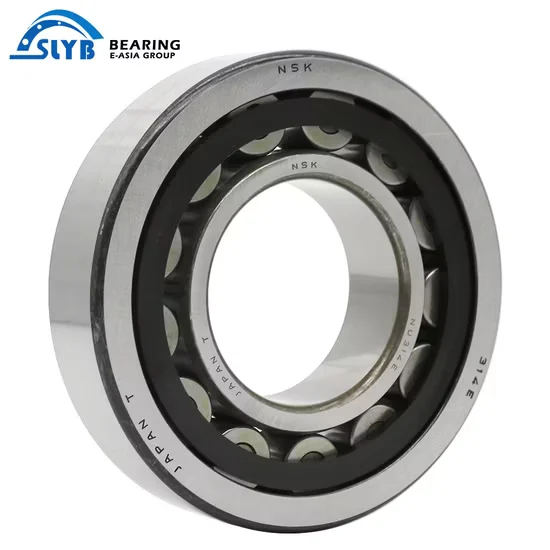 01 Clutch Release Bearings LM501349/LM501310 501349/10 Double Row Roller Bearing OEM View model details
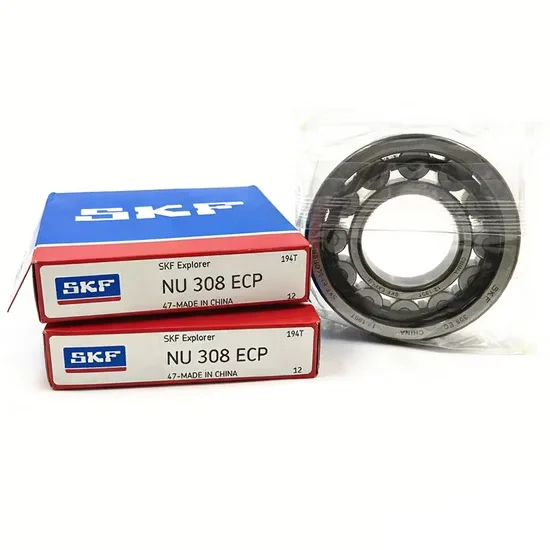 02 Cylindrical Roller Bearings SKF NU308ECP Cylindrical Roller Bearing for Gearbox Reducer OEM View model details
 03 Deep Groove Ball Bearings Genuine SKF Deep Groove Ball Bearings 6201-6206 OEM ODM Supply View model details
 04 Tapered Roller Bearing <p> 32218 Rodamiento de rodillos cónicos 90x160x42.5mm para aplicaciones OEM de energía eólica y automotriz View model details
Applications
Where these SKF bearings are used
Keep reading
Related SKF bearing selection guides
More practical notes on SKF designations, precision items and project bearing lists from Project Purchasing Company.
 Technical Resources · · 6 min read Ball Bearing Weight Table: Wholesale Supplier for Bulk Orders A precise ball bearing weight table is essential for calculating freight costs and avoiding port overweight penalties. Distinguish between net and gross weight to… Read the guide
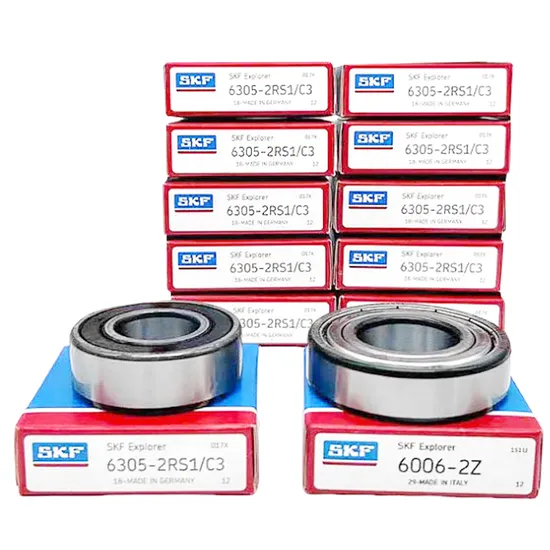 Technical Resources · · 7 min read Motor Bearing Lookup by Power | Genuine Wholesale Supplier Stop relying on motor bearing lookup by power alone to avoid premature failures from shock loads and heat. Calculate real dynamic requirements and match… Read the guide Technical Resources · · 7 min read Ball Bearing Load Rating Reference Table: Wholesale Supplier Master the Ball Bearing Load Rating Reference Table to prevent premature failures caused by misinterpreting dynamic and static limits. Learn to calculate equivalent loads… Read the guide

Request a quote
Send your SKF list. Get one itemized written quote.
Project Purchasing Company supplies SKF ball, roller, precision and housed bearing units to distributors, repair workshops and project buyers worldwide. Standard and precision items are priced line by line, with accessories kept on the same quote.