
OEM SKF-Spec Bearing Program Escalation Clauses Wholesale Supplier
Fixed pricing in long-term OEM bearing contracts is the single biggest margin trap for both buyers and suppliers.
OEM SKF-spec bearing escalation clauses are contractual mechanisms that tie unit pricing to verifiable external triggers — public steel indices, currency fluctuation bands, and scheduled batch-delivery renegotiation checkpoints — so that neither party absorbs uncontrolled cost volatility over 6-to-24-month supply programs. Without these clauses, the supplier silently eats every raw-material spike, and the buyer silently inherits every delivery delay, quality shortcut, and emergency reorder premium that follows.
I learned this the hard way on a Middle East wholesale order years ago. We signed a full-container annual program for deep groove ball bearings in SKF-equivalent specs — no escalation language, no index linkage, just a locked unit price. Within weeks of the first shipment, hot-rolled bearing steel prices started climbing. By the third month, raw material costs had jumped noticeably, and we kept shipping at the original price because the contract said so. Margins didn’t just vanish — we were effectively paying the buyer to take delivery. That order taught me to treat OEM SKF-spec bearing escalation clauses as non-negotiable contract infrastructure, not a favor to the supplier.
Let me walk you through how these clauses actually work in real OEM SKF-spec bearing programs, what happens when they are missing, and how to draft a framework that protects both sides.
What Are Escalation Clauses in OEM Bearing Contracts?
Escalation clauses are pre-agreed contractual formulas that adjust the unit price of bearings during a long-term supply program based on measurable external variables — typically steel price indices, exchange rate movements, and predefined delivery-milestone checkpoints. They are not open-ended price increases. They are structured, formula-driven, and tied to publicly verifiable data sources.
In a typical OEM SKF-spec bearing program, the base price is set at contract signing using a reference steel grade cost and a reference exchange rate. The escalation clause then defines three layers of adjustment:
- A raw material index linkage that tracks published steel price movements against a named benchmark such as CRU or Mysteel.
- A currency fluctuation band — usually a bilateral corridor like ±3% around a reference FX rate — beyond which either party can trigger a price review.
- A batch delivery renegotiation trigger that opens a pricing checkpoint at each quarterly or semi-annual shipment window, regardless of whether indices have moved.
The clause specifies who calculates the adjustment, which data source governs, how many days in advance a notice must be issued, and what happens if the parties cannot agree within a defined window.
A common misunderstanding among buyers is that escalation clauses only benefit the supplier. In reality, a well-drafted clause protects the buyer’s delivery continuity and product consistency just as much as it protects the supplier’s margin. When a supplier is forced to absorb sustained cost increases without any contractual relief, the predictable outcomes are late shipments, substituted lower-grade materials, or outright supply refusal — all of which cost the buyer far more than a modest, transparent price adjustment.
Why Do SKF-Spec Long-Term Agreements Need Price Adjustment Terms?
Because bearing steel is a commodity input with cyclical volatility, and SKF-spec manufacturing demands consistent material grade — locking price without locking the input cost is a structural mismatch that guarantees margin destruction or supply failure.
SKF-spec bearings require specific carbon-chromium steel grades with controlled inclusion levels and verified hardenability. The raw material cost for these grades does not stay flat over a 12- or 18-month contract. It moves with global steel markets, energy costs, and scrap prices. When a buyer insists on a fully fixed price for a multi-batch OEM SKF-spec bearing program, the supplier is effectively underwriting all commodity risk — and no manufacturer, regardless of size, can carry that exposure indefinitely without compromising somewhere else in the order.
I have seen this play out repeatedly. A Latin American distributor once signed a two-year program for tapered roller bearings in SKF-cross-reference specs. The contract had zero escalation language. In the second year, steel prices surged and the local currency depreciated simultaneously. The supplier tried to absorb both shocks for several months. Then shipments started slipping — first by days, then by weeks. When the buyer finally demanded an explanation, the supplier had already begun substituting lower-grade material on some batches to stay within cost. The buyer caught it during incoming inspection. The entire shipment was rejected. The relationship ended in dispute, not renewal.
The root cause was not bad faith. It was a contract that made it economically impossible for the supplier to deliver what was specified at the price that was agreed. OEM SKF-spec bearing escalation clauses exist precisely to prevent this outcome. They convert an unpredictable cost variable into a managed, shared, and transparent one.
Without these clauses, the buyer does not get a cheaper bearing. The buyer gets a bearing that arrives late, arrives with substituted materials, or does not arrive at all.
What Key Elements Should an Escalation Clause Include?
A functional escalation clause in an OEM SKF-spec bearing contract must contain three operational components: a named raw material index with a clear calculation formula, a bilateral currency fluctuation band with a defined trigger threshold, and a scheduled renegotiation checkpoint aligned to batch delivery milestones.
Each component serves a distinct purpose, and omitting any one of them leaves a gap that will eventually be exploited — by the market, by the counterparty, or by both.
Raw material index linkage. The clause must name a specific, publicly available steel price index — not a vague reference to "market conditions." Acceptable benchmarks include CRU long product indices, Mysteel bearing steel price tracks, or regional equivalent publications. The formula should define the reference price at contract signing, the percentage weight of steel in the total bearing cost, and the adjustment calculation per index movement.
Currency fluctuation band. For cross-border OEM SKF-spec bearing programs, the invoicing currency and the supplier’s cost currency are almost never the same. A well-drafted clause sets a reference exchange rate at signing and defines a corridor — for example, ±3% — within which no price adjustment occurs. If the rate moves beyond the corridor, a formula-driven adjustment activates automatically. This protects both parties: the buyer is shielded from minor FX noise, and the supplier is protected from sustained currency dislocation.
Batch delivery renegotiation checkpoints. Even with index linkage and FX bands, long-term programs need scheduled review points. These are typically aligned to quarterly or semi-annual batch deliveries. At each checkpoint, both parties review the current index levels, the current FX rate, and the actual cost experience of prior batches. If adjustments are needed, they apply to the next batch — not retroactively. This prevents disputes over past shipments and keeps the commercial relationship forward-looking.
In our own OEM SKF-spec bearing programs, we provide wholesale buyers and distributors with a standard contract framework that includes all three elements pre-drafted. The steel index source, the FX corridor width, and the renegotiation calendar are all specified before the first batch is scheduled. This eliminates ambiguity and ensures that when market conditions shift — as they always do — both sides already know exactly what happens next.
How to Structure a Fair Escalation Framework for Both Buyer and Supplier?
A fair escalation framework uses public indices, sets mutual trigger thresholds, and includes clear timelines for price review — so that neither party can unilaterally impose adjustments and neither party is forced to absorb uncontrollable cost swings.
Fairness in escalation clauses is not about splitting every cost increase fifty-fifty. It is about ensuring that both the buyer and the supplier face the same rules, see the same data, and have the same ability to trigger a review.
Start with the index source. Both parties must agree on a single, publicly verifiable steel price index. Private quotes, supplier-internal cost surveys, or unnamed "market references" have no place in a credible clause. The index must be independently published, regularly updated, and accessible to both sides.
Next, define the trigger threshold together. A common structure is a dead-band — a range within which no adjustment occurs — followed by a proportional adjustment beyond that band. For example, if steel prices move within a defined range, the unit price stays fixed. If the move exceeds the range, the price adjusts by a pre-agreed percentage of the movement. The threshold should be set based on historical volatility of the chosen index, not on what one party considers comfortable.
Then, build in mutual notice and response timelines. Either party should be able to trigger a price review by written notice within a defined window before a scheduled batch. The other party must respond within a set number of days. If no agreement is reached, the clause should specify a fallback — such as continuation at the last agreed price for a limited number of batches, followed by a right to terminate the affected batch schedule without penalty to the overall program.
Finally, include a transparency obligation. The supplier should provide the buyer with a cost breakdown showing the material cost share, the labor and overhead share, and the margin component. This does not mean disclosing proprietary manufacturing data. It means showing enough structure for the buyer to verify that the adjustment formula is being applied correctly and that the resulting price reflects actual cost movements, not opportunistic markup.
When we structure OEM SKF-spec bearing escalation frameworks for our wholesale clients, we walk them through each of these elements before the contract is signed. The buyer sees the index source, the FX corridor, the trigger thresholds, and the renegotiation calendar — all in plain language, all verifiable. This is how you build a long-term program that survives market cycles instead of collapsing under them.
What Happens When Escalation Clauses Are Missing or Poorly Drafted?
When OEM SKF-spec bearing contracts lack escalation clauses, the predictable outcomes are supply disruption, hidden cost-shifting through material downgrades, and emergency renegotiation under duress — all of which cost the buyer more than a properly structured price adjustment would have.
I have seen every one of these outcomes in real programs.
A Middle East wholesale buyer signed an annual program for spherical roller bearings in SKF-cross-reference specs for mining conveyor applications. No escalation clause. Steel prices rose steadily over the first half of the contract. The supplier absorbed the increases for several months, then quietly switched to a lower-grade steel on subsequent batches to protect margin. The bearings passed visual inspection but failed prematurely in service — premature spalling within a fraction of the expected service life. The buyer did not discover the substitution until a batch was sent for metallurgical analysis after a field failure. By then, multiple batches had already been deployed. The cost of equipment downtime and replacement bearings dwarfed any price savings from the original contract.
A Central Asian distributor had a contract with a semi-annual price review provision — but the clause did not specify which index governed the review or what happened if the parties disagreed. When steel prices spiked, the supplier proposed a large increase. The buyer disputed it. The contract offered no resolution mechanism. Shipments stopped for months while both sides argued. The buyer had to source emergency replacements on the spot market at a significant premium. The supplier lost the account permanently.
These are not edge cases. They are the standard failure pattern for long-term bearing supply programs that skip proper escalation language. The buyer thinks fixed price protects them. The supplier thinks absorbing cost is sustainable. Neither is true. The market always wins, and when it does, the contract either holds the relationship together or tears it apart.
OEM SKF-spec bearing escalation clauses are the difference between a program that runs smoothly through commodity cycles and one that ends in dispute, downtime, and distrust.
Conclusion
Escalation clauses are not optional contract language — they are the structural foundation of any viable long-term OEM SKF-spec bearing supply program. Raw material index linkage, bilateral currency bands, and scheduled batch renegotiation checkpoints convert unpredictable cost volatility into a managed, shared, and transparent process. Without them, fixed pricing becomes a liability for both buyer and supplier, leading inevitably to supply disruption, material substitution, and relationship breakdown. Structure the clause fairly, anchor it to public data, and both sides ship with confidence through any market cycle.
Products in this article
SKF bearings mentioned above
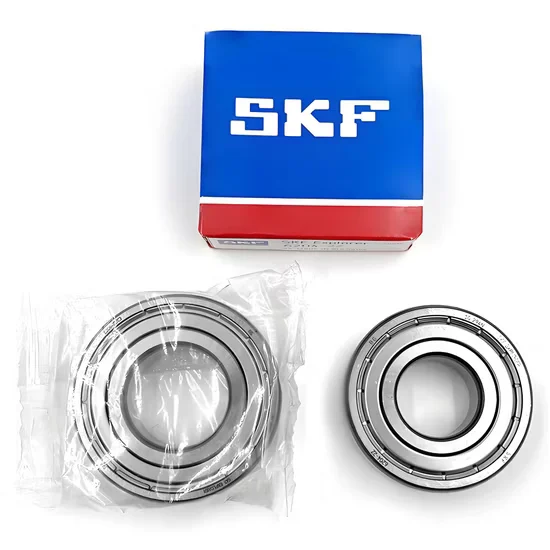 01 Deep Groove Ball Bearings SKF 6200 6300 Deep Groove Ball Bearing Genuine Wholesale Supplier View model details
 02 Deep Groove Ball Bearings SKF 608 Deep Groove Ball Bearing Genuine Stock Wholesale Supplier View model details
 03 Cylindrical Roller Bearings Nu222 Ec J/C3 Single Row Cylindrical Roller Bearing Zhaoyun Wholesale Supplier View model details
 04 Cylindrical Roller Bearings Zhaoyun Nu312 Ec P/C3 Double Row Cylindrical Roller Bearing Wholesale Supplier View model details
Applications
Where these SKF bearings are used
Keep reading
Related SKF bearing selection guides
More practical notes on SKF designations, precision items and project bearing lists from Project Purchasing Company.
 Procurement & Trade FAQs · · 8 min read Ball Bearing Supplier to Latin America: Genuine SKF, FAG, NSK Wholesale Sourcing genuine ball bearings for Latin America demands strict customs compliance to avoid costly port delays. Master precise HS codes and Certificates of Origin… Read the guide
 Procurement & Trade FAQs · · 8 min read Genuine Ball Bearing Supply to Southeast Asia Wholesale Master Ball Bearing Supply to Southeast Asia by prioritizing customs compliance and verified authenticity over marginal price differences. Learn how mixed-brand consolidation, accurate HS… Read the guide
 Procurement & Trade FAQs · · 7 min read Genuine Ball Bearings for Africa & Middle East Wholesale Supplier Secure genuine ball bearing supply to Africa and Middle East with strict customs compliance and authentic mixed-brand consolidation. Master SONCAP clearance, optimize container loading,… Read the guide

Request a quote
Send your SKF list. Get one itemized written quote.
Project Purchasing Company supplies SKF ball, roller, precision and housed bearing units to distributors, repair workshops and project buyers worldwide. Standard and precision items are priced line by line, with accessories kept on the same quote.