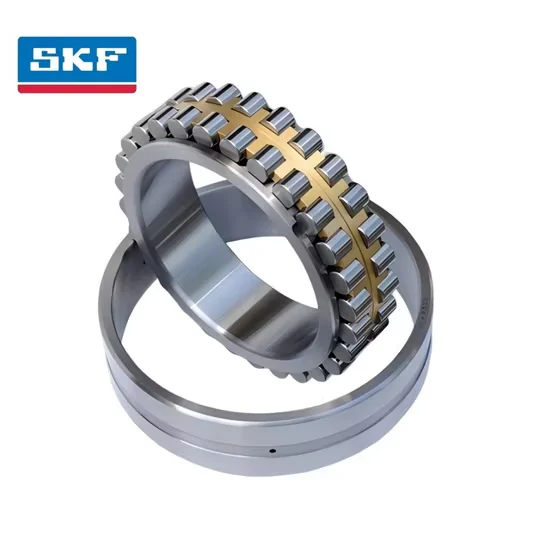
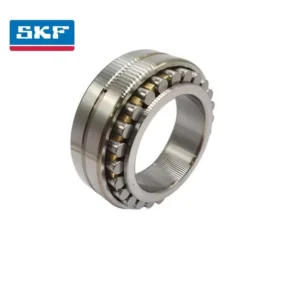
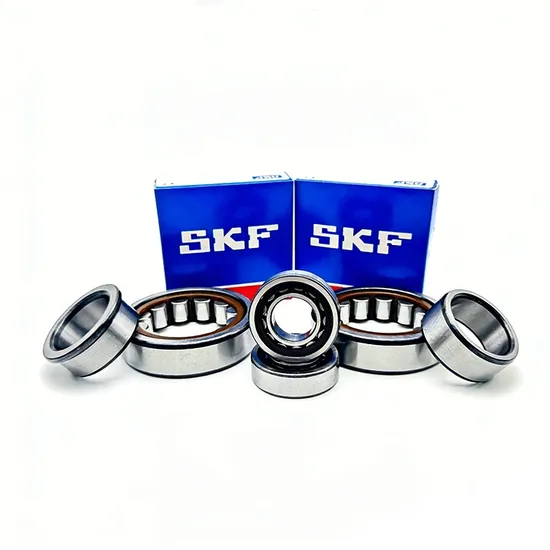
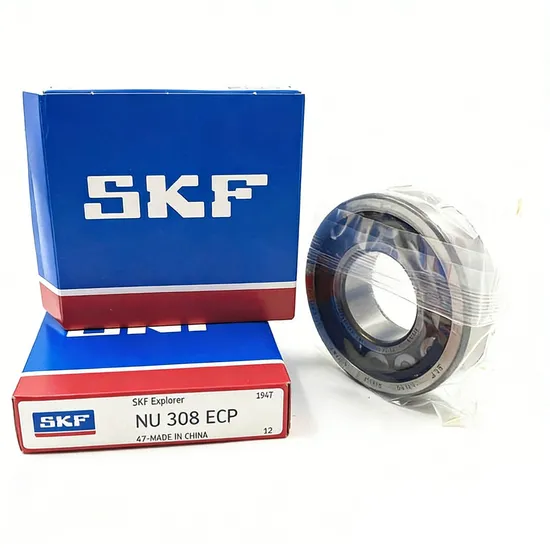
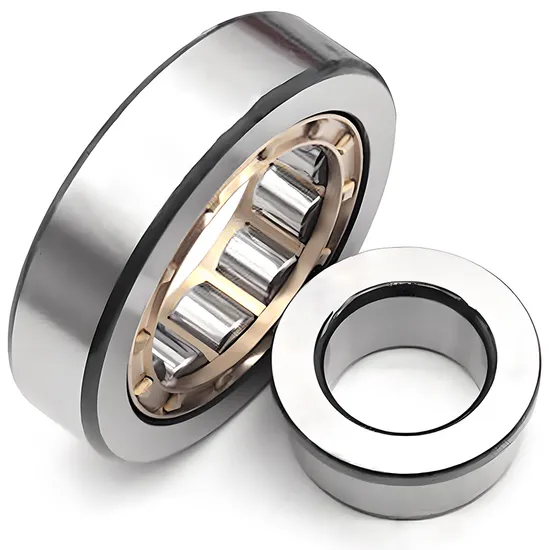
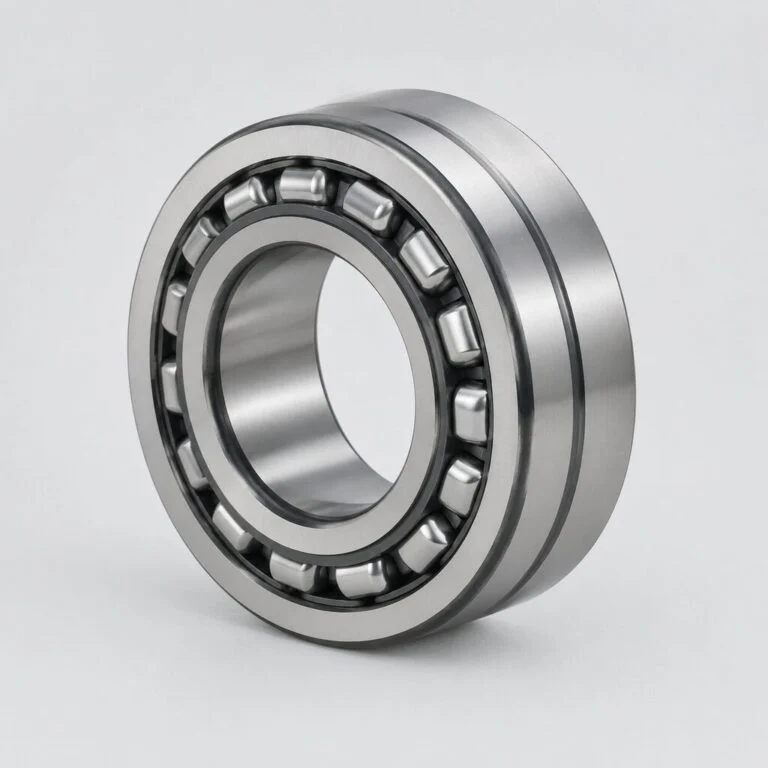
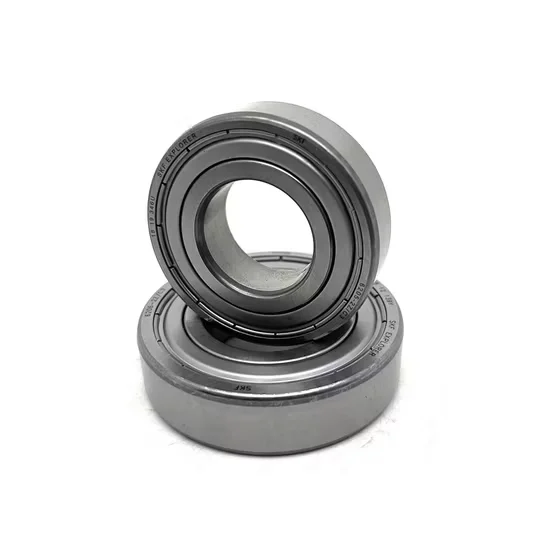
Listed data for this SKF designation; confirm the execution and dimensions against your drawing or application before ordering.
Authenticity Via Official App — Every Nu214-Ec J Nu217-Ec M Nu218-Ec J cylindrical roller bearing shipped includes a scannable QR code linked to the manufacturer's official verification application for immediate traceability.
Technical Specifications
| Parameter | Value |
| Designation | Nu214-Ec J Nu217-Ec M Nu218-Ec J |
| Bearing Type | Cylindrical Roller Bearing |
| Outside Diameter (D) | 120-190 mm range |
| Cage Material | Brass (M) or Stamped Steel (J) |
| Clearance Class | C0, C2, C3, C4, C5 |
| Material | Bearing Steel |
| Hardness | 60-64 HRC |
| Vibration Level | Z1V1, Z2V2, Z3V3 |
| Origin | Jiangsu, China |
Application Suitability
| Industry | Typical Applications |
| Heavy Machinery | Heavy-duty gearboxes and traction motors |
| Metallurgy | Rolling mills and continuous casting equipment |
| Industrial Maintenance | Equipment refit and MRO replacement projects |
Overlooking Cage Suffixes Destroys Refit Timelines for the Nu214-Ec J Nu217-Ec M Nu218-Ec J cylindrical roller bearing
Matching the exact cage design to the operational vibration profile prevents catastrophic line stoppages during equipment overhauls.
During my years conducting failure analysis in heavy industry plants, I witnessed entire steel mill rolling lines shut down because a standard stamped steel cage was installed where a machined brass cage was strictly required. Procurement teams often focus solely on the base dimension, ignoring that high-vibration environments demand specific internal geometries. This oversight leads to premature cage fracture, roller skidding, and unplanned downtime that halts production for days. When executing an equipment refit, the margin for error is practically zero, and assuming all internal configurations are identical is a critical mistake that compromises the entire mechanical assembly.

Aligning Internal Clearances with Thermal Expansion in Gearboxes
When executing an equipment refit, thermal growth inside heavy-duty gearboxes drastically alters the operational clearance. Selecting the correct Nu214-Ec J Nu217-Ec M Nu218-Ec J cylindrical roller bearing with a predefined C3 or C4 clearance ensures the internal geometry compensates for heat generation, maintaining optimal load distribution across the rolling elements. If the clearance is too tight, the thermal expansion will induce excessive internal preload, leading to rapid temperature spikes and lubricant degradation. Our engineering team cross-references your housing tolerances and operational heat profiles to lock in the precise clearance class before shipment, ensuring the assembly performs reliably under continuous heavy loads.
Managing Vibration and Lubrication Starvation in Rolling Mills
Rolling mill applications subject components to intense radial loads combined with severe structural vibrations and shock impacts. In these setups, lubrication film thickness can drop critically if the cage design does not facilitate adequate oil flow to the roller ends. A machined brass cage provides superior guidance and oil retention compared to stamped alternatives under such extreme oscillating conditions. Furthermore, the non-aligning nature of these components demands strict shaft and housing alignment to prevent edge loading on the rollers. Any misalignment exacerbates the stress concentration, accelerating surface fatigue and ultimately leading to spalling on the raceways.
Decoding the E, J, and M Suffix Engineering
The "E" suffix indicates an optimized internal design with a higher load-carrying capacity, achieved through maximized roller dimensions and improved raceway profiles. The "J" suffix designates a stamped steel cage, which is lightweight and suitable for standard-speed, moderate-vibration applications where friction must be minimized. Conversely, the "M" suffix signifies a machined brass cage, offering exceptional durability, superior vibration resistance, and better lubrication management for high-speed or heavy-shock environments. Understanding these distinctions is vital for matching the Nu214-Ec J Nu217-Ec M Nu218-Ec J cylindrical roller bearing to its precise operational envelope.
The Financial Impact of Mismatched Internal Geometries
Installing a bearing with an incorrect cage type or clearance class in a high-vibration refit project inevitably triggers premature fatigue and mechanical degradation. According to the failure mode classification per ISO 15243, cage breakage and roller smearing are direct consequences of inadequate internal guidance and improper load distribution. This results in catastrophic damage to adjacent shafts, seals, and housings, voiding equipment warranties and forcing emergency procurement at premium costs. The hidden expenses of a mismatched component far exceed the initial purchase price, encompassing lost production revenue, secondary component replacements, and extensive labor hours required for disassembly and reinstallation.
Securing Exact Suffix Configurations for Critical Refits
We maintain massive spot inventory covering thousands of part numbers, ensuring you receive the exact M or J cage configuration without waiting for extended factory lead times. Our technical selection support involves rigorous cross-brand equivalent model consultation, verifying that the internal design matches your OEM requirements perfectly. Every shipment includes complete traceability documentation, and our flexible MOQ allows you to order a single emergency spare or a full container consolidation for major plant overhauls. We specifically double-check the cage suffix and clearance class for every order, eliminating the risk of receiving a generic substitute that cannot withstand your specific operational demands. Furthermore, our global shipping consolidation service ensures your refit components arrive precisely when your maintenance window opens.
Documentation & Authenticity
- Certificate of Conformity verifying the exact C0-C5 clearance class for each unit.
- Original factory batch traceability records linking the Nu214-Ec J Nu217-Ec M Nu218-Ec J cylindrical roller bearing to its production date.
- Official application QR code for immediate digital authentication upon delivery.
- Material inspection reports confirming the 60-64 HRC hardness of the bearing steel.
- Dimensional and running accuracy inspection reports validating the 120-190mm outer diameter tolerances.
Storage, Handling & Mounting
- Store the medium and large (120-190mm) units in their original packaging to protect the brass or steel cages from ambient humidity.
- Use induction heating for mounting these cylindrical roller bearings, strictly controlling the temperature to preserve the factory heat treatment.
- Keep the machined brass cage (M suffix) variants separated from stamped steel (J suffix) inventory to prevent accidental misallocation during refits.
- Apply clean gloves when handling the separated inner and outer rings to avoid contaminating the precision ground raceways.
- Verify the selected C3 or C4 clearance with a feeler gauge after mounting to ensure thermal expansion compensation is intact.
Preparing Your Technical Data for Precision Selection
To ensure the selected configuration perfectly matches your refit requirements, please provide the specific radial and axial loads, operational speeds, and ambient temperatures. Sharing the original OEM equipment number allows our engineering team to perform a comprehensive cross-reference check against multiple international catalogs. We will then recommend the optimal cage material and clearance class to maximize the L10 life of your machinery. Providing detailed housing and shaft tolerance data also enables us to verify that the selected outer dimension range will seat correctly without requiring invasive machining modifications. Additionally, specifying the lubrication method helps us confirm the cage design is compatible with your maintenance schedule.
Preguntas Frecuentes
Q: How do the J and M cage suffixes affect operational performance?
A: The J suffix indicates a stamped steel cage, ideal for standard speeds and moderate loads due to its lighter weight. The M suffix denotes a machined brass cage, which provides superior strength, better lubrication flow, and higher vibration resistance, making it mandatory for heavy-duty gearboxes and rolling mills experiencing severe shock loads.
Q: What is the significance of the E suffix in these designations?
A: The E suffix represents an optimized internal design that maximizes the size and number of rolling elements. This structural enhancement significantly increases the dynamic load rating, allowing the bearing to handle heavier radial forces during equipment refit projects without increasing the external dimensions or altering the housing requirements.
Q: How should I select the correct clearance class for a refit?
A: Selecting between C0, C3, C4, or C5 depends on the thermal expansion of the shaft and housing during operation. For heavy-duty gearboxes generating substantial heat, a C3 or C4 clearance prevents internal preload buildup. Our technical team reviews your operating temperatures to recommend the precise clearance required for optimal performance.
Q: What does the unverified "c" suffix mean in this context?
A: The "c" suffix is currently unverified and requires direct confirmation against the specific manufacturer's official catalog. We always cross-reference this detail with the factory's latest engineering drawings to ensure the internal geometry matches your exact application requirements before finalizing the order, preventing any unexpected deviations during installation.
Q: Why is cross-referencing critical when replacing these bearings?
A: Cross-referencing ensures that the internal design, cage material, and clearance class align perfectly with the original equipment specifications. Relying solely on the base dimension often leads to mismatched internal geometries, which causes premature failure in high-vibration environments like traction motors and metallurgical equipment, ultimately compromising the entire refit project.