
RoHS & REACH Compliant OEM SKF-Grade Bearings | Wholesale Supplier
Most buyers think RoHS and REACH are interchangeable — they are not, and confusing the two is the single most common reason bearing shipments get detained at Middle East free zones.
RoHS compliance for bearings covers restricted heavy metals and flame retardants in homogeneous components; REACH compliance for bearings extends to every chemical substance in the supply chain, including grease additives, plasticizers, and surface treatment residues, against a candidate list that updates twice yearly. For any project where the end-user is a European EPC contractor, both sets of documentation — per-batch SGS test reports for steel and lubricant separately, a Declaration of Conformity, and a material traceability sheet — must travel with the goods.
I learned this the hard way at Jebel Ali. A full container of bearings I was procuring got held up because the lubricant grease contained a phthalate plasticizer that exceeded the REACH SVHC threshold. The European EPC contractor on the other end issued a formal claim before the cargo even cleared the free zone. That single incident reshaped how I think about compliance documentation — it is not a value-add, it is the entry ticket.
If you are sourcing RoHS and REACH compliant bearings for projects with European end-clients, here is exactly what you need to know to avoid the same fate.
What Is the Difference Between RoHS and REACH for Bearings?
RoHS targets a fixed list of restricted substances in electronic and electrical components; REACH covers all chemical substances used across the entire supply chain, including those in bearing grease, seals, and surface coatings.
RoHS — formally Directive 2011/65/EU and its amendment 2015/863 — restricts ten substances: lead, mercury, cadmium, hexavalent chromium, PBB, PBDE, and four phthalates (DEHP, BBP, DBP, DIBP). The threshold is 0.1% by weight for most substances and 0.01% for cadmium, evaluated per homogeneous material.
REACH — Regulation EC 1907/2006 — operates on an entirely different logic. It maintains a Candidate List of Substances of Very High Concern (SVHC) that has grown from an initial fifteen entries to well over two hundred. The list is updated typically twice a year by ECHA. Any article placed on the EU market containing an SVHC above 0.1% by weight triggers communication and notification obligations.
For bearings specifically, the practical difference matters enormously:
| Compliance Dimension | RoHS Scope for Bearings | REACH Scope for Bearings |
|---|---|---|
| Substance Coverage | Ten restricted substances in homogeneous materials | Hundreds of SVHCs across all chemical inputs |
| Grease and Lubricant | Not directly addressed | Fully covered — additives, thickeners, plasticizers |
| Seal and Rubber Compounds | Limited to heavy metals | Includes vulcanization accelerators, softeners |
| Surface Treatment | Hexavalent chromium only | All SVHCs in plating and conversion coatings |
| Update Frequency | Amendment-based, infrequent | Candidate list updated roughly twice yearly |
| Documentation | Test report per material group | Per-batch SVHC screening plus supply chain declaration |
A European EPC contractor I worked with rejected an entire batch of deep groove ball bearings because the supplier provided only a RoHS test report and assumed it covered REACH. The grease in those bearings contained a substance that had been added to the SVHC candidate list just months earlier. The supplier had no idea.
This is not a theoretical gap. Grease formulations in bearings routinely contain additives — extreme pressure agents, anti-wear compounds, rust inhibitors, and thickeners — that may include SVHC-listed substances. A RoHS test on the steel ring tells you nothing about the grease inside the seal.
Why Do Middle East Projects Require REACH Compliance?
European EPC contractors operating in the Middle East contractually mandate REACH compliance as a condition of material approval, and non-compliance triggers customs detention, project delays, and financial claims against the buyer.
The Middle East industrial project landscape — from desalination plants in Saudi Arabia to power generation facilities in Qatar and infrastructure builds in the UAE — is heavily populated by European main contractors. These firms carry their home regulatory framework into every procurement specification they issue. When they specify bearings for critical rotating equipment, the material compliance clause typically references both RoHS and REACH by name.
I have seen this pattern repeat across multiple regions. A distributor supplying bearings to a mining conveyor project in the Gulf received a shipment hold notice from the free zone authority. The terminal client’s quality team had flagged that the supplier’s documentation package lacked any REACH SVHC screening for the lubricant. The cargo sat in bonded storage for weeks while the issue was resolved.
The liability chain is often misunderstood. Many buyers assume that if goods are detained, the supplier bears the cost. In practice, the importer of record — often the buyer or their local agent — faces the immediate storage charges, demurrage, and project delay penalties. The supplier may eventually replace the goods, but the commercial damage to the buyer’s relationship with the end-user is already done.
Consider the documentation requirements that European EPCs typically enforce:
- Per-batch SGS or equivalent third-party test reports covering both steel material and lubricant grease separately
- A Declaration of Conformity referencing the specific batch numbers shipped
- A material traceability sheet linking each bearing part number to its production batch, steel heat number, and grease batch
- Confirmation that the SVHC screening was performed against the current candidate list version, not an outdated one
A one-time "we are REACH compliant" statement from a factory means nothing without this documentary chain. The SVHC list moves; a certificate issued two years ago may already be invalid for the current shipment.
How to Verify Bearing RoHS and REACH Compliance?
Request per-batch third-party test reports for steel and grease separately, cross-check the SVHC candidate list version date, and ensure all compliance documents are physically shipped with the cargo.
Verification is a process, not a certificate. I have reviewed hundreds of compliance packages from bearing suppliers, and the gaps follow predictable patterns. Here is the protocol that actually works:
Step one: demand separate test reports for steel and lubricant. A single "bearing RoHS report" that tests the assembled unit is insufficient. The steel rings, rolling elements, and cage must be tested as homogeneous materials. The grease must be tested separately because its chemical composition is entirely different.
Step two: confirm the testing laboratory’s accreditation. SGS, TÜV, and Intertek are the bodies that European EPCs recognize. A test report from an unaccredited lab will be rejected during the client’s document review. Check that the report carries the relevant ISO 17025 accreditation mark.
Step three: verify the SVHC list version date. The test report should explicitly state which version of the candidate list was used for screening. If the report references a list version that is more than a year old, request an updated screening. ECHA publishes the current list on its website, and any competent testing body can run a fresh check against it.
Step four: require a material traceability sheet with every shipment. This document should map each bearing part number to its steel heat number, grease batch number, and production date. Without this traceability, you cannot demonstrate that the tested batch matches the shipped batch.
Step five: ensure documents travel with the goods. I have seen shipments arrive at destination with the compliance paperwork still sitting in the supplier’s office. The shipping document package — typically placed inside the master carton or attached to the outside in a sealed pouch — must include the test reports, declaration, and traceability sheet. Customs officers and client quality inspectors check for these on arrival.
A distributor in the Levant switched to a factory that provided this full documentation chain after losing a major order. The previous supplier had offered a single generic "RoHS certificate" that covered nothing specific. The new factory’s per-batch testing protocol cost marginally more, but the order retention rate jumped noticeably.
What Happens If Compliance Documents Are Missing?
Goods get detained at the free zone or port, the project faces delay penalties, the end-user issues financial claims, and the supplier gets disqualified from future tenders.
The consequences cascade quickly. I have witnessed each stage of this sequence more than once.
The first impact is physical detention. Customs authorities at major Middle East logistics hubs — Jebel Ali, Dammam, Doha — have increasingly stringent procedures for industrial goods destined for projects with European end-clients. If the compliance documentation is incomplete or missing, the cargo does not clear. It sits in bonded storage, accruing daily charges.
The second impact is project delay. Bearings for critical equipment — pumps, compressors, conveyors, gearboxes — are usually on the project’s long-lead procurement path. A detention of even a few weeks can push back commissioning timelines. The main contractor then faces liquidated damages from the project owner.
The third impact is the claim. The European EPC contractor will issue a formal claim against the buyer or the local subcontractor who sourced the non-compliant goods. The claim typically covers the cost of replacement goods, expedited shipping, storage charges, and any project delay penalties that can be attributed to the incident. These claims routinely run into mid-five or even mid-six figures depending on the equipment criticality.
The fourth impact is long-term. The EPC contractor’s approved vendor list is not easily re-entered. A supplier who delivers non-compliant goods once — or whose documentation is found wanting — gets flagged. Future tenders from that contractor become inaccessible.
I recall a case where a batch of tapered roller bearings for a mining operation was held because the supplier’s "REACH compliance" letter was a generic template that did not reference the specific grease batch or the current SVHC list version. The end-user’s quality team caught it during document review before the goods even shipped from origin. The order was cancelled, and the buyer had to source replacement bearings at short notice from a different supplier at a premium.
The pattern is consistent: the cost of proper compliance documentation is a fraction of the cost of a single detention event.
How to Build a Reliable Compliance Supply Chain?
Partner with a bearing factory that maintains ISO-certified quality systems, offers per-batch material traceability, provides third-party testing documentation, and supports full cross-reference interchange for OEM-grade procurement.
Building a supply chain that consistently delivers RoHS and REACH compliant bearings requires selecting a manufacturing partner whose quality infrastructure is designed around documentation discipline, not just dimensional accuracy.
The foundation is ISO 9001 certification — not as a marketing badge, but as evidence that the factory operates under a documented quality management system where material inputs, production processes, and finished goods are traceable and auditable.
Beyond that, the critical differentiators are:
Per-batch testing capability. The factory must be willing and able to send samples of each production batch’s steel material and lubricant grease to an accredited third-party laboratory for RoHS and REACH testing. This is not a one-time qualification exercise; it is a recurring cost of doing business with compliance-sensitive buyers.
Material traceability systems. Every bearing shipped should be traceable back to its steel heat number, its grease batch, and its production date. This traceability must be documented on a sheet that accompanies the shipment, not buried in the factory’s internal records.
Full cross-reference support. Buyers sourcing RoHS and REACH compliant bearings for replacement in existing equipment need confidence that the bearings they receive are dimensionally and performance-interchangeable with the OEM originals. A factory that maintains comprehensive cross-reference charts across all major bearing types — deep groove ball bearings, self-aligning ball bearings, cylindrical roller bearings, self-aligning roller bearings, tapered roller bearings, angular contact ball bearings, and thrust bearings — eliminates a major source of procurement risk.
Standard documentation package. Every shipment should include, as standard practice: the per-batch SGS test reports for steel and grease, a Declaration of Conformity referencing the batch numbers, a material traceability sheet, and a packing list that cross-references the purchase order. This is not an optional add-on; it is the baseline for any supplier serious about serving the global industrial market.
Our factory operates exactly this way. We are a full-category bearing manufacturer headquartered in China, serving industrial buyers, distributors, and MRO purchasers worldwide. Our catalog covers all major bearing types and popular models including 6205, 6206, 6305, 22320, 32218, 30206, NU205, and 22308. We provide complete cross-reference interchange support for SKF, NSK, FAG, TIMKEN, NTN, and KOYO. Every batch undergoes per-batch SGS testing for both steel and lubricant, and our ISO 9001-certified quality system ensures full material traceability from raw material to finished goods. We offer wholesale pricing with bulk-order discounts, private-label options for distributors, and same-day dispatch on stock items with express delivery for urgent orders.
Conclusion
RoHS and REACH compliance for bearings is not optional — it is the baseline requirement for any supplier serving projects with European end-clients, and the documentation burden falls squarely on the buyer if things go wrong.
The distinction between RoHS and REACH is fundamental, not academic. Grease additives, seal compounds, and surface treatments all fall under REACH scrutiny, and the SVHC list keeps expanding. Per-batch third-party testing, material traceability, and shipping documents that travel with the cargo are non-negotiable. Build your supply chain around a factory that treats compliance documentation as core infrastructure, and the detention notices, claims, and disqualifications become someone else’s problem.
Products in this article
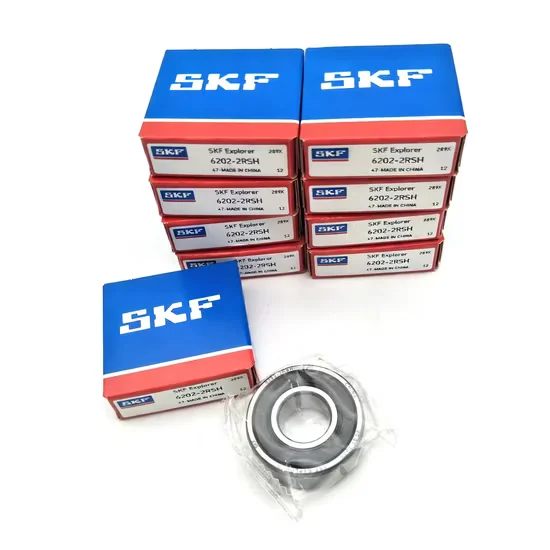
SKF bearings mentioned above
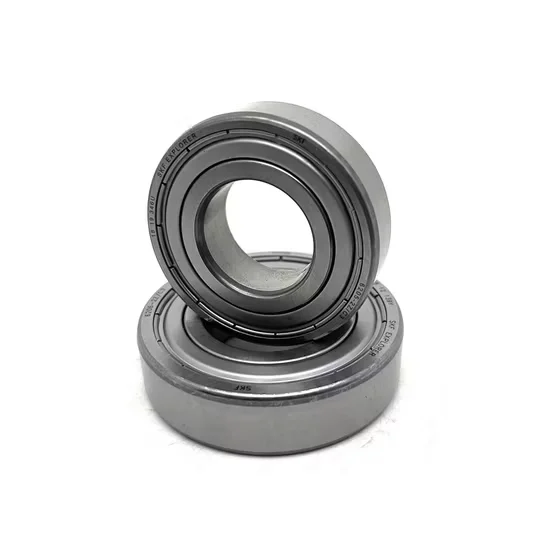 01 Deep Groove Ball Bearings SKF 6204 6205 6206 Deep Groove Ball Bearing Spare Parts View model details
 02 Deep Groove Ball Bearings Original SKF Deep Groove Ball Bearing 6000 6001 6308 6309 6204 6205 6206 for Auto Parts View model details
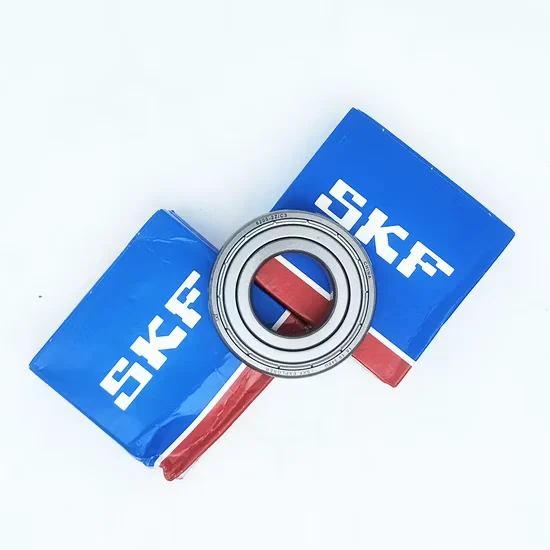 03 Agricultural Machinery Bearings X&S 80607kt 6301-2RS 6205-2Z 6206-2Z Deep Groove Ball Bearing View model details
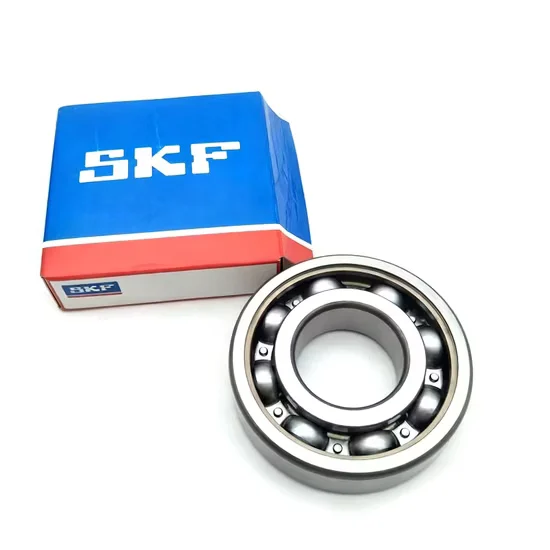 04 Deep Groove Ball Bearings SKF 6205 6206 ZZ C3 Deep Groove Ball Bearing for Automobile Industry View model details
Applications
Where these SKF bearings are used
Keep reading
Related SKF bearing selection guides
More practical notes on SKF designations, precision items and project bearing lists from Project Purchasing Company.
 Procurement & Trade FAQs · · 7 min read Ball Bearing Supplier to Latin America: Genuine SKF, FAG, NSK Wholesale Sourcing genuine ball bearings for Latin America demands strict customs compliance to avoid costly port delays. Master precise HS codes and Certificates of Origin… Read the guide
 Procurement & Trade FAQs · · 8 min read Genuine Ball Bearing Supply to Southeast Asia Wholesale Master Ball Bearing Supply to Southeast Asia by prioritizing customs compliance and verified authenticity over marginal price differences. Learn how mixed-brand consolidation, accurate HS… Read the guide
 Procurement & Trade FAQs · · 7 min read Genuine Ball Bearings for Africa & Middle East Wholesale Supplier Secure genuine ball bearing supply to Africa and Middle East with strict customs compliance and authentic mixed-brand consolidation. Master SONCAP clearance, optimize container loading,… Read the guide

Request a quote
Send your SKF list. Get one itemized written quote.
Project Purchasing Company supplies SKF ball, roller, precision and housed bearing units to distributors, repair workshops and project buyers worldwide. Standard and precision items are priced line by line, with accessories kept on the same quote.