
SKF Ball Bearings by Series MOQ: Wholesale Supplier
Official channel rules are not physical laws.
The official minimum order quantity for SKF ball bearings is dictated by standard packaging units per series, but buyers can bypass these rigid constraints by sourcing from consolidated spot inventory that allows mixed-size, low-volume orders without penalty.
Sitting in a humid textile mill in Cikarang, I watched a production manager stare at a pallet of unused bearings while his main line sat idle. He had ordered a full container to meet the manufacturer’s strict wholesale requirements, only to realize the mix was wrong for his immediate repair needs. The official channel refused to break the bulk pack. That week of downtime cost far more than the savings from buying direct. This scenario repeats across Southeast Asia and beyond because procurement teams mistake channel policy for technical necessity.
Understanding how to navigate these restrictions requires looking past the catalog and into the logistics of spot market consolidation.
What is the official MOQ for SKF deep groove ball bearings by series?
Standard packs vary significantly by series size, creating artificial barriers for mixed-batch procurement.
The concept of minimum order quantity in the bearing industry is often conflated with standard packaging quantities. For deep groove ball bearings, the manufacturer defines specific pack sizes based on the bore diameter and series width. Small bore bearings in the 6000 series often come in boxes of ten or twenty, while larger 6300 series units may be packaged individually or in pairs due to their weight and protective coating requirements.
When buying through official authorized distribution channels, the MOQ is frequently tied to these standard packs multiplied by a commercial threshold. A buyer cannot simply order three units of a 6205 bearing if the standard box contains ten. This rigidity forces MRO managers to overstock slow-moving items just to access fast-moving ones.
| Bearing Series | Typical Bore Range | Standard Pack Behavior | Spot Market Flexibility |
|---|---|---|---|
| 6000 Series | Small to Medium | Multi-unit boxes | High (single unit available) |
| 6200 Series | Medium | Multi-unit boxes | High (single unit available) |
| 6300 Series | Medium to Large | Individual or paired | Moderate (weight limits apply) |
| 6400 Series | Large | Individual | Low (special handling required) |
A regional distributor in Latin America once attempted to stock a new line of agricultural machinery parts. The official channel required a full pallet of each SKU. By shifting to a spot inventory model, he sourced exactly the mix he needed for his initial trial run. This approach avoided tying up capital in slow-moving stock while ensuring genuine product traceability.
The key insight is that the physical bearing does not change based on who sells it. The constraint is purely logistical. By accessing suppliers who consolidate spot inventory, buyers can treat standard packs as flexible units rather than rigid minimums.
How can buyers bypass strict SKF MOQs for mixed-size orders?
Consolidating spot inventory allows single-piece to mixed-pallet flexibility without violating brand integrity.
The belief that mixed batches inevitably increase per-unit cost is a common misconception. While official channels offer volume discounts for homogeneous large orders, they penalize complexity. Spot market suppliers absorb this complexity by maintaining massive inventories of thousands of part numbers. They act as a buffer, breaking down bulk shipments from manufacturers and reassembling them into custom mixes for end-users.
This process involves several steps. First, the supplier verifies the authenticity of the bulk stock. Then, they store items in conditions that preserve the original packaging integrity. When an order arrives, they pick the exact quantities needed, regardless of whether it is one unit or one hundred. Finally, they consolidate these picks into a single shipment.
A maintenance workshop in Indonesia needed urgent replacements for a conveyor system. The requirement included five different sizes of deep groove bearings. An official order would have required five separate minimum purchases, resulting in excess stock. Through spot consolidation, the workshop received exactly five units of each size in a single parcel. The total cost was lower than the waste generated by the alternative.
Risk management is critical here. Buyers must ensure the spot supplier provides complete traceability documentation. Genuine bearings come with specific batch codes and certification papers. Without these, the risk of counterfeit products increases. A reputable supplier will provide these documents for every item, regardless of order size.
This method shifts the focus from meeting arbitrary volume thresholds to solving immediate operational problems. It is particularly effective for MRO scenarios where downtime costs outweigh minor price premiums.
What are the MOQ differences for spherical roller vs. angular contact bearings?
Heavier series require different consolidation strategies due to weight and precision constraints.
Spherical roller bearings, such as the 222 and 223 series, are significantly heavier and often used in harsh environments like mining or steel production. Their packaging is designed to prevent damage during transit, which often means individual wooden crates or heavy-duty cardboard boxes. Angular contact ball bearings, used in high-precision applications like machine tools, have stricter cleanliness requirements.
The MOQ dynamics differ because of these physical attributes. Spherical rollers are less likely to be sold in multi-unit boxes due to weight limits. Therefore, the "minimum" is often one unit, but the shipping cost per unit is high. Angular contact bearings may come in smaller packs, but the risk of contamination means they are rarely broken out of their sealed packaging until installation.
| Bearing Type | Primary Application | Packaging Constraint | Consolidation Strategy |
|---|---|---|---|
| Spherical Roller | Heavy Industry | Weight limits | Pallet-level mixing |
| Angular Contact | Precision Machinery | Cleanliness seals | Box-level mixing |
| Deep Groove | General Purpose | Standard boxes | Unit-level mixing |
A wind farm operator in Europe faced a critical failure in a gearbox. The required spherical roller bearing was not in local stock. Ordering a full batch from the manufacturer would take weeks. By sourcing from a global spot supplier, they secured a single genuine unit from existing inventory. The ability to buy just one unit saved days of production loss.
The strategy for these heavier or more sensitive bearings is to prioritize availability and authenticity over volume discounts. Spot suppliers who specialize in cross-brand consolidation can mix these heavy items with lighter ones to optimize shipping costs.
Understanding these distinctions helps buyers plan their procurement more effectively. It allows them to request quotes that reflect the true logistical cost rather than just the unit price.
How does flexible MOQ impact lead time and shipping costs?
Spot consolidation shifts focus from factory lead time to inventory availability and LCL optimization.
Traditional procurement models rely on forecasted demand to justify large orders. This leads to long lead times as goods move through manufacturing and official distribution layers. Flexible MOQ sourcing leverages existing stock. The lead time is determined by how quickly the supplier can pick, pack, and ship the items, not by production schedules.
Shipping costs are also impacted. Less than Container Load (LCL) shipments allow buyers to combine orders from multiple suppliers or for multiple projects. A buyer can order a mix of SKF, FAG, and NSK bearings in a single consignment. This reduces the per-unit freight cost compared to sending multiple small parcels.
However, there are trade-offs. Spot inventory levels fluctuate. A part number available today might be gone tomorrow. Buyers need to act quickly when they find the right mix. Additionally, LCL shipments require careful documentation to avoid customs delays. A professional supplier handles this by providing accurate commercial invoices and packing lists that detail every part number.
A construction equipment manufacturer in Africa used this approach to stock their service centers. Instead of waiting for monthly container arrivals, they placed weekly LCL orders based on real-time breakdown data. This reduced their average inventory holding time while improving part availability.
The result is a more responsive supply chain. Buyers no longer need to predict demand months in advance. They can react to actual usage patterns, reducing the risk of obsolescence and stockouts.
Conclusion
Flexibility is a strategic advantage in bearing procurement.
Rigid adherence to official minimum order quantities often leads to overstocking and inefficiency. By leveraging spot inventory consolidation, buyers can access genuine SKF ball bearings in the exact quantities and mixes they need. This approach reduces downtime, optimizes working capital, and simplifies logistics for diverse industrial applications.
Products in this article
SKF bearings mentioned above
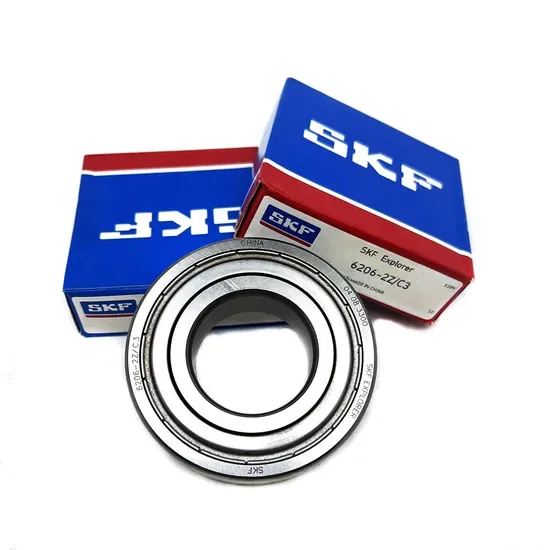 01 Deep Groove Ball Bearings SKF Deep Groove Ball Bearing 680 607 628 638 6000-6314 in Stock View model details
 02 Deep Groove Ball Bearings SKF Original Deep Groove Ball Bearing 636-6901 6000 6200 6300 Series View model details
 03 Deep Groove Ball Bearings Original SKF Deep Groove Ball Bearing 6000 6001 6308 6309 6204 6205 6206 for Auto Parts View model details
 04 Deep Groove Ball Bearings SKF 6000 6200 6300 Series Deep Groove Ball Bearing for General Industrial Machinery View model details
Applications
Where these SKF bearings are used
Keep reading
Related SKF bearing selection guides
More practical notes on SKF designations, precision items and project bearing lists from Project Purchasing Company.
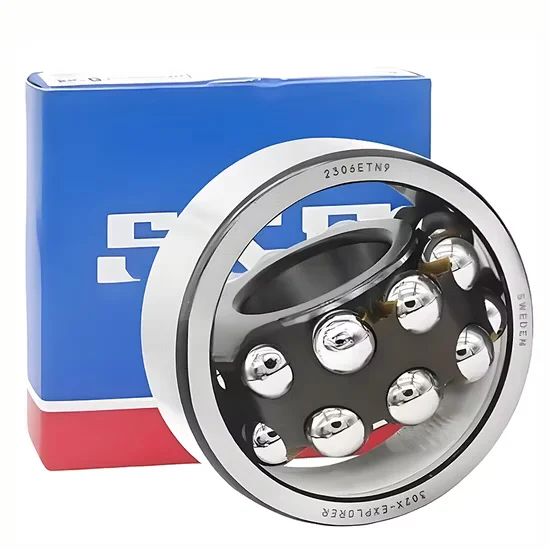 Procurement & Trade FAQs · · 7 min read Ball Bearing Supplier to Latin America: Genuine SKF, FAG, NSK Wholesale Sourcing genuine ball bearings for Latin America demands strict customs compliance to avoid costly port delays. Master precise HS codes and Certificates of Origin… Read the guide
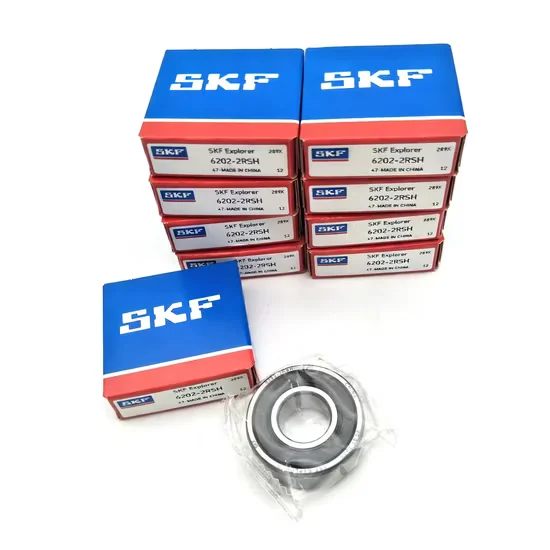 Procurement & Trade FAQs · · 8 min read Genuine Ball Bearing Supply to Southeast Asia Wholesale Master Ball Bearing Supply to Southeast Asia by prioritizing customs compliance and verified authenticity over marginal price differences. Learn how mixed-brand consolidation, accurate HS… Read the guide Procurement & Trade FAQs · · 7 min read Genuine Ball Bearings for Africa & Middle East Wholesale Supplier Secure genuine ball bearing supply to Africa and Middle East with strict customs compliance and authentic mixed-brand consolidation. Master SONCAP clearance, optimize container loading,… Read the guide

Request a quote
Send your SKF list. Get one itemized written quote.
Project Purchasing Company supplies SKF ball, roller, precision and housed bearing units to distributors, repair workshops and project buyers worldwide. Standard and precision items are priced line by line, with accessories kept on the same quote.