
Custom OEM 30205 Tapered Roller Bearings to SKF Standards
"Matching SKF standards" does not mean copying the part number — it means replicating the clearance grouping, heat treatment curve, and cage material one by one, with verifiable test data behind each.
When buyers ask for Custom OEM 30205 Tapered Roller Bearings to SKF Standards, the real answer is this: dimensional interchange is only the starting line. The fatigue life, running noise, and thermal stability of the bearing are decided by internal radial clearance tolerance bands, carburizing and quenching curves, and cage alloy selection — none of which appear on a basic dimension drawing. I learned this the hard way at a palm oil mill in Sumatra, where a batch of 30205 units started showing spalling on the raceway within a single harvest season. The buyer pulled out an SKF catalog, pointed at the clearance tolerance table, and asked how deep our OEM process actually went. That conversation reshaped how I approach every custom order since.
Let me walk you through what "SKF-level" really means when you spec Custom OEM 30205 Tapered Roller Bearings to SKF Standards from a contract factory, and how to verify each layer before the goods leave the warehouse.
How Do You Verify Clearance Tolerance and Group Matching for 30205?
You cannot assume "standard group" clearance fits your machine — operating temperature and load direction must drive the clearance group selection, and the factory must supply measured reports per unit batch.
Most buyers default to the normal clearance group when ordering Custom OEM 30205 Tapered Roller Bearings to SKF Standards, then wonder why the bearing runs hot or develops axial play after a few hundred hours. The root cause is almost always a mismatch between the actual operating temperature rise and the clearance group chosen at the drawing stage.
A mining equipment buyer in Indonesia once sent me an SKF catalog with the clearance tolerance table highlighted, asking us to confirm which group our 30205 would be produced in. We went back and forth across several rounds of parameter confirmation before locking in the right group — not because the dimensions were unclear, but because the application temperature and axial load ratio had to be translated into a specific clearance band.
Here is how the verification matrix typically looks when we compare clearance-related parameters across OEM tiers:
| Parameter | Top-Tier OEM | Mid-Tier OEM | Unverified Workshop |
|---|---|---|---|
| Clearance group per ISO 355 | Certified batch-level | Sample-level only | Not provided |
| Measured internal clearance report | Full batch-level | Spot check | Self-reported |
| Thermal stability of clearance under load | Verifiable | Partially verifiable | Not verifiable |
| Axial play consistency after run-in | Robust | Noticeably variable | Vulnerable |
The takeaway is simple: if your supplier cannot hand you a clearance measurement report tied to a specific batch and clearance group, you are buying a dimension, not a performance level.
Why Does Cage Material and Heat Treatment Curve Matter More Than Dimensions?
The cage alloy and the heat treatment curve decide whether the bearing survives its designed fatigue life — not the outer diameter or bore tolerance.
This is the part that surprises most first-time buyers of Custom OEM 30205 Tapered Roller Bearings to SKF Standards. They assume that as long as the bore is 25 mm, the OD is 52 mm, and the width matches, the bearing will perform identically. In reality, the carburizing depth, the carbon potential curve during heat treatment, and the carbide banding rating after quenching are what determine whether the raceway will spall prematurely.
I once inspected a failed 30205 from a Southeast Asian conveyor application. The dimensions were perfectly within tolerance, but the raceway showed early-stage spalling. Metallographic examination revealed a carbide banding structure that should never have passed a proper heat treatment audit. The cage, meanwhile, was a thin stamped steel design that deformed under the actual operating speed — another hidden variable that does not show up on a dimension sheet.
| Factor | Pressed Steel Cage | Machined Brass Cage |
|---|---|---|
| Speed capability | Standard | Substantially extended |
| Thermal resistance under continuous load | Noticeably limited | Robust |
| Suitability for high-vibration mining duty | Vulnerable | Resistant |
| Cost impact on unit price | Basic | Certified premium |
When you spec Custom OEM 30205 Tapered Roller Bearings to SKF Standards, the cage material and heat treatment parameters must be locked into the purchase agreement as explicitly as the bore and OD. Otherwise, you are leaving the most life-critical variables to chance.
How Do You Request a Full Cross-Reference and Quality Documentation Package?
A legitimate OEM factory should deliver a complete brand interchange chart, ISO-standard quality certificates, and batch-level test reports — not just a packing list and a commercial invoice.
Buyers sourcing Custom OEM 30205 Tapered Roller Bearings to SKF Standards often need to replace existing branded units in the field. That means they need a cross-reference list showing exactly which SKF, NSK, FAG, or TIMKEN part number their OEM unit maps to — along with any clearance or design suffix differences. A Vietnamese conveyor distributor I worked with needed this interchange list plus ISO 9001 documentation before he would place a trial order. The entire file package took a few business days to assemble, but it turned a hesitant inquiry into a recurring account.
Here is what a proper documentation package for Custom OEM 30205 Tapered Roller Bearings to SKF Standards should include:
- ISO 9001 quality management certificate, current and auditable
- Material certificate for the bearing steel, traceable to the heat number
- Batch-level dimensional inspection report covering bore, OD, width, and chamfers
- Clearance measurement report per the specified ISO 355 group
- Heat treatment process summary including carburizing depth and hardness range (HRC 58–62 for through-hardened rings)
- Brand cross-reference chart covering all major interchangeable part numbers
- Cage material declaration (pressed steel grade or brass alloy composition)
If any of these documents is missing or vague, treat it as a red flag. The paperwork is not bureaucracy — it is the only proof that the bearing inside the box matches the spec on your drawing.
What Does a Real Application Audit Look Like Before Production Starts?
Every custom order should begin with an application audit that translates operating conditions into bearing parameters — skipping this step is the single biggest cause of premature field failure.
Before we release any batch of Custom OEM 30205 Tapered Roller Bearings to SKF Standards for production, the engineering team reviews the actual operating environment: load direction, rotational speed, ambient temperature, contamination risk, and expected service interval. These inputs determine the clearance group, the cage material, the seal type (if applicable), and the heat treatment profile.
A palm oil processing plant in Sumatra learned this lesson the expensive way. They ordered a full set of 30205 units based purely on dimensional interchange with an existing branded bearing. No one asked about the operating temperature inside the digester gearbox or the axial load ratio during crushing cycles. The bearings ran for a fraction of the expected service interval before raceway spalling forced an unplanned shutdown. The replacement cost — in bearings, labor, and lost production — ran into mid-five figures.
When we re-audited the application and re-specced the Custom OEM 30205 Tapered Roller Bearings to SKF Standards with a higher clearance group, a machined brass cage, and a controlled carburizing curve, the same gearboxes ran substantially longer without a single spalling complaint. The dimensions never changed. Everything else did.
Conclusion
Dimensional interchange is the easiest part of matching SKF standards — clearance grouping, heat treatment control, cage material selection, and verifiable documentation are what separate a true OEM bearing from a look-alike. When you source Custom OEM 30205 Tapered Roller Bearings to SKF Standards, insist on batch-level test reports, a complete brand cross-reference chart, and an application-driven parameter lock before production begins. The paperwork and the process are the real guarantee that the bearing will perform as expected in the field.
Products in this article
SKF bearings mentioned above
 01 Tapered Roller Bearings SKF 30204 30205 Tapered Roller Bearing for Automotive Hubs View model details
 02 Tapered Roller Bearing Taper Roller Bearings SKF 30205-J2/Q with Iron/Brass Cage for Industrial Machinery View model details
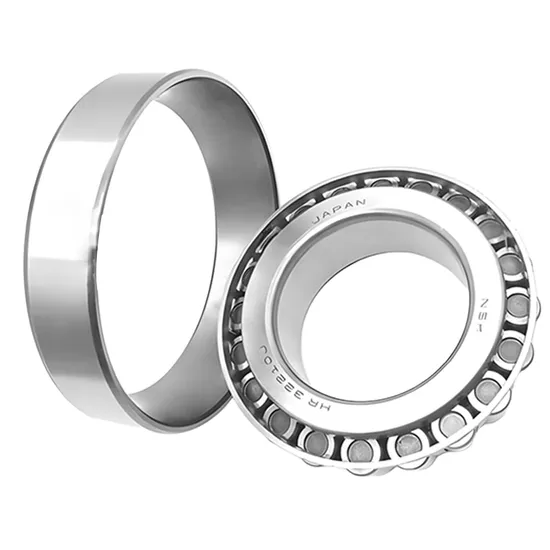 03 Tapered Roller Bearing High Load Conical Roller Bearing 30205 32205 for Industrial Machinery with Long Life View model details
 04 Clutch Release Bearings LM501349/LM501310 501349/10 Double Row Roller Bearing OEM View model details
Applications
Where these SKF bearings are used
Keep reading
Related SKF bearing selection guides
More practical notes on SKF designations, precision items and project bearing lists from Project Purchasing Company.
 Product & Series Guides · · 6 min read SKF 6205-2RSH/C3VL0241 Insulated Bearing Wholesale Supplier Secure your VFD motors with the SKF 6205-2RSH/C3VL0241 insulated bearing, featuring an outer ring aluminum oxide coating to block destructive shaft currents. Learn why… Read the guide
 Product & Series Guides · · 7 min read SKF W 6205-2RS1 Stainless Steel Bearing Wholesale Supplier Secure genuine SKF W 6205-2RS1 stainless steel bearing specs for corrosive environments where visual inspection fails. The critical W prefix distinguishes these 25x52x15mm units… Read the guide
 Product & Series Guides · · 8 min read SKF 51206 Thrust Bearing Specs | Wholesale Supplier for Sale Stop ordering the wrong thrust bearing by relying only on dimensions. This guide details SKF 51206 specs, including 30x52x16mm size, 25.5 kN dynamic load… Read the guide

Request a quote
Send your SKF list. Get one itemized written quote.
Project Purchasing Company supplies SKF ball, roller, precision and housed bearing units to distributors, repair workshops and project buyers worldwide. Standard and precision items are priced line by line, with accessories kept on the same quote.