
Custom OEM 30210-Series Bearings to SKF J2 Q Specifications
A suffix code is not a marketing label—it is a binding engineering contract.
When sourcing custom OEM 30210 bearings to match SKF J2 Q specifications, the critical verification points are the radial internal clearance class defined by the J2 suffix and the optimized internal geometry and surface finish indicated by the Q suffix. Simply matching the base model number 30210 without confirming these suffix-level parameters will result in premature field failure, regardless of dimensional interchangeability.
I still remember a conversation at a trade show booth in Hannover years ago. A procurement manager from a European gearbox manufacturer held up a purchase order and pointed at the suffix block: "My supplier shipped me 30210 bearings, dimensionally perfect. But they ignored the J2 and the Q entirely. The gearboxes started howling before the warranty period ended." That single oversight—a missing suffix confirmation—cost his company a full batch recall and damaged a long-standing OEM relationship.
This is not an isolated story. Across industrial procurement circles, the assumption that "30210 equals 30210" persists dangerously. The reality is that suffix codes in bearing designation systems carry precise technical obligations, and when a buyer specifies SKF J2 Q requirements for a custom OEM 30210 bearing, every letter and number in that suffix chain must be individually verified against the supplier’s production documentation.
Let me walk you through exactly what these suffixes mean, how to verify compliance, where cross-referencing typically goes wrong, and what a disciplined sourcing process should look like.
What Does the SKF J2 Q Suffix Actually Mean on a 30210 Bearing?
The J2 suffix defines a specific radial internal clearance range within the standard group, while the Q suffix indicates optimized internal geometry including improved contact patterns and controlled surface roughness on rolling elements and raceways.
To understand why this matters, we need to break down the SKF designation system for tapered roller bearings. The base model 30210 follows ISO 355 dimensional standards: 50 mm bore, 90 mm outside diameter, and a nominal assembly width of 20 mm. That dimensional envelope is universal—any manufacturer producing a 30210 to ISO 355 will have matching outer dimensions. But the suffix layer tells a completely different story.
The J2 suffix in SKF’s system refers to a radial internal clearance that falls within a defined subrange of the standard CN (normal) group. In practical terms, this means the bearing’s internal fit between the cone assembly and cup is held to a tighter band than a basic CN bearing, but not as loose as a C3 clearance. This tighter clearance range directly affects how the bearing behaves under combined radial and axial loads—particularly in applications like industrial gearboxes where thermal expansion, shaft deflection, and load direction all interact.
The Q suffix goes further into internal geometry. It signals that the manufacturer has applied specific optimizations to the contact angle profile, roller end-to-flange interaction, and surface finish of the load-carrying surfaces. These optimizations reduce frictional heat generation and improve load distribution across the roller set. In a gearbox running at moderate speeds with continuous duty, a Q-specification bearing will typically operate cooler and quieter than a standard geometry version under identical conditions.
Here is where the trap springs shut. Many OEM suppliers, when asked to produce a "30210 equivalent," will deliver a bearing that meets the ISO 355 envelope but carries no J2 clearance verification and no Q-level geometry control. The part looks identical. It measures identically on a caliper. But internally, it behaves like a completely different component.
How to Verify an OEM 30210 Actually Meets J2 Q Requirements?
Verification requires a documented chain of evidence: dimensional inspection report, clearance measurement certificate, geometry and surface finish confirmation, and a formal cross-reference declaration signed by the supplier’s quality department.
When I work with buyers who need custom OEM 30210 bearings matched to SKF J2 Q specs, I insist on a structured verification protocol before any sample is approved for testing. This is not bureaucratic overhead—it is the only reliable way to confirm that the suffix codes on the purchase order translate into physical reality on the shop floor.
The first step is requesting the supplier’s dimensional inspection report against ISO 355 tolerances. For a 30210, this means verifying bore diameter, outside diameter, width, and all associated form tolerances. The report must reference the specific ISO tolerance class—typically Normal class for standard industrial applications.
The second step is clearance verification. The supplier must provide measurement data showing that each inspected bearing’s radial internal clearance falls within the J2-defined range. This is not a generic "CN clearance" statement—it requires actual measurement values or a certified gauge inspection confirming the bearing sits within the J2 band. Without this data, the J2 suffix is meaningless.
The third step addresses the Q suffix. Here, the buyer should request documentation on the bearing’s internal geometry parameters: contact angle, roller profile, and surface roughness values for the raceways and roller surfaces. While full geometry data may not always be available in a standard inspection report, the supplier should at minimum confirm that the bearing’s internal design matches the Q-specification requirements for optimized contact patterns and controlled surface finish.
The fourth step is a formal cross-reference declaration. The supplier should provide a written statement identifying which specific SKF suffix codes their bearing is designed to match, along with any deviations or limitations. This document becomes part of the quality file and serves as the basis for any future dispute resolution.
I have seen buyers skip steps two and three because the dimensional report looked clean. The bearing arrived, passed incoming inspection, got installed—and then failed in service. The root cause was never the dimensions. It was the clearance and geometry that nobody bothered to verify.
What Are the Most Common Pitfalls When Cross-Referencing to SKF J2 Q?
The three most frequent failures are suffix omission on purchase documents, clearance class mismatch between supplier and buyer expectations, and undocumented geometry deviations that only surface after installation.
Let me share a pattern I have observed repeatedly across procurement cycles. A buyer in the Middle East, sourcing for a conveyor system in a cement plant, sends an inquiry for "30210 bearing, SKF equivalent." The supplier responds with a quote for a standard 30210—dimensionally correct, price-competitive, readily available. The buyer approves. The order ships. The bearing installs. And within a few hundred hours of operation, the conveyor gearbox develops abnormal noise and elevated temperature.
What happened? The original specification called for J2 Q clearance and geometry. The purchase order, however, only said "30210." The supplier, following the letter of the PO, delivered a standard clearance, standard geometry bearing. Nobody asked. Nobody confirmed. The suffix was assumed, not specified.
This is the first and most dangerous pitfall: suffix omission. When a buyer references a branded specification like SKF J2 Q but does not explicitly carry those suffix codes into the purchase documentation, the supplier has no contractual obligation to match them. The base model number alone does not convey clearance or geometry requirements.
The second pitfall is clearance class mismatch. Even when the J2 suffix is specified, some suppliers interpret it differently or substitute a "close equivalent" from their own designation system. A supplier might claim their "CC" clearance matches J2, but without documented measurement data proving the bearing falls within the J2-defined range, this claim is unverifiable. The buyer receives a bearing that is technically "within standard clearance" but outside the specific J2 band required for the application.
The third pitfall is undocumented geometry deviation. The Q suffix implies specific internal optimizations. Some suppliers, particularly those producing high-volume standard bearings, may not have the capability to control roller profile and surface finish to Q-level requirements. They may deliver a bearing that is dimensionally and clearance-compliant but lacks the geometry optimizations that reduce friction and heat generation. This deviation typically goes undetected until the bearing operates under real-world conditions and thermal or noise performance falls short.
| Verification Element | Standard 30210 Supply | J2 Q Specified and Verified |
|---|---|---|
| Dimensional compliance to ISO 355 | Verifiable | Verifiable |
| Radial internal clearance class | Self-reported or unspecified | Certified to J2 range with measurement data |
| Internal geometry and surface finish | Not documented | Confirmed against Q-specification requirements |
| Formal cross-reference declaration | Not provided | Signed by supplier quality department |
| Traceability to production batch | Basic or none | Full batch-level traceability |
This table illustrates the gap between a standard supply transaction and a specification-verified transaction. The dimensional envelope is identical in both cases. The difference lies entirely in the suffix-level parameters—and those parameters determine whether the bearing performs as intended in the application.
How Should Buyers Source Custom 30210 Bearings to SKF J2 Q Specs from OEM Suppliers?
A disciplined sourcing process requires explicit suffix specification on all inquiry and order documents, supplier capability assessment for clearance and geometry control, sample approval with full verification documentation, and ongoing batch-level quality monitoring.
Based on my experience working with industrial buyers across multiple regions, I have developed a sourcing framework for custom OEM 30210 bearings that need to match SKF J2 Q specifications. This framework is not theoretical—it is built from repeated observation of what works and what fails in real procurement scenarios.
Step one: Explicit suffix specification on all documents. Every inquiry, quotation request, and purchase order must include the full designation with suffix codes: "30210, radial internal clearance class J2, internal geometry and surface finish per Q specification." Do not rely on verbal agreements or assumptions. If the suffix is not on the document, it does not exist contractually.
Step two: Supplier capability assessment. Before placing an order, verify that the supplier has documented capability to produce bearings to the required clearance class and geometry specification. This means requesting evidence of clearance measurement equipment, geometry inspection capability, and quality management system certification. A supplier who cannot demonstrate these capabilities should not be considered for J2 Q work, regardless of price competitiveness.
Step three: Sample approval with full documentation. Before committing to a production order, request sample bearings accompanied by complete verification documentation: dimensional inspection report, clearance measurement data, geometry confirmation, and formal cross-reference declaration. Inspect the samples against the specification. If any parameter falls outside the required range, reject the sample and request corrective action. Do not approve samples with "minor deviations" hoping they will not matter in service. They will.
Step four: Ongoing batch-level quality monitoring. Once production begins, require the supplier to provide batch-level inspection reports with every shipment. These reports should include dimensional data, clearance measurements, and any deviations from the approved sample. If the supplier cannot provide batch-level documentation, their process control is insufficient for J2 Q requirements.
I have worked with buyers who followed this framework and received bearings that performed identically to the branded originals in their applications. I have also worked with buyers who skipped steps, accepted verbal assurances, and paid the price in field failures and warranty claims. The difference is never the bearing itself—it is the discipline of the sourcing process.
Conclusion
Suffix codes are engineering specifications, not optional descriptors. When sourcing custom OEM 30210 bearings to match SKF J2 Q requirements, the base model number ensures dimensional interchange, but only explicit verification of the J2 clearance class and Q geometry specification ensures functional equivalence. Every procurement document must carry the full suffix designation, every supplier must demonstrate capability to meet those suffix requirements, every sample must be verified against the complete specification, and every production batch must be monitored with documented inspection data. The cost of skipping these steps is never saved—it is only deferred until the bearing fails in service.
Products in this article
SKF bearings mentioned above
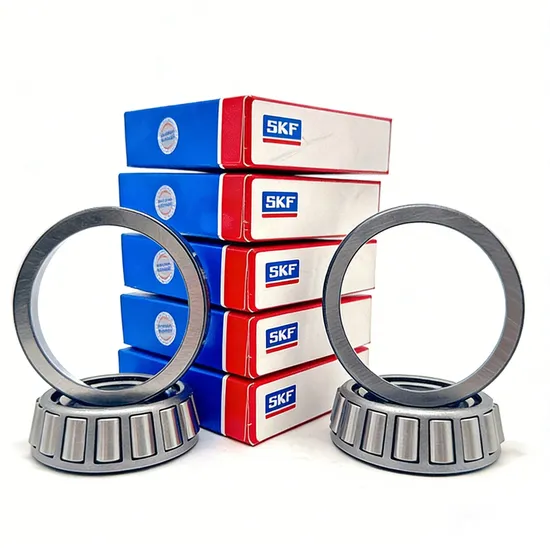
 01 Tapered Roller Bearing Taper Roller Bearing 30210 40x68x19mm P0-P2 for Plastic Machinery with Bearing Steel View model details
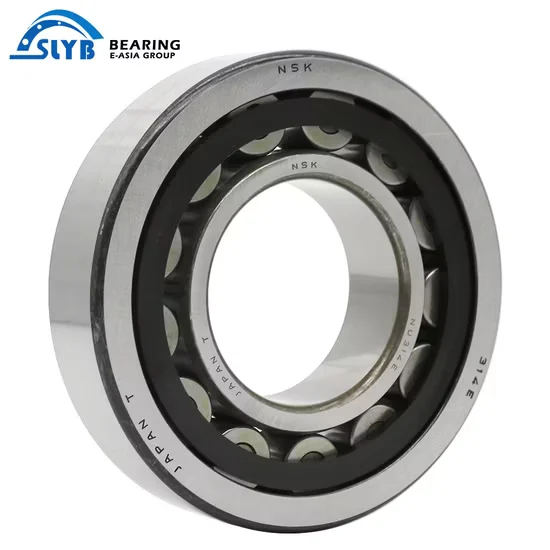
 02 Tapered Roller Bearing High-Quality SKF 30210 Tapered Roller Bearing 50x90x20mm for Construction Gearbox View model details
 03 Clutch Release Bearings LM501349/LM501310 501349/10 Double Row Roller Bearing OEM View model details
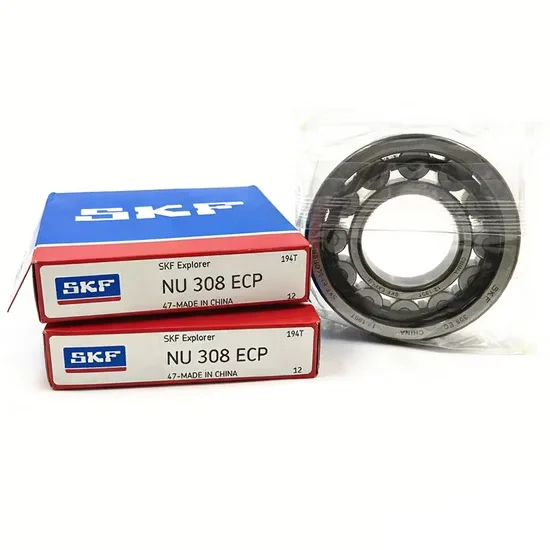 04 Cylindrical Roller Bearings SKF NU308ECP Cylindrical Roller Bearing for Gearbox Reducer OEM View model details
Applications
Where these SKF bearings are used
Keep reading
Related SKF bearing selection guides
More practical notes on SKF designations, precision items and project bearing lists from Project Purchasing Company.
 Product & Series Guides · · 6 min read SKF 6205-2RSH/C3VL0241 Insulated Bearing Wholesale Supplier Secure your VFD motors with the SKF 6205-2RSH/C3VL0241 insulated bearing, featuring an outer ring aluminum oxide coating to block destructive shaft currents. Learn why… Read the guide
 Product & Series Guides · · 7 min read SKF W 6205-2RS1 Stainless Steel Bearing Wholesale Supplier Secure genuine SKF W 6205-2RS1 stainless steel bearing specs for corrosive environments where visual inspection fails. The critical W prefix distinguishes these 25x52x15mm units… Read the guide
 Product & Series Guides · · 8 min read SKF 51206 Thrust Bearing Specs | Wholesale Supplier for Sale Stop ordering the wrong thrust bearing by relying only on dimensions. This guide details SKF 51206 specs, including 30x52x16mm size, 25.5 kN dynamic load… Read the guide

Request a quote
Send your SKF list. Get one itemized written quote.
Project Purchasing Company supplies SKF ball, roller, precision and housed bearing units to distributors, repair workshops and project buyers worldwide. Standard and precision items are priced line by line, with accessories kept on the same quote.