
Custom OEM Bearing First-In-First-Out for OE Production Lines
Sealed bearings are not immune to shelf degradation. The real killer is grease oxidation during static storage, not dust or moisture.
Implementing FIFO bearing inventory management on OE production lines prevents lubricant breakdown, eliminates micro-motion corrosion from prolonged standstill, and ensures every unit installed meets original performance specs. The system works by linking procurement batches to consumption rhythm, tagging every incoming lot, and physically routing stock so the oldest unit is always the first picked.
I still remember a shipment of 6205 series units that sat in a Riyadh warehouse for over a year and a half. The client called me furious—three months after installation, batch after batch was throwing noise complaints. We pulled a few from the shelf, cracked them open, and the grease had turned into a dry, crumbly paste. The seals looked perfect. The steel was fine. But the lubricant had oxidized beyond recovery. That single incident pushed their return rate from a routine trickle into double-digit territory. It was a textbook case of why FIFO bearing inventory management is not just a warehouse exercise—it is a production-line survival rule.
Let me walk you through how to build this system from the ground up, based on what I have seen work—and fail—across Middle East distribution hubs and automotive OEM floors.
Why FIFO Matters for OEM Bearing Production Lines?
Static storage is the silent failure mode most procurement teams ignore until warranty claims start piling up.
The misconception is simple: bearings are sealed, greased for life, and can sit indefinitely. The reality is that lithium-based greases begin oxidizing after roughly a year and a half of shelf time, while high-temperature synthetic variants degrade even faster. When a bearing sits motionless, the rolling elements press against the raceway at a single contact point. Over months, this creates micro-indentations—what tribologists call false brinelling or static corrosion. Once the unit spins up on a production line, those indentations translate directly into vibration and premature noise.
On an OE production line, the stakes are higher than in general MRO. A gearbox assembled with a stale bearing will not fail in the warehouse. It will fail in the hands of an end user, six months or a year later, triggering warranty replacements that cost several times the original unit price. I have watched a European automotive supplier absorb a mid-six-figure warranty bill because a batch of tapered rollers had been stored without rotation for over two years. No one checked the grease condition. No one tracked the date code.
This is where FIFO bearing inventory management becomes a non-negotiable discipline. It is not about moving boxes faster. It is about ensuring that the lubricant chemistry and surface metallurgy inside every bearing match the performance envelope your OE line was designed around.
How to Set Up a Bearing FIFO System?
A working FIFO system is built on three layers: batch identification, physical flow control, and digital traceability.
The first layer is batch coding. Every incoming shipment must be tagged with a date-based identifier at the moment of receipt. In practice, I have seen two approaches work well. The simpler one uses a color-coded sticker system—each month gets a distinct color, applied to the outer packaging before the unit enters the rack. A more rigorous approach ties the date code to the manufacturer’s original batch number and records it in a warehouse management system.
The second layer is physical flow. Gravity-flow racks are the gold standard here. Bearings loaded from the rear slide forward on inclined rails, so the oldest unit is always at the picking face. If gravity racks are not feasible, a disciplined manual system works: each rack bay is assigned to a single batch, and pickers are trained to always draw from the front. The critical rule is never to mix batches within the same rack face.
The third layer is digital traceability. A basic spreadsheet can work for small operations, but once volume grows, you need a system that locks the pick sequence to the oldest available lot and flags any unit approaching its shelf-life limit. This is where our factory’s batch-level documentation and full quality file package become directly useful—we supply every shipment with traceable manufacturing records, including date codes, material certificates, and inspection reports, so your warehouse team can plug our data straight into your FIFO system without manual transcription.
I once audited a mining distributor in Doha that had implemented a color-coded month system across their entire stock. Before the system, their average stock turnover cycle dragged on for well over a year. After implementation, they compressed it to roughly half that time, and shelf-life complaints dropped to zero.
What Are the Key Storage Conditions for Bearings?
Even a perfect FIFO system collapses if the storage environment accelerates degradation.
The three non-negotiable parameters are temperature, humidity, and atmospheric contamination. Industry standards specify a storage temperature range between 15°C and 25°C, relative humidity at or below sixty percent, and an environment free from corrosive gases or chemical vapors.
In practice, I have seen warehouses in the Gulf region where daytime temperatures inside the storage shed routinely exceeded forty degrees Celsius during summer months. The grease inside those bearings was cooking on the shelf. No FIFO system can compensate for that kind of thermal abuse. The fix was straightforward: insulated storage with basic climate control, combined with a policy of keeping bearings in their original sealed packaging until the moment of issue.
Dust and particulate contamination is another silent killer. Even sealed bearings can accumulate surface contaminants on their outer rings and seals during storage, which then get pushed into the raceway during installation. A clean, covered storage area with minimal foot traffic around bearing racks is essential.
Periodic inspection is the third pillar. Units approaching their shelf-life threshold should be pulled for vibration testing, clearance measurement, and grease condition assessment before they are released to the production line.
How to Handle Aged Bearing Inventory?
Aged stock is not automatically scrap—but it must be verified before it touches a production line.
When a bearing has been in storage beyond the standard shelf-life window, the responsible move is to subject it to a structured evaluation before either releasing it for use or downgrading it to a less critical application. The evaluation covers three areas: vibration signature analysis to detect raceway damage from false brinelling, internal clearance measurement to confirm no dimensional drift, and a grease condition check—either through visual inspection of a sample or torque-to-turn testing.
If the unit passes all three checks, it can be released for use, ideally with a shortened warranty window or restricted to non-critical applications. If it fails any check, the correct decision is to quarantine and dispose of it. The cost of a single field failure on an OE line dwarfs the value of the bearing itself.
I have seen procurement teams try to "rotate" aged stock by running it on a test bench for a few minutes and then releasing it. This is dangerous. Brief rotation does not redistribute oxidized grease or heal micro-indentations. It only masks the problem until the unit is under real load.
How to Align Procurement with FIFO?
FIFO breaks down at the source when procurement buys in volumes that outpace consumption.
The root cause of most FIFO failures is not poor warehouse execution—it is a mismatch between purchase batch sizes and actual production-line consumption rates. When a buyer orders a full year’s supply in a single lot to chase a volume discount, the back half of that lot is already sitting past its optimal shelf life before it ever reaches the rack.
The fix is to align procurement planning with the production-line consumption rhythm. Calculate your average monthly draw rate, set a safety stock buffer based on lead time variability, and then size each purchase order to cover a defined consumption window—typically three to six months, depending on supplier lead times and logistics reliability.
This is where working with a factory that holds standard stock and can dispatch quickly becomes a structural advantage. If your supplier can ship within days rather than weeks, you do not need to over-order to buffer against lead-time risk. You can buy smaller, buy more often, and keep your stock flowing in a true FIFO pattern. Our own production planning is built around this model—we maintain rolling stock of high-volume OE models like the 6205, 6206, 6305, 22320, and 32218, and can dispatch same-day against confirmed orders, so your procurement team can right-size each batch without fear of line stoppage.
A Middle East automotive OEM I worked with shifted from semi-annual bulk orders to quarterly rolling purchases aligned with their gearbox assembly schedule. Within a single year, their inventory turnover rate roughly doubled, and they recorded zero stock-related quality complaints across their entire OE line.
Conclusion
FIFO bearing inventory management is a production-line discipline, not a warehouse afterthought. It requires batch-level traceability, controlled storage conditions, structured evaluation of aged stock, and—most critically—procurement plans that match consumption rhythm rather than chase volume discounts. When these elements are in place, OE lines run on fresh, verified bearings, and the silent failure mode of static storage degradation simply does not get a chance to surface.
Products in this article
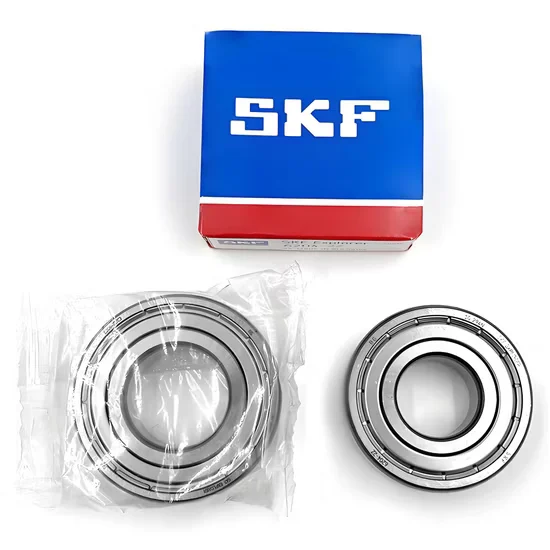
SKF bearings mentioned above
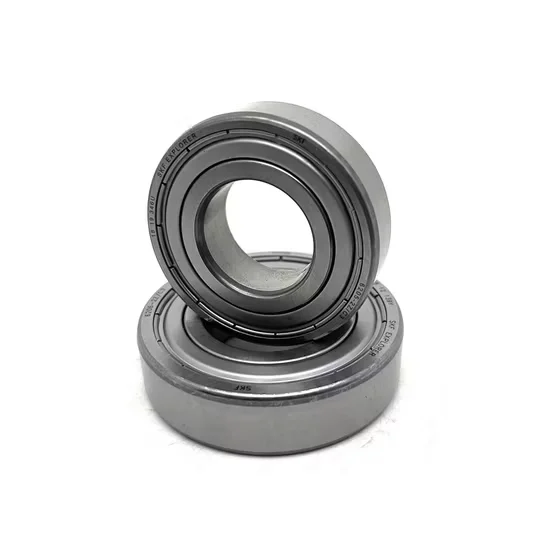 01 Deep Groove Ball Bearings SKF 6204 6205 6206 Deep Groove Ball Bearing Spare Parts View model details
 02 Deep Groove Ball Bearings Original SKF Deep Groove Ball Bearing 6000 6001 6308 6309 6204 6205 6206 for Auto Parts View model details
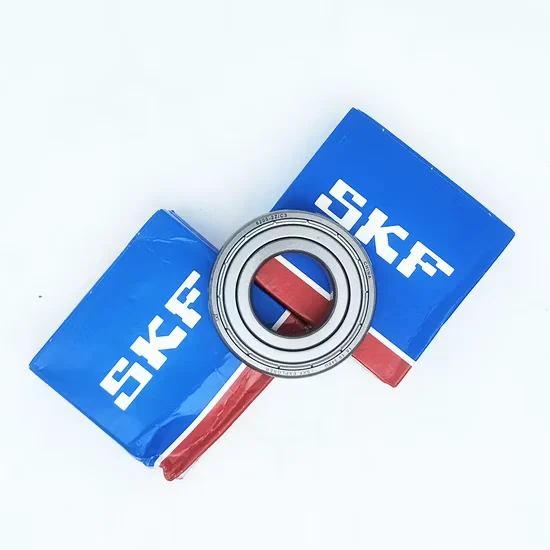 03 Agricultural Machinery Bearings X&S 80607kt 6301-2RS 6205-2Z 6206-2Z Deep Groove Ball Bearing View model details
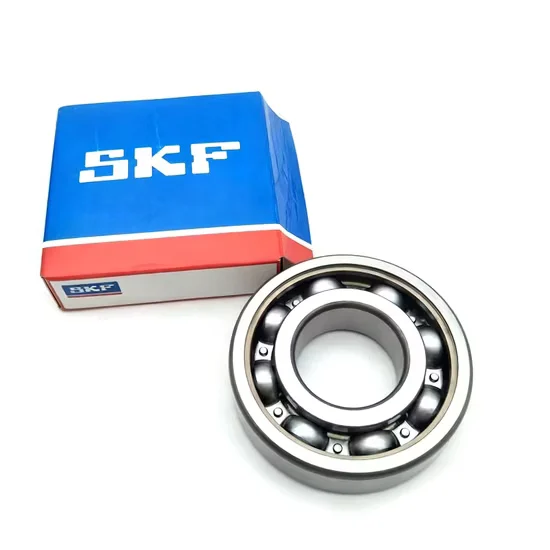 04 Deep Groove Ball Bearings SKF 6205 6206 ZZ C3 Deep Groove Ball Bearing for Automobile Industry View model details
Applications
Where these SKF bearings are used
Keep reading
Related SKF bearing selection guides
More practical notes on SKF designations, precision items and project bearing lists from Project Purchasing Company.
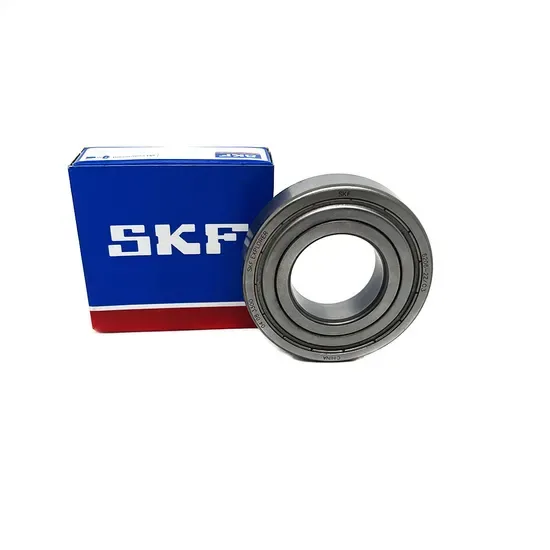 Installation & Maintenance · · 7 min read Ball Bearing Maintenance Checklist for Workshops: Genuine SKF/NSK Wholesale Supplier Stop premature failures with our Ball Bearing Maintenance Checklist, addressing contamination and improper installation rather than product quality. Learn essential pre-installation checks, proper mounting… Read the guide
 Installation & Maintenance · · 9 min read Ball Bearing Life in Variable Speed Drives: Wholesale Supplier Standard L10 life calculations fail in variable speed drives due to electrical erosion and thermal degradation. Extend ball bearing life in variable speed drives… Read the guide
 Installation & Maintenance · · 7 min read Corroded Ball Bearings Prevention Wet Sites: Wholesale Supplier Prevent corroded ball bearings in wet sites by prioritizing internal grease fill and contact seal integrity over superficial oiling. Upgrade to double-lip rubber seals,… Read the guide
Request a quote
Send your SKF list. Get one itemized written quote.
Project Purchasing Company supplies SKF ball, roller, precision and housed bearing units to distributors, repair workshops and project buyers worldwide. Standard and precision items are priced line by line, with accessories kept on the same quote.