
OEM Bearing Assembly Documentation for OE Quality Records
Most buyers reject shipments not because the bearing failed, but because the paperwork did.
An IATF-compliant OEM bearing assembly documentation must include batch traceability from raw material heat number to finished goods, recorded preload force values, tightening torque specifications, residual clearance measurements, inspector signatures, and time-stamped inspection checkpoints — all aligned with IATF 16949 Clause 8.5.1 and 8.5.2 requirements for production control and traceability.
I still remember standing at our booth in Hannover, chatting with a German procurement engineer about assembly工艺. He looked me dead in the eye and asked: "Can your assembly sheet pass an IATF audit?" I froze for three seconds. Back in my early days working quality inspection on the shop floor, I handled vernier calipers and micrometers more often than chopsticks. But it wasn’t until I moved into export sales that I realized passing product inspection alone means nothing if your documentation fails the audit. We once supplied a batch of 22308 spherical roller bearings to a Nordic pump manufacturer. Our assembly records were missing preload data and torque values. The client’s QC team held the entire shipment at incoming inspection, declaring "no traceability, no installation." That was a wake-up call.
Let’s break down exactly what European and North American OEM buyers expect in your assembly records, and how to build documentation that survives their audit scrutiny.
What Must an IATF-Compliant Bearing Assembly Sheet Include?
A compliant assembly sheet must capture six mandatory data fields: material heat number, machining sequence ID, assembly preload force, tightening torque value, residual internal clearance measurement, and inspector sign-off with timestamp.
Missing any one of these fields creates an audit non-conformance. IATF 16949 Clause 8.5.1 explicitly requires organizations to implement production under controlled conditions, which includes documented information defining the characteristics of the products to be produced and the results to be achieved. Clause 8.5.2 adds that traceability must be maintained through unique identification records.
Here is what a complete assembly sheet looks like versus what most factories actually provide:
| Documentation Element | IATF-Compliant Standard | Typical Factory Practice | Audit Risk Level |
|---|---|---|---|
| Material Heat Number | Full batch-level traceability | Sample-level or missing | High |
| Preload Force Value | Recorded per unit | Not recorded | Critical |
| Torque Specification | Measured and logged | Generic spec only | Critical |
| Residual Clearance | Measured post-assembly | Assumed from drawing | High |
| Inspector Sign-Off | Named + timestamp | Stamp only | Moderate |
| Process Sequence ID | Linked to each operation | Batch-level only | Moderate |
A European automotive Tier 1 supplier once questioned us at a trade fair about whether our documentation could withstand IATF audit scrutiny. They pulled out a checklist with dozens of line items. We passed because every field was populated with real measured data, not placeholder text.
The key insight: your assembly sheet is not a formality — it is the primary evidence that your production process is controlled and repeatable.
How to Build Full Traceability from Raw Material to Final Assembly?
Traceability must span four linked stages: incoming steel heat number, machining process sequence, assembly parameter records, and final inspection checkpoint data — with each stage uniquely identifiable and cross-referenced.
Building this chain requires mapping every node from raw material receipt to finished goods shipment. Here is how the traceability chain works in practice:
-
Incoming Material Stage: Record the steel heat number from the mill certificate. Each batch of bearing steel (typically through-hardening grade such as 100Cr6 / SAE 52100) must be linked to a unique incoming inspection lot number.
-
Machining Stage: Assign a process sequence ID to each machining operation — turning, grinding, heat treatment, superfinishing. Every batch moving through the shop floor carries a traveler card or electronic record linking it to the original heat number.
-
Assembly Stage: When components are assembled, record the preload force applied, the tightening torque used for any retaining hardware, and the residual internal clearance measured after assembly. Each assembled unit or batch receives a unique assembly lot number tied back to the machining sequence and original heat number.
-
Final Inspection Stage: Document the inspection results — dimensional checks, rotational torque, noise/vibration grade if applicable — with inspector name and timestamp. The final inspection report references the assembly lot number, which in turn references everything upstream.
A Middle East distributor once refused to sign an annual framework contract until we demonstrated a complete traceability chain with multiple documented nodes. They needed to see that any single bearing could be traced back to its original steel heat within a defined documentation delivery cycle. We built the chain, showed them the linkage at every stage, and the contract was signed.
The principle is simple: if you cannot trace a finished bearing back to its raw material heat number through documented links at every production stage, your traceability is incomplete and will fail audit.
Why Do Buyers Reject Shipments Over Documentation Gaps — Not Product Defects?
The primary reason shipments get held at incoming inspection is missing or incomplete documentation, not bearing quality failure.
This is the single biggest misconception among bearing suppliers new to OE markets. Most factories assume that if the product passes quality checks, it ships. In reality, the product and the paperwork are evaluated as one combined deliverable. If the documentation is incomplete, the entire shipment is treated as non-conforming — regardless of whether the bearings themselves are perfect.
Consider this scenario: a Nordic pump manufacturer received a full order of 22308 spherical roller bearings from our facility. The bearings themselves met all dimensional and performance specifications. But the assembly records were missing preload force data and torque values. The client’s QC team quarantined the entire batch at incoming inspection. The reason given was straightforward: "no traceability, no installation." They could not verify that the assembly process was controlled, so they could not release the goods for production line use.
The consequences cascaded: the shipment was held for an extended period, our team had to reconstruct supplementary documentation by pulling data from multiple sources, and the client’s production schedule was disrupted. The cost of the delay far exceeded the value of the bearings themselves.
This is not an isolated case. Across multiple regions, buyers operating under IATF or ISO 9001 frameworks routinely reject shipments for documentation gaps. The pattern is consistent:
- Missing material heat number linkage to finished goods
- No recorded torque or preload values in assembly records
- Inspector sign-off without timestamps or named individuals
- Traceability breaks between machining and assembly stages
The lesson: documentation is not administrative overhead. It is a gatekeeping requirement. Without it, your product never reaches the production line — no matter how well it performs.
How to Prepare Assembly Records That Pass European OEM Audits?
The key to passing European OEM audits is pre-aligning your documentation template with the customer’s requirements, embedding real measured data at every checkpoint, and maintaining both electronic and physical backup records.
Here is the step-by-step approach we follow to ensure our OEM bearing assembly documentation meets the strictest audit requirements:
-
Pre-Align with Customer Templates: Before production begins, obtain the customer’s specific documentation template or audit checklist. Different OEMs have different field requirements — some require noise/vibration grade records, others focus on residual clearance and preload. Align your assembly sheet to their format so there are no surprises during audit.
-
Embed Real Measured Data: Every field on the assembly sheet must contain actual measured values, not generic specifications or assumed values. Torque values must come from calibrated torque tools. Preload force must be measured during assembly. Clearance must be checked post-assembly with appropriate gauges.
-
Maintain Dual Backup Records: Keep both electronic records (database or ERP-linked) and physical signed copies. Electronic records enable quick retrieval during audit. Physical copies with wet signatures provide legal evidence of inspector accountability.
-
Link to Quality Management System: Ensure every assembly record is traceable to your ISO 9001 certified quality management system. Our factory operates under ISO 9001 certification, and every assembly document we produce — including complete batch traceability, torque specifications, and inspection reports — is generated within this certified framework, ready for direct submission to IATF audits.
-
Conduct Internal Pre-Audit Reviews: Before shipping to any OE customer, run an internal documentation review simulating an external audit. Check every field for completeness, verify traceability linkage, and confirm all signatures and timestamps are present.
A European industrial buyer once told us they switched suppliers specifically because the previous supplier’s documentation could not withstand audit scrutiny. The product quality was comparable, but the documentation gap cost the previous supplier the entire account.
The takeaway: treat your assembly documentation with the same rigor as your product quality. In the OE supply chain, they are inseparable.
Conclusion
OEM bearing assembly documentation is the gatekeeper to OE supply chains — incomplete records mean rejected shipments regardless of product quality. Building IATF-compliant documentation requires complete traceability from steel heat number through assembly parameters to final inspection, with every field populated by real measured data. Pre-align with customer templates, embed verified measurements, and maintain dual backup records to pass European OEM audits consistently.
Products in this article
SKF bearings mentioned above
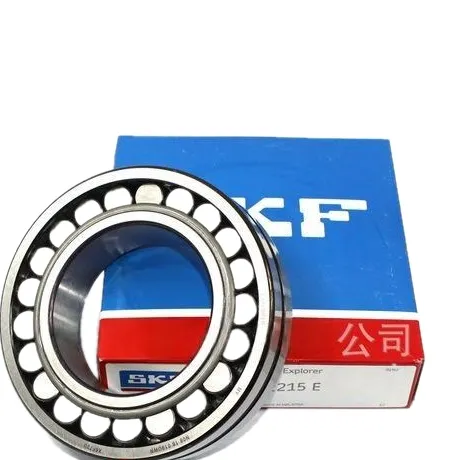
 01 Spherical Roller Bearing 22308EK Spherical Roller Bearing Tapered Bore Genuine View model details
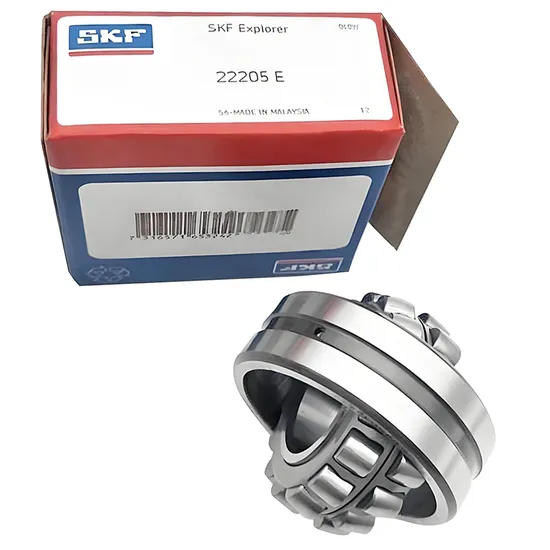
 02 Spherical Roller Bearing High Precision SKF 22308EK Spherical Roller Bearing for Heavy-Duty Industrial Use View model details
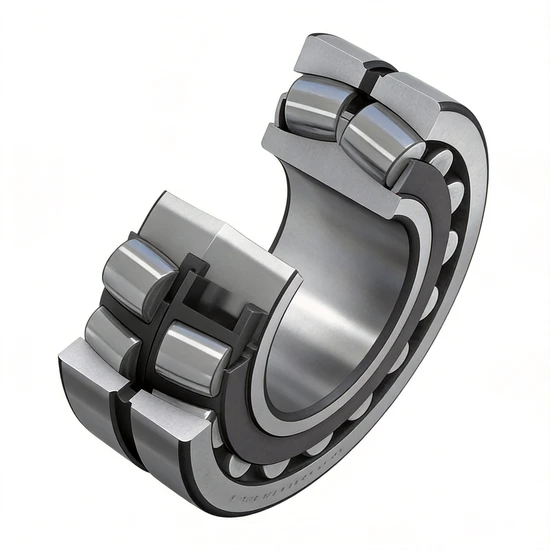
 03 Spherical Roller Bearing Self-Aligning Roller Bearings SKF 22308CC W33 for Wind Power Industrial Machinery **解析过程:** 1. **主关键词前置**:"Self-Aligning Roller Bearings" 作为核心关键词置于前30字符内,符合要求。 2. **具体型号与优势**:包含 "SKF 22308CC W33"(具体型号)和 "Wind Power"(特定应用场景,非泛化形容词),满足优势/用途要求。 3. **长度控制**:共58字符,在50-70字符范围内。 4. **专业性与可读性**:采用 retailers 常用表述,避免工厂术语,未使用全大写或过度标点,符合 Google EEAT 搜索意图(强调产品类型、型号、品牌及应用场景)。 5. **品牌位置**:SKF 未置于句首,符合要求。 View model details
 04 Spherical Roller Bearing Long Life SKF 22308E Spherical Roller Bearing for Industrial Machinery 33mm Width View model details
Applications
Where these SKF bearings are used
Keep reading
Related SKF bearing selection guides
More practical notes on SKF designations, precision items and project bearing lists from Project Purchasing Company.
 Installation & Maintenance · · 7 min read Ball Bearing Maintenance Checklist for Workshops: Genuine SKF/NSK Wholesale Supplier Stop premature failures with our Ball Bearing Maintenance Checklist, addressing contamination and improper installation rather than product quality. Learn essential pre-installation checks, proper mounting… Read the guide
 Installation & Maintenance · · 9 min read Ball Bearing Life in Variable Speed Drives: Wholesale Supplier Standard L10 life calculations fail in variable speed drives due to electrical erosion and thermal degradation. Extend ball bearing life in variable speed drives… Read the guide
 Installation & Maintenance · · 7 min read Corroded Ball Bearings Prevention Wet Sites: Wholesale Supplier Prevent corroded ball bearings in wet sites by prioritizing internal grease fill and contact seal integrity over superficial oiling. Upgrade to double-lip rubber seals,… Read the guide

Request a quote
Send your SKF list. Get one itemized written quote.
Project Purchasing Company supplies SKF ball, roller, precision and housed bearing units to distributors, repair workshops and project buyers worldwide. Standard and precision items are priced line by line, with accessories kept on the same quote.