
Sep 19, 2026 · Applications & Industries
Genuine Ball Bearings for Printers & Copiers Wholesale Supplier
Prevent high-speed reson…
Read the selection guideSKF bearings by designation · Itemized written quotes for mixed project lists
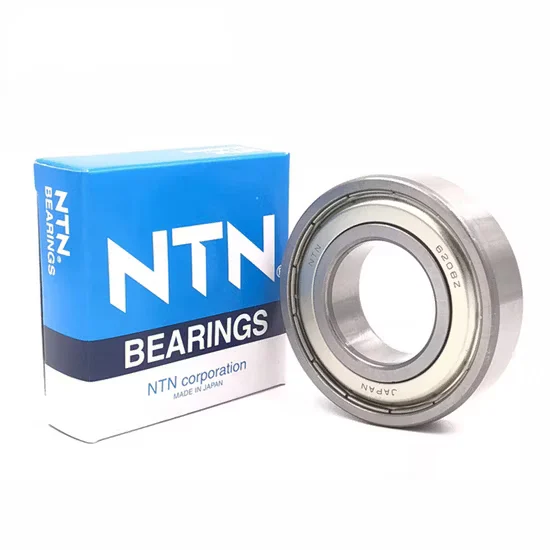


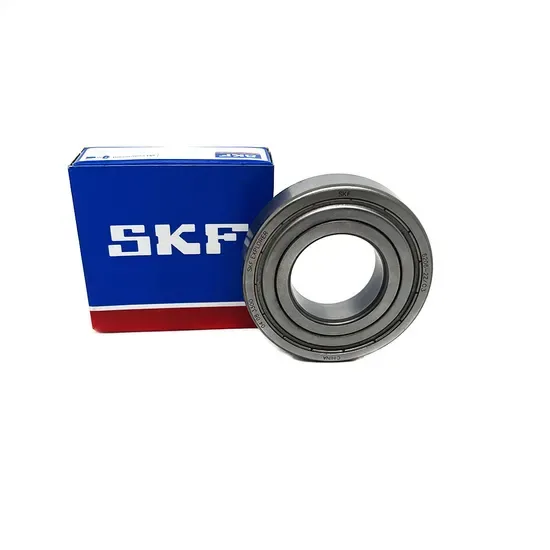
State the exact execution (designation suffix), whether you need the complete assembly, and which housings or mounting accessories belong on the same line. Keep precision items separate, with accuracy class and arrangement.
Technical data
Listed data for this SKF designation; confirm the execution and dimensions against your drawing or application before ordering.
| Category | Deep Groove Ball Bearings |
|---|
Verified via QR scan — Every 6000/6200/6300 unit includes a scannable code linking directly to the manufacturer's authenticity database.
| Parameter | Value |
|---|---|
| Designation | 6000/6200/6300 |
| Product Type | Deep Groove Ball Bearing |
| Lubrication | Grease or Oil |
| Precision Rating | P0 P6 P5 P4 P2 |
| Vibration | Z1V1 Z2V2 Z3V3 |
| Load Direction | Radial Bearing |
| Material | Bearing Steel |
| Separated | Unseparated |
| Origin | China |
| HS Code | 8482102000 |
| Industry | Typical Applications |
|---|---|
| Electric motors | Stator and rotor shaft support |
| Pumps | Impeller shaft radial load management |
| Gearboxes | High-speed intermediate shaft rotation |
Standard clearance defaults cannot absorb thermal expansion.
Back in Qingdao, I analyzed a burnt-out pump motor where the rotor seized completely. The root cause was a standard clearance bearing operating under high thermal load without adequate expansion room. When equipment runs hot, relying on baseline specifications without verifying thermal limits leads to catastrophic internal friction. Many procurement engineers assume the default metric series configuration handles all thermal variations, but continuous duty cycles in enclosed motor housings generate substantial heat. If the internal geometry lacks the necessary clearance to accommodate shaft and housing expansion, the rolling elements experience extreme contact stress. This localized overheating degrades the lubricant rapidly, leading to metal-to-metal contact and eventual seizure [NEED_CITE: bearing seizure mechanisms under thermal expansion]. Understanding these thermal dynamics is crucial when deploying standard metric series in demanding industrial environments.
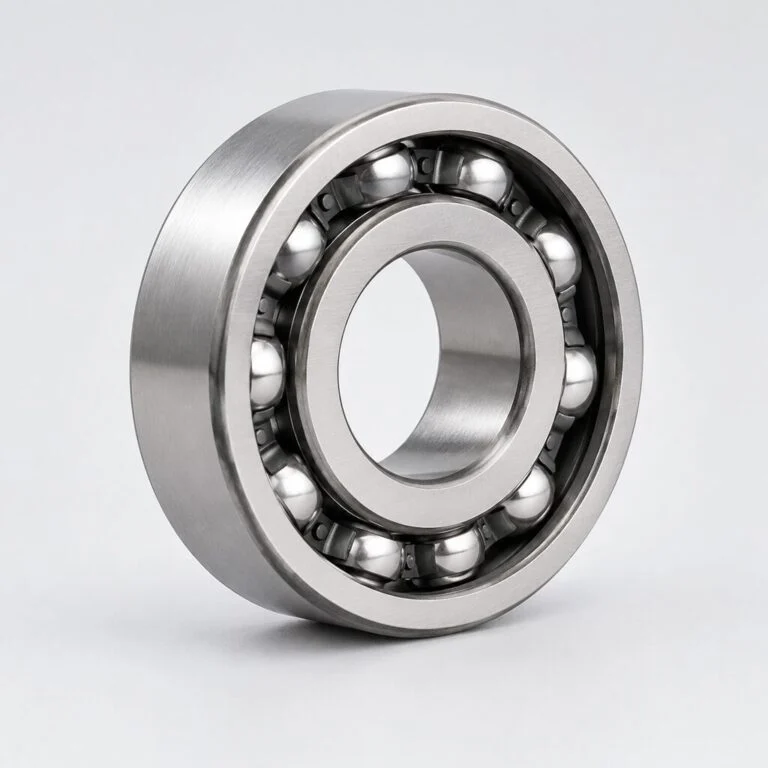
When specifying a 6000/6200/6300 deep groove ball bearing for continuous-duty electric motors, the baseline radial load capacity and unseparated design provide a stable foundation. We cross-reference these standard metric dimensions against your exact housing tolerances to ensure the selected variant handles the specific radial forces without premature raceway fatigue. The unseparated architecture ensures that the inner and outer rings maintain strict concentricity, which is vital for minimizing vibration in high-speed pump applications. By evaluating the specific radial loads and shaft deflection characteristics of your machinery, we can determine whether the baseline metric series offers sufficient structural integrity or if alternative internal geometries are required to sustain prolonged operational cycles without compromising the overall equipment reliability.
Electric motors and pumps subject these components to continuous radial loading and varying rotational speeds. The choice between grease and oil lubrication directly impacts heat dissipation and operational lifespan. In environments where contamination is a risk, the open design requires external sealing solutions to prevent particulate ingress, which otherwise accelerates raceway wear. When dealing with heavy radial loads in gearbox applications, the lubrication film thickness must be carefully calculated to prevent asperity contact between the rolling elements and the raceways. Oil circulation systems are often necessary to flush out wear debris and manage the thermal energy generated by high-speed rotation. Conversely, sealed grease cavities simplify maintenance but demand precise initial fill volumes to avoid churning losses and excessive temperature buildup during continuous motor operation [NEED_CITE: particulate contamination effects on bearing fatigue life].
The absence of specific suffixes indicates a standard configuration, typically featuring P0 precision and Z1V1 vibration levels. For high-speed motor applications, upgrading to P5 or P4 precision and Z3V3 vibration grades minimizes acoustic noise and rotational runout. Available in bearing steel or stainless steel variants, the construction provides the necessary core hardness or corrosion resistance, while the unseparated architecture ensures the inner and outer rings remain perfectly aligned under radial stress. Achieving tighter precision grades involves precision grinding and superfinishing processes that reduce surface roughness, thereby lowering the friction coefficient and extending the fatigue life. When the vibration levels are strictly controlled during manufacturing, the resulting dynamic balance significantly reduces the harmonic resonance transmitted to the motor housing, ensuring smoother operation and protecting sensitive adjacent components from unnecessary vibrational stress [NEED_CITE: vibration grade impact on motor acoustic emissions].
Deploying standard clearance and precision grades in high-temperature or high-speed applications inevitably leads to unplanned downtime. When thermal expansion exceeds the internal clearance limits, the rolling elements skid rather than roll, causing severe surface distress. This failure mode, classified under ISO 15243, voids equipment warranties and triggers costly secondary damage to adjacent motor components. The financial repercussions extend far beyond the replacement cost of the component itself, encompassing lost production hours, emergency maintenance labor, and potential collateral damage to the pump impeller or motor windings. Procurement teams often focus on initial unit pricing, overlooking the fact that a mismatched baseline configuration will exponentially increase the total cost of ownership through frequent interventions and reduced mean time between failures in critical rotating equipment [NEED_CITE: ISO 15243 failure mode classification for surface distress].
Sourcing standard metric series often involves mixed batches with unclear origins. We provide complete traceability documentation for every unit, ensuring the bearing steel and precision ratings match the catalog specifications. Our engineering team verifies the exact radial load requirements and suggests necessary clearance adjustments before dispatch, eliminating the guesswork that typically causes early motor failures. By maintaining massive spot inventory covering thousands of standard part numbers, we eliminate the supply chain bottlenecks that delay urgent MRO replacements. Furthermore, our cross-brand equivalent model consultation ensures that if a specific premium brand is unavailable, we can immediately supply a dimensionally and metallurgically identical alternative, keeping your production lines running without compromising the original equipment manufacturer's performance expectations or voiding existing machinery warranties.
To ensure the selected baseline configuration meets your operational demands, please provide the exact radial loads, rotational speeds, and operating temperatures. Sharing the OEM equipment model numbers allows our technical team to perform a comprehensive cross-reference check and confirm if the standard clearance and vibration grades are sufficient for your specific motor or pump application. We also require details regarding the environmental conditions, such as exposure to moisture or abrasive dust, to advise on the most appropriate external sealing arrangements. By supplying these critical operational parameters, our engineering specialists can calculate the theoretical L10 life and recommend precise lubrication intervals, ensuring the integrated solution delivers maximum reliability and minimizes unexpected maintenance interventions throughout the equipment lifecycle.
Q: How do I select the right precision and vibration levels for my electric motors?
A: Standard P0 precision and Z1V1 vibration levels suit general industrial motors. However, for high-speed or noise-sensitive applications, specifying P5 or P4 precision alongside Z3V3 vibration grades significantly reduces acoustic emissions and rotational runout, ensuring smoother operation and extended service life in demanding electrical equipment.
Q: How can I verify the authenticity of these metric series bearings upon delivery?
A: Every unit includes a scannable QR code linked to the official manufacturer database. You can use the brand's official app to verify the production batch, material certificates, and dimensional reports, ensuring the bearing steel and precision ratings strictly match the original equipment manufacturer specifications without counterfeit risks.
Q: What cross-reference equivalents exist for this standard metric series across premium brands?
A: The 6000/6200/6300 metric dimensions are globally standardized, allowing direct cross-referencing across major premium brands. By providing your current OEM equipment model or existing part numbers, our engineering team can identify exact dimensional and precision equivalents, ensuring direct integration without modifying the motor or pump housing tolerances.
Q: How should I choose between grease and oil lubrication for these unseparated bearings?
A: Grease lubrication is ideal for standard-speed electric motors due to its sealing properties and minimal maintenance requirements. Conversely, oil lubrication is preferred for high-speed gearboxes or pumps where superior heat dissipation is critical, as it effectively carries away friction heat and extends the operational lifespan under continuous radial loading.
Q: What maintenance intervals are recommended for open-type radial bearings in industrial pumps?
A: Open-type designs require strict external sealing and regular relubrication schedules based on operational hours and environmental contamination levels. Monitoring the grease condition and replenishing it before particulate ingress occurs prevents raceway wear, aligning with ISO 281 guidelines to maintain the rated dynamic load capacity and prevent premature pump shaft failures.
Project buyers
"We submitted a long SKF list for a new project, mixing ball, roller, needle and thrust bearings. This supplier came back with itemized pricing, lead times and alternatives for two long-lead references. We could plan the procurement timeline without surprises."
 Daniel KimKim Engineering Project · South Korea
"When our project timeline shifted and we needed to split the delivery into three batches, the supplier worked with us on the schedule. Each batch arrived complete and on the agreed date. No holding costs, no rush shipping fees."
 Mohammed Al-AminAl-Amin Contracting · Saudi Arabia
Same series
Comparable designations from the same category, ready to add to one itemized quote.
 Deep Groove Ball Bearing High-Precision Deep Groove Ball Bearing 6706-2RS for Industrial Machinery with P5 Precision Rating
 Deep Groove Ball Bearing 6004 Deep Groove Ball Bearing 20x42x12mm Zz 2RS for Motorcycle Accessories with SKF Quality
 Deep Groove Ball Bearing Deep Groove Ball Bearing SKF 6002-2RS P5 Precision for High-Precision Industrial Use
 Deep Groove Ball Bearing Deep Groove Ball Bearing 6815 6816 6817 for Automobile High Speed Long Life
Where it runs
Typical equipment and duty conditions this SKF bearing type is specified for.
Standard and precision lines listed separately, each with model, stock, lead time and validity — so your comparison is line by line, not guesswork.
Selection guides
Sep 19, 2026 · Applications & Industries
Prevent high-speed reson…
Read the selection guide Sep 18, 2026 · Buying Guide
Select genuine SKF ball …
Read the selection guide
Sep 18, 2026 · Buying Guide
Selecting the correct SK…
Read the selection guideFAQ
Send the selected SKF model, quantity per line, accuracy requirement, mounting accessories, destination country and postcode, and the date you need the goods. Confirm the exact execution and whether you need the complete assembly. With that, Project Purchasing Company returns a written itemized quote.
List precision bearings on separate lines with their accuracy class and arrangement or configuration. Keeping them apart from standard bearings prevents wrong pricing and wrong shipments on mixed project lists.
Yes. Send a photo of the nameplate or bearing markings, and we list the information that still needs confirming. Any technical change or alternative model is clearly marked and requires your approval.
Yes. Shipping method and delivery schedule are confirmed before dispatch, so batches can follow your installation timeline. On receipt, check labels, quantity and condition; any mismatch is handled with your order number and photos.
Request a quote
Project Purchasing Company quotes every line by SKF model, with price and currency, stock, estimated lead time, validity and freight or tax terms. Add related bearings and accessories to the same request.