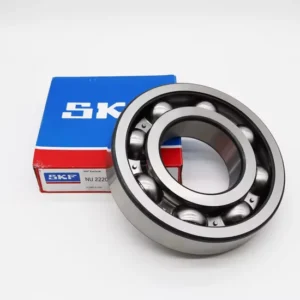
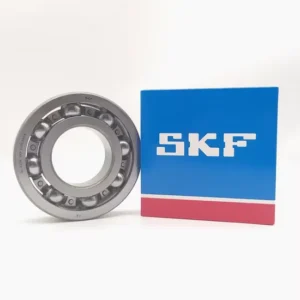
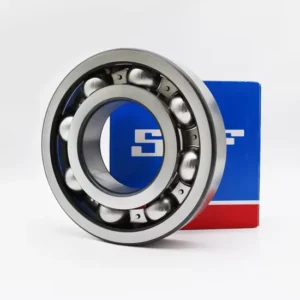
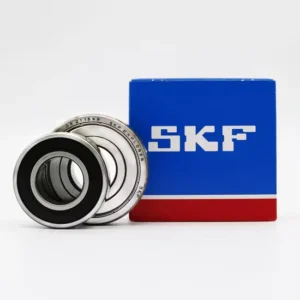
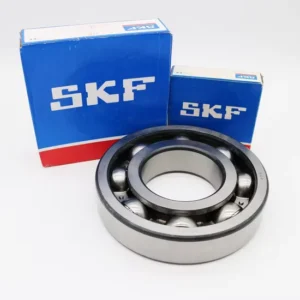
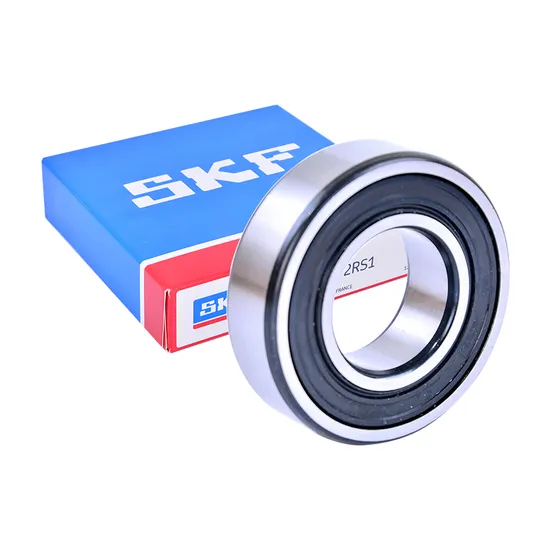
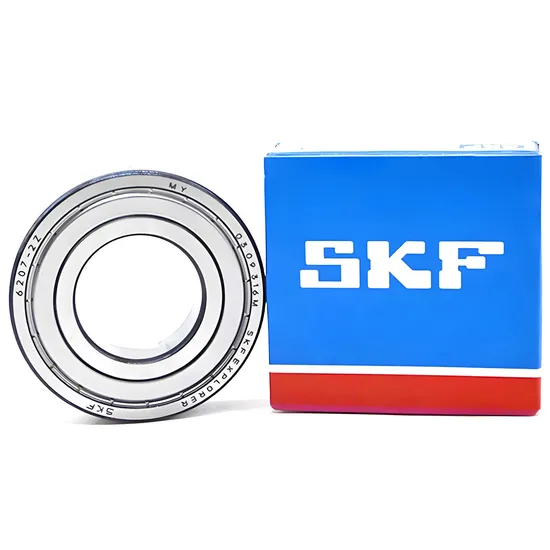
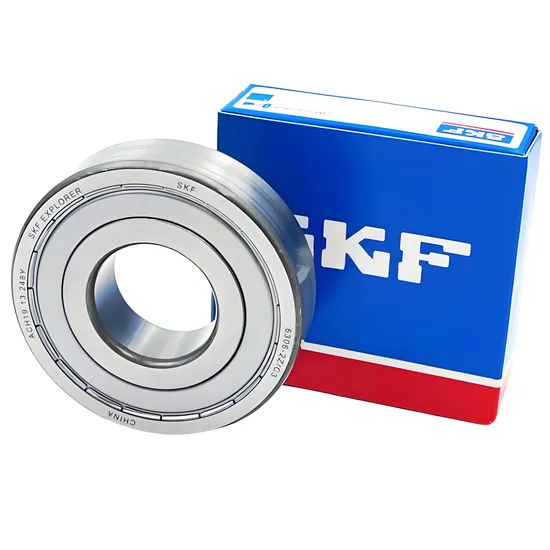
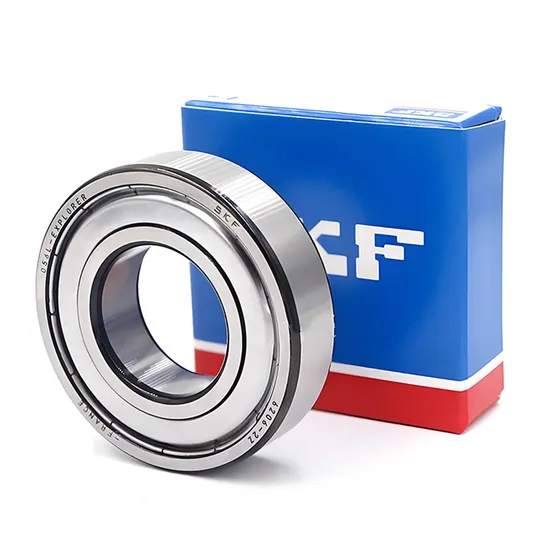
Listed data for this SKF designation; confirm the execution and dimensions against your drawing or application before ordering.
Official App QR Verification — Every FAG 6002-2RS 6202-2RS 6302-2RS 6003-2RS 6203-2RS 6303- batch includes scannable traceability codes linked directly to the manufacturer's authentication database.
Technical Specifications
| Parameter | Value |
| Designation | FAG 6002-2RS 6202-2RS 6302-2RS 6003-2RS 6203-2RS 6303- |
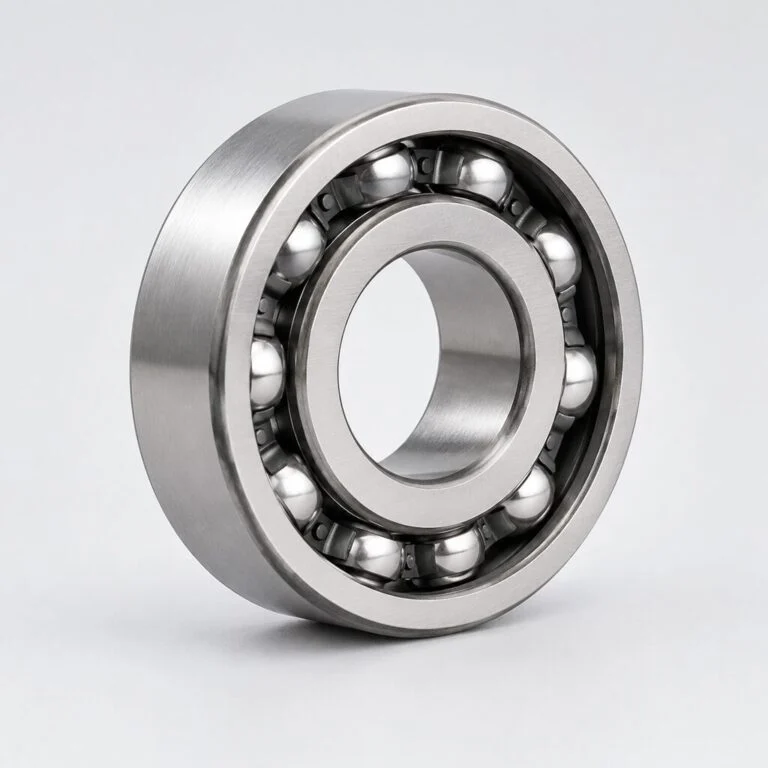
| Bearing Type | Deep Groove Ball Bearing |
| Material | Chrome Steel |
| Precision Class | P5 |
| Clearance Class | C3 |
| Vibration & Noise Grades | Z1V1, Z2V2, Z3V3 |
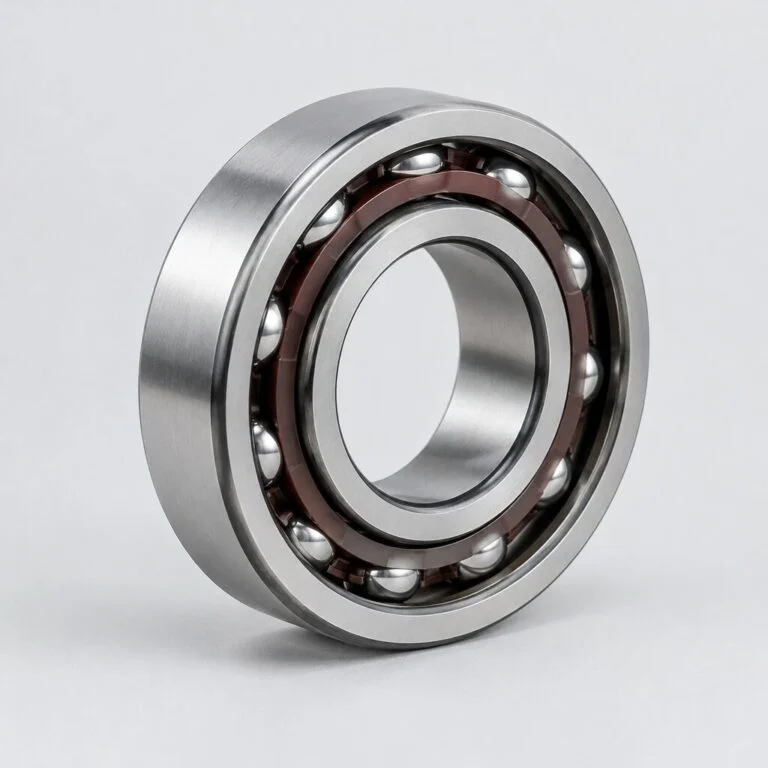
| Cage Material Options | Steel, Nylon, Brass |
| Seal Type | Contact seals on both sides |
| Certification | ISO9001, TS16949, ISO9006, QS9000, VDA6.1 |
| Origin | China, Japan, Sweden |
Note: The -2RS suffix designation requires manufacturer catalog confirmation for exact seal material specifications.
Application Suitability
| Industry | Typical Applications |
| Industrial Air Handling | Roots blower rotor shaft support and timing gear drives |
| Automotive Drivetrain | Hydraulic clutch center bearings and transmission input shafts |
| General Machinery | Electric motor rotor supports and reduction gearbox shafts |
| Fluid Handling | Centrifugal pump impeller shafts and compressor drives |
Why Vibration Grades Dictate Survival in Roots Blower Assemblies
Precision tolerances mean nothing if the cage shatters under harmonic resonance.
When configuring a FAG 6002-2RS deep groove ball bearing for high-vibration environments like positive displacement blowers, overlooking the Z1V1 to Z3V3 grading can lead to catastrophic resonance failures. Many maintenance teams focus solely on dynamic load ratings, ignoring that microscopic harmonic vibrations degrade raceways rapidly and initiate surface fatigue. Selecting the correct vibration grade ensures the internal geometry withstands continuous oscillatory stress without premature spalling. Furthermore, the interaction between the cage material and the raceway under vibrational stress dictates the overall lifespan of the assembly. Ignoring these nuanced vibration characteristics often results in unexpected micro-pitting, which eventually escalates into complete mechanical seizure, halting production lines and demanding extensive teardown procedures to replace damaged shafts and housings.

Matching Cage Materials to Clutch and Blower Dynamics
Sourcing the right FAG 6002-2RS deep groove ball bearing involves much more than just checking outer dimensions and basic load ratings; it requires aligning cage materials with specific operational stresses and thermal profiles. Our engineering team frequently cross-references OEM equipment manuals and historical failure data to ensure the selected steel, nylon, or brass cage variant matches the exact vibrational profile of your automotive clutch or blower assembly. By analyzing the specific shock loads and rotational speeds inherent to your machinery, we prevent costly mismatch errors before the components even leave our warehouse, ensuring that the internal architecture is perfectly calibrated for your unique operational environment.
Navigating Thermal Expansion and Contamination in Heavy Duty Cycles
Roots blowers and automotive transmissions generate significant localized heat during continuous operation, making the C3 clearance class absolutely essential for accommodating thermal expansion without inducing destructive internal preload. In these demanding environments, lubricant degradation and particulate ingress are constant threats, necessitating reliable contact seals to retain high-quality grease and block abrasive dust from entering the raceway. Furthermore, high-speed electric motor applications demand low-friction sealing solutions that do not compromise the limiting speed or generate excessive operational heat. Balancing the sealing effectiveness with rotational friction is a critical engineering challenge, as overly tight seals can cause temperature spikes that break* metal-to-metal contact and accelerated wear under heavy radial loads.
Decoding Precision, Clearance, and Cage Selection Parameters
The P5 precision class guarantees exceptionally tight dimensional and running accuracy tolerances, which is critical for minimizing runout and ensuring smooth operation in high-speed instrumentation and electric motors. Meanwhile, the C3 internal clearance provides the necessary thermal expansion room for Roots blower shafts that operate at elevated temperatures, preventing the bearing from tightening internally as the metal expands. Regarding cage selection, brass cages offer superior durability and shock resistance under high-vibration and heavy-load conditions, making them ideal for rugged industrial applications. Steel cages provide a balanced cost-to-performance ratio for standard electric motors, while nylon cages are suitable for lighter, high-speed applications but must be strictly avoided in high-heat or high-shock environments to prevent structural degradation and sudden cage collapse.
The Cascading Impact of Incorrect Bearing Specification
Installing a bearing with standard clearance in a high-heat blower application inevitably leads to internal tightening, causing excessive friction, rapid lubricant breakdown, and eventual seizure. This unplanned downtime often cascades into catastrophic damage to adjacent shafts, gears, and housings, voiding equipment warranties and inflating repair costs significantly across the entire drivetrain. Adhering to ISO 281 life calculation frameworks prevents these hidden expenses by ensuring the selected bearing matches the actual operational loads, speeds, and environmental conditions. When procurement teams prioritize initial purchase price over precise technical matching, the resulting premature failures easily eclipse any marginal savings, disrupting production schedules and damaging the reputation of the maintenance department through repeated, avoidable breakdowns.
Securing Authentic Components for Critical Drivetrain Applications
Procuring genuine components is paramount in heavy machinery, as counterfeit deep groove ball bearings frequently exhibit substandard metallurgy and improper heat treatment that fails catastrophically under dynamic loads. We verify every single batch through official manufacturer applications and provide complete traceability documentation, ensuring the chrome steel meets exact hardness and purity specifications required for demanding applications. Our flexible consolidation services allow you to mix these specific models with other heavy-equipment spares in a single, optimized shipment, reducing freight costs and simplifying customs clearance. Additionally, our technical team provides comprehensive post-installation failure analysis and application guidance, helping your maintenance crew optimize lubrication intervals and mounting procedures to maximize the service life of your critical rotating equipment.
Traceability and Quality Assurance Records
- Official QR code verification linking each FAG 6002-2RS 6202-2RS 6302-2RS 6003-2RS 6203-2RS 6303- batch to the manufacturer.
- Material test reports confirming chrome steel composition and heat treatment compliance.
- Dimensional inspection certificates validating P5 precision tolerances before dispatch.
- Certificate of Conformity covering ISO9001 and TS16949 quality management standards.
- Original batch traceability logs detailing the specific production facility and date.
Preservation and Installation Protocols
- Retain the original anti-corrosion packaging until mounting to protect the chrome steel surfaces from ambient humidity.
- Use clean, lint-free gloves when handling the bearings to prevent skin oils from degrading the factory-applied grease.
- Verify the C3 clearance marking on the outer ring before pressing onto the shaft to ensure correct thermal expansion allowance.
- Avoid heating the bearings beyond the thermal limit of the selected cage material, especially when using nylon variants.
- Ensure the contact seals remain undamaged during installation to maintain contamination resistance in dusty blower environments.
Engineering Review and Selection Support
To ensure optimal performance and prevent premature wear, please provide your specific radial and axial load profiles, operational speeds, and ambient temperature ranges for a comprehensive L10 life recalculation. Sharing the exact OEM equipment model numbers and detailed installation space constraints allows our technical team to perform precise cross-reference verification and confirm the ideal cage, seal, and clearance configuration for your specific application, ensuring long-term reliability.
Frequently Asked Questions
Q: How can I verify the authenticity of these bearings using official tools?
A: You can authenticate the components by scanning the QR codes on the packaging using the manufacturer's official mobile application. This process links the specific FAG 6002-2RS deep groove ball bearing batch directly to the production database, confirming its origin and ensuring it meets all original equipment specifications.
Q: What is the functional difference between standard and C3 clearance?
A: Standard clearance suits general applications, while C3 clearance provides extra internal space to accommodate thermal expansion. In Roots blowers and automotive clutches where operating temperatures rise significantly, this additional clearance prevents internal tightening, reducing friction and preventing premature seizure during continuous high-speed operation.
Q: How do I choose between steel, nylon, and brass cages?
A: Brass cages offer superior strength for high-vibration and heavy-load environments like blowers. Steel cages provide a reliable balance for standard electric motors, while nylon cages are best for lightweight, high-speed applications but must be avoided in high-temperature zones to prevent structural failure.
Q: What do the Z1V1, Z2V2, and Z3V3 grades indicate?
A: These designations represent the vibration and noise levels of the bearing, with Z3V3 being the quietest and smoothest. For high-speed electric motors and precision instrumentation, selecting a higher grade minimizes harmonic resonance and ensures smoother operation, directly extending the service life of the surrounding assembly.
Q: Why is P5 precision critical for transmission equipment?
A: P5 precision guarantees tighter dimensional and running accuracy tolerances compared to standard grades. In automotive transmissions and high-speed gearboxes, this reduced runout minimizes vibration, ensures even load distribution across the rolling elements, and significantly enhances the overall efficiency and longevity of the drivetrain.