
SKF-Grade vs Aftermarket Private Label OEM Bearings Wholesale Supplier 6205 6206 6305
型号相同不等于性能相同。
The core difference between SKF-grade private label bearings and aftermarket alternatives lies not in the model number printed on the box, but in internal clearance precision, material purity consistency, and the completeness of quality documentation. Buyers must verify interchangeability through measurable test data and cross-reference standards rather than relying on packaging claims alone.
I still remember the first time I learned this the hard way. Early in my career, I was sourcing for an agricultural machinery dealer in the Chicago area. We ordered a batch of 6205 deep groove ball bearings from a supplier whose packaging screamed "Premium Grade." The price was attractive, the paperwork looked professional, and the model numbers matched SKF’s catalog perfectly. We installed them on combine harvester drive shafts just before harvest season. Before the season ended, cages started fracturing. The dealer’s clients refused to pay the remaining balance and demanded compensation for downtime losses. When I finally got a lab to open up the failed units and compare them against genuine SKF samples, the internal clearance was off by an entire grade class. The "Premium Grade" stamp meant absolutely nothing without supporting test data behind it.
That incident shaped how I approach every sourcing conversation today. When European buyers meet me at trade shows and pull out SKF bearings for side-by-side comparison with our private label OEM bearings wholesale supplier inventory, I never make verbal promises. I hand them a micrometer, point to the inner ring wall thickness specification, and let them measure. I ask them to run the no-load vibration test and compare the decibel readings. The numbers speak louder than any marketing claim.
Let me walk you through what actually separates SKF-grade private label OEM bearings wholesale supplier products from generic aftermarket alternatives, and how you can verify the difference before committing to a bulk order.
What Defines "SKF-Grade" vs Aftermarket Bearings?
SKF-grade refers to a performance tier defined by international precision standards, material quality benchmarks, and documented quality control processes—not by the brand name on the seal.
When buyers search for SKF-grade private label OEM bearings wholesale supplier options, they are essentially looking for bearings that match the dimensional accuracy, rotational precision, and operational reliability of SKF’s standard product lines, but under a different brand identity. The technical foundation for this comparison rests on several internationally recognized frameworks.
The critical parameters that determine whether a bearing qualifies as SKF-grade include:
| Parameter | SKF-Grade Private Label | Generic Aftermarket |
|---|---|---|
| Dimensional Tolerance | P5/P6 class per ISO 492 | P0 or unclassified |
| Internal Clearance Consistency | Controlled within C2/C3/C4 bands | Uncontrolled or self-reported only |
| Material Purity Documentation | Full batch-level mill certificates | Sample-level or not provided |
| Noise/Vibration Rating | Z1V1 minimum, verifiable | Self-reported, rarely verifiable |
| Quality Management System | ISO 9001 certified with audit trail | Claimed but undocumented |
The table above reveals a pattern: SKF-grade private label OEM bearings wholesale supplier products distinguish themselves through verifiable documentation at every stage, while generic alternatives rely on self-reported claims that buyers cannot independently confirm.
Consider a practical scenario. A distributor in the Middle East was sourcing 6206 bearings for industrial motor applications. The supplier claimed "SKF-equivalent quality" with attractive pricing. The distributor placed a trial order. Upon arrival, the bearings looked identical externally. But when installed in motors running at extended service hours, vibration levels were noticeably higher than expected, and bearing replacement intervals dropped significantly compared to previous SKF-sourced units. The root cause? The internal clearance distribution was inconsistent—some units fell within C3 range, others drifted toward C4, causing unpredictable operational behavior under load.
This is the fundamental divide. SKF-grade private label OEM bearings wholesale supplier products maintain tight control over clearance distribution within specified grade bands, ensuring predictable performance. Generic aftermarket products may hit the target on individual measurements but lack the statistical consistency required for industrial applications.
How to Verify Private Label Bearing Quality?
Physical measurement, vibration testing, and documentation review form the three-pillar verification framework that separates genuine SKF-grade products from packaging claims.
When evaluating private label OEM bearings wholesale supplier offerings, buyers need a systematic approach that goes beyond visual inspection. Here is the verification methodology I recommend based on years of field experience and lab testing.
Step 1: Inner Ring Wall Thickness Measurement
Using a precision micrometer, measure the inner ring wall thickness at multiple points around the circumference. SKF-grade products maintain wall thickness within tight tolerance bands specified in ISO standards. Generic aftermarket bearings often show noticeable variation—sometimes the difference between maximum and minimum measurements across a single unit reveals manufacturing inconsistency that will translate into uneven load distribution during operation.
A European wind farm operator once shared their verification protocol with me. They require every batch of private label OEM bearings wholesale supplier products to undergo wall thickness measurement on a sample basis. If the variation exceeds their internal threshold, the entire batch is rejected. This simple test has prevented multiple potential field failures.
Step 2: No-Load Vibration and Noise Testing
Mount the bearing on a test spindle and run it at specified RPM under no-load conditions. Measure vibration levels using a calibrated vibration analyzer. SKF-grade bearings typically achieve Z1V1 or better ratings, meaning low vibration amplitude and low noise output. Generic aftermarket units often show elevated vibration signatures that indicate surface finish irregularities or internal geometry deviations.
I remember testing a batch of 6305 bearings from two different suppliers side by side. The SKF-grade private label OEM bearings wholesale supplier product ran smoothly with minimal vibration across the frequency spectrum. The generic alternative showed distinct peaks at specific frequencies, indicating rolling element passage irregularities. The vibration amplitude difference was immediately obvious on the analyzer display.
Step 3: Documentation Audit
Request the following documents from your private label OEM bearings wholesale supplier:
- ISO 9001 certification with current validity and scope covering bearing manufacturing
- Material mill certificates showing steel grade and heat treatment records
- Batch-specific inspection reports with actual measurement data
- Cross-reference interchange charts mapping to SKF, NSK, FAG, TIMKEN, NTN, and KOYO equivalents
If a supplier cannot provide these documents or offers only generic certificates not tied to specific production batches, treat this as a red flag. Genuine SKF-grade private label OEM bearings wholesale supplier operations maintain complete traceability from raw material to finished product.
When Can Private Label Bearings Replace SKF?
Private label bearings can fully replace SKF products when internal clearance, dimensional precision, and documentation meet international standards—but interchangeability must be verified case by case, not assumed from model number matching.
The most dangerous assumption in bearing procurement is that identical model numbers guarantee identical performance. I have seen this mistake cost industrial operations significant downtime and repair expenses. The reality is more nuanced.
Private label OEM bearings wholesale supplier products can serve as direct replacements when the following conditions are met:
Condition 1: Clearance Grade Match
If your application requires C3 clearance for thermal expansion compensation, the private label bearing must demonstrably fall within C3 range—not just claim it on the packaging. Request batch-specific clearance measurement data from your private label OEM bearings wholesale supplier.
An agricultural equipment manufacturer in South America learned this lesson when they switched from SKF to a cheaper alternative for their conveyor systems. The model numbers matched, but the clearance grades did not. During summer operation, thermal expansion caused the bearings to preload excessively, leading to premature failures. The replacement cost far exceeded the initial savings from switching suppliers.
Condition 2: Precision Class Alignment
For applications requiring P5 or P6 precision—such as high-speed motors or precision gearboxes—the private label OEM bearings wholesale supplier must provide dimensional tolerance certificates confirming compliance with ISO 492 P5/P6 requirements. P0-class bearings, even if dimensionally correct, will not perform adequately in precision applications.
Condition 3: Application-Specific Validation
Before committing to full-scale replacement, conduct a controlled trial. Install private label OEM bearings wholesale supplier products alongside existing SKF units in non-critical positions. Monitor vibration levels, temperature rise, and operational hours over an extended period. Document any deviations from baseline performance.
A mining operation in Central Asia followed this protocol when evaluating private label OEM bearings wholesale supplier alternatives for their conveyor pulley bearings. They installed test units on secondary conveyors first, monitored performance for several months, and only after confirming equivalent operational life did they proceed with broader replacement. This cautious approach prevented potential production disruptions.
What Documentation Should Buyers Request?
ISO 9001 certification, batch-specific quality inspection reports, and comprehensive cross-reference interchange charts form the mandatory documentation package for any serious private label OEM bearings wholesale supplier transaction.
Documentation is not paperwork for paperwork’s sake. It is the evidence trail that proves the bearing you receive matches the performance claims made during the sales process. Without proper documentation, you are purchasing based on trust rather than verification—and in industrial applications, misplaced trust leads to costly failures.
ISO 9001 Certification
This is non-negotiable. The certification must be current, issued by an accredited body, and specifically cover bearing manufacturing operations—not just general trading or assembly. Request a copy and verify its validity through the certifying body’s database.
Batch-Specific Inspection Reports
Generic certificates that apply to all products from all time periods are insufficient. You need inspection reports tied to specific production batches, showing actual measurement data for dimensions, clearance, vibration, and noise levels. This allows you to verify that the bearings you receive match the specifications you ordered.
A distributor in Africa shared their procurement protocol with me. They require batch-specific inspection reports for every shipment. When a supplier could only provide generic certificates, they switched to a private label OEM bearings wholesale supplier who maintained complete batch traceability. Their customer complaint rate dropped noticeably after implementing this requirement.
Cross-Reference Interchange Charts
Professional private label OEM bearings wholesale supplier operations provide comprehensive interchange documentation mapping their products to SKF, NSK, FAG, TIMKEN, NTN, and KOYO equivalents. These charts should include not just model number cross-references but also technical parameter comparisons—clearance grades, precision classes, load ratings, and speed limits.
This documentation serves multiple purposes:
- Enables buyers to verify interchangeability before ordering
- Provides technical support teams with reference data for application engineering
- Creates an audit trail for quality assurance purposes
- Facilitates communication between procurement and maintenance departments
Material Certificates and Heat Treatment Records
For critical applications, request material mill certificates showing steel grade composition and heat treatment parameters. This documentation confirms that the bearing material meets international standards for rolling bearing steels.
How to Avoid Counterfeit Risks in Private Label Sourcing?
Counterfeit risk in private label bearing sourcing is mitigated through supplier qualification, documentation verification, and physical testing—not through price comparison or packaging appearance.
The bearing market faces a persistent counterfeit problem. Counterfeit products often mimic premium brand packaging with alarming accuracy, fooling even experienced buyers. When sourcing from private label OEM bearings wholesale supplier channels, the risk profile differs from buying premium brands directly, but the verification principles remain similar.
Risk 1: Packaging Mimicry
Counterfeiters excel at replicating brand packaging, seals, and markings. A box that looks identical to SKF packaging may contain bearings of vastly inferior quality. This is why I emphasize physical measurement and testing over visual inspection.
When a steel mill in Southeast Asia received a shipment of bearings with SKF markings, they immediately suspected counterfeits based on pricing that seemed too attractive. Lab analysis confirmed their suspicion—the bearings showed material composition deviations and dimensional inconsistencies that genuine SKF products would never exhibit.
Risk 2: Documentation Forgery
Sophisticated counterfeiters also forge quality certificates and inspection reports. To mitigate this risk:
- Verify ISO 9001 certificates through the certifying body’s online database
- Request batch-specific data that can be cross-checked against production records
- Establish direct communication channels with the supplier’s quality department
- Conduct periodic third-party lab testing of received products
Risk 3: Supply Chain Opacity
Some suppliers operate as trading companies without direct manufacturing relationships, creating opportunities for product substitution or mixing. When evaluating a private label OEM bearings wholesale supplier, clarify their position in the supply chain:
- Are they the manufacturer or a distributor?
- Do they own production facilities or outsource manufacturing?
- Can they provide factory audit reports or facilitate third-party inspections?
A European industrial buyer implemented a supplier qualification program requiring factory audits for all private label OEM bearings wholesale supplier partners. They discovered that one supplier claiming direct manufacturing actually sourced products from multiple subcontractors with inconsistent quality standards. After restructuring their supplier base to include only verified manufacturers, their field failure rate dropped substantially.
Risk 4: Price-Driven Decision Making
While competitive pricing is a legitimate business objective, choosing suppliers based solely on lowest cost invites quality risk. The total cost of ownership—including potential downtime, replacement labor, and production losses—often far exceeds the initial purchase price difference.
When evaluating private label OEM bearings wholesale supplier options, calculate the total cost impact of potential failures. A bearing that costs less upfront but fails prematurely may cost several times more in total operational expenses.
Conclusion
SKF-grade performance in private label bearings is achievable and verifiable through systematic quality assessment.
The distinction between SKF-grade private label OEM bearings wholesale supplier products and generic aftermarket alternatives lies in precision control, material consistency, and documentation completeness—not in brand names or packaging claims. Buyers who invest time in physical measurement, vibration testing, and documentation verification can confidently source private label bearings that match premium brand performance at competitive pricing. The key is treating every procurement decision as a technical verification exercise rather than a price comparison shopping trip.
Products in this article
SKF bearings mentioned above
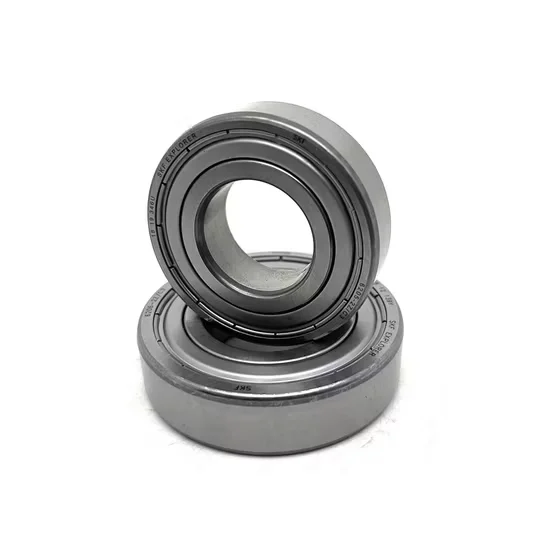 01 Deep Groove Ball Bearings SKF 6204 6205 6206 Deep Groove Ball Bearing Spare Parts View model details
 02 Deep Groove Ball Bearings Original SKF Deep Groove Ball Bearing 6000 6001 6308 6309 6204 6205 6206 for Auto Parts View model details
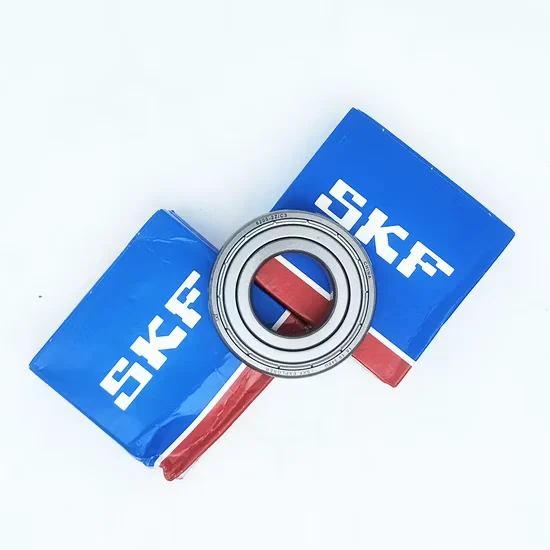 03 Agricultural Machinery Bearings X&S 80607kt 6301-2RS 6205-2Z 6206-2Z Deep Groove Ball Bearing View model details
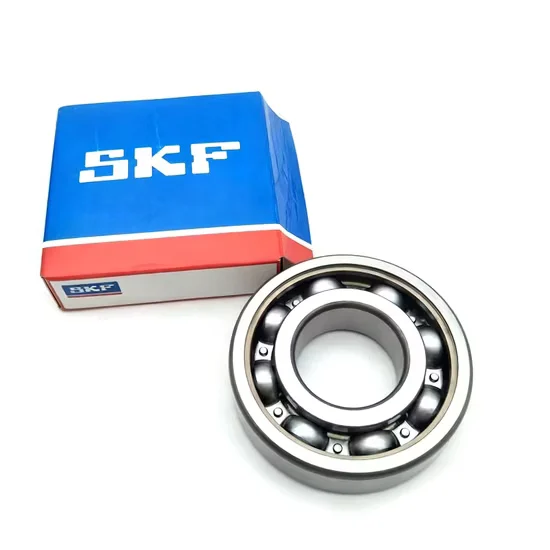 04 Deep Groove Ball Bearings SKF 6205 6206 ZZ C3 Deep Groove Ball Bearing for Automobile Industry View model details
Applications
Where these SKF bearings are used
Keep reading
Related SKF bearing selection guides
More practical notes on SKF designations, precision items and project bearing lists from Project Purchasing Company.
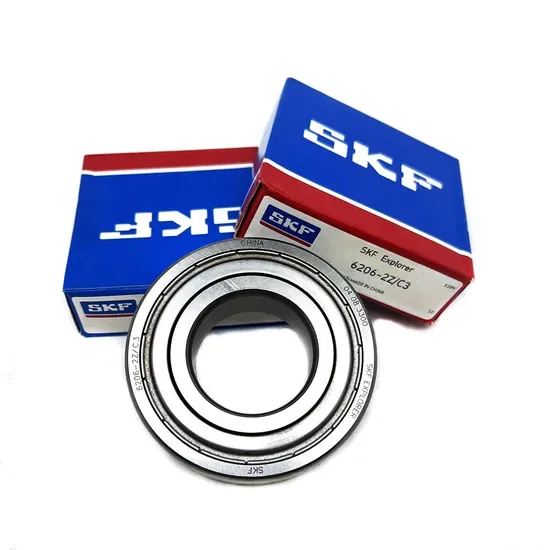 Brands & Alternatives · · 8 min read SKF Ball Bearing Range: Wholesale Supplier for Bulk & MRO Orders Navigate the SKF ball bearing range with precision by mastering series specs, suffix codes, and compliant cross-brand alternatives. Optimize MRO procurement costs while ensuring… Read the guide
 Brands & Alternatives · · 8 min read Ball Bearing Brand Tiers for Motor Repair: Wholesale Supplier Ball Bearing Brand Tiers for motor repair help buyers avoid costly failures from inferior heat treatment and clearance control. Match Tier 1 or 2… Read the guide Brands & Alternatives · · 6 min read Old to New SKF Ball Bearing Designations Cross-Reference Chart for Wholesale Buyers Master the Old to New SKF Ball Bearing Designations Cross-Reference Chart for Wholesale Buyers to avoid catastrophic failures from hidden suffix mismatches. Learn why… Read the guide

Request a quote
Send your SKF list. Get one itemized written quote.
Project Purchasing Company supplies SKF ball, roller, precision and housed bearing units to distributors, repair workshops and project buyers worldwide. Standard and precision items are priced line by line, with accessories kept on the same quote.