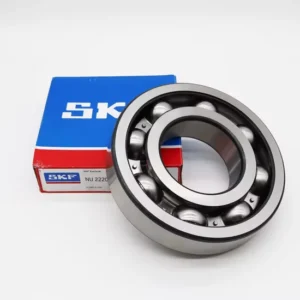
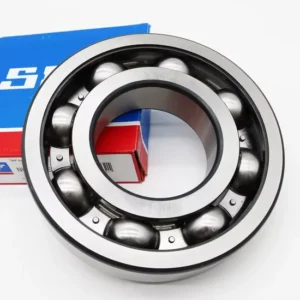
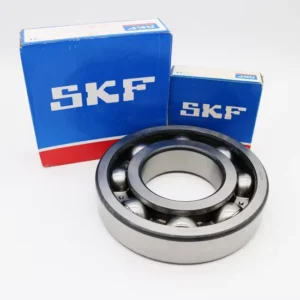
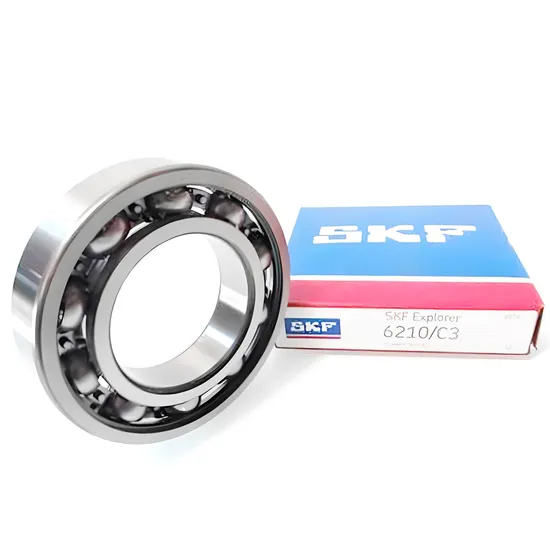
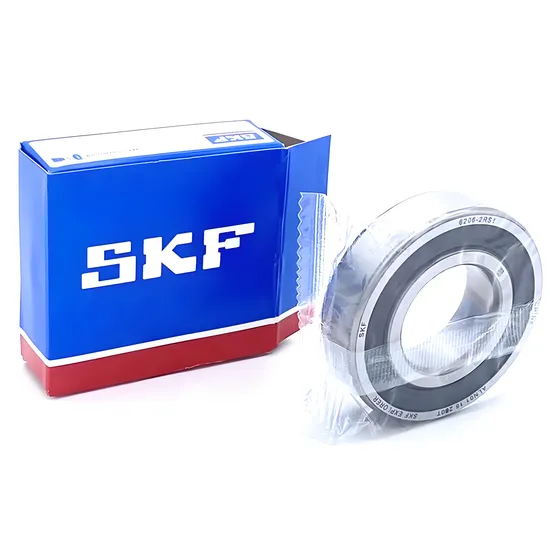
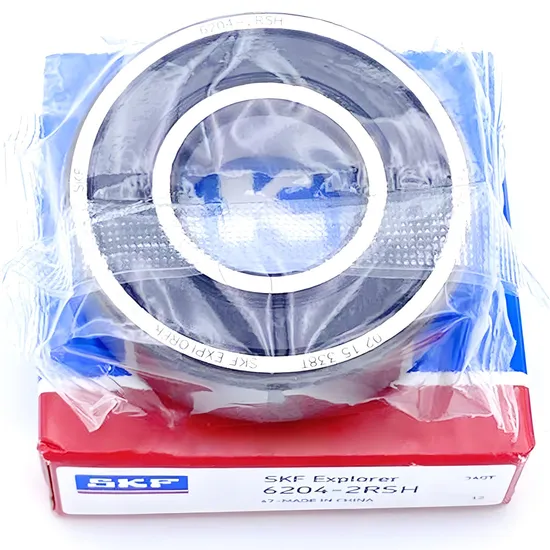
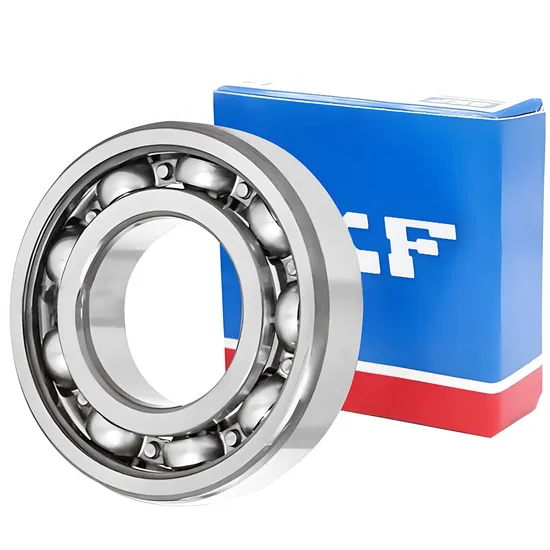
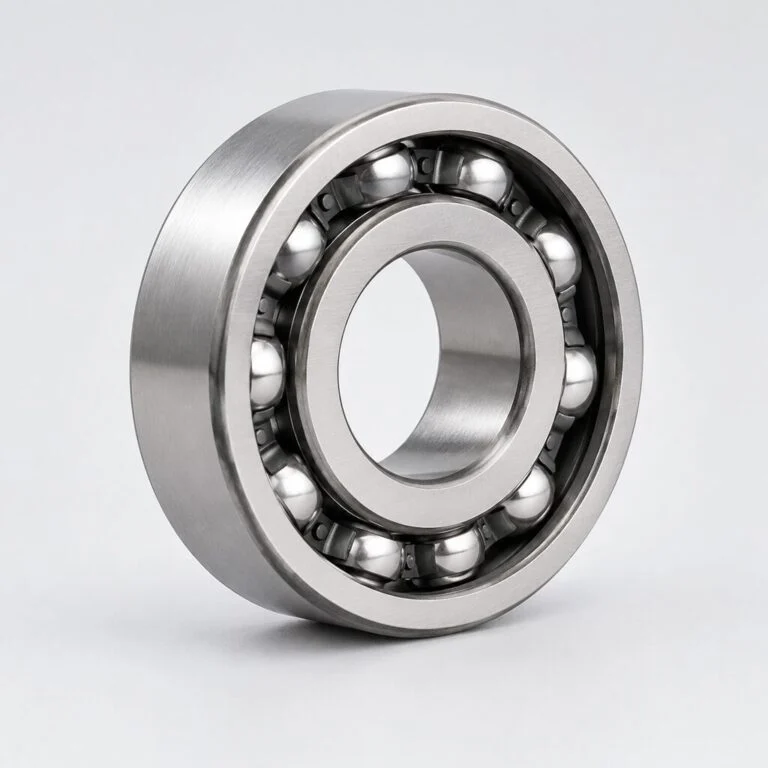
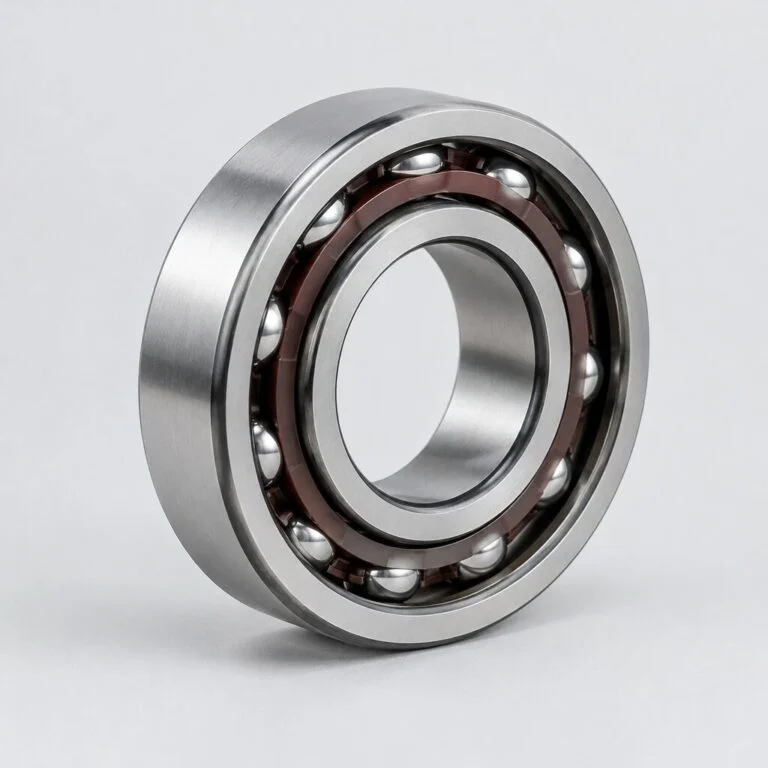
Listed data for this SKF designation; confirm the execution and dimensions against your drawing or application before ordering.
Cross-Reference Alignment Verified — We validate OEM part 510012910 against FAG 6002-2RS dimensional and load specs to ensure direct drop-in replacement.
Technical Specifications
| Parameter | Value |
| Designation | FAG 6002-2RS |
| Product Type | Deep Groove Ball Bearing |
| Material | Chrome Steel |
| Precision Class | P5 |
| Clearance Class | C3 |
| Cage Material | Steel, Nylon, Brass |
| Noise/Vibration Level | Z1V1, Z2V2, Z3V3 |
| Certification | ISO9001, TS16949, ISO9006, QS9000, VDA6.1 |
| Origin | China, Japan, Sweden |
| ABS | Without ABS |
Application Suitability
| Industry | Typical Applications |
| Automotive | Oil pumps, auto clutches, transmission systems |
| Industrial Manufacturing | Electric motors, gearboxes, general pumps |
Why Oil Pumps Fail When the Wrong FAG 6002-2RS deep groove ball bearing Is Installed
Thermal expansion traps the rolling elements when internal clearance is underestimated.
During a complex refinery turnaround in São Paulo, I watched a critical oil pump seize completely because the installed bearing lacked sufficient thermal clearance. The intense heat generated at high rotational speeds caused the internal steel components to expand and lock up, turning a minor scheduled maintenance task into a catastrophic line shutdown. This preventable failure halted production for days and required extensive machining to repair the damaged housing. Sourcing the correct internal geometry is not just about fitting the shaft; it is about predicting how the metal behaves under extreme operational stress.

Matching the FAG 6002-2RS deep groove ball bearing to High-Speed Pump Dynamics
Selecting the correct FAG 6002-2RS deep groove ball bearing for demanding oil pump applications requires carefully balancing rotational speed with anticipated thermal growth. Our engineering team cross-checks your specific pump operating temperatures and fluid characteristics against the C3 clearance class to prevent internal preload buildup during continuous operation. This proactive matching ensures the bearing effortlessly handles the combined radial and minor axial loads typical in automotive and industrial fluid transfer systems. By analyzing the exact duty cycle, we can recommend the optimal configuration that maintains hydrodynamic lubrication films and prevents metal-to-metal contact under peak loading conditions.
Managing Thermal and Contamination Challenges in Fluid Systems
Oil pump environments constantly subject rotating components to rapid temperature fluctuations and aggressive fluid contamination. A standard clearance bearing will quickly lose its internal gap as the shaft and housing expand at different rates under severe thermal stress, leading to destructive friction. Furthermore, keeping abrasive particulates and degraded fluid out of the raceway is absolutely critical, making the contact seal design essential for retaining clean lubrication and blocking microscopic debris. Proper seal selection and material compatibility directly dictate the maintenance interval, preventing the ingress of harmful sludge that accelerates raceway wear and compromises the overall reliability of the pump assembly.
Decoding Clearance, Precision, and Cage Options
The C3 clearance class provides the necessary internal gap to accommodate thermal expansion in high-speed oil pump environments, effectively preventing the rolling elements from binding when temperatures spike. Achieving P5 precision ensures exceptionally tight dimensional tolerances, which minimizes vibration, reduces acoustic noise, and significantly extends the operational life of electric motors and sensitive instrumentation. Depending on your specific speed and lubrication requirements, the bearing is available with steel, nylon, or brass cage options to optimize friction characteristics and heat dissipation across different operating envelopes. The 2RS suffix indicates contact seals on both sides, providing vital protection against fluid ingress, though buyers should always verify the exact seal material compatibility with their specific pumping fluid to avoid chemical degradation. Note: The 2RS suffix requires manufacturer catalog confirmation for exact seal compound specifications.
The Cascading Impact of Incorrect Clearance Selection
Installing a bearing with inadequate internal clearance in a high-temperature pump inevitably leads to excessive friction, rapid lubricant degradation, and eventual mechanical seizure. This unplanned downtime not only halts production schedules but can also cause catastrophic, irreversible damage to the expensive pump shaft, seals, and surrounding housing. According to failure mode classifications outlined in ISO 15243, smearing, severe discoloration, and cage distortion from overheating are primary indicators of clearance-related failures. Avoiding these costly cascading issues requires strict adherence to thermal and load calculations during the initial specification phase, ensuring the selected component can survive the worst-case operational scenarios.
Securing Traceable Components for Critical Rotating Equipment
Sourcing genuine FAG components means you receive complete batch traceability documentation, entirely eliminating the risk of counterfeit parts entering your critical oil pumps and causing unexpected failures. We maintain massive spot inventory covering thousands of standard part numbers, allowing us to fulfill urgent maintenance requirements and emergency breakdowns without enduring typical multi-week lead times. Our technical team provides expert cross-brand equivalent model consultation, ensuring that if the exact OEM part is temporarily unavailable, a fully verified alternative perfectly meets your P5 precision and C3 clearance needs. Furthermore, our flexible minimum order quantity accommodates everything from single-unit emergency spare-part orders to full container consolidation shipments, optimizing your logistics costs. Every single shipment includes rigorous dimensional inspection reports matching the requested specifications, giving your maintenance team absolute confidence during installation.
Documentation & Authenticity
- Certificate of Conformity verifying the chrome steel material grade for this specific batch.
- Original factory batch traceability codes linking the bearing to its production facility.
- Official brand app QR verification to confirm the authenticity of the packaging.
- Dimensional inspection report confirming P5 tolerance and C3 internal clearance before dispatch.
- Origin documentation detailing the specific manufacturing country for customs compliance.
Storage, Handling & Mounting
- Store the sealed units in original packaging to protect the 2RS contact lips from humidity and dust.
- Use clean gloves during handling to prevent skin oils from degrading the chrome steel raceway surface.
- Maintain ambient storage temperatures to preserve the factory-applied rust preventive coating on the outer ring.
- Avoid using carbon steel tools directly on the bearing faces to prevent cross-contamination of the chrome steel.
- For sealed variants, do not attempt to wash or relubricate, as this compromises the internal Z1V1/Z2V2/Z3V3 noise performance.
Preparing Your Technical Data for Accurate Selection
To ensure precise model validation and prevent costly installation errors, please share your oil pump operating parameters, including maximum radial and axial loads, peak rotational speed, and expected thermal gradients. If you are replacing an existing unit, provide the original equipment manufacturer part number, such as 510012910, for thorough cross-reference verification against our extensive database. Supplying these detailed operational parameters allows our engineering team to confirm the L10 life calculation and recommend the optimal cage material and seal configuration for your specific application environment.
Frequently Asked Questions
Q: How to verify the authenticity of FAG bearings using official traceability tools?
A: You can verify authenticity by scanning the QR code on the packaging using the manufacturer's official mobile application. This tool cross-checks the batch number against the central production database, confirming the origin and specifications. We also provide physical Certificate of Conformity documents that match the exact serial numbers on the box, ensuring complete supply chain transparency for your maintenance records.
Q: What are the critical cross-reference checks when replacing OEM part 510012910?
A: When replacing OEM part 510012910, it is crucial to verify the bore diameter, outside diameter, and width to ensure a direct drop-in fit. Beyond physical dimensions, you must confirm that the internal clearance class and precision grade match the original equipment requirements. Our engineering team cross-references these parameters against the FAG 6002-2RS deep groove ball bearing specifications to guarantee operational compatibility in your specific oil pump assembly.
Q: How does C3 clearance benefit high-speed automotive oil pump applications?
A: The C3 clearance class provides a larger internal gap than standard bearings, which is essential for accommodating thermal expansion in high-speed oil pumps. As the shaft and housing heat up during operation, the internal components expand. Without this extra clearance, the rolling elements would bind and generate excessive friction, leading to premature seizure. This thermal compensation ensures smooth rotation and extends the service life of the pump.
Q: What are the selection criteria between steel, nylon, and brass cages for clutch bearings?
A: Steel cages offer high strength for standard speeds, making them cost-effective for many clutch applications. Nylon cages reduce friction and run quieter, ideal for high-speed scenarios where vibration matters. Brass cages deliver superior durability and heat dissipation, performing well under heavy loads. The choice depends on your specific speed and thermal requirements.
Q: How to interpret P5 precision and Z/V vibration levels for instrumentation use?
A: P5 precision indicates tight dimensional and running accuracy tolerances, which minimizes shaft runout and ensures stable rotation in sensitive instrumentation. The Z and V ratings define the noise and vibration limits; for example, Z2V2 represents a stricter threshold than Z1V1. Selecting a higher precision class combined with a lower vibration rating guarantees smooth, quiet operation, preventing resonance issues that could interfere with delicate measuring equipment or electrical motors.