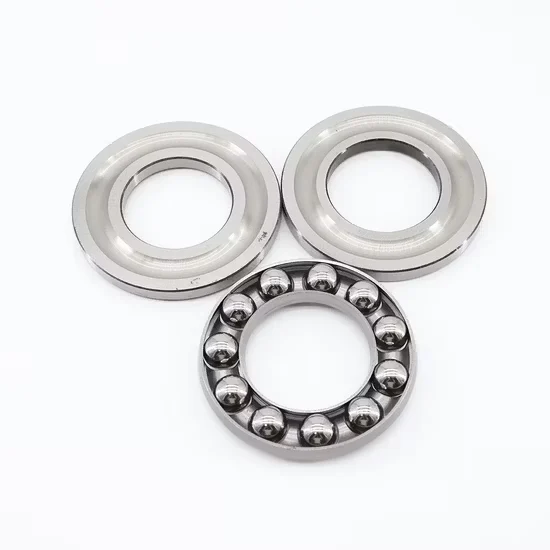
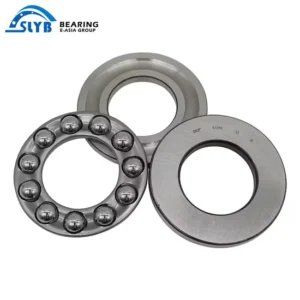
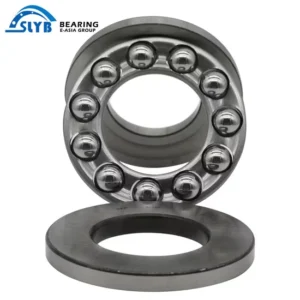
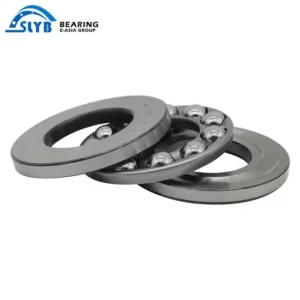
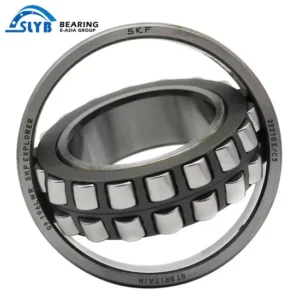
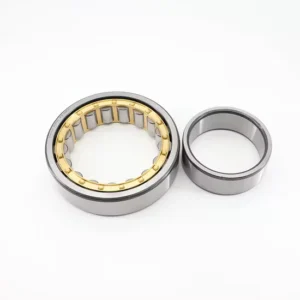
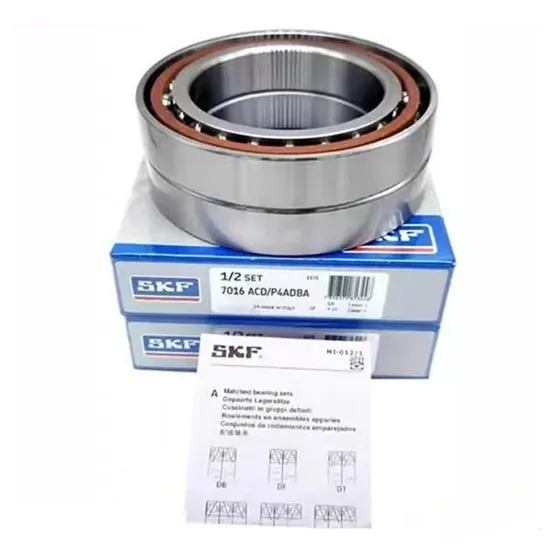
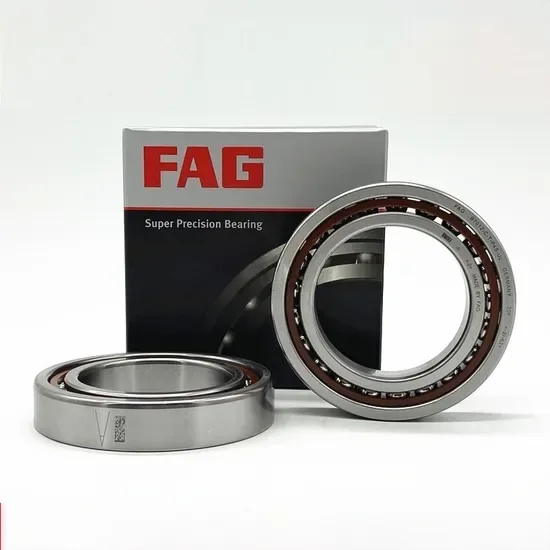
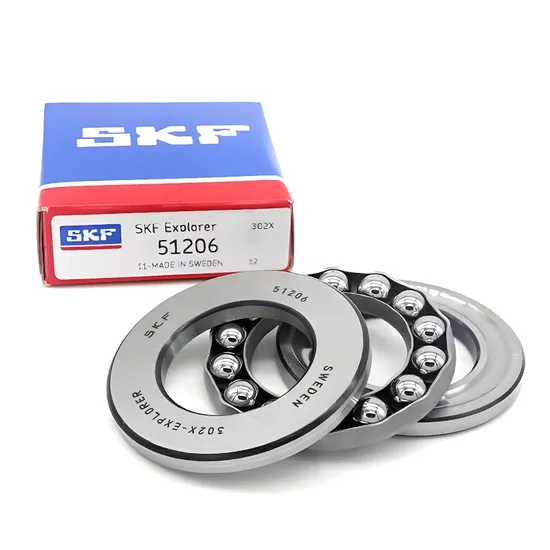
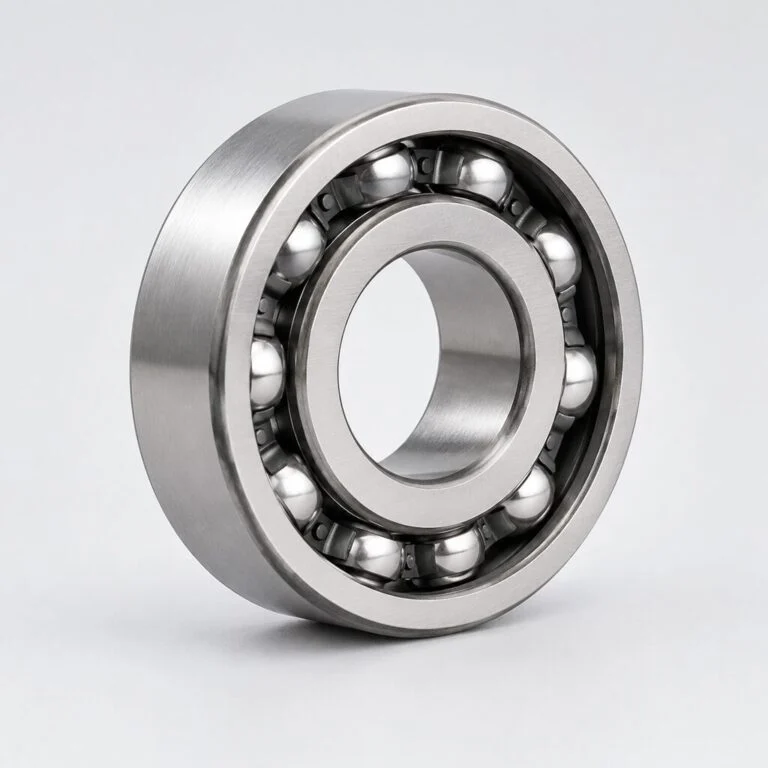
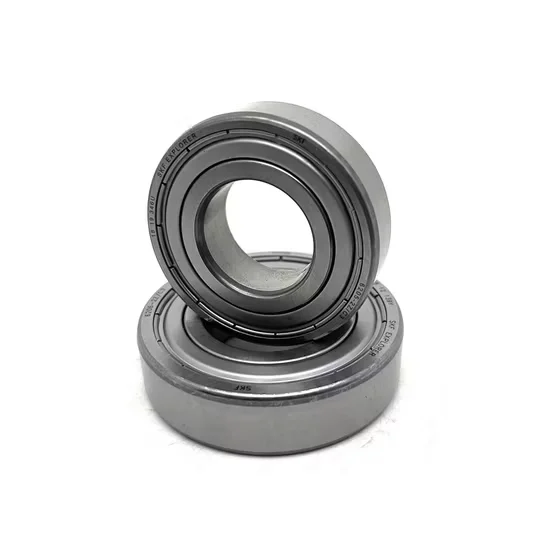
Listed data for this SKF designation; confirm the execution and dimensions against your drawing or application before ordering.
Full Traceability Guaranteed — Every unit ships with verifiable mill certificates linking directly to the original production batch for complete authenticity.
Technical Specifications
| Parameter | Value |
| Designation | 51112 |
| Bearing Type | Thrust Ball Bearing |
| Material | Chrome Steel |
| Precision Class | P5 |
| Clearance Class | C3 |
| Cage Material | Steel, Nylon, Brass |
| Vibration/Noise Level | Z1V1, Z2V2, Z3V3 |
| Certification | ISO9001, TS16949, ISO9006, QS9000, VDA6.1 |
| Origin | China, Japan, Sweden |
Application Suitability
| Industry | Typical Applications |
| Steel Manufacturing | Continuous casting machine guide rolls, ladle turret slewing mechanisms |
| Heavy Metallurgy | Rolling mill screw-down systems, coil car lifting cylinders |
Why Standard Cages Fail in Steel Mill Heat
Brass or high-temperature nylon cages prevent catastrophic jamming under extreme thermal loads.
When sourcing a 51112 thrust ball bearing for steel plant equipment, buyers often overlook cage material to save initial costs. I have seen continuous casting lines halt entirely because a cheap stamped steel cage deformed under intense heat and heavy dust infiltration. The resulting jam locked the entire screw-down mechanism, causing massive secondary damage to the housing. Selecting the correct cage variant is critical to avoiding unplanned downtime and severe financial losses in harsh metallurgical environments.

Matching the 51112 to Metallurgical Loads
This specific configuration handles heavy axial loads typical in screw-down mechanisms, ladle turrets, and lifting cylinders. Our engineering team cross-references your equipment parameters to ensure the selected variant matches the exact thrust requirements of your rolling mill or casting line. By analyzing the specific load cycles and shock impacts inherent in steel processing, we prevent undersized selections that would otherwise lead to rapid fatigue and spalling on the washer raceways.
Thermal Expansion and Lubrication in Hot Zones
Steel mill environments subject components to severe temperature gradients that drastically alter internal clearance and lubricant viscosity. A C3 clearance class accommodates the thermal expansion of the chrome steel rings when operating in close proximity to hot metal. Proper lubrication intervals and high-temperature grease selection are equally vital to prevent cage starvation. Without adequate thermal management, the lubricant degrades rapidly, leading to metal-to-metal contact and accelerated wear.
Decoding the P5 Precision and Cage Options
The P5 precision class ensures tight dimensional tolerances for the 51112 thrust ball bearing, which is essential for smooth operation in precision instrumentation or heavy transmission setups where axial runout must be minimized. For cage materials, stamped steel suits standard loads, while machined brass offers superior durability under heavy shock loads and high temperatures typical in metallurgy. Nylon variants provide quieter operation and lower friction, ideal for electrical or automotive clutch systems where vibration control up to Z3V3 is prioritized. Understanding these material options ensures the component survives the specific operational stresses it will encounter.
The Financial Impact of Incorrect Sourcing
Specifying the wrong cage or clearance for a high-heat application leads to rapid raceway spalling and catastrophic seizure. This results in severe secondary damage to adjacent shafts and housings, voiding equipment warranties and triggering massive production losses across the entire mill. Adhering to proper selection frameworks and verifying material compatibility prevents these compounding financial hits, safeguarding both the machinery and the facility's overall output targets.
Sourcing Advantages for Heavy Industry Buyers
We maintain massive spot inventory covering thousands of standard part numbers, ensuring urgent maintenance requirements for steel plants are met without multi-week delays. Our cross-brand equivalent model consultation helps you find exact replacements when OEM lead times are unacceptable for critical downtime situations. Every unit undergoes strict quality assurance with complete traceability documentation, eliminating the risk of counterfeit parts entering your critical machinery. Furthermore, we support mixed-brand consolidation shipments, allowing you to source this model alongside other maintenance spares in a single container, significantly reducing freight complexity.
Documentation & Authenticity
- Mill test certificates verifying chrome steel chemical composition for each batch
- Dimensional inspection reports confirming P5 tolerance limits before dispatch
- Original manufacturer batch traceability codes linked to production dates
- Vibration and noise test logs validating Z1V1 to Z3V3 classifications
- Certificate of Conformity aligned with ISO9001 and TS16949 standards
Storage, Handling & Mounting
- Store C3 clearance variants in climate-controlled areas to prevent condensation inside the packaging
- Use induction heaters for mounting the shaft washer to avoid damaging the P5 precision raceway
- Keep brass cage units sealed until installation to prevent dust contamination in steel mill environments
- Apply clean gloves when handling nylon cage variants to avoid degrading the polymer with skin oils
- Verify the Z-level vibration classification matches the motor or transmission housing requirements before pressing
Engineering Review and Selection Support
Share your specific axial load profiles, operating temperatures, and shaft speeds so our technical team can verify the L10 life calculation for this 51112 thrust ball bearing model. Providing the original equipment manufacturer part numbers allows us to perform precise cross-reference checks and confirm the optimal cage material for your exact application.
Frequently Asked Questions
Q: How does the C3 clearance benefit continuous casting equipment?
A: The C3 clearance provides extra internal space to accommodate thermal expansion when the chrome steel rings heat up near molten metal. This prevents the component from seizing due to restricted internal movement, ensuring continuous operation in high-temperature metallurgical environments without causing premature raceway damage or cage deformation.
Q: Which cage material is best for high-dust steel mill conditions?
A: Machined brass cages are highly recommended for dusty, high-heat environments like rolling mills. Unlike stamped steel cages that can deform and jam when exposed to extreme thermal stress and particulate ingress, brass maintains structural integrity and provides reliable guidance for the rolling elements under severe operating conditions.
Q: What does the Z3V3 rating mean for electrical instrumentation?
A: The Z3V3 rating indicates the strictest vibration and noise control during manufacturing. For electrical instruments and precision automotive clutch systems, this ensures ultra-smooth rotation with minimal acoustic emission, preventing high-frequency vibrations from interfering with sensitive measurement devices or causing premature wear in delicate transmission assemblies.
Q: How do you verify the authenticity of the P5 precision class?
A: We provide comprehensive dimensional inspection reports that measure the exact bore, outside diameter, and width tolerances against P5 specifications. Additionally, every shipment includes original manufacturer batch traceability documentation, allowing buyers to verify the production origin and confirm the unit meets the required ISO and TS16949 quality standards.
Q: Can this model handle combined radial and axial loads?
A: This configuration is engineered strictly for heavy axial loads in one direction and cannot accommodate radial forces. If your application involves combined loading, such as in certain crane slewing mechanisms, our engineering team will recommend an alternative spherical roller or tapered roller design to prevent rapid structural failure.