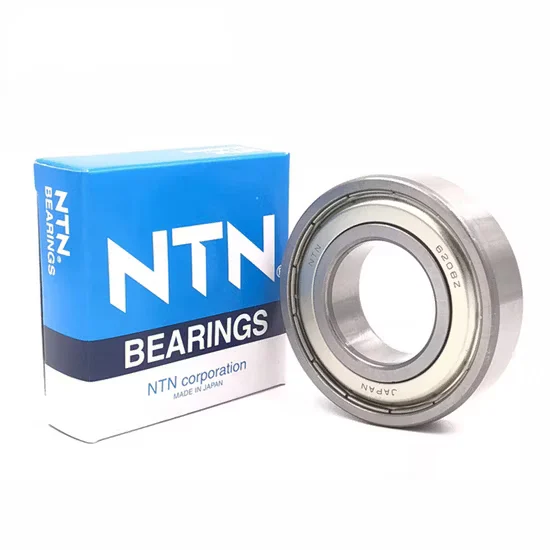
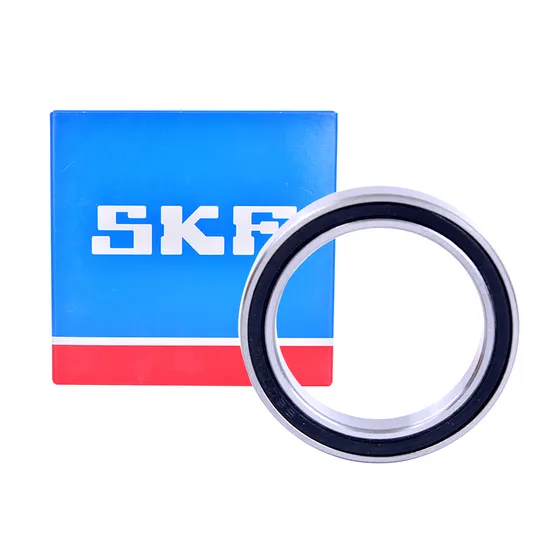
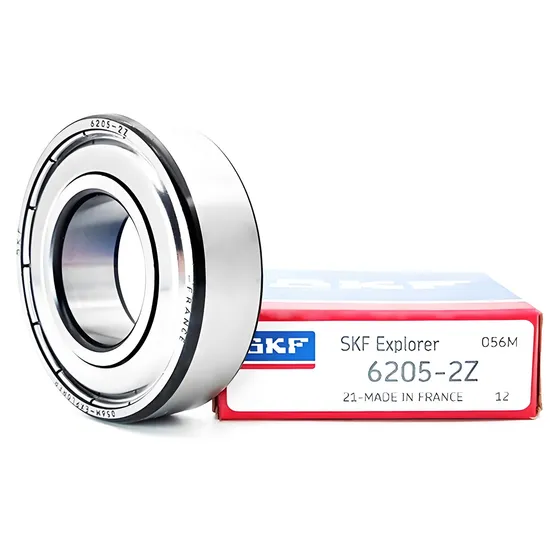
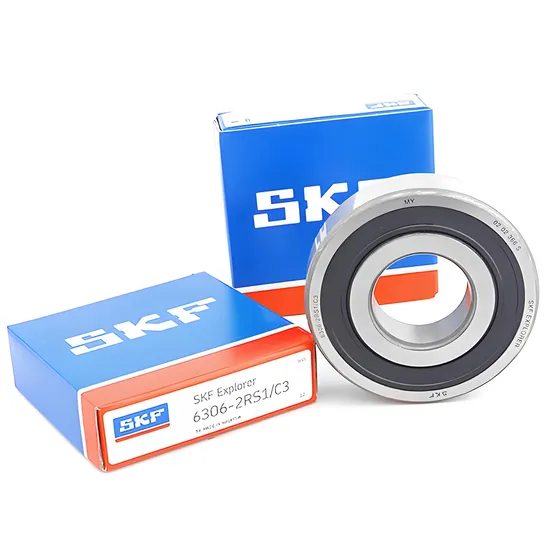
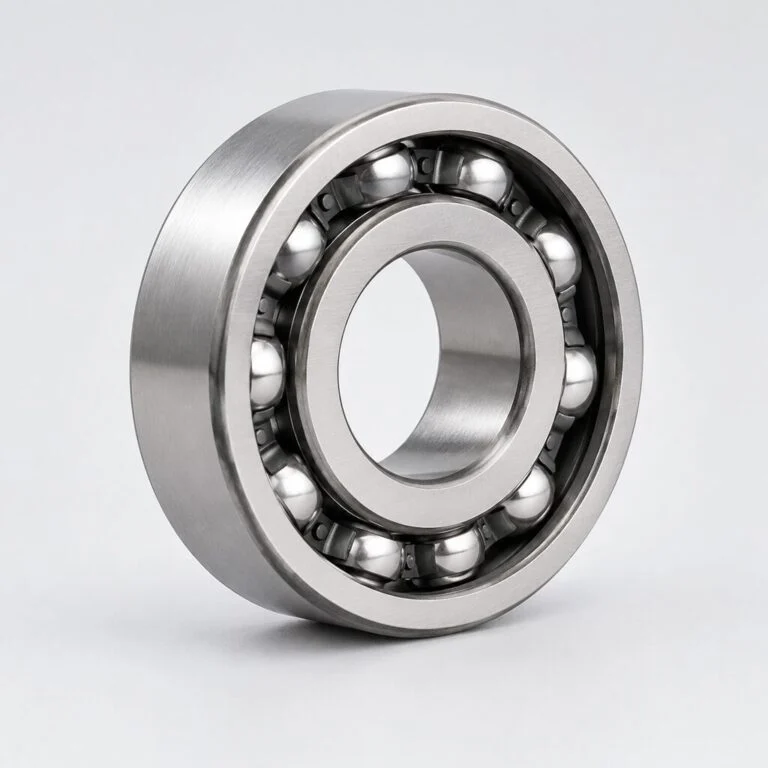
Listed data for this SKF designation; confirm the execution and dimensions against your drawing or application before ordering.
Verified via QR scan — Every 6000/6200/6300 unit includes a scannable code linking directly to the manufacturer's authenticity database.
Technical Specifications
| Parameter | Value |
| Designation | 6000/6200/6300 |
| Product Type | Deep Groove Ball Bearing |
| Lubrication | Grease or Oil |
| Precision Rating | P0 P6 P5 P4 P2 |
| Vibration | Z1V1 Z2V2 Z3V3 |
| Load Direction | Radial Bearing |
| Material | Bearing Steel |
| Separated | Unseparated |
| Origin | China |
| HS Code | 8482102000 |
Application Suitability
| Industry | Typical Applications |
| Electric motors | Stator and rotor shaft support |
| Pumps | Impeller shaft radial load management |
| Gearboxes | High-speed intermediate shaft rotation |
Why Unmarked 6000/6200/6300 deep groove ball bearing Units Fail in Hot Environments
Standard clearance defaults cannot absorb thermal expansion.
Back in Qingdao, I analyzed a burnt-out pump motor where the rotor seized completely. The root cause was a standard clearance bearing operating under high thermal load without adequate expansion room. When equipment runs hot, relying on baseline specifications without verifying thermal limits leads to catastrophic internal friction. Many procurement engineers assume the default metric series configuration handles all thermal variations, but continuous duty cycles in enclosed motor housings generate substantial heat. If the internal geometry lacks the necessary clearance to accommodate shaft and housing expansion, the rolling elements experience extreme contact stress. This localized overheating degrades the lubricant rapidly, leading to metal-to-metal contact and eventual seizure. Understanding these thermal dynamics is crucial when deploying standard metric series in demanding industrial environments.

Aligning Baseline Metrics with Motor and Pump Demands
When specifying a 6000/6200/6300 deep groove ball bearing for continuous-duty electric motors, the baseline radial load capacity and unseparated design provide a stable foundation. We cross-reference these standard metric dimensions against your exact housing tolerances to ensure the selected variant handles the specific radial forces without premature raceway fatigue. The unseparated architecture ensures that the inner and outer rings maintain strict concentricity, which is vital for minimizing vibration in high-speed pump applications. By evaluating the specific radial loads and shaft deflection characteristics of your machinery, we can determine whether the baseline metric series offers sufficient structural integrity or if alternative internal geometries are required to sustain prolonged operational cycles without compromising the overall equipment reliability.
Managing Radial Loads and Lubrication Boundaries
Electric motors and pumps subject these components to continuous radial loading and varying rotational speeds. The choice between grease and oil lubrication directly impacts heat dissipation and operational lifespan. In environments where contamination is a risk, the open design requires external sealing solutions to prevent particulate ingress, which otherwise accelerates raceway wear. When dealing with heavy radial loads in gearbox applications, the lubrication film thickness must be carefully calculated to prevent asperity contact between the rolling elements and the raceways. Oil circulation systems are often necessary to flush out wear debris and manage the thermal energy generated by high-speed rotation. Conversely, sealed grease cavities simplify maintenance but demand precise initial fill volumes to avoid churning losses and excessive temperature buildup during continuous motor operation.
Decoding the Baseline Precision and Vibration Grades
The absence of specific suffixes indicates a standard configuration, typically featuring P0 precision and Z1V1 vibration levels. For high-speed motor applications, upgrading to P5 or P4 precision and Z3V3 vibration grades minimizes acoustic noise and rotational runout. Available in bearing steel or stainless steel variants, the construction provides the necessary core hardness or corrosion resistance, while the unseparated architecture ensures the inner and outer rings remain perfectly aligned under radial stress. Achieving tighter precision grades involves precision grinding and superfinishing processes that reduce surface roughness, thereby lowering the friction coefficient and extending the fatigue life. When the vibration levels are strictly controlled during manufacturing, the resulting dynamic balance significantly reduces the harmonic resonance transmitted to the motor housing, ensuring smoother operation and protecting sensitive adjacent components from unnecessary vibrational stress.
The Financial Impact of Overlooking Baseline Limits
Deploying standard clearance and precision grades in high-temperature or high-speed applications inevitably leads to unplanned downtime. When thermal expansion exceeds the internal clearance limits, the rolling elements skid rather than roll, causing severe surface distress. This failure mode, classified under ISO 15243, voids equipment warranties and triggers costly secondary damage to adjacent motor components. The financial repercussions extend far beyond the replacement cost of the component itself, encompassing lost production hours, emergency maintenance labor, and potential collateral damage to the pump impeller or motor windings. Procurement teams often focus on initial unit pricing, overlooking the fact that a mismatched baseline configuration will exponentially increase the total cost of ownership through frequent interventions and reduced mean time between failures in critical rotating equipment.
Securing Traceable Metric Bearings for Critical Rotating Equipment
Sourcing standard metric series often involves mixed batches with unclear origins. We provide complete traceability documentation for every unit, ensuring the bearing steel and precision ratings match the catalog specifications. Our engineering team verifies the exact radial load requirements and suggests necessary clearance adjustments before dispatch, eliminating the guesswork that typically causes early motor failures. By maintaining massive spot inventory covering thousands of standard part numbers, we eliminate the supply chain bottlenecks that delay urgent MRO replacements. Furthermore, our cross-brand equivalent model consultation ensures that if a specific premium brand is unavailable, we can immediately supply a dimensionally and metallurgically identical alternative, keeping your production lines running without compromising the original equipment manufacturer's performance expectations or voiding existing machinery warranties.
Documentation & Authenticity
- Certificate of Conformity detailing the exact P0 to P2 precision grade achieved during final inspection.
- Original manufacturer batch traceability linking the production date and heat treatment records for the bearing steel.
- Official app QR verification confirming the 6000/6200/6300 unit is not a counterfeit metric series product.
- Material inspection report validating the bearing steel or stainless steel composition and core hardness parameters.
- Dimensional and running accuracy inspection report confirming Z1V1 to Z3V3 vibration limits before shipment.
Storage, Handling & Mounting
- Store the unseparated units in original packaging to protect the bearing steel from ambient humidity and corrosion.
- Maintain consistent warehouse temperatures to prevent condensation inside the open raceways of the 6000/6200/6300 series before mounting.
- Use clean lint-free gloves during handling to avoid transferring skin oils onto the P0 to P2 precision-ground surfaces.
- Apply induction heating for inner ring mounting to preserve the precision alignment of the unseparated metric architecture.
- Follow strict grease or oil lubrication protocols immediately after unpacking to prevent dry-start friction in the radial bearing.
Engineering Review for Metric Series Integration
To ensure the selected baseline configuration meets your operational demands, please provide the exact radial loads, rotational speeds, and operating temperatures. Sharing the OEM equipment model numbers allows our technical team to perform a comprehensive cross-reference check and confirm if the standard clearance and vibration grades are sufficient for your specific motor or pump application. We also require details regarding the environmental conditions, such as exposure to moisture or abrasive dust, to advise on the most appropriate external sealing arrangements. By supplying these critical operational parameters, our engineering specialists can calculate the theoretical L10 life and recommend precise lubrication intervals, ensuring the integrated solution delivers maximum reliability and minimizes unexpected maintenance interventions throughout the equipment lifecycle.
Frequently Asked Questions
Q: How do I select the right precision and vibration levels for my electric motors?
A: Standard P0 precision and Z1V1 vibration levels suit general industrial motors. However, for high-speed or noise-sensitive applications, specifying P5 or P4 precision alongside Z3V3 vibration grades significantly reduces acoustic emissions and rotational runout, ensuring smoother operation and extended service life in demanding electrical equipment.
Q: How can I verify the authenticity of these metric series bearings upon delivery?
A: Every unit includes a scannable QR code linked to the official manufacturer database. You can use the brand's official app to verify the production batch, material certificates, and dimensional reports, ensuring the bearing steel and precision ratings strictly match the original equipment manufacturer specifications without counterfeit risks.
Q: What cross-reference equivalents exist for this standard metric series across premium brands?
A: The 6000/6200/6300 metric dimensions are globally standardized, allowing direct cross-referencing across major premium brands. By providing your current OEM equipment model or existing part numbers, our engineering team can identify exact dimensional and precision equivalents, ensuring direct integration without modifying the motor or pump housing tolerances.
Q: How should I choose between grease and oil lubrication for these unseparated bearings?
A: Grease lubrication is ideal for standard-speed electric motors due to its sealing properties and minimal maintenance requirements. Conversely, oil lubrication is preferred for high-speed gearboxes or pumps where superior heat dissipation is critical, as it effectively carries away friction heat and extends the operational lifespan under continuous radial loading.
Q: What maintenance intervals are recommended for open-type radial bearings in industrial pumps?
A: Open-type designs require strict external sealing and regular relubrication schedules based on operational hours and environmental contamination levels. Monitoring the grease condition and replenishing it before particulate ingress occurs prevents raceway wear, aligning with ISO 281 guidelines to maintain the rated dynamic load capacity and prevent premature pump shaft failures.