Listed data for this SKF designation; confirm the execution and dimensions against your drawing or application before ordering.
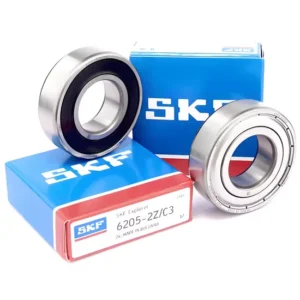
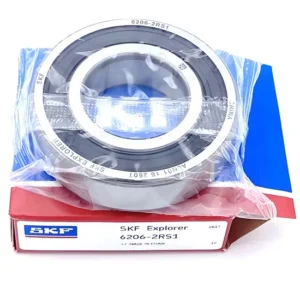
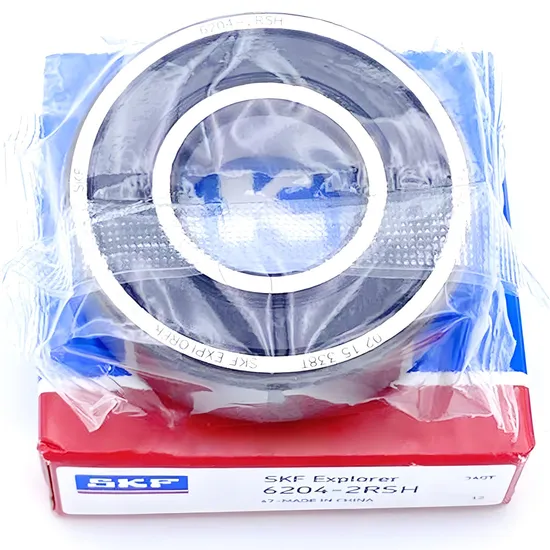
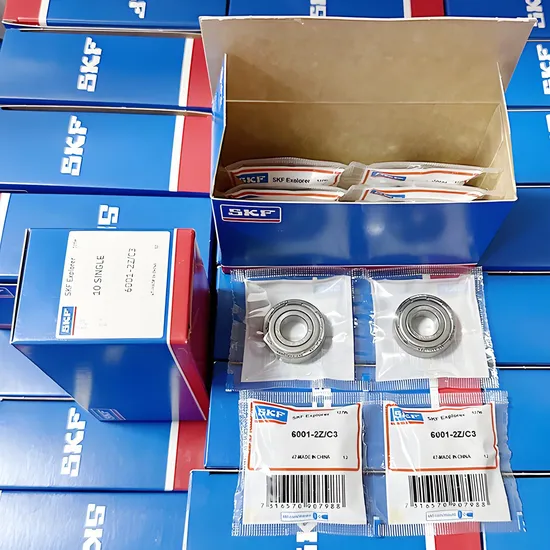
Original Batch Traceability — Every SKF 6200 6201 6202 6203 6204 6205 6206 deep groove ball bearing ships with verifiable factory batch documentation to guarantee authentic origin.
Technical Specifications
| Parameter | Value |
| Designation | 6200 6201 6202 6203 6204 6205 6206 |
| Bearing Type | Deep Groove Ball Bearing |
| Precision Class | P0 (Normal) |
| Clearance Class | CN (Normal) |
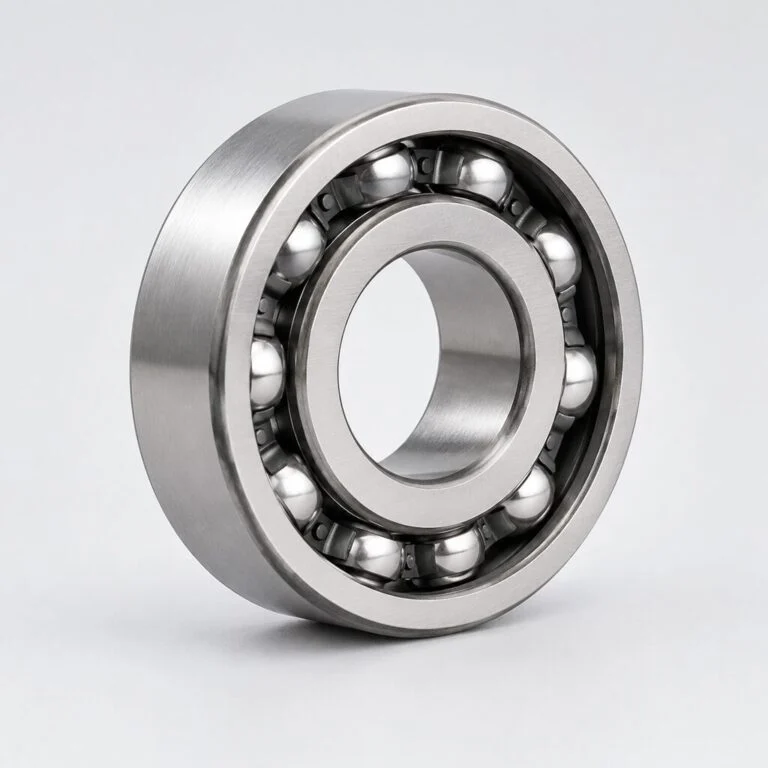
| Seal or Shield Type | Open |
| Certification | ISO9001:2008 |
| Origin | Germany, Sweden, Japan |
| HS Code | 8482102000 |
Application Suitability
| Industry | Typical Applications |
| Electric Motor Manufacturing | Stator and rotor shaft support in industrial AC/DC motors |
| Fluid Handling | Impeller shaft alignment in centrifugal water pumps |
| Material Handling | Drive roller shafts in belt conveyors |
| Power Transmission | High-speed input shafts in industrial gearboxes |
Thermal Expansion Risks When Sourcing SKF 6200 6201 6202 6203 6204 6205 6206 deep groove ball bearing
Standard CN clearance often leads to shaft seizure when operating temperatures exceed normal ambient ranges.
I once watched a motor assembly line halt completely because a standard clearance 6205 bearing expanded under heat and seized the rotor shaft. That single failure destroyed the stator windings and cost the facility days of unplanned downtime. Maintenance crews often overlook the thermal growth of the shaft and housing, assuming default parameters will suffice for all applications. This oversight leads to excessive internal preload, accelerating surface fatigue and ultimately causing catastrophic cage failure. Sourcing the correct SKF 6200 6201 6202 6203 6204 6205 6206 deep groove ball bearing requires verifying the exact clearance suffix rather than assuming the default open configuration fits every thermal profile.

Matching Default Open Designs to Specific Motor and Pump Environments
When procurement teams request a mixed batch of these models, we verify each unit's open design to ensure compatibility with the client's custom lubrication setup. Supplying the exact SKF 6200 6201 6202 6203 6204 6205 6206 deep groove ball bearing in flexible quantities prevents maintenance crews from compromising on their preferred grease injection schedules. This flexibility allows facilities to consolidate emergency spares and bulk project orders without forcing a switch to pre-lubricated sealed variants. By aligning the bearing configuration with your specific maintenance protocols, we help you avoid the hidden costs of premature relubrication failures and unplanned equipment stoppages.
Managing Radial Loads and Contamination in General Manufacturing
These models primarily handle radial loads with moderate axial components, making them ideal for high-speed electric motor shafts. However, open-type bearings demand rigorous contamination control, as airborne dust in conveyor environments can rapidly degrade the lubricant. Maintenance teams must establish strict relubrication intervals to flush out particulates before they score the raceways. Furthermore, operating temperatures dictate whether the standard CN clearance suffices or if a thermal expansion allowance is strictly necessary to prevent internal preload. Ignoring the specific friction characteristics of the application can easily turn a minor temperature rise into a critical seizure event.
Decoding the No-Suffix Standard Configuration
The absence of any suffix on these units indicates a P0 precision grade, which provides standard dimensional tolerances suitable for general industrial machinery. They also feature CN normal internal clearance, balancing the operational gap between the rolling elements and raceways under typical room-temperature conditions. The open type design means no integrated seals or shields are present, granting maintenance engineers full access to apply specialized high-temperature greases or oil baths. While P0 precision handles most motor applications, high-speed spindles might require tighter tolerances to minimize vibration and noise. Understanding these baseline parameters ensures that the selected SKF 6200 6201 6202 6203 6204 6205 6206 deep groove ball bearing aligns perfectly with the equipment's rotational speed, load profile, and environmental constraints.
The Operational Toll of Ignoring Clearance and Precision Codes
Installing a standard clearance bearing in a high-heat pump housing inevitably causes thermal growth to eliminate the internal gap, leading to catastrophic cage failure. Such premature failures not only void equipment warranties but also trigger extensive secondary damage to adjacent seals, housings, and drive couplings. According to failure mode classifications per ISO 15243, inadequate internal clearance is a primary root cause of smearing, surface fatigue, and eventual seizure. Avoiding these hidden operational costs requires strict adherence to the manufacturer's thermal and load specifications during the initial selection and procurement phase.
Securing Authentic Traceability for Critical MRO Replacements
Counterfeit bearings often fake the laser markings but fail to replicate the exact metallurgical properties, causing sudden seizures in critical motors. We provide complete batch traceability documentation for every unit, allowing you to verify the genuine origin of your SKF 6200 6201 6202 6203 6204 6205 6206 deep groove ball bearing. Our technical team cross-checks the clearance and seal suffixes against your specific motor data sheets to prevent the costly mismatch of open versus sealed variants. With massive spot inventory covering these standard part numbers, we fulfill both single-unit emergency requests and full-container consolidation shipments rapidly. This ensures your maintenance schedule never stalls while waiting for official brand channel lead times.
Documentation & Authenticity
- Certificate of Conformity confirming ISO9001:2008 compliance for the entire shipped batch.
- Original factory batch traceability documents linking each box to its specific production run.
- Official manufacturer app QR verification codes printed on the outer packaging labels.
- Material inspection reports validating the chemical composition of the bearing steel rings.
- Dimensional and running accuracy inspection reports confirming P0 tolerance limits before dispatch.
- Origin certificates specifying the exact manufacturing country among Germany, Sweden, or Japan.
Storage, Handling & Mounting
- Keep the open type bearings in their original anti-corrosion wrapping until mounting to prevent moisture ingress on the exposed raceways.
- Use clean lint-free gloves when handling these P0 precision units to avoid transferring acidic skin oils to the polished steel surfaces.
- Apply the specified motor grease immediately after unsealing, as the lack of integrated shields leaves the rolling elements vulnerable to dust.
- Store the boxes in a temperature-controlled environment to prevent condensation from forming inside the unsealed bearing cavities during long-term MRO staging.
- Ensure induction heating equipment is calibrated correctly when mounting these cylindrical bore units onto tight motor shaft fits to avoid thermal shock.
Preparing Your Technical Parameters for Accurate Selection
To ensure the selected models match your exact operational demands, please share the radial and axial load profiles along with the maximum operating temperature. Providing the OEM equipment serial numbers allows our engineering team to perform a precise cross-reference and verify the required clearance suffix. This technical review guarantees that the open or sealed configuration aligns perfectly with your maintenance capabilities and environmental conditions.
Frequently Asked Questions
Q: How can we verify the authenticity of the supplied units before installation?
A: You can authenticate each unit by scanning the anti-counterfeit QR codes printed on the packaging using the official manufacturer application. Additionally, we provide original factory batch traceability documents that allow you to cross-check the production date, origin country, and specific model numbers against the manufacturer's global database to ensure complete supply chain transparency.
Q: What is the practical difference between standard CN clearance and C3 clearance in electric motors?
A: Standard CN clearance is designed for normal operating temperatures and typical assembly fits. However, when electric motors generate significant internal heat or feature tight interference fits on the shaft, the internal gap shrinks. A C3 clearance provides the necessary thermal expansion allowance, preventing the rolling elements from binding against the raceways and causing catastrophic motor seizure during continuous high-speed operation.
Q: How do we decide between open, steel shielded, and rubber sealed configurations?
A: Open configurations require external lubrication systems and are ideal for clean environments where custom grease injection is possible. Steel shields offer basic dust protection with minimal friction, suiting high-speed applications. Rubber contact seals provide superior moisture and contamination exclusion but generate higher friction heat, making them better suited for moderate-speed machinery operating in harsh or washdown conditions.
Q: What precautions are necessary when cross-referencing these models with other premium brands?
A: When replacing these units with equivalent models from other global manufacturers, you must ensure that the internal clearance class, precision grade, and cage material align perfectly. Different brands may use varying suffix conventions to denote identical specifications. Our technical team reviews your cross-reference requirements to guarantee that the substituted bearing maintains the exact load capacity and thermal performance of the original design.
Q: How should we determine the correct relubrication interval for the open type variants?
A: The relubrication frequency depends heavily on the equipment's rotational speed, operating temperature, and exposure to airborne contaminants. In clean, moderate-speed environments, standard motor greases can last for extended periods. Conversely, high-temperature or dusty conditions demand shorter intervals to flush out degraded lubricant and particulates, ensuring the exposed raceways remain protected against premature surface fatigue and wear.