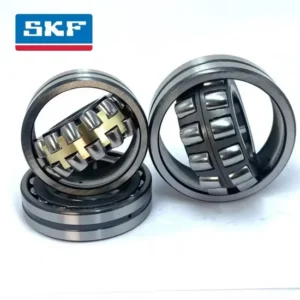
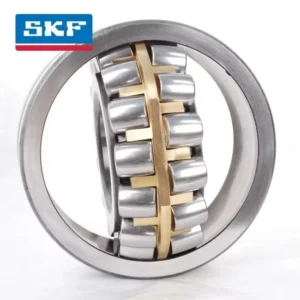
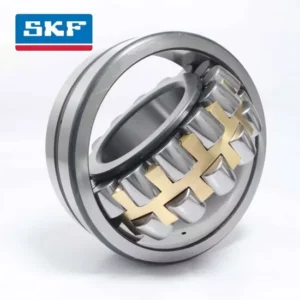
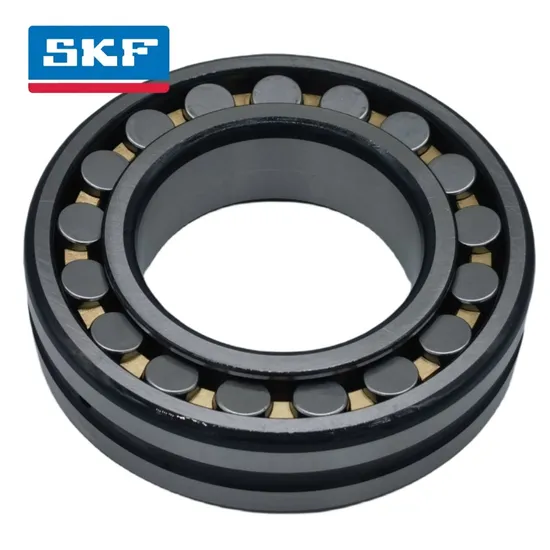
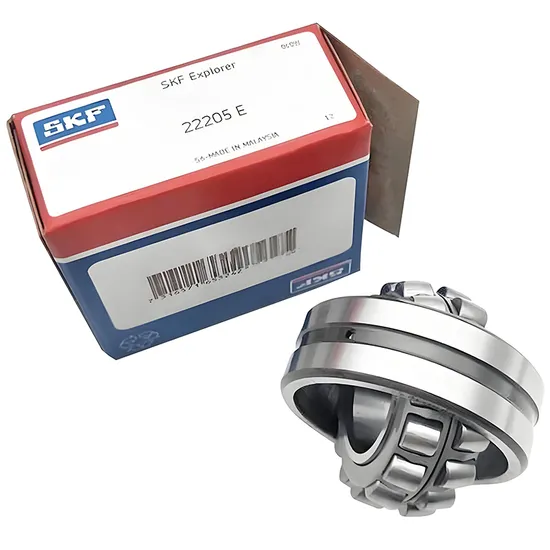
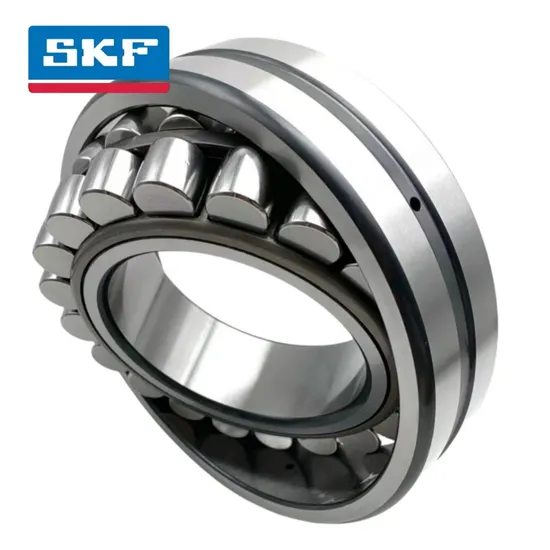
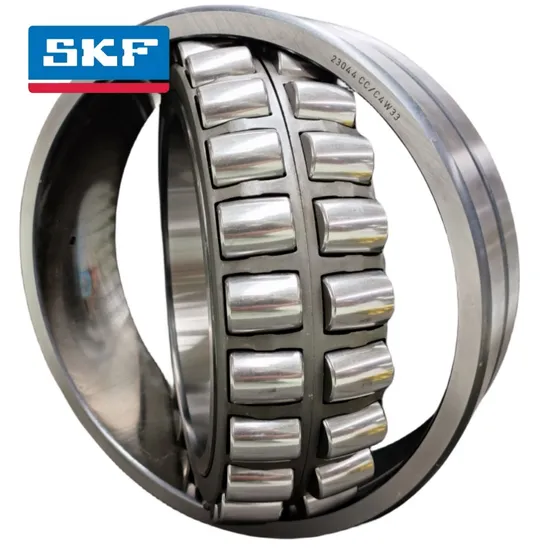
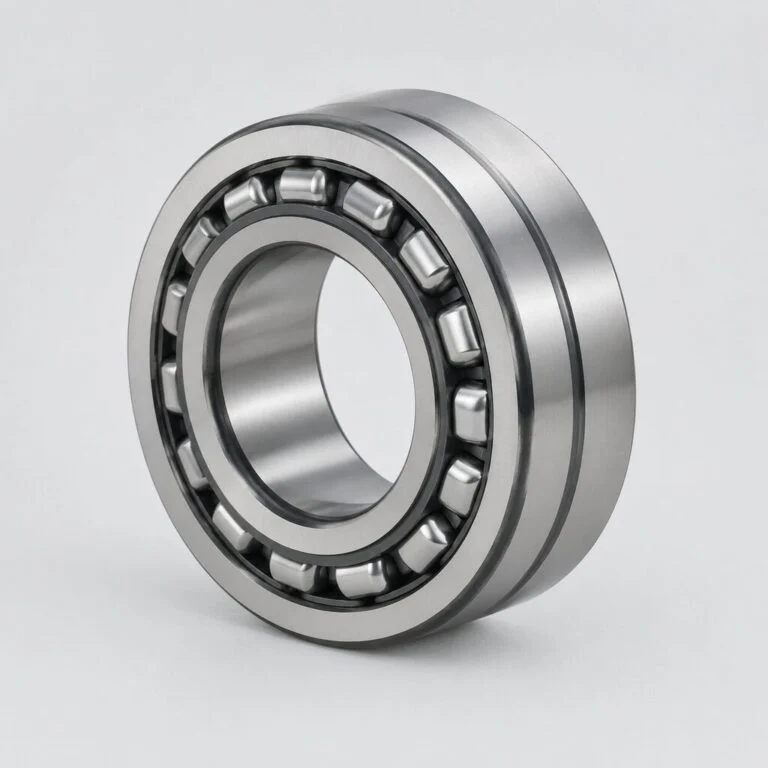
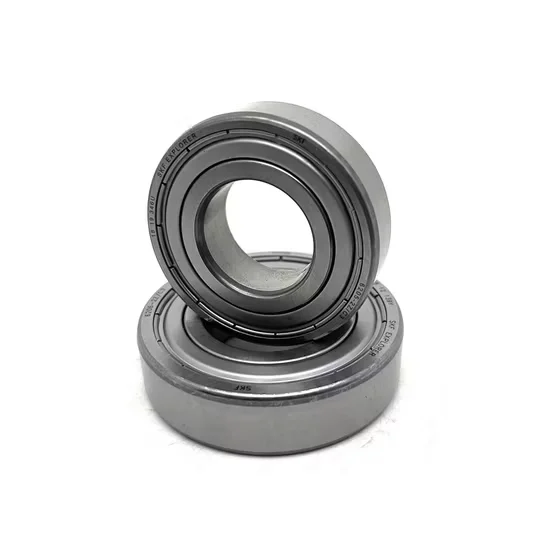
Listed data for this SKF designation; confirm the execution and dimensions against your drawing or application before ordering.
Original Batch Traceability — Every SKF 23040 Cc/ W33 ships with unbroken manufacturer lot records linking directly to the forging facility.
Technical Specifications
| Parameter | Value |
| Designation | SKF 23040 Cc/ W33 |
| Bearing Type | Spherical Roller Bearing |
| Precision Class | P0, P2, P4, P5, P6 |
| Cage Material | Steel Cage, Brass Cage, Nylon Cage |
| Arrangement | Double Row, Self-Aligning |
| Material | Chrome Steel Gcr15 |
| Suffix Code | E, K, W33, 2RS |
| Origin | Jiangsu China |
Note: The "Cc" suffix requires manufacturer catalog confirmation for exact internal design clearance.
Application Suitability
| Industry | Typical Applications |
| Automotive Heavy Equipment | Articulation joints in heavy-duty dump trucks |
| Steel Mill Equipment | Continuous casting machine roll guides |
| Mining Machinery | Vibrating screen eccentric shafts |
Why Suffix Accuracy Dictates Survival for the SKF 23040 Cc/ W33 spherical roller bearing
Matching the exact cage and lubrication suffix prevents catastrophic structural fatigue under high-vibration loads.
I once saw a continuous casting line halt because a brass cage was swapped for a stamped steel variant in a similar spherical roller bearing, leading to cage fracture under intense vibration. The rollers skewed, seized the shaft, and caused massive secondary damage to the housing. When sourcing the SKF 23040 Cc/ W33 spherical roller bearing, ignoring these suffix details invites premature failure and unplanned downtime. Procurement engineers often focus solely on the basic dimensions, overlooking how internal geometry dictates survival in harsh environments. A mismatched internal design will inevitably lead to roller skidding, excessive heat generation, and eventual raceway spalling.

Aligning the SKF 23040 Cc/ W33 spherical roller bearing with Heavy-Duty Automotive Loads
Heavy-duty automotive axles, suspension systems, and off-highway vehicle drivetrains demand components that tolerate severe misalignment and repetitive shock loads. This double row self-aligning structure naturally compensates for shaft deflections and housing distortions typical in rugged terrain operations. By securing genuine units with complete traceability, procurement teams eliminate the risk of counterfeit parts that often fail catastrophically under dynamic automotive stresses. The ability to accommodate angular misalignment without inducing edge stresses on the rollers ensures that the load is distributed evenly across the entire contact area. This uniform load distribution is critical for maximizing the fatigue life of the bearing in heavy transport applications where payload weights fluctuate constantly.
Managing Vibration, Heat, and Contamination in Industrial Drives
Heavy machinery operates under combined radial and axial loads with significant shock impacts that test the limits of standard rolling elements. Elevated operating temperatures alter internal clearances, making the correct internal geometry vital for preventing roller skidding and subsequent cage wear. Furthermore, the W33 lubrication groove and holes facilitate efficient relubrication, flushing out abrasive particles that compromise the raceways and accelerate wear. Proper sealing arrangements and strict lubrication intervals are essential to mitigate contamination ingress in dusty mining or construction environments. Without*, the friction between the rolling elements and the cage pockets increases dramatically, leading to thermal runaway and premature seizure of the assembly.
Decoding the Internal Geometry and Material Options
Material options include Chrome Steel Gcr15, providing the necessary fatigue strength and wear resistance for heavy radial loads encountered in industrial gearboxes. The W33 suffix guarantees an outer ring oil groove and holes, ensuring lubricant reaches the rolling elements directly during scheduled maintenance windows. Precision classes ranging from P0 to P2 allow engineers to select the exact tolerance needed for high-speed or high-precision automotive assemblies, minimizing vibration and acoustic noise. Available cage options include steel, brass, or nylon, each suited for different vibration profiles and speed limitations. Brass cages are generally preferred for high-vibration applications due to their superior damping characteristics and resistance to cage pocket wear, while steel cages offer cost-effective performance in standard operating conditions.
The Operational Toll of Mismatched Internal Clearances
Installing a bearing with incorrect internal clearance or the wrong cage material leads to catastrophic damage, warranty voidance, and severe safety hazards. A stamped steel cage deployed in a high-vibration application will suffer early fatigue cracking, causing roller skewing, severe raceway scoring, and complete mechanical seizure. Such unplanned downtime disrupts entire production lines, delays critical project timelines, and incurs massive replacement costs far beyond the price of the component itself. The secondary damage to adjacent shafts, housings, and drive motors often requires extensive teardowns and prolonged maintenance outages. Relying on unverified sourcing channels increases the probability of receiving counterfeit or mislabeled inventory, directly exposing your facility to these hidden operational and financial risks.
Securing Genuine Components Through Rigorous Verification
We specialize in matching the exact suffix requirements, ensuring the W33 lubrication features and specific cage materials are physically verified before dispatch. Our massive spot inventory covers thousands of standard and special part numbers, allowing flexible consolidation for mixed-brand project orders and urgent maintenance replacements. Every shipment includes complete traceability documentation, protecting your automotive or heavy equipment lines from the pervasive risks of counterfeit bearings. We provide cross-brand equivalent model consultation to optimize your sourcing costs without sacrificing the stringent quality demands of your application. Our technical team offers long-term after-sales support, including failure analysis and application guidance, ensuring that every SKF 23040 Cc/ W33 performs exactly as engineered.
Documentation & Authenticity
- Certificate of Conformity confirming genuine origin and manufacturing batch.
- Original manufacturer batch traceability linking the unit to the forging facility.
- Official app QR verification codes for instant authenticity checks on site.
- Material inspection reports validating the chemical composition of the selected Chrome Steel Gcr15 variants.
- Dimensional and running accuracy inspection reports matching the selected precision class.
Storage, Handling & Mounting
- Store the double row self-aligning units in original packaging to protect the W33 lubrication grooves from dust ingress.
- Use induction heating for mounting the inner rings, typically supplied in Chrome Steel Gcr15, avoiding open flames that alter metallurgical properties.
- Keep the bearing sealed until installation to prevent moisture from compromising the precision class tolerances.
- Verify the exact cage material matches the high-vibration requirements of your automotive application before pressing.
- Apply clean gloves when handling the outer ring to prevent sweat-induced corrosion on the Gcr15 raceways.
Engineering Support for Precise Application Matching
To ensure optimal performance and avoid premature failures, share your specific radial and axial load profiles, operating speeds, and thermal conditions. Providing the OEM equipment number allows our engineering team to perform cross-reference verification and calculate the expected L10 life for your specific duty cycle. Detail your environmental exposure, including dust levels and moisture presence, so we can confirm the most suitable cage material, clearance class, and sealing arrangement for your machinery. This collaborative technical review ensures that the selected configuration perfectly aligns with your operational realities, eliminating guesswork and safeguarding your equipment against unexpected mechanical breakdowns.
Frequently Asked Questions
Q: How can I verify the authenticity of the SKF 23040 Cc/ W33 spherical roller bearing?
A: You can verify authenticity by scanning the QR codes on the packaging using the manufacturer's official mobile application. Additionally, we provide complete traceability documentation and original batch numbers that link directly to the production facility, ensuring every unit is a genuine component.
Q: What does the W33 suffix mean for relubrication in this spherical roller bearing?
A: The W33 suffix indicates the presence of an annular lubrication groove and three lubrication holes in the outer ring. This design allows fresh grease to be injected directly into the bearing interior, efficiently flushing out contaminants and ensuring optimal lubrication of the rolling elements during maintenance.
Q: How do I choose the correct precision class for heavy-duty vibrating equipment?
A: Standard P0 precision is typically sufficient for general heavy-duty applications like vibrating screens. However, if your automotive or industrial gearbox requires tighter tolerances to minimize vibration and noise at higher speeds, upgrading to P6, P5, or P4 precision classes will provide the necessary running accuracy.
Q: What are the cross-reference considerations when replacing existing bearings?
A: When replacing existing units, you must verify the internal clearance, cage material, and bore type to ensure exact operational compatibility. We offer cross-brand equivalent model consultation, allowing you to match the original specifications accurately while exploring cost-effective alternatives from other premium global brands in our inventory.
Q: How does the double row self-aligning structure handle shaft misalignment?
A: The spherical outer ring raceway allows the inner ring and roller assembly to align itself freely relative to the outer ring. This self-aligning capability accommodates static and dynamic shaft misalignments caused by housing deflections or mounting errors, preventing edge loading and extending the service life of the bearing.