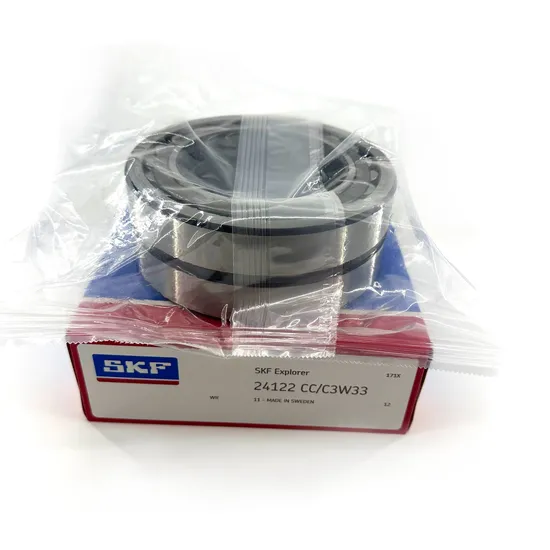
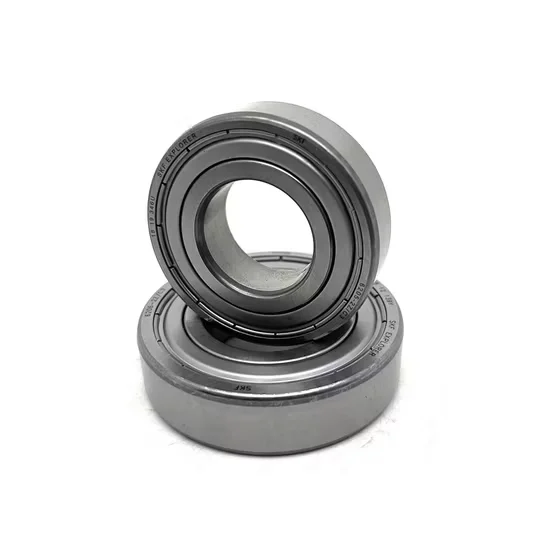
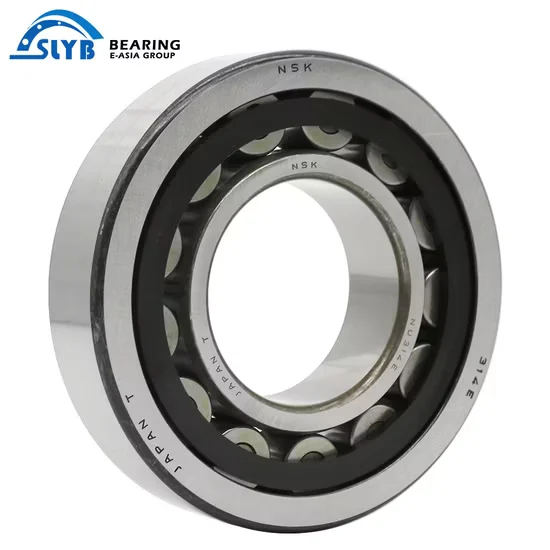
Listed data for this SKF designation; confirm the execution and dimensions against your drawing or application before ordering.
Original Batch Traceability — Every SKF 22240 22248 22252 22260 spherical roller bearing ships with verifiable factory lot documentation to confirm Swedish origin.
Technical Specifications
| Parameter | Value |
| Designation | SKF 22240 22248 22252 22260 |
| Bearing Type | Spherical Roller Bearing |
| Bore Diameter (d) | 200 mm (for 22240) |
| Outside Diameter (D) | 360 mm (for 22240) |
| Width (B) | 98 mm (for 22240) |
| Precision Class | P0, P6, P5, P4, P2 |
| Clearance Class | C0, C3, C4 |
| Number of Rows | Double |
| Material | Bearing Steel |
| Arrangement | Unseparated |
| Origin | Sweden |
Application Suitability
| Industry | Typical Applications |
| Mining & Construction | Vibrating screens, crushers, and heavy earthmoving equipment |
| Metallurgy & Steel Mills | Continuous casters, rolling mill stands, and furnace transfer rollers |
| Pulp & Paper | Paper machine dryer cylinders and press sections |
Thermal Expansion Traps in Heavy-Duty Spherical Roller Bearings
Selecting the correct internal clearance prevents catastrophic seizure when operating temperatures spike during continuous vibration.
I once saw a steel mill vibrating screen grind to a halt because the maintenance team insisted on standard clearance to reduce initial procurement costs. The SKF 22240 22248 22252 22260 spherical roller bearing expanded under intense friction heat, eliminating the internal gap and causing immediate seizure. When the inner ring heats up faster than the outer housing, the radial clearance vanishes, forcing the rollers against the raceway with immense pressure. Downtime in these environments incurs massive financial losses per hour, making proper clearance selection non-negotiable. Ignoring these thermal dynamics inevitably leads to edge loading, accelerated surface fatigue, and ultimately, a locked shaft that requires cutting torches to dismantle. Procurement engineers must prioritize operational realities over initial catalog pricing to avoid these devastating production halts.

Matching Double-Row Geometry to Misaligned Shafts
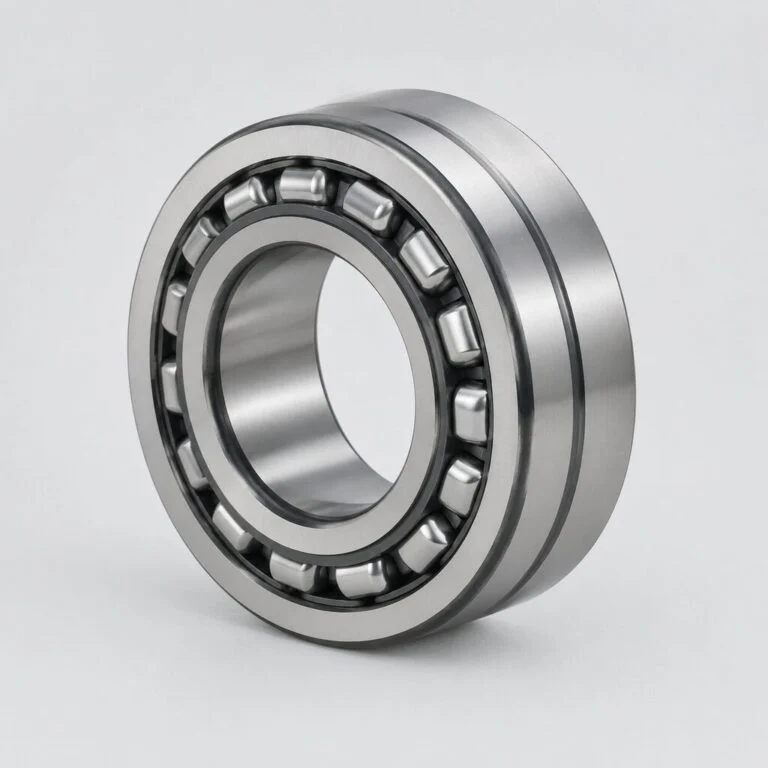
Heavy machinery frames frequently deflect under extreme radial loads, forcing shafts out of perfect alignment. The self-aligning capability of this SKF 22240 22248 22252 22260 spherical roller bearing accommodates these angular errors without inducing edge stresses on the raceways. Unlike rigid cylindrical designs that bind when the housing distorts, the spherical outer raceway allows the inner ring and roller assembly to pivot freely. Our engineering team routinely cross-checks your specific housing tolerances to ensure the double-row design performs optimally in your exact setup. This geometric flexibility is particularly vital in construction machinery where structural weldments naturally twist under dynamic digging forces, ensuring the bearing maintains full contact across the roller length.
Withstanding Shock Loads and Contaminated Environments
Crushers and vibrating screens subject equipment to relentless shock loads and high-frequency oscillations. These dynamic forces demand a heavy-duty cage design and adequate lubrication to prevent surface fatigue and roller skidding. Furthermore, airborne dust and moisture constantly threaten the internal geometry, requiring effective sealing solutions or frequent relubrication cycles to purge invasive particles. Temperature fluctuations further complicate matters, as thermal gradients alter the operational clearance dynamically during startup and shutdown phases. In metallurgy applications, radiant heat from molten materials rapidly degrades standard greases, necessitating high-temperature lubricants that maintain their viscosity and protective film strength under severe thermal stress.
Decoding Clearance and Precision Tolerances
The availability of C0, C3, and C4 clearance classes is critical for heavy-duty applications where thermal expansion dictates the final operating gap. While C0 suits standard ambient conditions, C3 provides the necessary extra space for the inner ring to expand without binding against the rollers during continuous operation. Precision classes ranging from P0 to P2 dictate the dimensional accuracy and running smoothness, directly influencing vibration levels in sensitive paper machine applications where surface finish is paramount. The unseparated double-row arrangement ensures that the bearing maintains its structural integrity during installation, preventing component mismatch and ensuring balanced load distribution. Selecting the appropriate bore diameter and outside diameter ensures proper interference fits within the heavy-duty housings, preventing outer ring creep that could otherwise score the seating surface and compromise alignment.
The Financial Impact of Premature Seizure
Specifying an incorrect clearance class inevitably leads to unplanned downtime and catastrophic damage to adjacent shaft components. When internal gaps close due to thermal expansion, the resulting friction generates excessive heat, accelerating lubricant degradation and surface spalling across the load zone. Such premature failures void warranty claims and force emergency air-freight replacements, completely erasing any initial procurement savings. The true cost lies in the halted production line, the collateral damage to the gearbox, and the labor required to extract a fused inner ring from a ruined shaft. Engineers who overlook the thermal operational profile end up paying exponentially more in secondary damage and lost throughput than they ever saved on the component itself.
Securing Authentic Traceability for Critical Spares
Sourcing genuine SKF 22240 22248 22252 22260 spherical roller bearing units requires strict verification to avoid counterfeit parts that fail unpredictably under heavy loads. We provide complete batch traceability documentation for every shipment, ensuring the Swedish origin is fully authenticated and verifiable. Our flexible consolidation services allow you to mix these large-bore units with smaller emergency spares in a single container, optimizing your freight costs. When you need to cross-reference these models with equivalent alternatives for urgent maintenance, our technical team provides exact dimensional and load-rating comparisons to guarantee interchangeability. We also supply comprehensive failure analysis support if your existing equipment experiences unexpected vibration issues, helping you identify root causes rather than just replacing damaged parts repeatedly.
Documentation & Authenticity
- Certificate of Conformity verifying the Swedish manufacturing origin for these large-bore units.
- Official app QR code validation confirming authenticity of the 222-series packaging and labels.
- Dimensional inspection reports confirming P-class tolerances before dispatching the 200mm bore variants.
- Material traceability certificates linking the bearing steel to specific heat treatment batches.
- Factory lot documentation tracking the exact production date for warranty validation.
Storage, Handling & Mounting
- Store the C3 and C4 clearance variants in climate-controlled environments to prevent condensation inside the unseparated cages.
- Use induction heaters for mounting the 200mm bore inner rings, avoiding open flames that alter the bearing steel metallurgy.
- Keep the original packaging sealed until installation to protect the precision-ground raceways from abrasive mining dust.
- Support the outer ring evenly during lifting to prevent brinelling damage to the double-row roller paths.
- Verify the residual internal clearance after mounting to ensure thermal expansion gaps remain within the specified C3 limits.
Preparing Your Technical Parameters for Selection
To ensure accurate L10 life calculations, please provide your specific radial and axial load profiles alongside operating temperatures and rotational speeds. Sharing the exact OEM equipment model numbers allows our engineers to perform precise cross-reference verifications and identify any historical design modifications. Detailing the housing dimensions and shaft tolerances helps us recommend the optimal clearance class and precision grade for your specific application environment. This collaborative technical review ensures that the selected bearing configuration perfectly matches the mechanical and thermal realities of your machinery, eliminating guesswork from the procurement process.
Frequently Asked Questions
Q: How do I verify the authenticity of these SKF spherical roller bearings?
A: You can authenticate the bearings by scanning the QR code on the packaging using the official manufacturer application. Additionally, we supply a Certificate of Conformity and factory lot traceability documents that confirm the Swedish origin and specific production batch for your records.
Q: What is the difference between C0, C3, and C4 clearance classes?
A: C0 represents standard internal clearance for normal operating temperatures. C3 provides greater internal space to accommodate thermal expansion in hot environments like steel mills, while C4 offers even larger gaps for extreme heat or heavy interference fits on the inner ring.
Q: How do I select the correct bearing size for my vibrating screen?
A: Selection requires analyzing the dynamic radial loads, vibration frequency, and shaft deflection angles. Provide your equipment's operational parameters and housing dimensions, and our engineering team will calculate the required load ratings and recommend the precise 222-series designation for your machinery.
Q: What maintenance intervals are recommended for heavy-duty applications?
A: Relubrication frequency depends on the operating temperature, load magnitude, and contamination level. In highly polluted environments like mining crushers, frequent grease replenishment is necessary to purge abrasive particles and maintain adequate film thickness between the rollers and raceways to prevent wear.
Q: Can I cross-reference these models with other premium brands?
A: Yes, these 222-series designations have direct equivalents in other major international catalogs. Share your current part numbers and operational requirements, and we will provide a detailed cross-reference comparison covering dimensional interchangeability and dynamic load rating variations to ensure proper mechanical integration.