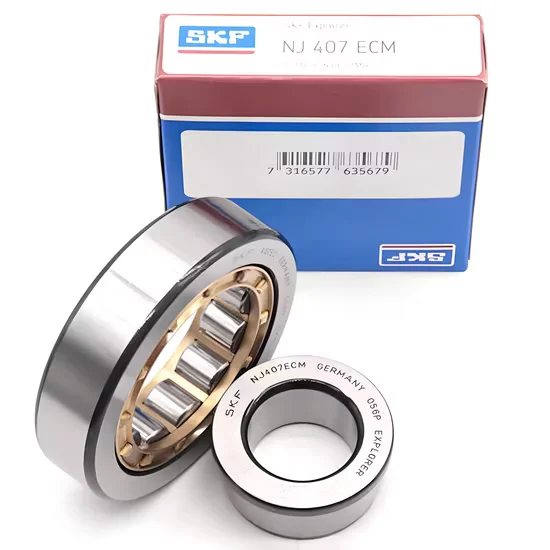
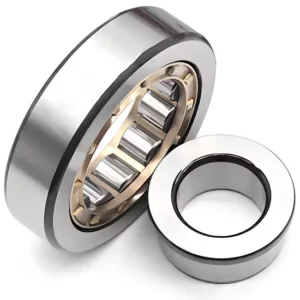
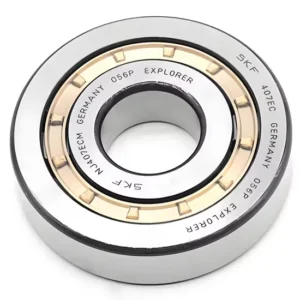
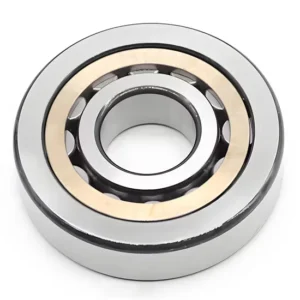
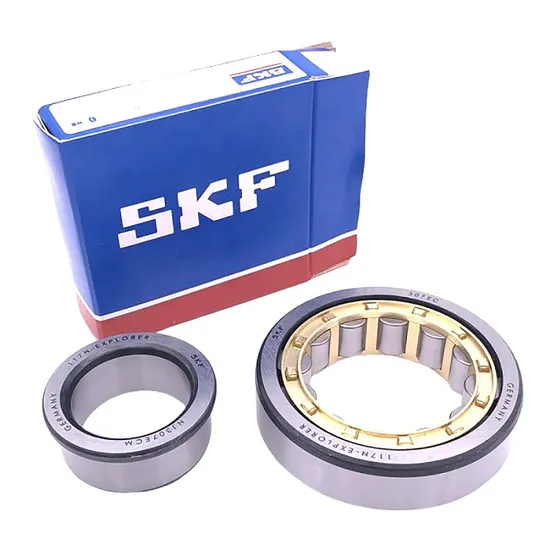
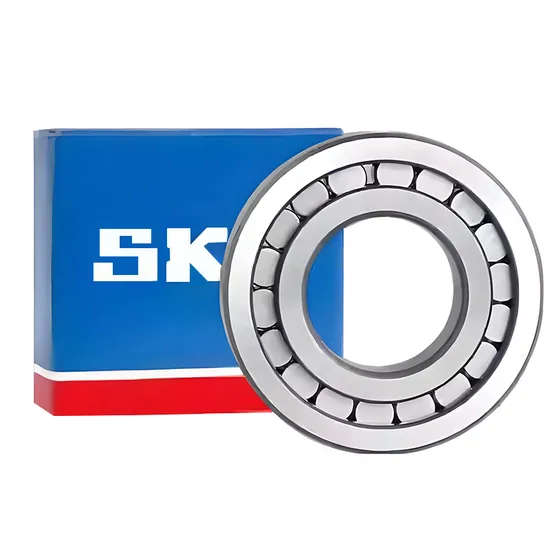
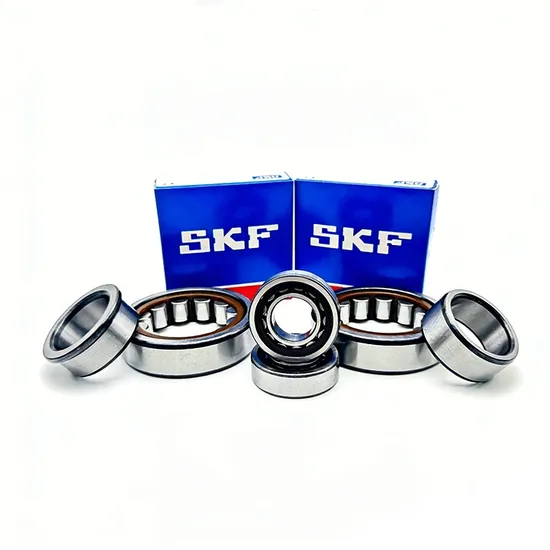
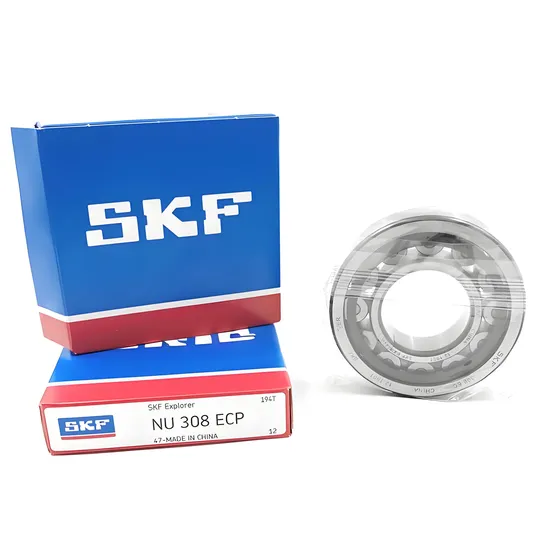
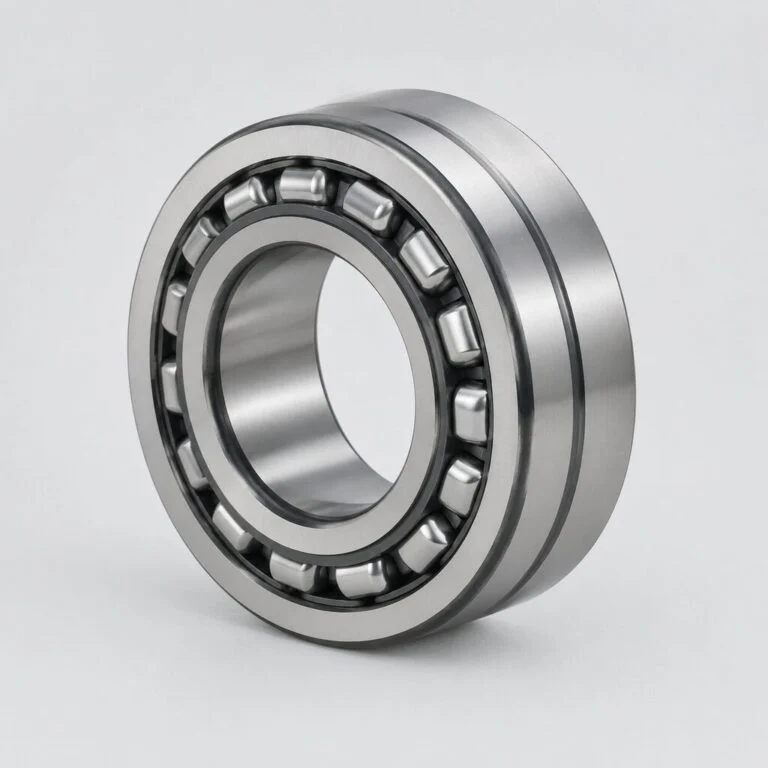
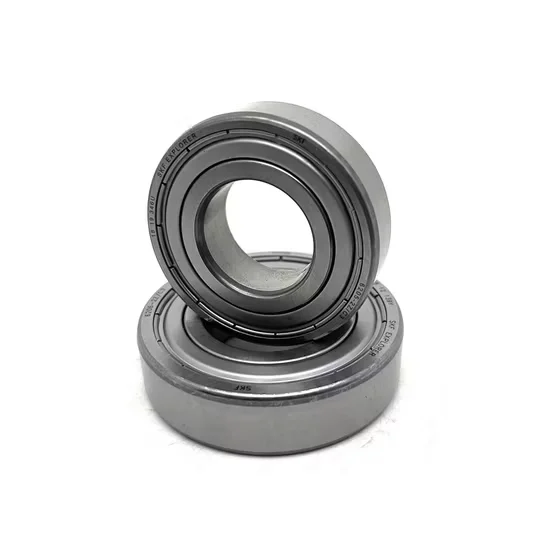
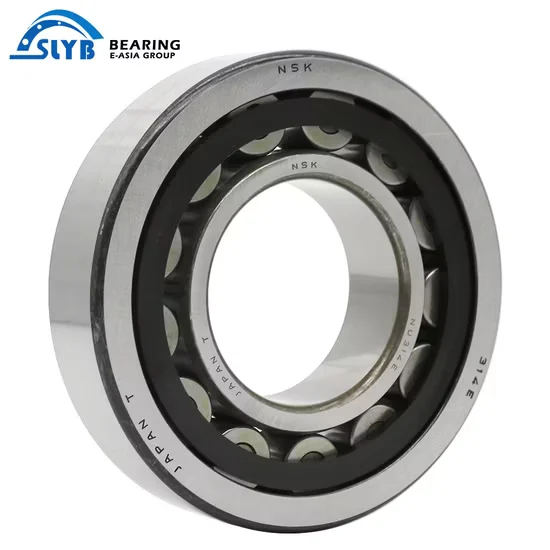
Listed data for this SKF designation; confirm the execution and dimensions against your drawing or application before ordering.
Mixed-Brand Sourcing Consolidated — We coordinate SKF, FAG, and domestic lines into a single shipment so you avoid managing multiple vendors for one project.
Technical Specifications
| Parameter | Value |
| Designation | NUP205EM |
| Bearing Type | Cylindrical Roller Bearing |
| Bore Diameter (d) | 25 mm |
| Outside Diameter (D) | 52 mm |
| Width (B) | 15 mm |
| Cage Material | Machined Brass |
| Seal or Shield Type | Open |
| Lubrication | Oil, Grease, Dry |
| Arrangement | Separated |
| Material | Bearing Steel |
Application Suitability
| Industry | Typical Applications |
| Heavy-duty gearboxes | Main shaft support and gear mesh alignment |
| Rolling mills | Work roll and backup roll neck positioning |
| Machine tools | Spindle radial support and feed mechanism guidance |
Why Vibration Shatters Cages Before the SKF NUP205EM cylindrical roller bearing Fails
Mismatched cage materials cause catastrophic structural fatigue under continuous high-frequency oscillation.
During my years running field operations in Vietnam, I transitioned from failure analysis to trading after witnessing a recurring disaster at a local plywood plant. The hydraulic presses utilized cylindrical roller bearings that kept fracturing, bringing the entire production line to a grinding halt. Upon tearing down the failed units, I discovered the procurement team had substituted the original components with cheaper stamped steel cage alternatives to cut costs. They completely ignored the critical M suffix indicating a machined brass cage. Under the intense, continuous vibration of the pressing cycle, the weak stamped cages suffered rapid metal fatigue and shattered, allowing the rolling elements to skew and destroy the shaft. This painful lesson proved that selecting the correct cage material is not just a technical detail; it is the difference between sustained productivity and catastrophic unplanned downtime.

Matching the SKF NUP205EM cylindrical roller bearing to Heavy-Duty Radial Loads
When dealing with heavy radial loads and axial displacement in demanding machinery, the SKF NUP205EM cylindrical roller bearing provides the necessary structural rigidity and operational stability. The enhanced internal geometry ensures that stress is evenly distributed across the rolling elements, minimizing localized surface fatigue. Our extensive spot inventory covers thousands of standard part numbers, allowing us to fulfill urgent maintenance requirements without delaying your critical production schedule. Furthermore, we provide comprehensive cross-brand equivalent model consultation to ensure smooth integration when consolidating mixed-brand packages for large-scale industrial projects.
Managing Oscillation and Contamination in Industrial Drives
Radial bearings installed in heavy-duty gearboxes and rolling mills endure combined shock loads and continuous mechanical vibration, demanding exceptional structural integrity from the internal components. The open seal configuration of this model allows for highly flexible lubrication choices, enabling maintenance teams to flush out microscopic contaminants using oil or grease based on specific operating conditions. Proper relubrication intervals are absolutely critical to prevent abrasive debris from accelerating wear on the raceways. Additionally, the separable design simplifies the mounting process, ensuring that technicians can achieve the correct fit without inducing excessive internal stress during assembly.
Decoding the E and M Suffixes for Operational Stability
The E designation indicates an enhanced internal design, optimizing load distribution across the rolling elements for significantly higher radial capacity and extended service life. This model is available in bearing steel variants to suit standard industrial environments. Meanwhile, the M suffix specifies a machined brass cage, which is essential for maintaining dimensional stability under heavy loads and severe vibrational forces. Unlike pressed steel cages that may fracture under resonant frequencies, brass offers superior damping characteristics that absorb shock and prevent structural fatigue. Selecting the correct cage material prevents the exact catastrophic failures I witnessed in plywood pressing equipment, ensuring the bearing performs reliably throughout its intended lifecycle.
The Financial Impact of Ignoring Suffix Specifications
Substituting a machined brass cage with a cheaper stamped alternative inevitably leads to unplanned downtime and premature failure in high-vibration applications. When the cage fractures, the rolling elements skew and cluster, causing catastrophic damage to the shaft, housing, and adjacent gearing. According to established failure analysis frameworks, cage failure is a primary trigger for secondary component destruction, multiplying the repair expenses. Ignoring these crucial design nuances results in immediate warranty voidance and exponentially higher replacement costs over the equipment's operational lifespan.
Securing Authentic Components with Full Traceability
Sourcing genuine components with complete traceability documentation ensures you receive the exact M suffix configuration required for high-vibration environments, eliminating the risk of receiving mislabeled substitutes. We maintain a massive spot inventory covering thousands of part numbers, offering flexible MOQs ranging from single-unit emergency spares to full container consolidation shipments. Our technical selection support helps verify cross-reference alignment, ensuring the clearance and cage material perfectly match your OEM specifications before dispatch. Furthermore, our competitive sourcing cost provides significant financial savings compared to direct official channels without compromising authenticity or quality. Every shipment includes original factory batch traceability and rigorous dimensional inspection to guarantee long-term operational reliability for your critical machinery.
Documentation & Authenticity
- Certificate of Conformity verifying the machined brass cage material against manufacturer specifications.
- Original factory batch traceability linking the specific production run to quality control records.
- Official app QR code verification confirming the authentic origin before installation.
- Dimensional inspection report validating the bore and outside diameter tolerances.
- Material certification confirming the bearing steel composition for heavy-duty radial applications.
Storage, Handling & Mounting
- Keep the original packaging intact until mounting to protect the open bearing from ambient moisture.
- Use induction heating for the inner ring to ensure proper expansion without damaging the brass cage.
- Apply clean lint-free gloves when handling to prevent skin acids from corroding the steel surfaces.
- Flush the open seal type with designated oil immediately after installation to establish the lubrication film.
- Verify the separable components are correctly aligned during assembly to avoid skewing the enhanced profile rollers.
Preparing Your Technical Parameters for Selection Review
To ensure optimal performance of the SKF NUP205EM cylindrical roller bearing and prevent premature fatigue, share your specific radial and axial load data, operating speeds, and thermal conditions for a comprehensive L10 life calculation. Providing the original OEM equipment number allows our engineering team to perform precise cross-reference verification and confirm the exact suffix requirements. Detailing the environmental exposure, such as dust ingress or moisture levels, helps us confirm if the open configuration and your chosen lubrication strategy are fully compatible with the application.
Frequently Asked Questions
Q: What does the M suffix indicate on this cylindrical roller bearing?
A: The M suffix specifies a machined brass cage, which provides exceptional strength and operational stability under heavy radial loads and high vibrations. Unlike pressed steel alternatives, brass offers superior damping properties, preventing cage fracture and ensuring prolonged service life in demanding industrial gearboxes and rolling mills.
Q: How do I verify the authenticity of the purchased bearings?
A: We provide complete traceability documentation, including a Certificate of Conformity and original factory batch records. You can also use the manufacturer's official mobile application to scan the QR code on the packaging. This digital verification confirms the genuine origin and ensures the internal components match the specified design.
Q: Can I use a cross-reference equivalent for urgent replacements?
A: Yes, we offer cross-brand equivalent model consultation to identify suitable alternatives from premium global brands. However, it is crucial to align the clearance class, cage material, and precision specifications. Our technical team verifies these parameters to ensure the replacement integrates smoothly without compromising the equipment's operational reliability.
Q: What lubrication strategy is recommended for the open seal configuration?
A: The open design allows for flexible lubrication choices based on your specific operating conditions. For high-speed applications, oil lubrication provides effective cooling and contaminant flushing. In contrast, grease is preferable for moderate speeds where sealing out dust is a priority. Always follow the recommended relubrication intervals to prevent starvation.
Q: Why did my previous bearing cage fail under high vibration?
A: Cage failure in high-vibration environments often stems from using a stamped steel cage instead of a machined brass one. The resonant frequencies can cause metal fatigue and structural fracture in weaker cages. Upgrading to a brass cage design significantly improves damping and prevents the catastrophic unplanned downtime associated with cage disintegration.