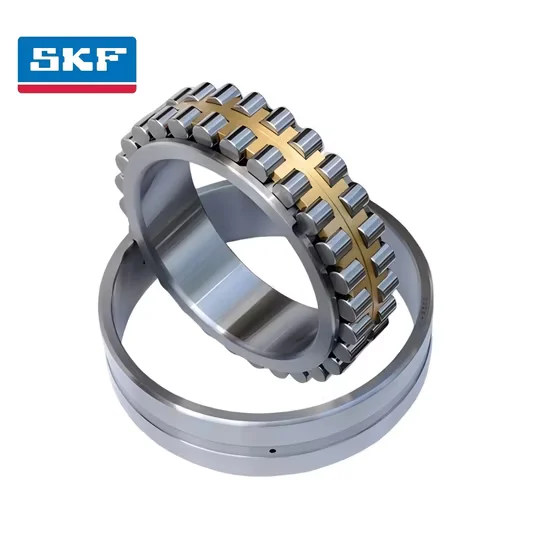
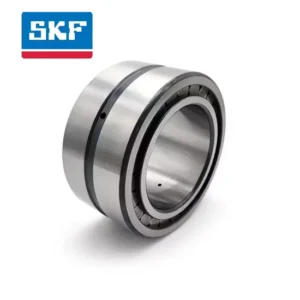
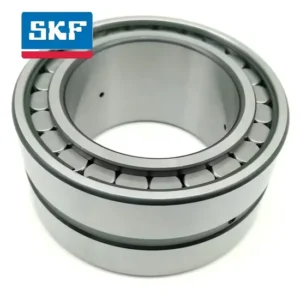
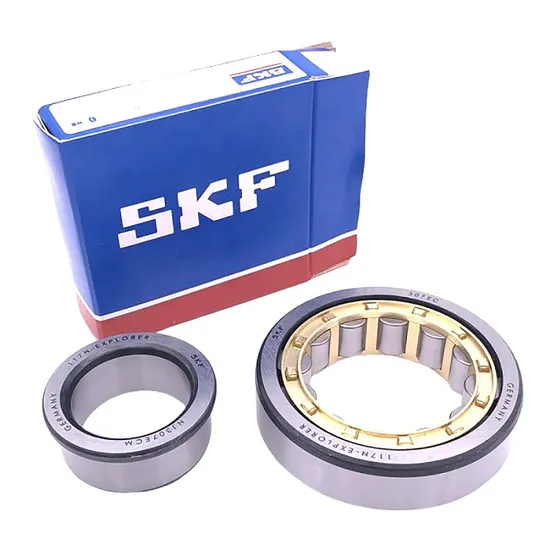
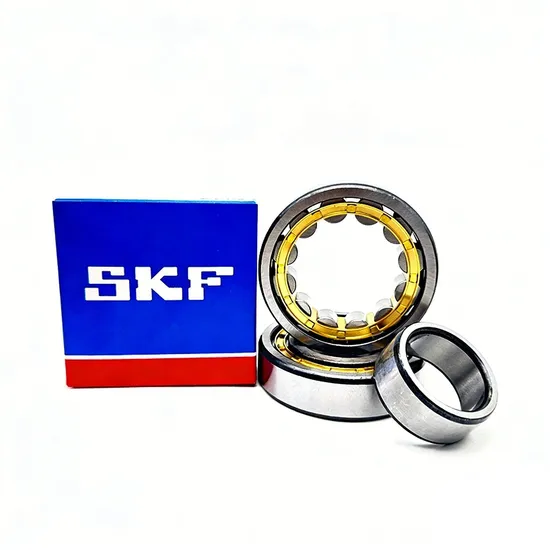
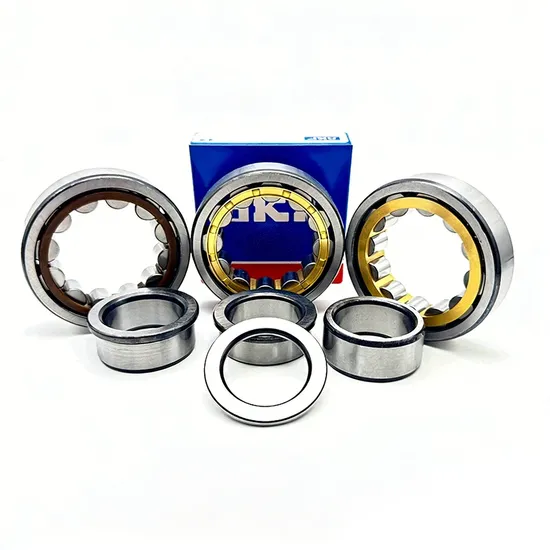
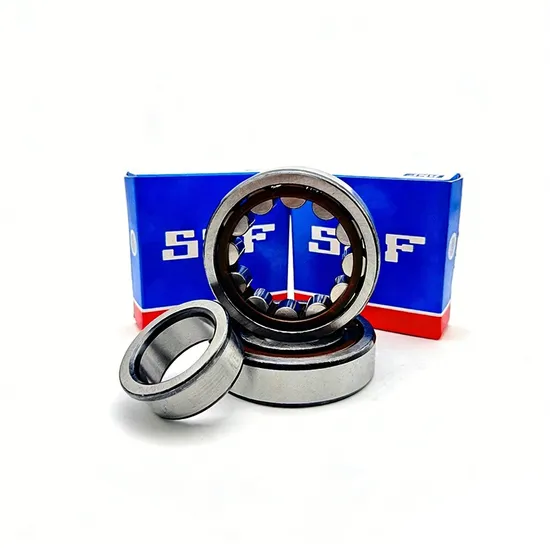
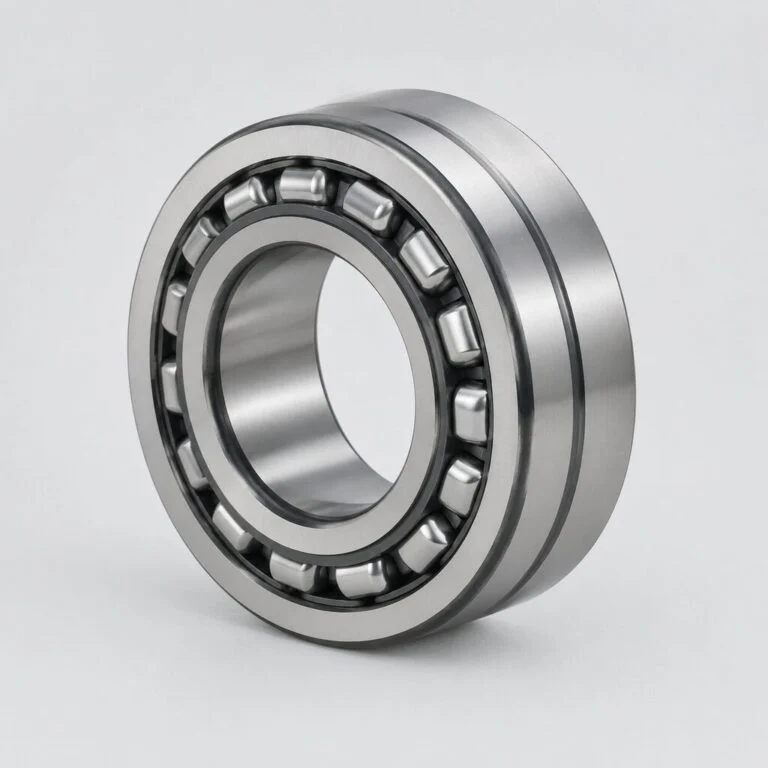
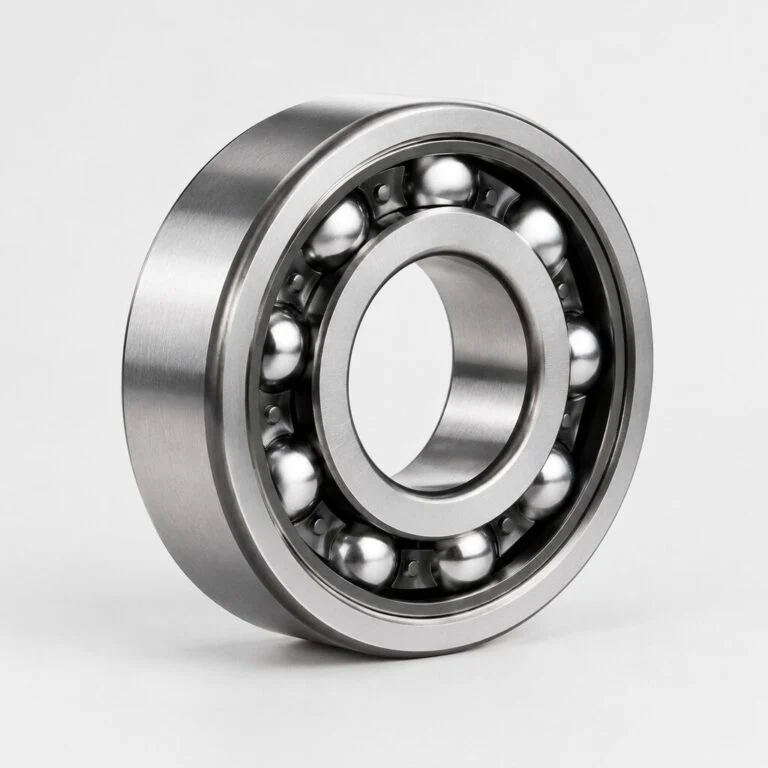
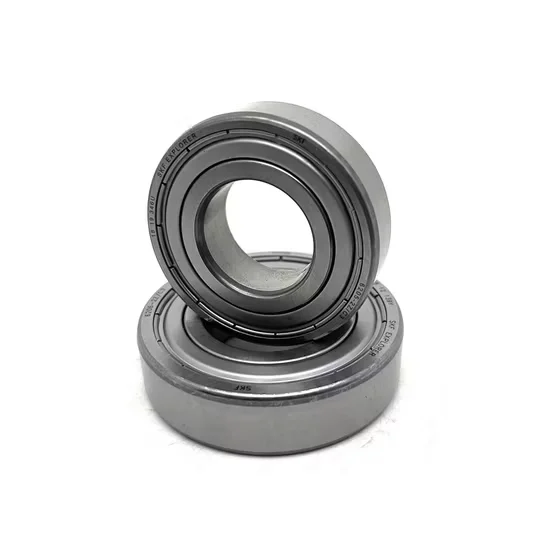
Listed data for this SKF designation; confirm the execution and dimensions against your drawing or application before ordering.
Full Brand Portfolio Sourcing — Consolidate your Nnu4921 B/Sp W33 double row cylindrical roller bearing orders alongside other premium spindle components from a single supply chain node without juggling multiple vendor approvals.
Technical Specifications
| Parameter | Value |
| Designation | Nnu4921 B/Sp W33 |
| Bearing Type | Double Row Cylindrical Roller Bearing |
| Outer Dimension Category | Medium and Large (120-190mm) |
| Material | Bearing Steel |
| Number of Rows | Double |
| Separated | Separated |
| Clearance Class | C0, C2, C3, C4, C5 |
| Cage Material | Brass, Steel |
| Vibration Level | Z1V1, Z2V2, Z3V3 |
| Hardness | 60-64 HRC |
| Precision Class | SP |
| Lubrication Feature | W33 (Outer ring groove and holes) |
| Origin | Jiangsu China |
Note: The '4921' dimension series and 'B' internal design suffixes remain unverified against specific manufacturer catalogs and require cross-referencing.
Application Suitability
| Industry | Typical Applications |
| Machine Tool Manufacturing | High-speed main spindles and precision boring bars |
| Precision Equipment | Optical measuring instruments and coordinate measuring machines |
| Heavy Machinery | Heavy-duty gearboxes requiring high radial rigidity |
| Metal Processing | Work rolls and backup rolls in rolling mills |
Why Super Precision Spindles Fail When Lubrication Routing Is Ignored
Starved lubrication zones cause localized thermal expansion that destroys SP tolerance before the bearing steel even yields.
When sourcing a Nnu4921 B/Sp W33 double row cylindrical roller bearing for high-accuracy spindles, buyers often fixate on dimensional tolerances while overlooking how oil reaches the rolling elements. In my years troubleshooting African mining crushers and precision milling setups, I have seen perfectly machined spindles seize simply because the outer ring lacked proper lubrication pathways. Relying on splash lubrication in high-speed enclosures leads to uneven oil distribution and catastrophic thermal gradients. The resulting localized expansion alters the internal geometry, causing the rollers to skid and smearing the raceway surface long before the rated fatigue life is reached.

Aligning Super Precision Tolerances With Demanding Spindle Environments
Deploying a Nnu4921 B/Sp W33 double row cylindrical roller bearing in machine tool spindles demands strict adherence to dimensional stability under continuous radial loads. Our engineering team ensures that every unit supplied matches the exact SP precision class required for minimal runout in high-speed cutting operations. By verifying the specific clearance and cage combinations, we help manufacturers avoid the micro-vibrations that ruin surface finishes on machined parts. This careful alignment between the component's inherent rigidity and the spindle's dynamic requirements is what separates reliable production runs from constant recalibration headaches.
Navigating Thermal Growth and Lubrication Starvation in High-Speed Enclosures
High-speed spindle operations generate immense friction heat, making the selection between C0 and C3 clearance critical to accommodate thermal expansion without losing preload. The W33 outer ring lubrication groove ensures that oil-air or oil-jet systems deliver coolant directly to the roller paths, preventing localized hot spots that compromise the bearing steel's structural integrity. Furthermore, choosing between brass and steel cages dictates the vibration damping characteristics and the maximum achievable RPM before cage instability occurs. Ignoring these thermal and dynamic interactions inevitably leads to accelerated wear and unpredictable spindle behavior during heavy milling cycles.
Decoding the Engineering Behind SP Precision and W33 Lubrication Features
The SP precision class guarantees exceptionally tight dimensional and running accuracy, which is mandatory for eliminating chatter marks in precision grinding and milling applications. Incorporating the W33 suffix means the outer ring features an annular groove and lubrication holes, facilitating efficient oil flow directly into the load zone during high-speed rotation. The bearing steel construction, hardened to 60-64 HRC, provides the necessary core toughness to withstand shock loads from interrupted cuts without micro-fracturing. Additionally, the separated design allows the inner ring with the roller and cage assembly to be mounted independently from the outer ring, simplifying interference fit installations on spindle shafts while preserving the delicate precision tolerances.
The Operational Fallout of Mismatched Clearance and Precision Grades
Installing a standard P0 or P5 grade bearing in a spindle designed for SP tolerances inevitably leads to excessive radial runout, ruining the geometric accuracy of the finished workpiece. Similarly, specifying a standard clearance when the application requires C3 to compensate for thermal growth results in internal preload buildup and premature roller skidding. According to failure analysis frameworks, these misalignments accelerate surface fatigue and spalling, forcing unplanned downtime and voiding the machine tool builder's warranty. The financial impact extends far beyond the replacement part cost, encompassing scrapped production batches, delayed shipments, and the extensive labor required to tear down and rebuild the spindle assembly.
Securing Traceability and Exact Suffix Matching for Critical Spindle Builds
Sourcing super precision components requires more than just finding a matching part number; it demands rigorous verification of the exact suffix combination. We specialize in cross-referencing the SP precision and W33 lubrication features against multiple premium global brands to ensure functional equivalence. Our inventory covers thousands of standard and special part numbers, allowing us to fulfill urgent maintenance requirements without compromising on traceability. Every shipment includes complete documentation proving the origin and metallurgical compliance of the bearing steel. Furthermore, our technical team provides application guidance to confirm that the selected clearance class aligns perfectly with your specific spindle thermal profile, preventing the costly mistake of installing an incompatible unit.
Documentation & Authenticity
- Certificate of Conformity confirming SP precision class and dimensional tolerances.
- Original manufacturer batch codes for full metallurgical traceability of the bearing steel.
- Running accuracy inspection reports verifying inner and outer ring runout limits.
- Material test certificates validating the 60-64 HRC hardness of the rolling elements.
- Lubrication feature verification confirming the W33 outer ring groove dimensions.
Storage, Handling & Mounting
- Store the separated inner and outer rings in original VCI packaging to prevent corrosion on the precision-ground raceways.
- Use clean lint-free gloves when handling the SP class components to avoid acidic fingerprint etching on the bearing steel.
- Induction heating is recommended for mounting the inner ring onto the spindle shaft to preserve the selected clearance class.
- Ensure the W33 outer ring lubrication holes align perfectly with the housing oil feed ports during assembly.
- Keep brass cage assemblies away from harsh solvents that could degrade the cage material before oil film establishment.
Engineering Review for Spindle Integration
To ensure optimal performance, please provide your spindle's maximum operating speed, continuous radial loads, and expected thermal growth parameters. Sharing the OEM machine tool model number allows our technical team to perform a precise cross-reference and verify the required clearance class. We will also review your housing design to confirm that the W33 lubrication routing aligns with your existing oil-air delivery system.
Frequently Asked Questions
Q: What does the SP precision suffix mean compared to standard P4 or P5 classes?
A: The SP precision class denotes a specialized tolerance grade optimized for machine tool spindles, offering tighter running accuracy and dimensional stability than standard P4 or P5 grades. This ensures minimal radial runout and vibration during high-speed cutting operations, which is critical for achieving superior surface finishes on precision-machined components.
Q: How does the W33 suffix affect lubrication routing and maintenance cycles?
A: The W33 suffix indicates an annular lubrication groove and holes on the outer ring, allowing oil to flow directly into the roller load zone. This targeted delivery prevents lubrication starvation at high speeds, reduces operating temperatures, and extends maintenance intervals by ensuring consistent oil film thickness across all rolling elements.
Q: What are the cross-reference considerations for NNU series spindle bearings?
A: When cross-referencing NNU series bearings, it is crucial to match not only the basic dimensions but also the specific internal design, precision class, and lubrication features. Different manufacturers may use varying suffix conventions for SP precision and W33 grooves, so verifying the exact functional equivalence prevents installation issues and performance degradation.
Q: How to choose between brass and steel cages for high-speed spindle applications?
A: Brass cages offer superior vibration damping and thermal conductivity, making them ideal for high-speed spindles subject to variable loads and rapid acceleration. Steel cages are generally lighter and suitable for applications where minimizing centrifugal forces is the priority, though they may require more precise lubrication routing to prevent wear.
Q: What specific inspection reports are required when receiving super precision bearings?
A: Buyers should request dimensional inspection reports confirming bore and outside diameter tolerances, alongside running accuracy certificates detailing inner and outer ring radial runout. Additionally, material certificates verifying the bearing steel hardness and a certificate of conformity for the specific SP precision grade are essential for validating the component's readiness for high-accuracy spindle assembly.