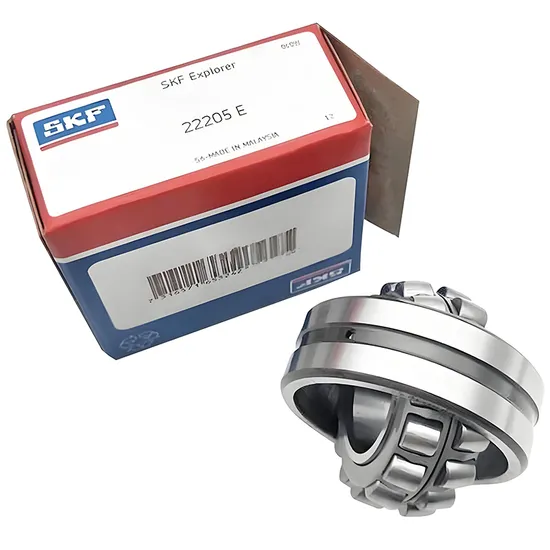
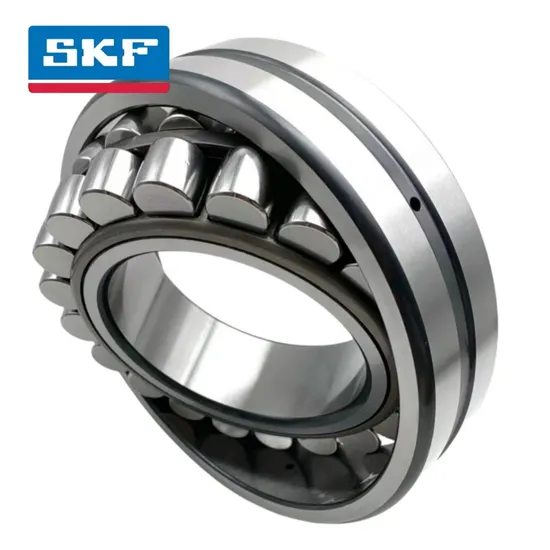
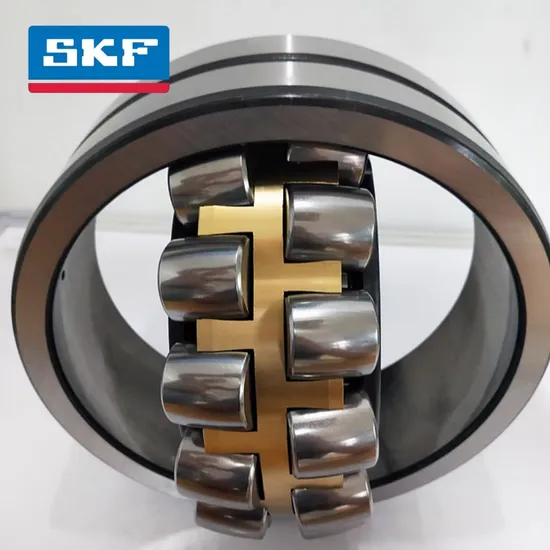
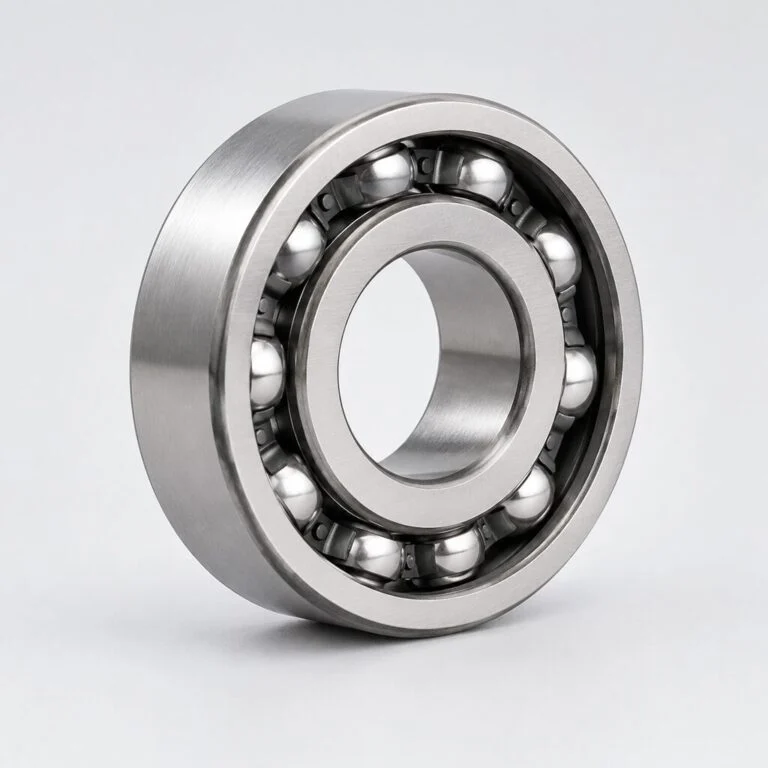
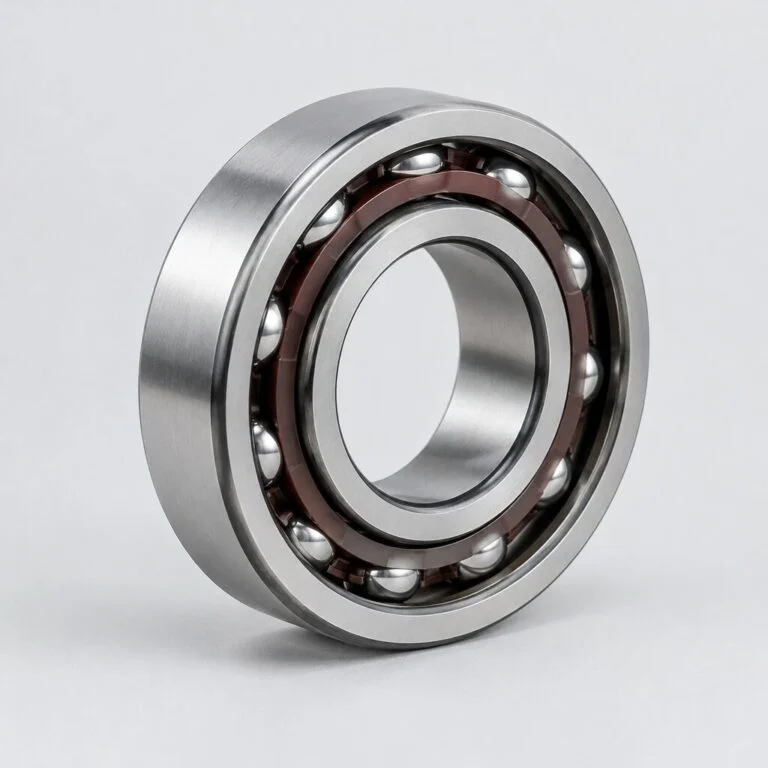
Listed data for this SKF designation; confirm the execution and dimensions against your drawing or application before ordering.
Full Traceability Guaranteed — Every NTN 22216 EL K C3 spherical roller bearing ships with unbroken batch documentation linking directly to the manufacturer's original production facilities.
Technical Specifications
| Parameter | Value |
| Designation | 22216 EL K C3 |
| Bearing Type | Spherical Roller Bearing |
| Bore Diameter (d) | 80 mm |
| Outside Diameter (D) | 140 mm |
| Width (B) | 33 mm |
| Bore Type | Tapered 1:12 (K) |
| Cage Material | Steel, Brass |
| Clearance Class | C3 |
| Precision Class | P0, P6, P5, P4, P2 |
| Material | Bearing Steel |
| Certification | ISO9001 |
| Origin | China, Japan, Sweden |
Note: The 'L' suffix remains unverified and requires manufacturer catalog confirmation before finalizing the order.
Application Suitability
| Industry | Typical Applications |
| Mining & Aggregates | Vibrating screens, jaw crushers, conveyor pulleys |
| Metallurgy | Steel mill roll necks, continuous casting equipment |
| Pulp & Paper | Paper machine dryer cylinders, press section rolls |
Why Suffix Variations Dictate the Survival of Your NTN 22216 EL K C3 spherical roller bearing
Misinterpreting a single clearance code turns a heavy-duty asset into an immediate liability.
In high-temperature processing environments, ignoring the thermal expansion characteristics of internal clearances leads to catastrophic seizure. I have seen identical basic models fail within hours simply because the operational heat soaked into the inner ring, eliminating the internal gap entirely. Procurement teams often focus heavily on the base dimensions while completely overlooking the suffix string, which actually governs the operational survival under severe thermal and mechanical stress. When a standard clearance bearing is forced into a high-heat application, the shaft expands faster than the housing, crushing the rolling elements against the raceway. This rapid preload buildup generates immense friction, spiking the localized temperature until the cage disintegrates. Understanding these suffix nuances is the primary defense against unplanned downtime.

Matching the Tapered Bore to Heavy-Duty Vibratory Loads
The NTN 22216 EL K C3 spherical roller bearing integrates a 1:12 tapered bore that pairs effectively with adapter sleeves for precise axial positioning on shafts. This configuration allows maintenance crews to dial in the exact radial internal clearance during installation, which is absolutely critical for vibrating screens and crushers where unbalanced centrifugal forces dominate. By controlling the drive-up distance on the adapter sleeve, technicians can compensate for the interference fit and ensure the internal geometry remains perfectly aligned under dynamic loading. Our sourcing network ensures that the specific cage design and internal geometry align perfectly with the high-shock demands of your aggregate processing equipment, preventing the micro-spalling that typically plagues poorly seated assemblies.
Managing Thermal Expansion and Contamination in Harsh Mills
When operating inside a steel mill or a humid processing plant, the ambient heat and particulate ingress constantly threaten the integrity of the rolling elements. The C3 clearance class is specifically engineered to accommodate the thermal expansion of the shaft and housing, preventing the rollers from binding when the machinery reaches its steady-state operating temperature. Furthermore, selecting the appropriate cage material—whether stamped steel for standard speeds or machined brass for severe vibration—dictates how well the assembly resists lubricant starvation and particle contamination over extended maintenance intervals. In environments where fine abrasive dust is prevalent, the internal geometry must maintain sufficient clearance to allow the lubricant to flush out contaminants rather than grinding them into the raceway surfaces.
Decoding the Engineering Behind the Suffix String
The 'E' designation in the NTN 22216 EL K C3 spherical roller bearing indicates a reinforced internal structure with optimized roller and raceway contact profiles, substantially increasing the dynamic load capacity and fatigue life under heavy radial loads. The 'K' suffix confirms the 1:12 tapered bore, necessitating the use of an adapter sleeve to secure the inner ring and control the mounted clearance with high precision. Meanwhile, the 'C3' radial internal clearance provides the necessary thermal buffer, ensuring that the rolling elements maintain a positive gap even when the inner ring expands considerably more than the outer ring under operational heat. This specific combination of reinforced geometry and expanded clearance allows the assembly to endure the punishing cycles of crushing equipment, ensuring long-term reliability under heavy radial loads.
The Compounding Penalties of Clearance Mismatches
Deploying a standard clearance bearing in an application that demands C3 results in rapid preload buildup, leading to excessive friction, localized overheating, and eventual cage disintegration. Such premature failures not only halt the production line but also cause secondary damage to the shaft and housing, drastically increasing the total remediation cost and extending the outage duration. When the internal gap collapses, the sliding friction between the rollers and the raceway generates enough heat to alter the metallurgical structure of the bearing steel, permanently destroying the component. According to industry reliability frameworks, a significant share of unplanned downtime stems directly from these preventable specification oversights rather than inherent material defects. Correcting a simple suffix error during the procurement phase is infinitely more cost-effective than replacing a seized shaft in the field.
Securing Exact Suffix Alignment Through Rigorous Verification
Our procurement protocol mandates a strict character-by-character verification of the suffix string, ensuring that the clearance, bore type, and internal design exactly match your OEM requirements without exception. We have eliminated the risk of receiving a standard cylindrical bore when a tapered version is specified, a common error that completely derails scheduled maintenance windows and forces emergency re-ordering. Every shipment is backed by comprehensive traceability, allowing your quality team to verify the original manufacturing batch and material certifications before the bearing ever leaves the staging area. By focusing intensely on the exact suffix configuration, we prevent the costly misapplications that occur when suppliers treat all variations of a base model as interchangeable. This strict attention to the engineering details ensures that the component you receive is precisely the one your machinery requires.
Traceability and Quality Assurance Records
- Certificate of Conformity verifying the exact 22216 EL K C3 designation and ISO9001 compliance.
- Original batch traceability documents linking the specific serial numbers to the manufacturer's production facilities.
- Material inspection reports confirming the metallurgical grade of the bearing steel and cage components.
- Dimensional accuracy certificates validating the 1:12 taper angle and C3 radial internal clearance limits.
Preservation and Installation Protocols
- Retain the original vapor-phase inhibitor packaging until mounting to protect the precision-machined tapered bore from humidity.
- Utilize induction heaters with precise temperature controls when expanding the inner ring to avoid compromising the C3 clearance.
- Measure the drive-up distance and residual radial clearance continuously during adapter sleeve tightening to prevent over-compression.
- Apply clean, lint-free gloves when handling the exposed rolling elements to prevent sweat-induced corrosion on the bearing steel.
Engineering Review and Specification Alignment
To ensure the selected configuration perfectly matches your operational envelope, please provide the exact radial and axial loads, rotational speeds, and steady-state operating temperatures. Sharing the original equipment manufacturer part numbers allows our technical team to perform a comprehensive cross-reference check, validating the clearance class and bore type against your specific machinery requirements. Additionally, detailing the environmental conditions, such as the presence of abrasive dust or corrosive moisture, helps us confirm whether the standard bearing steel and cage materials are sufficient. This collaborative engineering review guarantees that the final specification is fully optimized for your unique application, eliminating the guesswork and preventing costly field failures.
Frequently Asked Questions
Q: What does the C3 clearance mean for this specific application?
A: The C3 designation indicates a radial internal clearance greater than standard, which is essential for applications involving high temperatures or heavy interference fits. This extra gap compensates for the thermal expansion of the shaft, preventing the rollers from seizing inside the raceway when the equipment reaches its peak operating temperature.
Q: How does the 1:12 tapered bore affect the installation process?
A: The tapered bore requires an adapter sleeve for mounting, allowing technicians to precisely control the radial internal clearance by adjusting the drive-up distance. This ensures the bearing is securely locked onto the shaft while maintaining the optimal operational gap required for heavy-duty vibratory loads and dynamic forces.
Q: Why is cross-referencing the suffix string more critical than the base model?
A: The base model only defines the outer dimensions, while the suffixes dictate the internal geometry, clearance, and bore type. Installing a standard clearance or cylindrical bore variant in a high-heat, high-vibration environment will lead to rapid thermal binding and catastrophic failure, regardless of the dimensional match.
Q: What cage material options are available for high-vibration environments?
A: For severe vibration and shock loads, a machined brass cage is typically recommended due to its superior resistance to structural fatigue and lubricant starvation. Stamped steel cages are also available and are suitable for standard operational speeds where the vibratory forces remain within moderate limits.
Q: How can I verify the authenticity of the received bearings?
A: Every unit is supplied with unbroken batch documentation and a Certificate of Conformity. You can cross-verify the specific serial numbers and manufacturing origin directly through the official brand verification channels to ensure complete traceability and genuine material composition before installation.